How to market a nutrition coaching business without making health claims.
Marketing nutrition coaching is harder than marketing training in one specific way: the results people want are health results, and you are not allowed to promise them. This guide shows what to sell instead. It covers the positioning, the food content, the channels that suit nutrition coaches (including trainer and dietitian referrals), the lead magnets, and the path from a first message to a paying client, aimed at your first 20 clients.
By Markus Evers · Updated October 2026
the short version
To market a nutrition coaching business, start with a specific offer for a specific person, then sell what you deliver rather than a health result. Pick one content channel and post food content that shows your method, ask personal trainers and dietitians for referrals, offer one useful lead magnet, and move every interested person from a message to a short call to a written offer. Track conversations and calls, not likes.
What is the first thing to market as a new nutrition coach?
The first thing to market as a new nutrition coach is a specific offer for a specific person, before any content, ads or website. Write one sentence that names who you help, the change you help them make in their everyday eating, and how you work with them, for example a weekly check-in with targets set for them. That sentence decides what you post, who you ask for referrals and what you say on a call. Without it, every channel produces polite interest from people who are not sure the coaching is for them, and few of them buy.
Notice what the sentence does not contain: a number of kilos, a medical condition you will fix, or a promise about how someone will feel. Those are outcomes you cannot control, and in nutrition they quickly cross into clinical territory. The offer you market is the support you deliver and the person it is built for.
If you have not set up the business yet (scope of practice, macros or meal plans, pricing, payments), do that first with the online nutrition coaching business guide. This page starts where that one stops: getting the clients.
How do you position a nutrition offer people can picture?
Good nutrition positioning has three parts: a niche (who), an outcome described as a change in their week rather than a health result (what), and a method (how). "Healthy eating for everyone" has none of them. "A weekly plan busy parents can shop for in one trip, with a check-in every Sunday" has all three, and a busy parent reading it can picture the first week of coaching.
The niche does not have to be clever. It has to be a group you can reach, whose food problem you understand, and who will pay to have it solved. Coaches who also train people often find their niche in their training clients: lifters, runners, people coming back after a long break. For a structured way to pick one, see how to choose a coaching niche.
| Vague | Specific | Why it works |
|---|---|---|
| Nutrition coaching for anyone who wants to eat healthier | Nutrition coaching for shift workers who want a way of eating that survives night shifts | The reader can see themselves, and the method (meal timing around shifts) is implied in one line |
| Macro coaching for weight loss | Macro coaching for busy parents who want a weekly plan they can shop for in one trip | Swaps a result promise for a concrete change in how their week runs |
| Holistic nutrition and wellness | Nutrition coaching for lifters who train four days a week and keep losing track of food on weekends | Names the training context and the exact moment the client struggles |
| Plant-based coaching | Coaching for vegetarian runners who want enough protein without living on shakes | Pairs a diet with a sport and a specific worry you know how to solve |
Once the sentence is right, put it where people meet you first: your profile bio, your email signature, the first line of every outreach message. The nutrition coach bio examples show ten ways to fit it into a short profile, and nutrition coaching packages turns the method part into a menu you can sell.
How do you promote nutrition coaching without making health claims?
You promote nutrition coaching without health claims by marketing the method and the support, not the medical result. Show how you coach food: a grocery run for your niche, a swap you would give a client, a week of meals built to a target, the questions in your check-in, and client stories shared with written consent and real context. Describe what the client gets each week, such as targets, a check-in and a personal reply. Leave out promises about weight, conditions, hormones or how someone will feel, and say plainly that anything clinical goes to a doctor or dietitian.
This is not only about staying inside your scope. Informed readers have seen every detox and every 30-day transformation. Content that shows a sensible coach at work stands out because it is rare, and it attracts the kind of client who will stay longer than a month.
Food content that shows your method
- A real grocery run for one type of client, with the reason for each item.
- One swap per post: the meal your niche already eats, and the change you would make.
- A full day or week of meals built to a target, shown as plates, not spreadsheets.
- The check-in questions you ask and what you look for in the answers.
- How you handle the hard moments: eating out, a holiday, a bad week.
Content that builds trust
- A client story with consent: starting point, what they did, how long it took.
- A common myth and what you actually tell clients instead.
- What you will not do, and when you refer someone to a dietitian.
- Your own week of eating, if it fits your brand and you are comfortable sharing it.
- Answers to the questions people send you, posted as they come in.
| Avoid | Say instead | Why |
|---|---|---|
| Lose 10 kg in 8 weeks, guaranteed | A target set for you, a weekly check-in and a personal reply by Tuesday | A result promise you cannot control; describe what you deliver instead |
| Fix your hormones / balance your blood sugar | I coach everyday eating. If you have a diagnosed condition, I work alongside your doctor or dietitian | Treating a condition is clinical work outside a coaching scope |
| Detox, cleanse, reset your metabolism | A simple way of eating you can keep after coaching ends | Vague health claims invite complaints and lose trust with informed readers |
| Before-and-after photos with no context | A client story with their written consent, their starting point, what they did and how long it took | One result is not a typical result; context keeps the story honest |
| This diet works for everyone | Here is how I adjust the plan when it stops fitting your week | Your method is the selling point, not a universal rule |
Before-and-after photos need their own care: written consent, context, and a plain note that results vary. Some ad platforms restrict them in health and weight ads, so check the current policy of the platform before you run one. How to collect stories properly is in how to get client testimonials, and the line between coaching and clinical work is in the scope-of-practice explainer.
Which marketing channels work for nutrition coaches?
The channels that work best for most new nutrition coaches are, in order of warmth: the people who already know you, referrals from personal trainers and gyms whose clients ask nutrition questions, one content platform where your niche spends time, and an email list for people who are not ready yet. Instagram suits nutrition well because food is visual. Dietitians are a two-way partner: you refer clinical cases to them. Start with one or two channels, run them for a couple of months, and add paid ads only once the offer already sells without them.
The table below gives each channel the reason it suits nutrition specifically and a first action you can take this week. For the general channel map that applies to any coach, see the fitness coach marketing guide.
| Channel | Why it fits nutrition | First action |
|---|---|---|
| Your warm network | People already trust you with food questions; friends of friends are the easiest first clients | Tell 30 people what you now offer and who it is for, one personal message each |
| Food is visual: plates, grocery runs, swaps and a real week of meals show your method fast | Three posts a week for 8 weeks on one niche, each ending with one clear next step | |
| Personal trainers and gyms | Their clients ask nutrition questions every week and many trainers would rather not answer them | Offer two local or online trainers a free session for their clients, with a written handover |
| Dietitians and health professionals | You refer clinical cases out; some will send back clients who need everyday coaching, not therapy | Find one dietitian to refer to, and explain exactly where your scope stops |
| Nutrition is a slow decision; an email list keeps you in front of people until they are ready | One lead magnet, three follow-up emails, then one useful email a week |
If you would rather not live on social media, the warm network, referral partners and email can carry a small practice on their own; how to get coaching clients without social media covers that route. If Instagram is your channel, how to get coaching clients on Instagram goes deeper on the profile and the posting rhythm.
How do you get referrals from trainers, gyms and dietitians?
Referral partnerships are an easy channel to overlook. A personal trainer hears "what should I eat?" several times a week and often has neither the time nor the wish to answer it properly. A gym wants members who stay. A dietitian needs somewhere to send people who are healthy but want ongoing support with everyday eating. Each of them can send you clients who arrive already trusting you, because someone they trust sent them.
The partnership works when it is easy for the partner and safe for their reputation. That means a clear description of who you take and who you do not, a simple way to refer, and a short note back so they know their client was looked after.
- 1. Pick partners who serve your niche. A strength coach for lifters, a running club for runners, a gym with a busy early-morning crowd for working parents. Two good partners beat ten loose ones.
- 2. Lead with something useful for their clients. A free group Q&A on eating around training, a one-page handout they can share, or a short guest session. You earn the referral by helping their people first.
- 3. Write down your scope. Who you coach, what you do not take (diagnosed conditions, eating disorders, anything needing medical nutrition therapy), and who you refer those clients to. A dietitian will only work with you if this is clear.
- 4. Make referring one step. A link to your intake form they can paste into a message, so the client fills it in and you take it from there.
- 5. Close the loop. Send the partner a short note when their client starts, with the client's permission. If you pay a referral fee, agree it in writing and tell the client; check whether your partner's profession allows it.
a first message to a personal trainer
"Hi [name], I coach nutrition for [niche], mostly people who train three or four times a week and lose track of food around it. I guess your clients ask you food questions all the time. Would it help if I ran a free 30-minute Q&A on eating around training for them, online or at your gym? No pitch on the call. If anyone wants more help afterwards, I will send you a note when they start so you know they are looked after."
Once you have clients, the second source of referrals is them. The timing and wording for asking is in how to get referrals as an online coach.
What lead magnets work for nutrition coaches?
A nutrition lead magnet works when it solves one small food problem your niche has this week and hints at the bigger one your coaching solves. It should take a few minutes to use, and it should feel like your method rather than a generic download. Pick one, build it well, and attach three follow-up emails. Five half-finished freebies collect addresses but rarely start conversations.
A grocery list for your niche
One page, organised by shop section, built for the person you coach. Start from the grocery list for coaching clients and cut it down to your niche.
A hand-portion guide
How to build a plate without weighing anything, using palm, fist, cupped hand and thumb. Good for people put off by tracking, and it shows how you coach without numbers.
A protein guide
Everyday foods ranked by protein per portion, plus three meals that are easy to repeat. Pairs well with the protein calculator for readers who want a number.
A five-day email challenge
One small food action a day for five days, such as a protein breakfast or a planned lunch, with a reply-to-me question at the end. It starts conversations better than a PDF does.
Keep health claims out of the magnet too: a protein guide explains portions and meals, not what protein will do to someone's body. For more formats, the follow-up emails and how to build one quickly, see fitness lead magnet ideas; for what makes one work at all, what is a lead magnet.
How do you turn a message into a paying nutrition client?
You turn a message into a paying nutrition client with the same short path every time: reply to what they actually said, ask two questions about their eating and what got in the way before, send your intake form with screening questions, run a structured short call, and send a written offer with a payment link the same day. Refer anyone with a diagnosed condition or a history of disordered eating before they pay. Then track four numbers each week (conversations, calls, offers, clients) so you can see which step is weak.
- 1. Reply to what they actually said. If they commented on a protein post, start there. Ask one question about their situation, not about buying. Ready-made openers are in the Instagram DM scripts.
- 2. Ask two more questions, then offer a call. What they eat on a normal day and what has got in the way before. If it sounds like a fit, offer a short call and send your intake form first.
- 3. Screen on the intake form. Ask about diagnosed conditions, medication and any history of disordered eating before the call. If the answer points to clinical care, refer kindly and early, before anyone pays.
- 4. Run the same call every time. Their goal, their week, what they have tried, what coaching with you looks like, the price. The discovery call script gives you the wording.
- 5. Send a written offer the same day. The package, what is included and not, the price and a payment link. One follow-up a few days later, then let it rest.
Four numbers to track for your first 20 clients
- Conversations started each week, by channel.
- Calls booked from those conversations.
- Offers sent after calls.
- Clients signed, and which channel each one came from.
Write them down every Friday. When one step is weak, fix that step: few conversations means the content or the offer is unclear, few calls means you ask too late, few signed clients after calls usually means the offer or the price was not clear on the call. Likes and followers are not on the list on purpose.
One nutrition-specific check sits alongside them: how many intake forms you referred out to a doctor or dietitian. If that count climbs, your content may be drawing people who need clinical care, and the niche or the wording of your posts needs a closer look.
For the call itself in more depth, see how to run a discovery call; for what to charge once someone says yes, see how much nutrition coaches charge.
What does a weekly marketing routine look like for a nutrition coach?
Marketing that happens only when you have a gap in the diary produces leads in bursts and clients in bursts. A small fixed routine is easier to keep. As an example only, here is a week that fits around a full coaching schedule:
- Monday: plan three posts from the questions clients and followers asked last week, tied to your niche's food moments such as shop day, Sunday meal prep or the weekend meal out. Batch the photos while you shop or prep anyway.
- Tuesday and Thursday: 30 minutes of conversations: reply to comments and messages, follow up open leads, send one message to a warm contact.
- Wednesday: one partner action: a message to a trainer, a handout for a gym, a check-in with a dietitian you refer to.
- Friday: write one email to your list and fill in the four numbers.
If writing a weekly email feels like the hardest part, email marketing for coaches has a format that takes about half an hour. Coaches who also train clients can run the same week for both offers; adding nutrition coaching to a personal training business covers selling the two together.
Catch and convert every lead in one system.
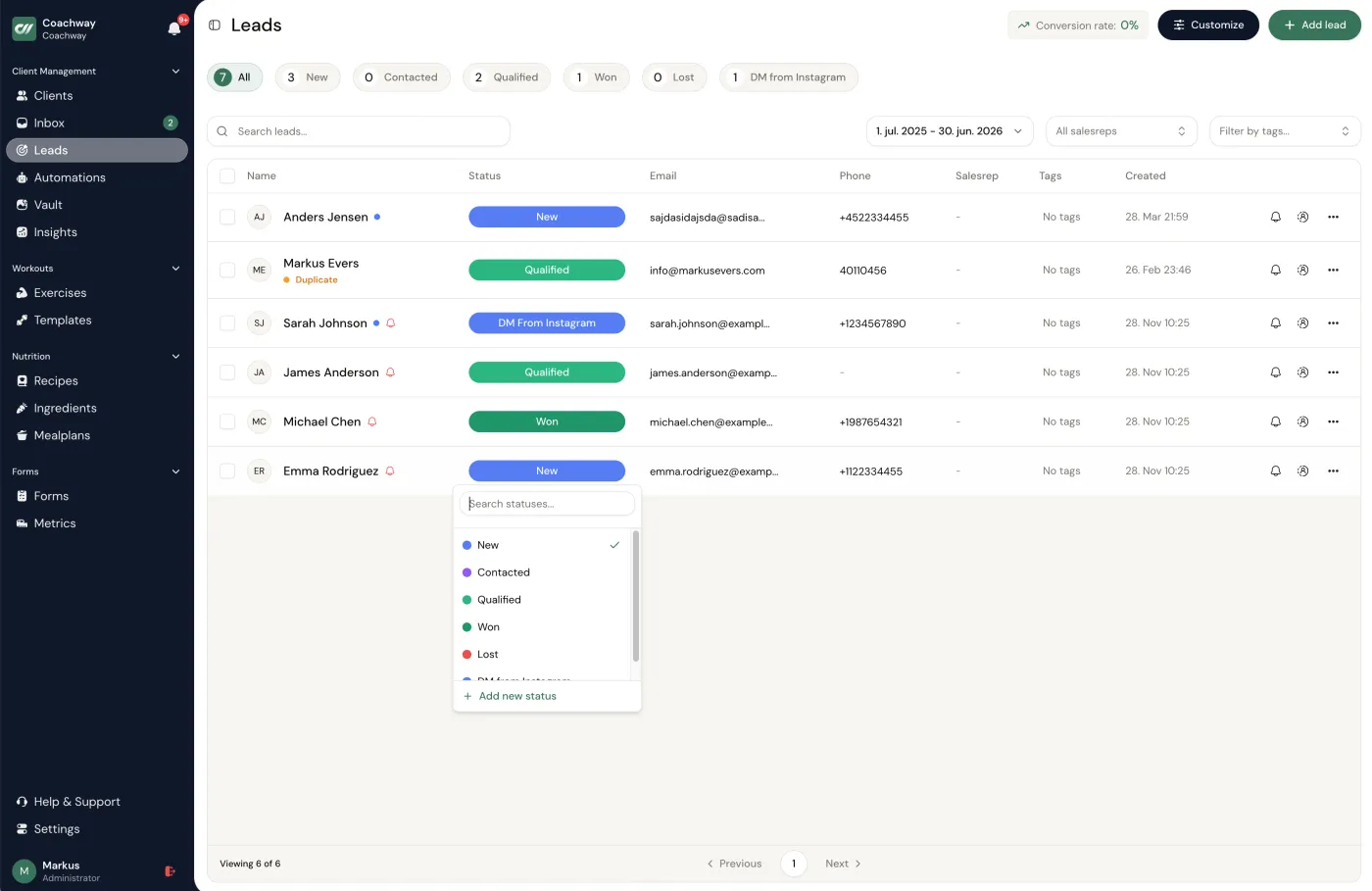
The marketing above only pays off if leads land somewhere you will see them. In Coachway you build a lead or intake form with your own questions, including the medical screening ones, and embed it on your site or share it as a link in your bio or in a message to a referral partner. Every submission lands in a lead pipeline, and when someone says yes you convert the lead to a client without re-typing anything. An onboarding automation flow can then send the welcome and first steps, and content drips with skip conditions can deliver your onboarding material over the first weeks.
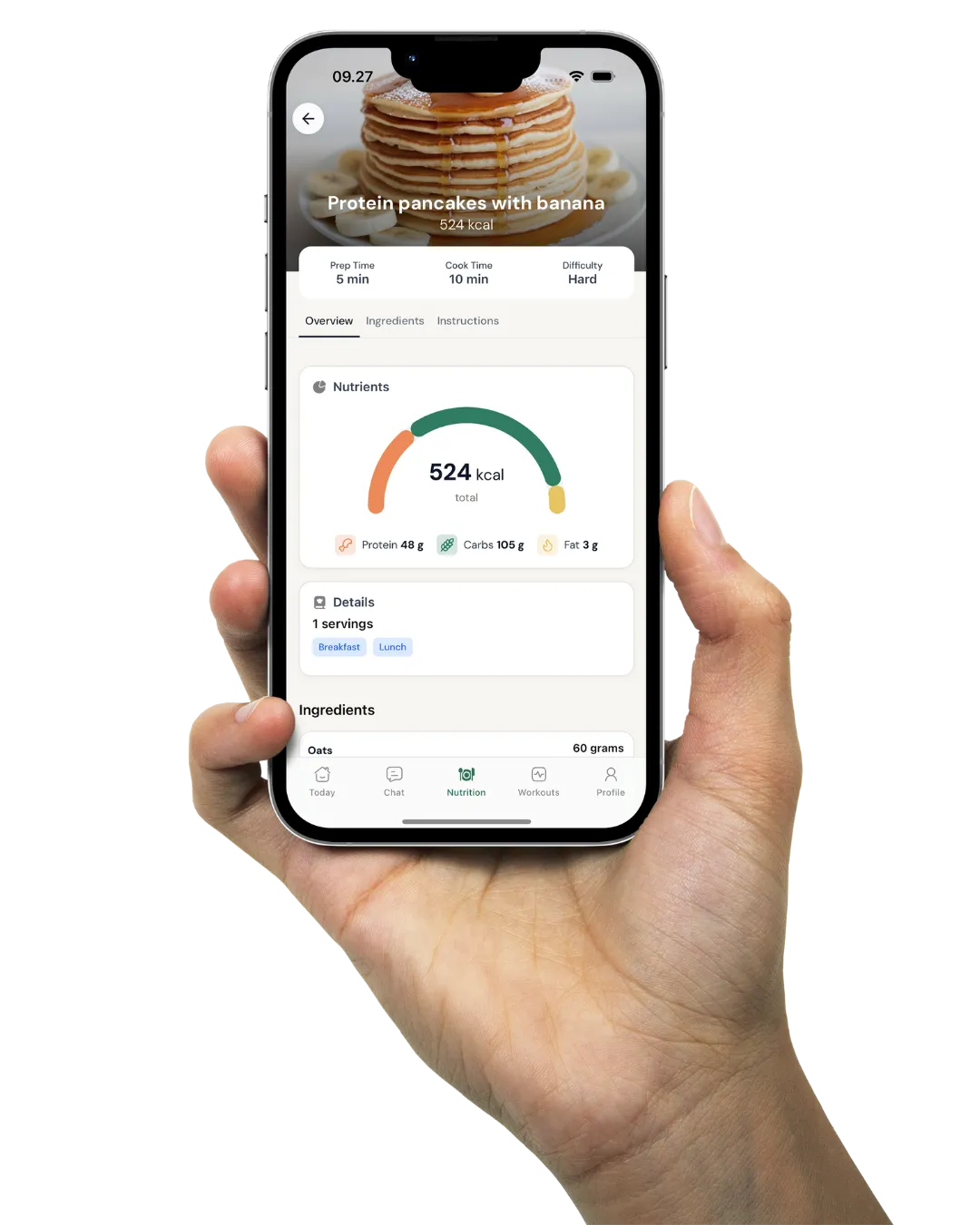
You also deliver what you sold from the same place: meal plans from 1,100+ recipes and 3,900+ ingredients, client food logging with barcode scanning and a photo diary, in-app chat and broadcasts. Clients pay through your own Stripe account, and built-in payments cost 2.4 % per transaction. Coachway costs EUR 69 a month including up to 5 active clients, then EUR 9 per extra active client. You can try it for 14 days before your next lead arrives.
Frequently asked questions about marketing nutrition coaching.
What is the first component of marketing for a new nutrition coach?
The first component is a clear offer: who you help, with what, and how you work with them. Before content, ads or a website, write one sentence that names a specific person, the change you help them make in their everyday eating, and your method, such as a weekly check-in and targets set for them. Every later piece of marketing points back to that sentence, so a vague offer makes every channel weaker.
How do nutrition coaches get clients?
For most new nutrition coaches, the easiest first clients are people who already know them, followed by referrals and one content channel. Tell your warm network what you offer, publish food content that shows your method on one platform, ask personal trainers and gyms whose clients ask nutrition questions to refer, and move every interested person from a message to a short call to a written offer. Paid ads come after the offer has sold a few times.
Can I use before-and-after photos to market nutrition coaching?
Only with the client's written consent, and only with context: where they started, what they did, how long it took, and a plain note that results vary. Some ad platforms restrict before-and-after images in health and weight ads, so check the current policy of the platform you use before you run one. A client story that describes the method usually sells the coaching better than a photo pair does.
What should a nutrition coach post on Instagram?
Post content that shows how you coach food, not general health facts anyone can find. Good examples are a real grocery run for one niche, a swap you would give a client, a week of meals built to a target, the questions you ask in a check-in, and an anonymised client story shared with permission. End each post with one next step, such as a lead magnet or a keyword to send you in a message.
Do nutrition coaches need a website to get clients?
No, not to get the first clients. A link in your bio to a short intake or lead form, a clear offer, and a way to take payment are enough to start. A website helps later, once you have client stories and want search traffic; your first 20 clients can come entirely from conversations, referrals and one content channel.
How much should a new nutrition coach spend on marketing?
Start with time rather than money. A few focused hours a week on your warm network, one content channel, referral partners and following up every lead is enough to test an offer. Spend on ads only once the offer has sold several times without them, and set a budget you can lose while you learn what one client costs you to win.
This article is general information for coaches, not legal or medical advice, and nothing here promises any health result or number of clients. Rules on nutrition advice, health claims in advertising and referral fees vary by country and, in the US, by state; check yours before you market.
Next steps: settle the menu with nutrition coaching packages, then write the profile that carries your positioning with the nutrition coach bio examples.
Keep reading
all guidesHow to coach clients who don't follow the program (2026)
Non-compliance is rarely about a lazy client. The plan was too hard, they never bought in, life happened, the instructions were unclear, or they were too ashamed to report honestly. This guide is about diagnosing the real reason through your check-ins instead of nagging, simplifying the plan, building buy-in, making honest reporting safe, and knowing the line where it becomes the client's responsibility, not yours.
Read the guideHow to write a coaching sales page that converts (2026)
Most coaching sales pages fail because they are written for the coach, in the coach's language, about the coach. This guide gives the structure that actually converts: a headline on the outcome, the problem in the reader's words, who it is for and not for, what is included, real proof, honest pricing, one clear call to action, and an FAQ that handles objections. No hype, no fake scarcity.
Read the guideHow to take time off as an online fitness coach without losing clients (2026)
The real fear is rarely the holiday; it is the worry that if you go quiet for a week, clients drift or cancel. They do not. Clients leave over silence and surprise, not a well-handled break. This guide is the system that lets you actually switch off: tell clients early, pre-load the week, set a clear away message, run a light touchpoint, keep a trusted coach on call, and rest without guilt.
Read the guideFree tools for this: Coaching Offer Builder · Sales Objection Handler · Discovery Call Calculator
See what Coachway can do for your coaching business
Coachway was built on knowledge from working with 150 online coaches over 6+ years, who all hit the same wall - slow platforms, clunky workflows, wasted hours. Start your 14-day free trial and see what we fixed - the whole platform, no charge today, cancel anytime under Billing.