


A grocery list for coaching clients - the copy-paste template you hand over, not a plan they must obey.
This page is the asset. Below is a complete, copy-paste healthy grocery list organized the way a supermarket is laid out, built around protein-forward staples, with a budget swap and a convenience swap for every section. Take it as your base, personalize it per client, and share it in the client app or attach it to a check-in. The framing that makes it work runs through all of it: nothing is forbidden, the list just makes the easy choice easy, and the client still owns the basket.
By Markus Evers · Updated August 2026
the short version
A grocery list for coaching clients is a short, reusable shopping template of everyday staple foods, organized by supermarket section, that a coach hands a client as a starting point to edit rather than a rigid plan to obey. It works because it sets the environment instead of the menu: stock the kitchen with the right defaults and most meals build themselves, while the client keeps the autonomy that keeps them adherent. Use the copy-paste list below as your base, personalize it per client for allergies, culture, budget and cooking skill, and share it as a resource in the client app or attach it to a check-in. It is general healthy-eating guidance for healthy adults - anything driven by a diagnosed medical condition belongs with a registered dietitian, not a shopping list.
Why a grocery list beats a meal plan for some clients.
Some clients thrive on a meal plan with exact meals and macros. Others quietly ignore it by Wednesday, because real life - a late meeting, a fussy kid, a last-minute dinner out - does not fit a fixed menu. For those clients a grocery list is the better tool. It sets the environment instead of dictating the meals: stock the kitchen with the right defaults and the healthy choice becomes the easy one, while the client keeps the autonomy that makes them stick. It is also faster for you to produce and easier to adjust than a full plan.
The trade-off is precision. A list is looser on exact macros than a structured plan, so it is not the right tool for a client who needs tight targets for a specific goal. That is why many coaches start clients on the list and layer a plan on top once the basics are habitual - see how to build a client meal plan for that next step, and how to teach clients to track macros when they are ready for numbers.
| Grocery list (starting template) | Full meal plan | |
|---|---|---|
| Best for | Clients who cook intuitively and want autonomy | Clients who want structure and exact targets |
| Client autonomy | High - they still choose | Lower - the menu is set |
| Fits real life | Flexes around meetings, family and eating out | Works best with a predictable week |
| Time to build | Minutes | Longer |
| Precision on macros | Looser | Tight |
| Main risk | Protein drifts low without a nudge | Ignored by Wednesday if too rigid |
The copy-paste grocery list, section by section.
Six sections in the order a client walks a shop, each protein-forward, each with a budget swap and a convenience swap so the same list works whether money or time is the constraint. Copy it, cut what a client will never eat, add the staples they cannot live without, and leave quantities to set together. Pair it with a simple meal-prep routine and the shop turns into the week.
Produce (fruit and vegetables)
The base of most plates and the first thing to run out. Lean on a mix of quick-to-eat and long-lasting veg so the fridge is not empty by Thursday.
- Leafy greens (spinach, mixed salad, kale)
- Broccoli and cauliflower
- Bell peppers
- Cucumber and tomatoes
- Carrots
- Onions and garlic
- Courgette or zucchini
- Mushrooms
- Potatoes and sweet potatoes
- Bananas and apples
- Oranges or clementines
- Berries
- Avocado
Budget swap: Buy what is in season and on offer, and lean on longer-lasting veg (carrots, cabbage, onions) that will not spoil mid-week. Frozen counts as produce.
Convenience swap: Pre-washed salad bags, pre-chopped stir-fry mixes and microwave veg pouches. A few minutes saved is a few meals kept.
Meat, fish and plant protein
The section that decides whether the week hits its protein. Pick two or three staples the client actually likes and rotate them.
- Chicken breast or thighs
- Lean beef or turkey mince
- White fish (cod, haddock)
- Salmon
- Canned tuna, mackerel or sardines
- Prawns
- Tofu and tempeh
- Cooked or dried lentils
- Canned chickpeas and beans
Budget swap: Chicken thighs over breast, canned fish, frozen fillets, eggs and legumes carry the same protein for far less per serving.
Convenience swap: Pre-cooked chicken, a rotisserie chicken, ready-cooked lentils and microwave fish turn protein into a two-minute job.
Dairy and eggs
Cheap, fast protein and the backbone of easy breakfasts and snacks. Plain versions give you more control than flavoured ones.
- Eggs
- Greek yogurt or skyr
- Cottage cheese
- Milk or fortified plant milk
- Cheese (block or sliced)
- Butter
Budget swap: Own-brand Greek yogurt and block cheese, and plain yogurt over flavoured pots, cut the cost without cutting the protein.
Convenience swap: Individual yogurt pots, pre-grated cheese and protein pudding pots for grab-and-go days.
Pantry and grains
The staples that make a meal out of whatever protein and veg are in. Stock these once and most weeks build themselves.
- Oats
- Rice (brown or white)
- Wholegrain pasta
- Wholemeal bread or wraps
- Canned tomatoes
- Canned beans, chickpeas and lentils
- Olive oil
- Nuts and nut butter
- Seeds
- Stock, herbs and spices
- Honey
Budget swap: Dried lentils and beans, bigger bags of oats and rice, and own-brand basics stretch the furthest of anything on the list.
Convenience swap: Microwave rice and grain pouches, pre-cooked quinoa, and canned beans over dried when time is tighter than money.
Frozen
The anti-waste section. Frozen keeps nutrition on standby for the week that falls apart, with no spoilage and no guilt.
- Frozen mixed vegetables
- Frozen berries
- Frozen fish fillets
- Frozen chicken
- Frozen edamame
- Frozen cooked rice
Budget swap: Frozen is often the budget answer already. Big bags of mixed veg and berries waste nothing and cost less than fresh.
Convenience swap: Steam-in-bag veg and pre-portioned protein mean a balanced plate straight from the freezer on the worst days.
Snacks and extras
The part most lists get wrong by leaving it blank. Give clients real snacks they enjoy so nothing feels forbidden.
- Fruit
- Greek yogurt
- Nuts and trail mix
- Rice cakes or oatcakes
- Hummus
- Dark chocolate
- Popcorn
- The client's genuine treats
Budget swap: Whole fruit, own-brand nuts and homemade popcorn give you snacks at a fraction of the packaged price.
Convenience swap: Single-serve nut packs and pre-portioned snack pots stop a hungry afternoon from turning into a vending machine.
the framing that makes it work
How to hand a client the list: a template, not a compliance test.
How you give it over matters as much as what is on it. Frame it as a starting template, not a rulebook. Nothing on the list is forbidden and nothing off it is banned - the point is to make the easy choice easy, not to police the basket. That anti-diet-culture framing is not softness, it is what keeps clients from the all-or-nothing spiral where one "off-list" biscuit becomes a written-off week.
Edit it together on the first call. Cross off what they will never eat, add the three things they cannot live without, and let them own the final version - a list the client shaped is a list the client uses. Then revisit it rather than enforce it. When a client "fails" a rigid plan they tend to quit; when they adjust a flexible list, they stay. Keep the language kind: "here are some defaults to lean on" lands very differently from "here is what you can and cannot buy".
Keep the same non-clinical line you keep everywhere. This is general healthy-eating guidance for healthy adults. The moment a client needs food managed around a diagnosed condition, that is a referral to a registered dietitian, not a redraw of the shopping list - more on where that line sits in scope of practice for online coaches.
How to personalize the list for the client in front of you.
A generic list is a starting point, not the deliverable. Five questions turn it into something the client will actually shop from, and each one has a kind way to adapt rather than restrict. Ask, then edit the staples - do not hand over a list of foods a client never eats and wonder why it goes unused. When you want to attach numbers to it, run a macro calculator and set protein targets together, so the list has a goal behind it.
| Factor | What to ask | How to adapt the list, kindly |
|---|---|---|
| Allergies and intolerances | What they avoid, and whether it is a genuine allergy | Swap the item quietly, never single them out. Treat a real allergy as a hard line and confirm it with the client. |
| Culture and cuisine | What they actually cook and eat at home | Rebuild the staples around their kitchen, not yours. A list of foods they never eat is a list they never use. |
| Cooking skill and time | How much they realistically cook on a weekday | Lean on the convenience column. Assembly beats recipes for a client who will not cook. |
| Budget | A rough weekly grocery spend | Lean on the budget column and say out loud that nothing on the list is mandatory. |
| Household | Who else eats these meals | Pick staples the whole home eats and portion on the plate, so nobody cooks twice. |
The printable list only works if the client has it in the shop.
A grocery list buried in an email chain from three weeks ago does not help anyone standing in the aisle. The list has to travel with the client. You can hand it over as a printable one-pager for the fridge, but the version clients actually keep is the one in their pocket. In Coachway you share it as a resource in the client app so it is there when they shop, or attach it to a weekly check-in so it lands in context alongside that week's focus.
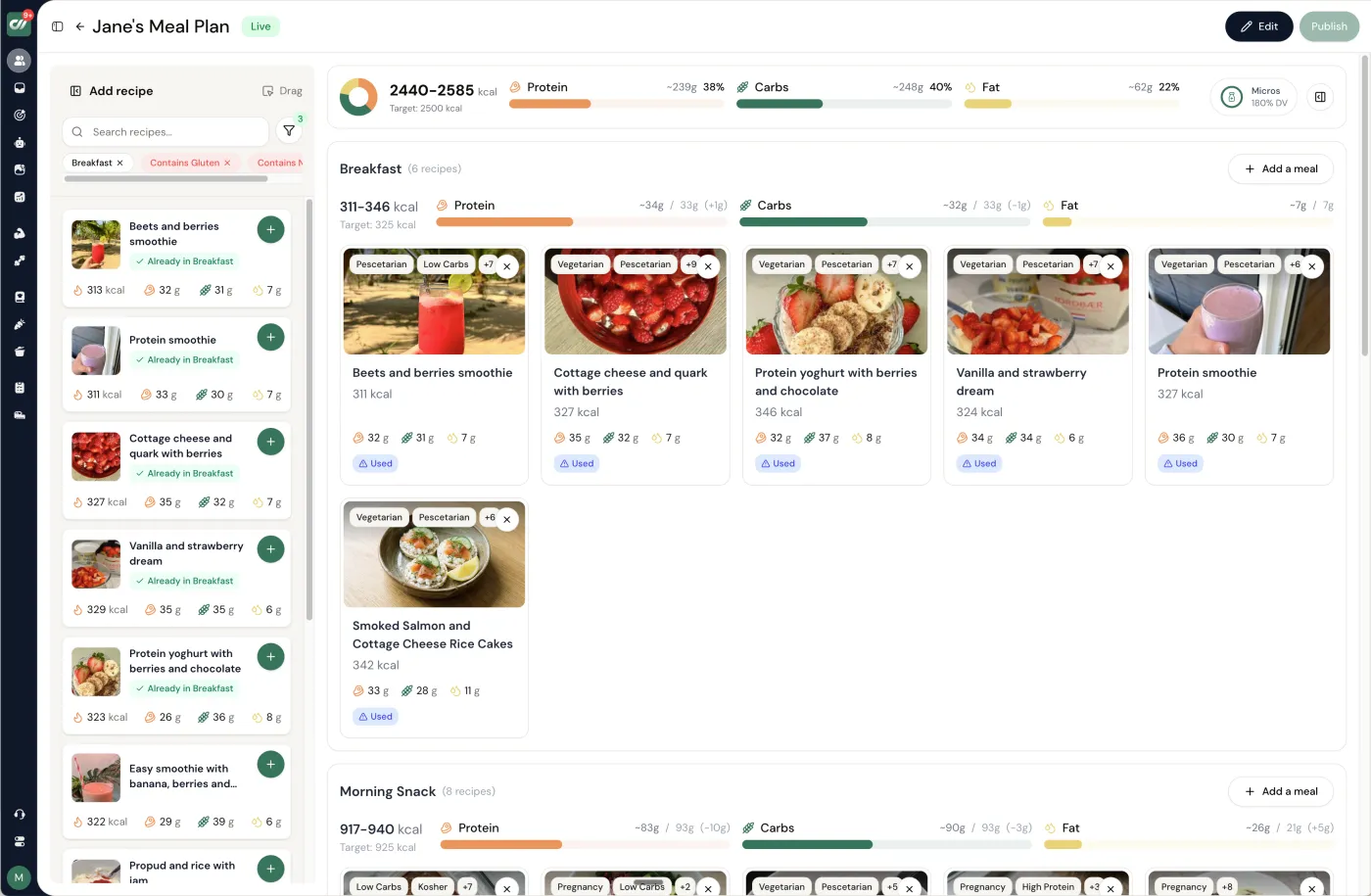
The same handover carries the real work. The staples you sketch on a list become a structured plan in the meal planner when a client is ready for one, with over 1,100 recipes and per-client macro targets, and the client logs food in their own app so the log comes back as something you can coach from. The list is the on-ramp; the platform holds the plan and the follow-through - which is the whole point of doing nutrition coaching online instead of over scattered messages. The coach dashboard is in English, and the client app is available in English, Danish, Norwegian, Swedish, Finnish and German. If you are deciding how closely to track, our guide to macro coaching compares the four tracking depths.
Vegetarian and vegan swaps for the protein section.
Only the protein section really changes for a vegetarian or vegan client - the produce, pantry and frozen sections mostly stand. A plant-based client can hit the same protein target, it just comes from more sources, so lean on legumes, soy foods and (for vegetarians) eggs and dairy. Keep an eye on fibre and variety as the sources shift. This is a factual food swap, not a clinical plan.
| Animal staple | Vegetarian swap | Vegan swap |
|---|---|---|
| Chicken breast | Eggs, Greek yogurt, halloumi | Tofu, tempeh, seitan |
| Beef or turkey mince | Meat-free mince, eggs | Lentils, black beans, soy mince |
| White fish or salmon | Eggs | Marinated tofu, chickpeas |
| Greek yogurt | Greek yogurt (no change) | Fortified soy yogurt (coconut yogurt is much lower in protein) |
| Milk | Milk (no change) | Fortified soy or pea milk |
| Whey protein | Whey protein (no change) | Pea or soy protein |
A vegetarian or vegan client can reach the same protein target from these sources; if a diet is driven by a diagnosed medical condition, that belongs with a registered dietitian rather than a swap table.
Frequently asked questions about grocery lists for clients.
Should coaches give clients a grocery list or a meal plan?
Both have a place, and the right call is about the client, not the tool. A grocery list suits clients who cook intuitively and stay adherent when they keep some autonomy - it sets the environment and lets them build the meals. A full meal plan suits clients who want exact structure and targets and feel lost without them. In practice many coaches start a client on the grocery list, because it is faster to hand over and easier to keep, then layer a structured plan on top once the basics are habitual. If you are moving from the list to a full plan, follow how to build a client meal plan and teach the client to track as you go.
How detailed should a client grocery list be?
Detailed enough to make the healthy choice the easy default, loose enough that the client still makes decisions. A one-page list of staples grouped by supermarket section beats a forty-item prescriptive shop the client resents by week two. Give categories and go-to staples rather than a fixed basket, and leave quantities either blank for the client to fill or something you set together on a call. The test is simple: could the client walk the shop with this and build meals without texting you? If yes, it is detailed enough. If it reads like a rulebook, trim it.
Can clients on a budget eat high-protein?
Yes, and often the cheapest foods carry the most protein per unit of money. Eggs, frozen chicken, canned fish such as tuna and mackerel, legumes like lentils, chickpeas and beans, own-brand Greek yogurt, cottage cheese and milk all hit protein hard for little cost. Dried beans and lentils are cheaper still than canned if the client will cook them. A tight budget changes which foods do the work, not whether the target is reachable - build the list from the budget column and, if you want a number to aim at, set it with a protein calculator rather than guessing.
Do I need to be a nutritionist to give a client a grocery list?
Sharing a general healthy-eating grocery list of everyday foods for a healthy adult is general guidance that sits inside most coaches' scope. What crosses the line is medical nutrition therapy - planning food to manage a diagnosed condition such as diabetes, kidney disease or an eating disorder - which is the work of a registered dietitian or doctor. The honest rule is to check your own local scope of practice, keep your lists to general healthy-eating for healthy adults, and refer out the moment a client's needs become clinical. A grocery list of normal foods is not a prescription, but the second it is written to treat an illness, it is.
The list is the easy start. When a client is ready for more, turn the staples into a structured week with how to build a client meal plan, keep the go-to snacks honest for eating out without derailing, and if you want the list drafted around one client, the nutrition-coach prompt library has a starting prompt.
Keep reading
all guidesJames Clear on Atomic Habits: The Four Laws of Behavior Change (Coach Breakdown)
James Clear's Atomic Habits framework, broken down for habit and wellness coaches: the Four Laws of Behavior Change, habit stacking, the two-minute rule and identity-based habits - and how to run them with clients.
Read the guideE3 Rehab on Lower Back Pain: What Coaches Can (and Cannot) Do (Coach Breakdown)
E3 Rehab's evidence-based lower back pain message, translated for coaches: reassure, keep loading, and - the hard line - screen and refer instead of diagnosing or treating. General coaching education, not medical advice.
Read the guideTom Merrick's Beginner Flexibility Routine, Broken Down for Coaches
Tom Merrick's no-equipment beginner flexibility follow-along, broken down for coaches: what the routine teaches, and how to turn stretching into a tracked, repeatable client habit inside your platform.
Read the guideFree tools for this: Coaching Business Health Check · Client Check-in Reader · Client Churn-Risk Reader
See what Coachway can do for your coaching business
Coachway was built on knowledge from working with 150 online coaches over 6+ years, who all hit the same wall - slow platforms, clunky workflows, wasted hours. Start your 14-day free trial and see what we fixed - the whole platform, no charge today, cancel anytime under Billing.


