


Nutrition coaching client progress assessment - read the signals, not just the scale.
A nutrition coaching client progress assessment is the moment you turn a week of raw data into a decision, and the coaches who get it wrong almost always read one number in isolation. The scale is the loudest signal and the least reliable on its own. This is a method for reading five signals together - weight trend, adherence, food-log quality, the felt state, and the objective non-scale measures - and letting the honest one decide whether you hold, adjust, or fix execution.
By Markus Evers · Updated August 2026
the short version
Assess by reading five signals side by side, not by reacting to the scale. The weight trend as a one to two week average, adherence as a percentage of days hit, food-log quality as complete-versus-thin, the felt state (energy, hunger, sleep, performance, mood), and the objective non-scale measures (waist, photos, strength). Gather them weekly, decide every two to three weeks. When two signals disagree, adherence and the felt state usually tell the truth before the scale does. Then the assessment forces exactly one move: hold the plan, adjust the target, close an adherence gap, or change the metric you are steering by.
What does a nutrition coaching client progress assessment actually measure?
Progress is not a number, it is a pattern, and the pattern only appears when you put several readings next to each other. A good assessment reads five signals every review. The mistake that wastes the most coaching hours is treating any one of them as a verdict, because each one lies in a predictable way: the scale lies through water and daily noise, adherence lies through optimism, the felt state lies through a single bad night, and measurements lie through inconsistent tape placement. Read together, their lies cancel and the truth shows.
1. Weight trend, as an average, never a single morning.
Bodyweight swings by one to two kilos day to day on water alone, so a single weigh-in carries almost no information. What you assess is the trend line: the seven-day average this week against last, ideally from four or more weigh-ins so one high morning cannot skew it. For most fat-loss clients a healthy trend is roughly 0.5 to 1 percent of bodyweight per week; slower is fine and often more sustainable, faster usually means muscle and water are leaving with the fat. You are reading direction and rate, not the number on any given day, and the number on any given day is exactly what an anxious client fixates on - so half the job is teaching them to read the average too.
2. Adherence, the percentage of days the plan was actually hit.
This is the most decisive signal in the whole assessment, because it separates a plan problem from an execution problem, and those two demand opposite responses. Estimate the share of days the client landed on or near their calorie and protein targets. A stall at 90 percent adherence is a real plateau that may justify adjusting the target; the identical stall at 55 percent adherence is not a plateau at all, it is a plan that was never run, and cutting calories under it just makes a hungry client hungrier. Always read adherence before you read the scale. If you skip this step you will keep tightening targets that were fine, and the client will keep failing a plan that was never the problem - the exact loop that ends in a burned-out, over-restricted client and a churned account.
3. Food-log quality, complete and honest versus tidy and thin.
A clean-looking log is not the same as an accurate one, and learning to read the log as evidence rather than a scoreboard is a distinct skill. Watch for the tells: weekends and evenings that vanish, a log that is suspiciously round and identical every day, oils and sauces and "a handful" that never appear, portions that are estimated where they most need weighing. A log that is complete but shows a genuine miss is far more useful than a perfect log that quietly omits the four beers and the restaurant meal, because you can only coach what you can see. When the log is thin, the fix is never a smaller target - it is a lighter, more honest tracking method the client will actually keep, matched to how much precision this particular person needs, which is the same tiering logic behind good macro coaching.
4. The felt state - energy, hunger, sleep, performance, mood.
These are the early-warning signals, and they often move before the scale does. A client who is dragging through workouts, ravenous by mid-afternoon, sleeping badly and short-tempered is telling you the diet is biting harder than the numbers suggest, whatever the trend line says. Collect them as quick weekly ratings so you can see the drift over time rather than relying on whether the client happened to mention it. A rising, well-fuelled, well-sleeping client on a slow loss is in a far stronger position than a faster loss bought with exhaustion, because the exhausted one abandons the plan long before they reach the goal. When the felt state craters, you do not wait two weeks to confirm it - a diet break or a small calorie bump is the assessment-driven move.
5. Objective non-scale measures - waist, photos, strength.
These are what save you when the scale goes quiet, and they are the ones a client most needs to see when the number stops moving. Waist and hip circumference taken the same way each time, monthly progress photos shot in the same light and pose, and strength holding or climbing on the bar all reveal body-composition change the scale is too blunt to register. A flat scale with a dropping waist and rising lifts is not a stall, it is recomposition, and calling it correctly is the difference between a client who trusts the process and one who quits a week before it visibly pays off. Steer newer and anxious clients toward these measures deliberately, because they carry the honest good news on the weeks the scale withholds it.
How do you read a client's weight trend without overreacting?
The whole skill is refusing to treat one weigh-in as a fact. Have the client weigh most mornings under the same conditions - after the toilet, before food and water, minimal clothing - and assess the seven-day average against the previous week's average. That single habit removes most of the noise that makes clients panic and coaches meddle. Water alone can add a kilo overnight from a salty dinner, a hard leg session, a poor night's sleep or the normal fluid shift across a menstrual cycle, and none of that is fat. Fat gain requires a real energy surplus, and an honest, adherent client did not eat one, so a scale that jumps on a good week is a water story almost every time.
Give the trend room to declare itself before you act. Two to three weeks of a rising average on high adherence, with no water explanation, is a genuine signal that the target is set too high for this client right now - that is when you adjust. One flat or bouncy week inside a longer downward trend is noise, and the correct assessment response to noise is to hold the plan and reassure the client, not to cut. The coaches who chase every wobble train their clients to fear the scale and end up over-restricting people who were progressing fine. If the trend has genuinely stalled on real adherence, the structured next step is a deliberate plateau protocol, changing one variable at a time rather than slashing calories in a panic.
How do you tell real adherence from a clean-looking food log?
Assess the log the way an auditor reads a set of books: not for whether the totals are pretty, but for whether they are complete. The most common miss in a nutrition assessment is accepting a tidy log at face value and concluding the plan has failed, when what has actually failed is the tracking. The gap between what a client logs and what they eat is where most stalled fat loss hides, and it is almost never deliberate deceit - it is optimistic estimating, the forgotten latte, the tasting spoon, the weekend that never made it into the app.
So before you change anything, decide which of two situations you are in, because they look identical on the scale and demand opposite moves:
High adherence, honest log, no result. Adjust the plan.
The client hit their targets on most days, the log is complete and detailed, and the trend still is not moving over two to three weeks. This is the one case where the plan itself is the problem, and a real adjustment - a modest calorie reduction or a step up in daily movement - is warranted. This is the client who has earned a change.
Low or thin adherence, gaps in the log, no result. Fix execution.
The targets were only hit on some days, or the log has holes, or portions were guessed where they mattered. The plan was never actually run, so cutting the target changes nothing except how hungry the client is. The assessment-driven move here is coaching, not maths: simplify the plan, tighten the logging on the foods that count, remove friction, and rebuild the habit before you ever touch a number.
Naming the situation out loud, to yourself and often to the client, is what keeps the assessment honest. It also protects the relationship: a client told "your plan needs a small tweak" hears something very different from a client told "let's close the gap between the plan and what actually happened last week", and only one of those conversations builds the trust that keeps them coaching with you.
What do energy, hunger and measurements tell you that the scale doesn't?
They tell you the cost and the quality of the progress, which the scale never shows. Two clients can lose the same weight in the same month; one is well-fed, sleeping, training hard and cheerful, the other is exhausted, ravenous and fraying. The scale rates them identically. Your assessment must not, because the second client is about to quit and the first is set to keep going for months. Weekly felt-state ratings turn that invisible difference into something you can see trending, so you catch the fray while it is still a small calorie bump rather than a blowout and a lost client.
The objective non-scale measures do the opposite job: they find progress the scale is hiding. Waist circumference is the most useful of them because it tracks visceral and abdominal fat closely and, taken the same way each week, moves even when the scale sulks. When you see a flat scale, a shrinking waist, sharper photos and heavier lifts all at once, the assessment writes itself - that is body recomposition, hold the plan, and show the client the measures that prove it. This is also where a client on a maintenance or muscle-gain phase gets read entirely differently: for them the scale holding steady while the tape and the photos improve is the whole goal, not a stall, which is the logic behind reverse dieting and phase work.
Turn the five signals into one decision.
An assessment that does not end in a decision is just data entry. Every review should resolve to exactly one of four moves, and the whole point of reading five signals is that they usually agree on which one. Run them in this order:
Hold the plan.
The trend is moving at a sensible rate, adherence is solid and the felt state is good. This is the most common correct answer and the hardest for anxious coaches to give, because it feels like doing nothing. It is not - holding a working plan and reassuring the client is an active decision, and the discipline to make it is what separates steady coaches from meddlers.
Adjust the target.
Two to three weeks of a genuine stall on high adherence, with the log complete and the felt state intact. Only now do you change the numbers - a modest calorie cut, more steps, or a small protein bump - because you have ruled out the cheaper explanations first. Change one variable, then reassess before you change another.
Fix execution, not the plan.
Adherence is low or the log is thin. The plan is fine and the target stays where it is; the work is coaching the habit - simpler logging, less friction, the foods that actually move the total. Cutting the target here would be solving the wrong problem and punishing the client for it.
Change the metric you are steering by.
The felt state is deteriorating, or the scale is flat while every other signal improves. Here you ease off or switch the metric entirely - a diet break when the client is fried, or steering by the waist and the lifts when the scale has stopped telling the truth. Managing which number the client watches is itself part of the assessment.
Reading five signals is fast when they live in one place.
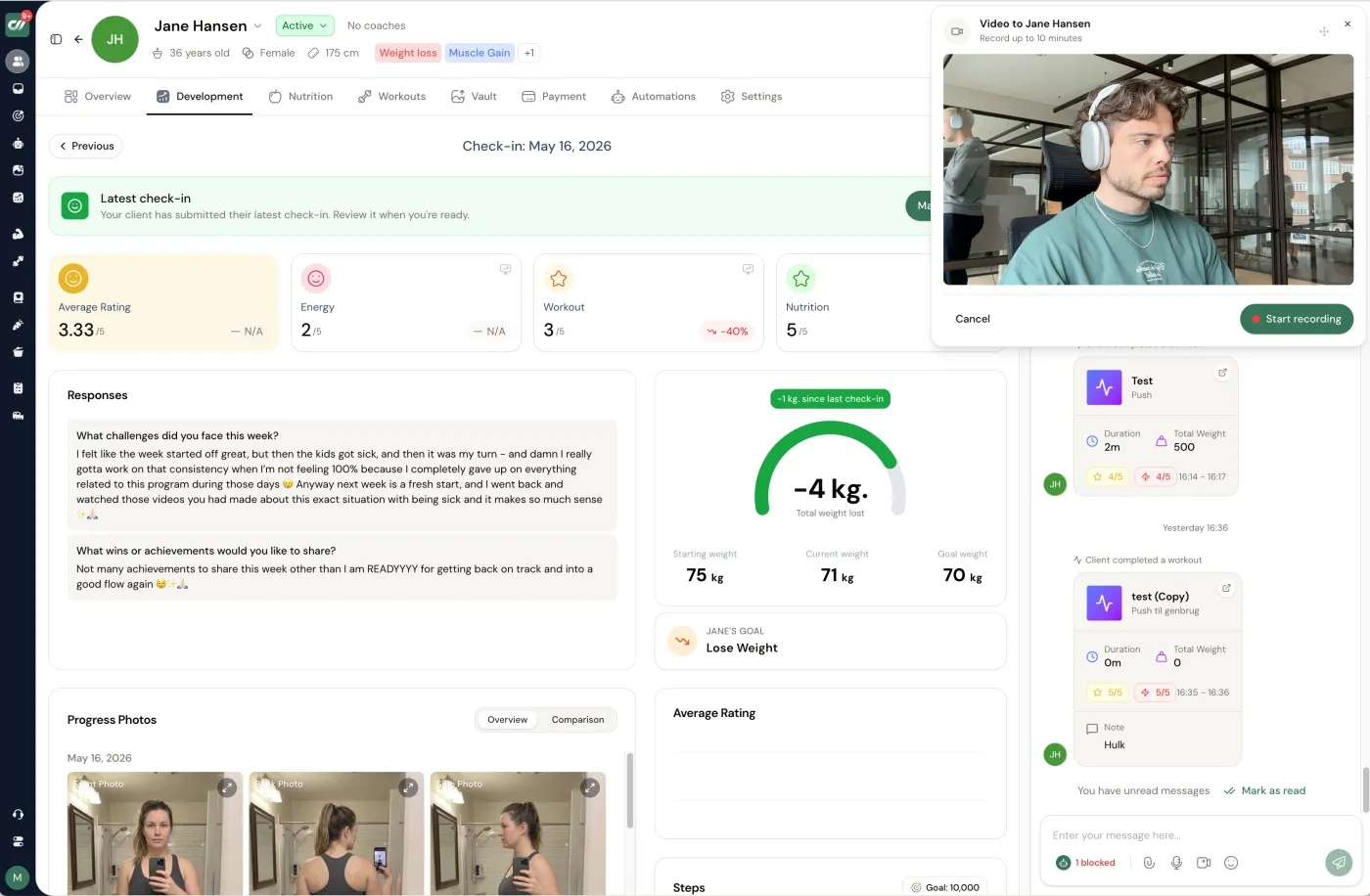
The method is only as good as how quickly you can run it, and when the signals are scattered across a weigh-in app, a spreadsheet, a photo thread and a separate food tracker, a two-minute assessment becomes a twenty-minute scavenger hunt you quietly start skipping. Coachway is built to put the five signals on one screen. The check-in tab shows this week's ratings, the client's answers, the weight trend and progress photos together, and the side-by-side review lines those responses up next to measurements, photos and the training log so recomposition is obvious rather than argued about. The food diary, logged against a database of 3.7 million foods with barcode scanning, is something you scroll and comment on directly, so food-log quality is a thing you can actually see. Four access levels - full, standard, photo-only and plan-only - let you match tracking depth to each client so the log stays honest instead of becoming a chore they abandon. It is built on knowledge from working with 150 online coaches over 6+ years, and it costs EUR 69 a month including your first 5 clients, then EUR 9 per additional client, every feature included. Book a demo to see the check-in view, or start the 14-day free trial - it begins with a card held securely by Stripe and cancels under Billing before it renews.
Frequently asked questions about assessing client nutrition progress.
How do you assess a nutrition coaching client's progress beyond the scale?
You read five signals together rather than reacting to any one of them: the weight trend (a rolling average over one to two weeks, not a single morning), adherence (how closely the client actually hit the plan), food-log quality (whether the log is complete and honest or tidy and thin), the felt signals (energy, hunger, sleep, training performance, mood), and the objective non-scale measures (waist and hip circumference, progress photos, strength on the bar). No single reading is a verdict. The scale can be flat for two weeks while the waist drops and lifts climb, which is progress the scale is simply too blunt to show. A nutrition coaching client progress assessment is the act of laying those five signals side by side, deciding which one is telling the truth this week, and letting that decide the next move - hold, adjust the target, fix adherence, or change the metric you are steering by. The coaches who overreact are almost always reading one number in isolation.
How often should you assess a client's nutrition progress?
Look every week, decide every two to three. A weekly check-in is the right cadence for gathering the signals - the weight average, the adherence note, the felt-state ratings, a measurement or a photo - because gathering often keeps the picture current and keeps the client accountable. But the decision to change a target should usually wait for two to three weeks of data, because bodyweight is noisy enough that one week of water, sodium, travel or a bad night's sleep can hide a real trend or invent a fake one. Reviewing weekly and adjusting fortnightly is the cadence most fat-loss coaching runs on: it is frequent enough to catch a genuine stall early and patient enough not to chase noise. The exception is a clear physiological signal - a client who is exhausted, ravenous and sleeping badly does not need three weeks of confirmation before you ease off.
What if the scale is up but the client is doing everything right?
Trust the process for a beat and interrogate the other signals before you touch the plan. A scale that rises while adherence is genuinely high is almost always water, not fat: more sodium or carbohydrate than usual, a hard training session that has the muscles holding fluid to repair, poor sleep, travel, or the normal hormonal water shift across a menstrual cycle. Fat gain needs a real surplus, and a client who logged honestly and hit their targets did not eat one. So the assessment move is not to cut calories - it is to widen the lens: check whether the seven-day average is actually up or just today's number, look at the waist measurement and the mirror, and ask about salt, sleep and training load. Nine times out of ten the weight settles within a week and the panic-cut you avoided would have made the client hungrier for no reason. The only case that changes the plan is a two to three week rising average with high adherence and no water explanation, which is a genuine miscalculated target, not a bad week.
How do you measure nutrition adherence, not just weight?
Adherence is the percentage of days the client hit the plan closely enough to count, and it is the single most useful number in a nutrition assessment because it tells you whether a flat result is a plan problem or an execution problem. You measure it from the food log and a short honest self-report, not from the scale: how many days this week landed on or near the calorie and protein target, whether the log looks complete or suspiciously light on weekends and evenings, and whether the client is estimating or actually weighing the foods that matter. A stall on 90 percent adherence and a stall on 55 percent adherence look identical on the scale and demand opposite responses - the first needs a real adjustment to the target, the second needs no target change at all, only support to close the gap between the plan and the plate. Judging adherence before you judge the plan is the discipline that stops coaches from cutting an already-tight target under a client who was simply not following it.
How does Coachway help assess client nutrition progress?
Coachway puts the five signals on one screen so the assessment is a two-minute read instead of a scavenger hunt across apps. The check-in tab shows this week's ratings, the client's answers, the weight trend and progress photos together; the side-by-side review lines up this week's responses next to measurements, photos and the training log; and the food diary, logged against a database of 3.7 million foods with barcode scanning, lets you scroll and comment on what the client actually ate. Four access levels - full, standard, photo-only and plan-only - let you match the tracking depth to each client so the log stays honest rather than a chore. Coachway is EUR 69 a month including your first 5 clients, then EUR 9 per additional client, every feature included, and it is built on knowledge from working with 150 online coaches over 6+ years. The 14-day free trial starts with a card held securely by Stripe and cancels under Billing before it renews.
The assessment sits inside a larger loop this method only points at: setting the targets you are now reading against in macro coaching, deriving them from each client's TDEE and macros, and gathering the signals through a fast weekly check-in workflow.
Keep reading
all guidesTranscribe Voice Notes for Client Check-Ins: A Coach Workflow (2026)
The four-step voice-note check-in workflow: transcribe on the device or in your own account (never by uploading audio to a chat assistant), summarise the anonymised transcript into five bullets, turn them into a 60-second four-part reply you record yourself, the privacy rules, the time sheet, and the four things that must never be a voice note.
Read the guideClaude Projects for Fitness Coaches: The 4-Project Setup (2026)
The four Claude Projects a coaching business needs (Content, Client comms, Programming assistant, Business numbers) with a rules-first instruction block for each, the upload and never-upload lists, a Claude vs ChatGPT vs Gemini table, why Claude ignores instructions and what helps, and a five-minute test per project.
Read the guidePrompt engineering for fitness coaches: the 6-part coach prompt
The six parts every coaching prompt needs as a fill-in template, three bad-versus-good pairs, the ten mistakes coaches make, the argue-back add-on, and the map of which prompt page to use for which job.
Read the guideFree tools for this: Macro Calculator by Body Type · Navy Body Fat Calculator · Calorie Deficit Calculator
Ready-made template: Meal Plan Template
See what Coachway can do for your coaching business
Coachway was built on knowledge from working with 150 online coaches over 6+ years, who all hit the same wall - slow platforms, clunky workflows, wasted hours. Start your 14-day free trial and see what we fixed - the whole platform, no charge today, cancel anytime under Billing.


