


How to coach older adults online - a niche worth doing well.
Coaching older adults online means running a fitness coaching business built around clients in their fifties, sixties, and beyond, focused on progressive strength, steady mobility, and everyday capability rather than the aggressive plans aimed at 25-year-olds. It is one of the clearer examples of a profitable coaching niche where a specialist beats a generalist, because the client wants a coach who plainly understands their stage of life. This guide is written for coaches: why demand for the 55-plus client is climbing, how to program and deliver online without ever stepping into medical territory, and how to package, price, and fill the offer.
By Markus Evers · Updated August 2026
the short version
To coach older adults online, build the base of a general fitness coach, then specialise. Program at the fitness level: progressive strength, balance and stability as trainable skills, joint-friendly progressions, and generous recovery spacing. Anything clinical stays with the client's own doctor. Adapt your delivery for the client, clear video demos, a simple legible screen, gentle tech onboarding, and a steady check-in rhythm. Then position the offer as a specialist, package it for patience, price the outcome, and fill your first spots with content and referrals.
Why the 55-plus niche is growing.
Most fitness content is still built for a 25-year-old with endless recovery. Meanwhile a large, motivated group of people in their fifties, sixties, and seventies keeps being handed the same plans and left to translate them alone. That gap is the whole opportunity. Three forces make coaching older adults one of the stronger specialist niches you can pick right now.
A large, durable demographic
The population moving through this stage of life is huge and growing, and more of them are online and comfortable there than ever before. That is a deep, lasting audience rather than a passing trend, which is exactly what you want under a coaching business.
Chronically under-served
These clients have usually tried generic programs and felt talked past by plans that assume a younger body and a younger schedule. A coach who speaks to their stage of life directly feels understood before the first call, and that is a real conversion advantage.
High intent to invest
Staying strong and independent is a priority many older clients take seriously and will invest in. High-intent clients who value being understood tend to support a specialist price and stay longer than bargain hunters chasing a quick transformation.
The practical takeaway: a narrow, honest positioning wins here. If you are still deciding whether to commit to this client or how to frame it, weigh it against the other options in the most profitable fitness niches and work through choosing a coaching niche first. New to terms like retention, LTV, or check-in? The coaching glossary explains them in plain language.
Programming principles for older clients.
The principles are the same ones behind any good program, applied with more patience and a sharper eye for the individual in front of you. You are coaching strength, movement, and consistency for a client who wants to feel capable in everyday life. You are not diagnosing, prescribing, or treating anything. Here is where the thinking goes.
Progressive strength work is the centrepiece. Most older clients want to keep lifting the shopping, the grandkids, and themselves out of a chair with ease, so a well-structured, gradually progressed resistance program usually does the heavy lifting of the offer. Start lighter than you think, add load slowly, and lean on the same fundamentals in progressive overload and programming principles for coaches. For a coach breakdown built specifically for this population, see our Will Harlow breakdown on a minimum-effective-dose strength routine for the over-50s.
Balance and stability as trainable skills. Single-leg work, controlled tempo, and simple stability drills give clients the steadiness they want in daily life. Treat these as skills you build over time, not as a fix for anything, and progress them the same way you progress strength.
Joint-friendly progressions. Meet the client where they are. Scale range of motion, pick variations that feel good, and swap movements when something is uncomfortable rather than pushing through. Building a plan around what a client can do well today, then widening it, is exactly the mindset in creating a client workout program.
Generous recovery spacing. Leave more room between hard sessions and schedule regular lighter weeks so training stays sustainable. Coach recovery as a lifestyle habit, sleep and daily walking included, using sleep and recovery for training and deload weeks as your reference points, never as treatment for a condition.
Consistency over intensity. A lot of the value is helping a client keep showing up at a pace they can hold for years. That is coaching, not willpower, and a structured approach helps. Our primer on behaviour-change frameworks is a good foundation.
The line that keeps you credible: you coach training, movement, and habits. Anything medical, a diagnosis, a symptom, medication, a recent surgery or cardiac event, belongs with the client's own doctor. Ask every older client to clear exercise with their healthcare professional before starting, adjust the plan around what they can comfortably do, and refer out the moment a question turns clinical.
- the scope-of-practice line every specialist should hold
Adapting your online delivery.
The programming can be excellent and still fall flat if the client cannot follow it on a small screen. Online training for older clients lives or dies on how effortless you make the experience. Four adjustments carry most of the weight, and the general playbook in how to do online personal training still applies underneath.
Video demos that are actually clear
Film full reps at a calm pace, from one steady angle, with plain cues and captions on screen. Skip the jargon and the fast cuts. A demo a client can copy on the first watch is worth more than a slick one they have to replay five times.
A simple, legible screen
Keep the client's day-to-day view uncluttered, with readable text and few taps to the next session. The less a client has to hunt for the workout, the more consistently they open the app, which is the whole game.
Gentle tech onboarding
Do not assume app fluency. Run a short guided setup, a quick walkthrough call or a step-by-step message, so the first login is a win rather than a wall. Once the setup is done, most older clients are just as engaged as anyone else.
A steady check-in cadence
A reliable weekly rhythm and a little extra reassurance keep momentum going and let you catch a dip in energy or adherence early. Steadier beats fancier here, and it is the same rhythm behind good retention on any client list.
None of this is extra work once it is set up as your default. Build the demos once, keep the screen tidy for everyone, and standardise the onboarding, and the whole niche becomes easier to run at a calm, professional standard.
Packaging and pricing your offer.
The specialist positioning is the point. "Online fitness coach" competes with everyone; "strength coaching for adults over 55 who want to stay capable and independent" competes with almost no one and speaks straight to the person reading it. Say who you help, what changes for them, and why your approach suits their life. Then package it for patience and price it like a specialist offer, not a commodity.
Package for patience
This work rewards a slow, steady build, so a three or six-month package fits the results better than a four-week block. Longer commitments give clients the runway to actually feel stronger and raise lifetime value at the same time.
Price the outcome, not the hour
Clients are buying strength, confidence, and independence again, not a number of sessions. A clear specialist offer usually supports a healthier price than generic coaching, but earn it with proof before you raise it.
For the mechanics of setting a number you can defend, work through setting your pricing, and if you want a sense of the ceiling, how much online fitness coaches make gives realistic ranges. The specialist angle mostly helps you charge nearer the top of whatever range fits your market.
Getting clients in this niche.
The good news about a sharp niche is that you do not need a huge audience to start, you need the right handful of people to feel seen. Your early job is proof, not scale, and the general fundamentals in getting personal training clients apply with a specialist twist.
Speak to the exact client, and to who refers them
Post about staying strong, steady, and independent in plain language, in the words this client actually uses. Remember that adult children often go looking for a coach for a parent, so your content should feel reassuring to both. The mechanics of that are in getting online coaching clients.
Build a simple referral network
A specialist positioning makes introductions easy, because people know exactly who to send your way. Warm referrals, local community groups, and relationships with nearby professionals who see this audience all tend to send the right person to a coach who clearly serves them.
Turn one result into the next three
One client who gets visibly stronger and moves through their day with more ease, shown honestly and with permission, is your best marketing. Delivery is what makes that happen, and it is the same engine behind retention and referrals.
From there, the growth playbook is the same as any coaching business: build a relevant audience, convert it, and keep clients long enough that referrals start doing the work. If you want the full picture, how to grow an online coaching business is the map.
The specialist promise lives or dies on delivery.
An older client is buying a coach who pays attention over months, adjusts the program to how they actually feel, and keeps the whole experience simple to use. That is a delivery job, and it is exactly where good software carries the weight so you can keep your time on coaching and content.
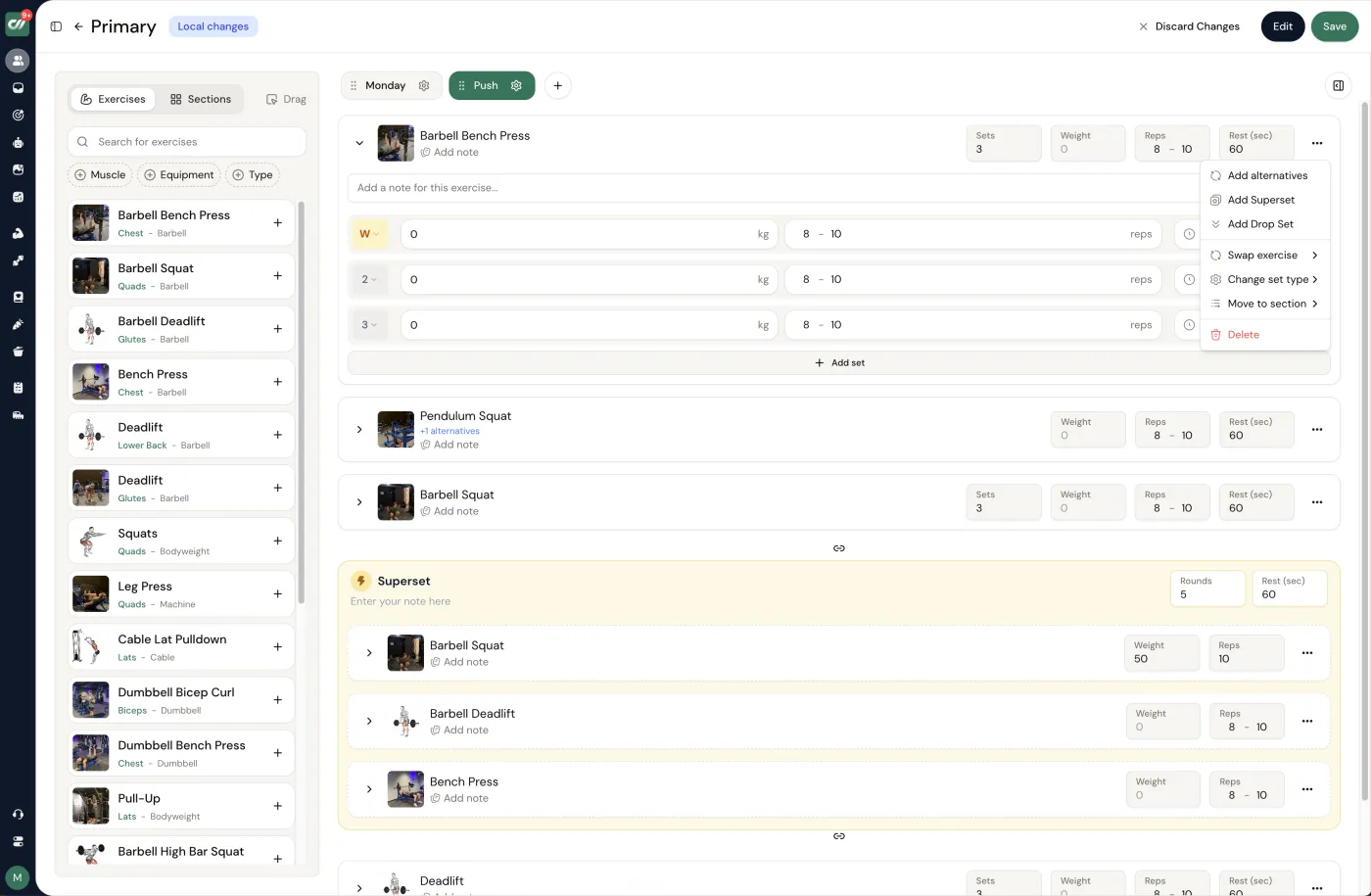
Programs that progress properly
Build and adjust strength programs with attached demos in the workout builder, so a gradual, joint-friendly plan is simple to run and easy for the client to follow week to week.
Check-ins that catch the drift
Regular check-in forms plus gentle automated reminders keep the weekly rhythm going, so you notice a dip in energy or adherence early and adjust before a client drifts.
A simple home for the work
The plan, messages, and progress live in one uncluttered client app under your name, which keeps the experience legible for a client who values things being clear.
Pricing that fits a small, careful client list
Coachway is EUR 69 a month for up to 5 clients, then EUR 9 per additional active client, with every feature included and a 14-day trial that asks for a card. See the full pricing.
No tool wins you the niche, that is your positioning and your content. But once a client says yes, the difference between a five-month client and a loyal, referring one is delivery, and that is the part Coachway is built to carry. See how other coaches run their delivery in the case studies.
Frequently asked questions about coaching older adults online.
Do I need a special qualification to coach older adults online?
There is no single licence required, but you should hold a recognised foundational personal-training or coaching certification, and many coaches add a senior or active-aging fitness specialisation on top. Just as important is your scope. You coach training, movement, and habits. Anything clinical, a diagnosis, a symptom, medication, or a recent medical event, belongs with the client's own doctor. Ask older clients to clear exercise with their healthcare professional before starting, and refer out the moment a question turns medical. The foundational base is covered in how to become a fitness coach.
Is coaching older adults online actually a good niche?
It is a large and growing audience that most generic coaching ignores. People in their fifties, sixties, and beyond are increasingly comfortable online, motivated to stay strong and independent, and often able to invest in coaching that respects their stage of life. Because so few coaches position for them clearly, a specialist tends to convert better and compete against far fewer people than a general online coach. See where it sits among the most profitable fitness niches.
How is programming for older clients different?
The principles are the same as any good coaching, applied with more patience. Progressive strength work is usually the centrepiece, because most clients want to feel capable in everyday life. You train balance and stability as skills, choose joint-friendly progressions that meet the client where they are, and leave more room between hard sessions for recovery. None of this treats a condition. Clients with health conditions should clear exercise with their own healthcare professional first, and you adjust the plan around what they can comfortably do. The core ideas are in programming principles for coaches.
How do I make online delivery work for less tech-comfortable clients?
Lower the friction everywhere. Record slower, clearer video demos with plain cues and captions, keep the client's screen simple and legible, and run a short guided setup rather than assuming app fluency. A steadier check-in cadence and a little more reassurance go a long way. When the tech feels effortless, older clients stay engaged just as well as anyone else. The wider approach is in how to do online personal training.
What should I charge to coach older adults online?
Price the outcome, not the hour, and sell longer commitments rather than short blocks. A clear specialist offer usually supports a healthier price than generic coaching, but earn it with proof first. Longer packages, such as three or six months, suit the patient pace this work needs, raise lifetime value, and give clients enough runway to feel genuinely stronger, which is what earns referrals. Walk through the mechanics in setting your pricing.
Where do I find older adult coaching clients?
Start narrow and let the niche do the work. Post content that names the exact person you help and speaks to feeling strong and independent, not generic fat loss. Many introductions come from your existing network, from adult children looking for a coach for a parent, and from warm referrals. One client who gets visibly stronger, shown honestly and with permission, becomes the proof that fills the next few spots. The full playbook is in getting personal training clients.
Keep reading
all guidesEmail Nurture Sequence for Fitness Coaches (10 Emails, 2026)
A complete 10-email nurture sequence for fitness coaches, written as copy-paste templates - each with two subject line options, a send day, and the job it does, from the opt-in that delivers the lead magnet to the release email that leaves the door open.
Read the guideAI Sales Assistant for Online Coaches: An Honest 2026 Guide
An honest look at AI sales assistants for online coaches: what they actually do, the real trade-offs, and the line where a human has to take over to close. Coachway does not sell one; here is the truthful role it plays instead.
Read the guide10 Fitness YouTube Channels Coaches Should Study in 2026
Ten verified fitness YouTube channels worth studying as craft: what each does exceptionally, the one lesson a coach can steal, and the honest caveat that what works at five million subscribers does not transfer 1:1.
Read the guideFree tools for this: Coaching Business Health Check · Client Check-in Reader · Client Churn-Risk Reader
See what Coachway can do for your coaching business
Coachway was built on knowledge from working with 150 online coaches over 6+ years, who all hit the same wall - slow platforms, clunky workflows, wasted hours. Start your 14-day free trial and see what we fixed - the whole platform, no charge today, cancel anytime under Billing.


