How to get personal training clients - the complete system, not a list of tactics.
Getting personal training clients is not a single channel you switch on - it is a system of five parts that feed each other: a referral engine, reach (local, online, or both), a content-to-client path, the discovery call that turns interest into a decision, and retention that quietly refills the top of the funnel. Chase them one at a time and you stay stuck near ten clients. Run them together and each new client makes the next one easier to sign. This page is the map. Each section gives you the core method and routes you to the deeper guide.
By Markus Evers · Updated September 2026
the short version
You get personal training clients by working a system, not chasing a tactic. Start where trust already exists - your warm network and past clients - to sign the first few. Turn those into referrals and testimonials. Add reach through content, local presence, or both, so strangers can find you. Put a short application in front of every discovery call so each conversation is with a serious person. Then deliver so well that clients stay longer and send you their friends, which refills the pipeline for free. Below 15 clients, reach and referrals are the job; after that, retention quietly becomes the biggest lever.
The five parts of a client-getting system.
Every piece of "how to get clients" advice you have ever read maps to one of these five parts. The trainers who stall usually run one part well and ignore the rest - great content and no referral ask, or a full calendar of calls and no follow-up. Find the part that is your bottleneck, then open the door to its deeper guide.
| The part | What it does for client flow | Go deeper |
|---|---|---|
| 1. The referral engine | The lowest-cost, highest-trust clients you will ever sign. A structured ask turns one happy client into two, then four. | referral program |
| 2. Reach - local or online | How strangers find you. In a gym it is the floor and local partnerships; online it is content and DMs. Most trainers run both. | lead generation |
| 3. Content to client | The path from a scroll to a saved DM to a booked call. Content is only reach until it points at a next step. | content ideas |
| 4. The discovery call | Where interest becomes a decision. An application before the call means you only ever talk to qualified people. | discovery calls |
| 5. Retention as acquisition | The quietest lever. Clients who stay longer are worth more and refer more, so keeping clients is a way of getting them. | retaining clients |
Here is the part most trainers miss: these parts compound. A trainer who signs a couple of clients a month, loses them after a few months, and never asks for referrals tends to stall - every new client just backfills one walking out the back door. Keep clients longer and earn referrals, and you grow on the same reach effort, because the pipeline refills itself. New to the vocabulary? The coaching glossary explains retention, LTV and discovery calls in plain language.
Build the referral engine first.
Referrals are the highest-trust, lowest-cost clients in the system, yet most trainers treat them as luck. They are not - they are a habit you install. The core method is small and specific: ask every happy client for exactly one introduction, at the right moment, right after a milestone or a strong check-in when the result is fresh. A vague "send people my way" gets acted on by almost nobody; a concrete "do you know one person who wants this?" gets a name.
Make the referral effortless on the other end. Give the client something forwardable - a short note they can paste, a clear next step for the friend - so referring costs them ten seconds, not a favour. Then reward it in a way that does not feel salesy. The full mechanics, when to ask, what to offer, and how to track it without it feeling transactional live in the client referral program guide, and if you want the exact wording, there are copy-and-paste lines in the referral request message templates.
One honest caveat: referrals only exist if your delivery earns them, which is why part five feeds back into part one. A trainer with a real system for word of mouth can turn a meaningful slice of new clients into introductions - see how to make it repeatable in how to get referrals as a coach.
Reach: local, online, or both.
Reach is how strangers find you, and it is the one part of the system where local and online trainers genuinely diverge. Everything else - referrals, the call, retention - stays the same. Pick the road that matches where you actually are, then borrow from the other as you grow.
The local road
If you train in a gym or a defined area, your reach is geography. Work the floor, run bring-a-friend sessions and short challenges, make a front-desk referral ask part of your week, complete your Google Business Profile so you show up when someone nearby searches, and partner with physios and local businesses who see your ideal client first.
The channel-by-channel playbook, plus how to capture every lead so none leak, is in lead generation for personal trainers.
The online road
Online, content replaces geography, so a stranger three towns over can find you. Online delivery also lets one trainer hold more clients than in-person hours allow, which is why so many trainers move here. The sequencing of channels for the online model is its own guide. If you would rather buy reach than wait for it to build, our guide to Facebook ads for personal trainers covers the honest budget floor and setup before you spend a euro.
Start with how to get online coaching clients, and if you are moving off the gym floor entirely, how to do online personal training covers the delivery shift.
Whichever road you take, the first clients rarely come from either channel cold - they come from your warm network. Before you spend a cent, message the people who already know you can coach, plus any past or paused clients, with a specific offer rather than a broadcast post. If you have no clients yet at all, the step-by-step is in getting your first client, and for going solo without a gym feeding you walk-ins, getting freelance personal training clients maps the full build.
The content-to-client path.
Content only becomes clients when it points at a next step. Reach without a path is just a follower count; the path turns a scroll into a saved DM into a booked call. The core method: post for one exact person, not a crowd. Speak to their real problem, show your method with proof - a client voice note, a weight curve, an honest before-and-after you have permission to share - and make the next step obvious in your bio and captions, so interest has somewhere to go.
Your profile is doing quiet conversion work the whole time, so treat your bio as a headline that names exactly who you help in three seconds - there are worked examples in personal trainer bio examples. For what to actually post week to week, Instagram content ideas for fitness coaches is the running list, and the mechanics of turning that content into signed clients sit in getting coaching clients on Instagram.
Not every trainer wants to live on the feed, and you do not have to - trainers filled their books for decades before it existed. If content is not your road, getting clients without social media covers the durable channels, and the wider channel map lives in fitness marketing for online coaches. A short, time-boxed fitness challenge is one of the fastest ways to convert an audience you already have.
The discovery call turns interest into a decision.
Reach and content fill the top of the funnel; the discovery call is where a warm lead becomes a paying client. The single move that lifts close rates most is putting a short application before the call. The form filters out people who are not serious and hands you their goal, timeline and budget before you ever speak, so every call is with someone qualified and motivated. Trainers who add that step close a far higher share, because they stop spending calls on tyre-kickers.
The call itself is a fit conversation, not a hard pitch. Help the person articulate their own reasons for change, confirm the goal, show plainly how your coaching reaches it, then ask for the decision. The full structure, question by question, is in how to run a discovery call.
Price will come up, and how you handle it decides more sales than the number itself. The honest way to answer "it is too expensive" without discounting or getting defensive is in handling price objections - most objections are really uncertainty about the result, not the cost.
Retention is a way of getting clients.
This is the part most trainers skip, and the reason so many stay stuck. When clients leave after a few months, every new sign-up just backfills a departure and the business runs on a treadmill. Keep clients longer and two things happen at once: each is worth more over their lifetime, and satisfied long-term clients are the ones who actually refer. Retention is not separate from acquisition - it is the engine that refills part one.
The core method is unglamorous and works. The first week matters most, so make onboarding land: a real plan and an early win in the first hours, not days of silence after the person finally said yes. Then hold a consistent weekly check-in rhythm so clients feel coached rather than managed, and watch the honest churn signals - missed check-ins, going quiet, slowing logins - so you can re-engage before someone drifts out. The full playbook is in retaining online coaching clients.
Zoom out and this hub sits inside a bigger picture: more clients, higher price per client, and longer retention are the three levers of the whole business. If you want that wider view, how to grow an online coaching business is the sibling map.
What to do this week if the calendar is empty.
The system takes months to compound, but the first client can come this week. Do the warm, slightly uncomfortable things first, in this order.
Message your warm network. Everyone who knows you can coach, plus past and paused clients. Reconnect and remind them what you do now, do not pitch. This one step fills more first spots than any ad.
Open a few founding-client spots. A small number at a clear, fair price in exchange for a testimonial and a case study - the proof that powers your content and calls later.
Set up capture and follow-up first. Decide where every lead lands and how fast you reply. A lead with no follow-up converts close to zero, so this unglamorous admin is what turns interest into paying clients.
No tool gets you clients. The right one keeps them.
Reach and referrals are your job - no software makes your content land or your warm messages braver. But the moment a lead says yes, the system's inner parts, the discovery follow-up, the first week, and the weekly check-in, decide whether you compound or run on a treadmill. That is the part Coachway is built to carry.
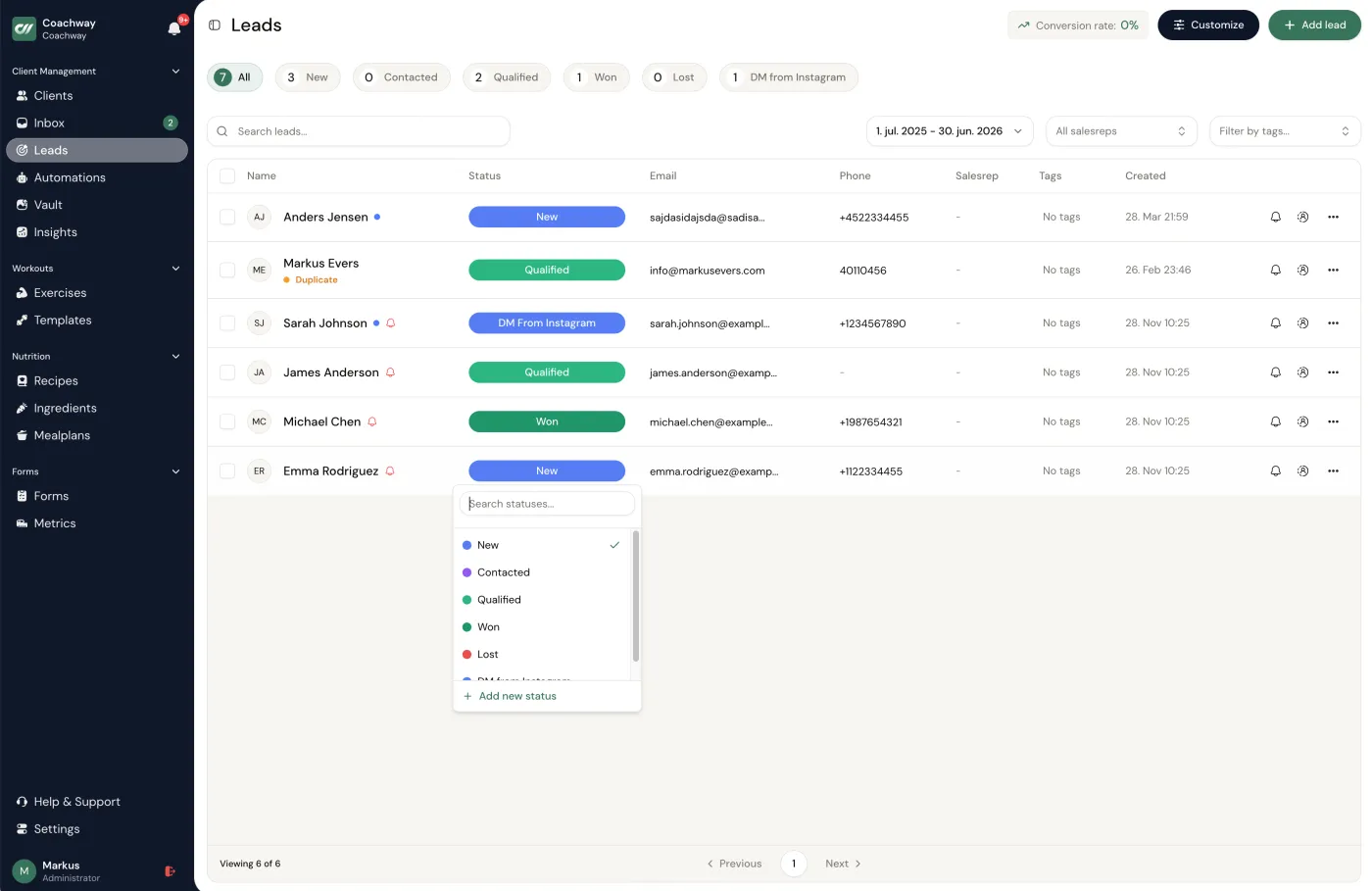
Every lead in one pipeline
The lead pipeline and the Power Panel keep enquiries, DMs and applications in one view, so the fast, personal follow-up that actually converts warm leads never slips through the cracks.
A first week that lands
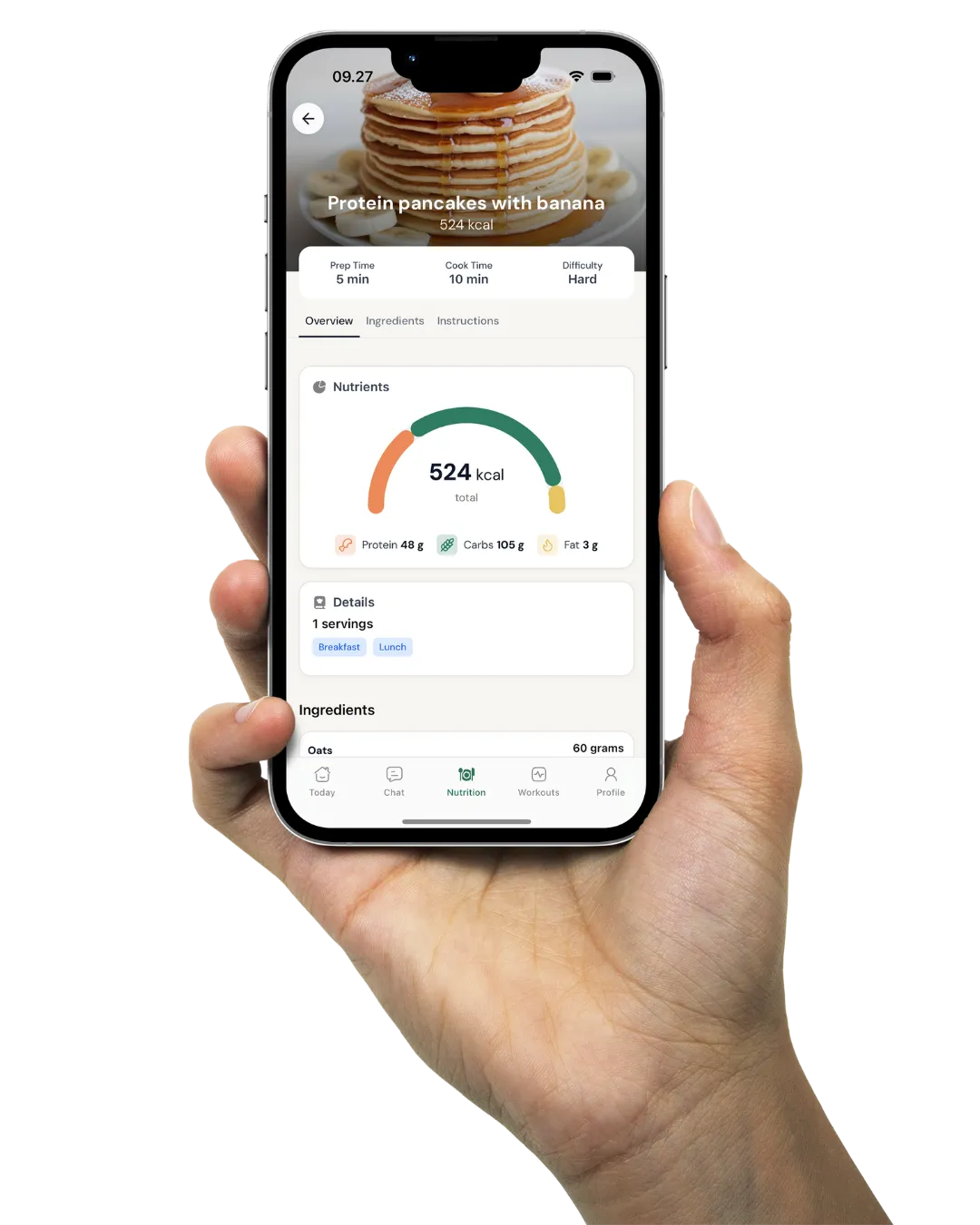
The client app with a real workout builder and meal planner means a new client gets a plan and an early win in the first hours - the single highest-leverage move for retention and referrals.
Check-ins that actually happen
Check-in forms and simple automated reminders hold the weekly rhythm without you tracking every client by hand, so coaching stays the focus and clients stay longer.
Pricing that does not punish growth
EUR 69 a month up to 5 clients, then EUR 9 per additional active client, every feature included, with a 14-day trial (card required). Predictable per-client pricing, and you keep your own Stripe. See the full pricing.
Coaches like Sandra Rosenkrantz and Rene Macapili built their own client-getting engines, then leaned on a tight delivery workflow to stay sharp as the client count climbed. That is the right order: reach makes the business, delivery keeps it, and the two together are what let the pipeline refill itself.
Frequently asked questions about getting personal training clients.
How do personal trainers get their first clients?
Almost always through people who already trust them, not paid ads. Make a list of everyone who knows you can coach - gym contacts, past clients, friends who train, anyone who has ever asked you for advice - and reach out one to one with a specific offer. Open a small number of founding-client spots at a clear price in exchange for a testimonial and a case study. Those first few clients then refer the next handful, which is why the warm network is the fastest, warmest door in. The step-by-step is in getting your first client.
How long does it take to get personal training clients?
Your first paying client can land in days if you work your warm network and past clients directly, because the trust already exists. Building a steady, predictable flow from organic content usually takes 3 to 6 months of consistent posting before it compounds. Paid ads can shorten the content route but only pay off once your offer and your discovery call already convert warm leads, so the sequence is prove it warm first, then scale the channel that fits your time.
How do you get personal training clients online versus in a gym?
The system is the same - referrals, reach, a real conversation, retention - only the reach layer changes. In a gym or local area you lean on the floor, walk-ins, front-desk referral asks, local partnerships and a complete Google Business Profile. Online you replace that geography with content and DMs so a stranger three towns over can find you. Most trainers end up running both, because online delivery lets one trainer hold more clients than in-person hours ever allow. Compare the two roads in local lead generation and getting online clients.
How do you get more personal training clients without paid ads?
Most trainers reach 20 to 30 clients with no ad spend at all, through three warm channels run in order: ask every happy client for one specific introduction, post helpful content for one exact person, and reactivate past and paused clients who already know your work. Ads are an accelerator you add on top of a system that already converts, never the starting point - paying to fill a funnel that does not convert warm leads just loses money faster. The no-feed route is in getting clients without social media.
How many discovery calls does it take to sign a personal training client?
Fewer than most trainers expect, once a short application sits in front of the call. The application filters out people who are not serious and hands you their goal, budget and timeline before you ever talk, so every call is with a qualified, motivated person. Trainers who add that step close a far higher share, because a discovery call is a fit conversation and a coaching moment, not a hard pitch - you confirm the goal, show how your coaching reaches it, and ask for the decision. The full structure is in how to run a discovery call.
Keep reading
all guidesHow to make a full-time living as an online fitness coach
The honest math behind replacing your salary online: clients x price x retention, the first-10 and first-30 milestones, the model choices, and the time-vs-money trap nobody warns you about.
Read the guideHow to coach clients on GLP-1 medications (Ozempic, Wegovy, Mounjaro)
An evidence-informed guide for online coaches: your real role, preserving muscle, protein, side effects, expectations, and where the medical line is.
Read the guideHow to run a coaching discovery call (without being salesy)
The help-first discovery call: diagnose before you prescribe, run a simple rapport-to-fit structure, and handle "I need to think about it" without pressure.
Read the guideFree tools for this: Client Onboarding Builder · Coaching Business Health Check · Client Check-in Reader
See what Coachway can do for your coaching business
Coachway was built on knowledge from working with 150 online coaches over 6+ years, who all hit the same wall - slow platforms, clunky workflows, wasted hours. Start your 14-day free trial and see what we fixed - the whole platform, no charge today, cancel anytime under Billing.