How to do online nutrition coaching as a fitness coach.
Most fitness coaches already give nutrition advice. Few do it with a system. This guide covers the part that keeps you safe (scope of practice), the part that drives results (the right approach for each client), and the part that keeps clients on track when you cannot see them eat (plans, tracking, and check-ins).
By Markus Evers · Updated June 2026
the short version
Online nutrition coaching means guiding clients' eating remotely in four steps: stay within scope (general guidance for healthy adults, refer clinical cases to a dietitian), pick habits, macros or meal plans to match each client, build the plan around their real life, and track adherence with weekly check-ins covering weight trends, photos and self-rated feedback.
What is online nutrition coaching?
Online nutrition coaching is an individualized service where a coach builds each client's food approach around their own goals, body, preferences, schedule, and lifestyle instead of handing out one generic diet. It usually combines a tailored plan (habits, macro ranges, or a meal plan), regular check-ins, and ongoing adjustments based on the client's real progress and feedback over time. If you are weighing up the role itself, our overview of what an online nutrition coach actually does covers the scope, the skills, and how the service is usually priced.
Stay in your lane: scope of practice first.
As a fitness coach you can give general, non-clinical nutrition guidance to healthy adults; you cannot prescribe diets to treat a disease. The general lane still matters: the World Health Organization states that "Healthy diets help to protect against malnutrition in all its forms, as well as noncommunicable diseases (NCDs), including diabetes, heart disease, stroke and cancer." That line is where most of the legal and ethical risk lives, so settle it before you build a single plan. Being able to explain why an evidence-based diet pattern lowers visceral fat keeps you firmly in the general-education lane while still giving clients the health context they ask about.
Inside your lane
- Portion sizes, food quality, and meal composition for healthy adults
- Protein, carbohydrate, and fat targets for performance and body composition
- Habit coaching: hydration, vegetable intake, meal timing, sleep and food
- General education that corrects common misinformation
- Sample meal plans and macro ranges for active, non-clinical clients
Refer it out
- Anything described as treating diabetes, heart disease, or high cholesterol
- Gastrointestinal conditions, allergies, or intolerances needing diagnosis
- Any sign of disordered eating, to a registered dietitian or clinician
- Pregnancy, post-surgery, or medicated clients where diet interacts with care
- Anything beyond your competence, even if it is technically legal
Rules vary by country and by US state, so check your local dietetic licensing board before you formally assess a client's diet. The practical move: build a short referral list of dietitians you trust, and treat "you need someone more qualified than me for this" as a sign of a good coach, not a weak one. It protects the client, and it protects you.
Pick the right approach for the client in front of you.
There is no single best method. Habits, macros, and meal plans each fit a different client. Match the method to the person, not to your own preference, because the plan a client will actually follow beats the perfect plan they abandon in three days.
Habit coaching.
Best for beginners, busy clients, and anyone who would never weigh their food. You change one or two behaviours at a time: a protein source at every meal, a daily step target, water before coffee, a vegetable on every plate, or a meal-timing window like intermittent fasting if it suits their schedule. Slow on paper, but the highest long-term adherence because it fits into a real life instead of fighting it. Concrete targets make those behaviours measurable: the World Health Organization recommends at least 400 grams of fruit and vegetables a day.
Use it as the default foundation for most clients. Two habits carry most of the load for hunger, protein and fibre at every meal, and the mechanics of protein and fibre for satiety explain why they beat willpower. You can always layer numbers on top later if progress stalls despite good behaviours.
Macro targets.
Best for motivated clients chasing a specific body-composition goal who are willing to track. You set protein, carbohydrate, and fat ranges and let the client build meals to hit them. More flexible than a fixed meal plan and more precise than habits, which is why it suits physique and performance clients.
The trade-off is friction: tracking is a skill, and not everyone wants it. Set it as a range, not a rigid number, and watch for the client who is "hitting macros" but stalling, which usually means the tracking is off, not the targets. That range-first thinking is the heart of Mike Matthews on flexible dieting, where our breakdown shows how wide the range can go before adherence slips. When a client's whole goal is fat loss, a systematic fat-loss framework keeps those macro adjustments in a logical order instead of guesswork.
Structured meal plans.
Best for clients who want to be told exactly what to eat and feel safest with a clear list. A done-for-you plan removes decision fatigue and gets fast early adherence. The risk is rigidity: a plan a client hates gets abandoned, so it has to be built around their real tastes, schedule, and budget.
The strongest version is a hybrid: a sample meal plan as a worked example of how to hit a macro range, with swaps built in, so the client learns the structure instead of depending on the exact menu forever. If clients want to cook ahead, a few meal-prep templates turn the plan into something they can batch on a Sunday.
Build a plan the client will actually follow.
A good plan starts from the client's intake and tastes, not from a calculator. Set a calorie and protein target, then shape the food around the life they already live: their schedule, their budget, their allergies, and the meals they will not give up. Those targets rest on energy balance, the one principle every fat-loss plan comes back to.
01
Start from intake.
Weight, activity, goal, food preferences, allergies, schedule, and the foods they refuse to drop. The plan is built around the answers, not a template.
02
Set the anchors.
A calorie target and a protein floor first; carbs and fats fill the rest. Get the two anchors right and the details have room to flex.
03
Build with real food.
Real recipes and ingredients with accurate macros and micros, swaps for the meals they dislike, and a clean export they can keep on their phone.
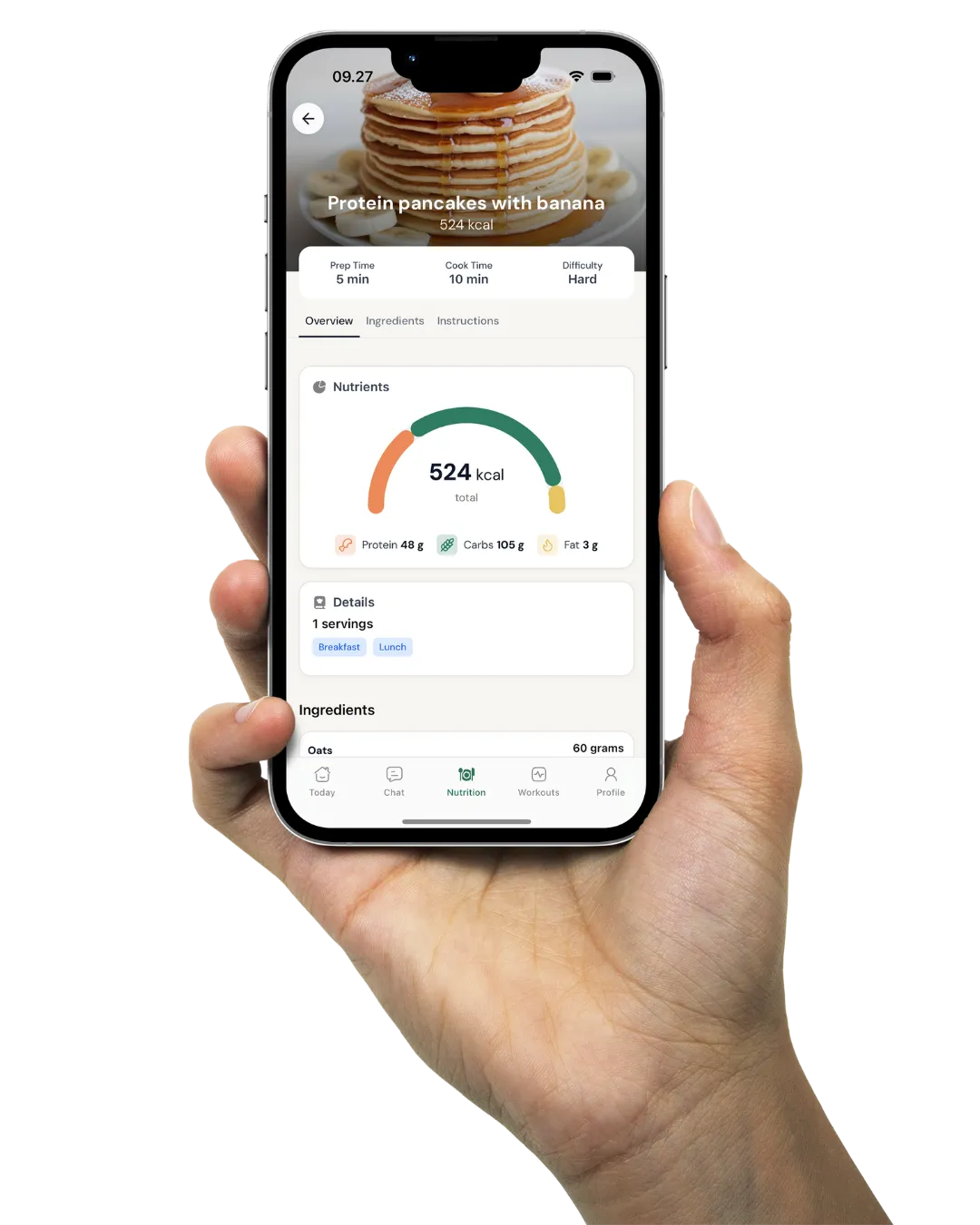
This is where doing it by hand falls apart. Looking up macros for every ingredient, scaling portions, and rebuilding plans when a client hates a meal eats hours you do not have. This is the job software is built for, and our roundup of nutrition coaching software compares the main options on database depth, scaling, and export. The Coachway meal planner carries the database for you: 3,900+ ingredients and 1,100+ recipes with full macros and over 30 micronutrients shown as a percentage of daily value, allergen and dietary filters, smart calorie scaling, portion-size changes, and one-click PDF export so the finished plan looks professional on the client's phone. If you also program training, the same logic applies to workouts; our guide on how to write an online coaching program walks through the structure side by side. And if you coach fitness clients specifically, our category guide to nutrition software for personal trainers narrows the shortlist further.
Which nutrition coaching method fits which client?
The three approaches above, plus the hybrid most coaches end up with, side by side: who each one suits, what you check every week, and what the client needs in their app.
| Method | Best for | What you check weekly | What the client needs |
|---|---|---|---|
| Habit coaching | Beginners, busy clients, anyone who will never weigh food | One or two behaviours rated yes or no, plus a weight trend | Check-in form with habit fields |
| Macro targets | Motivated clients chasing a body-composition goal who will track | Average protein, carbs and fat against the range, plus weight trend and photos | Food log summary or screenshot, reviewed at the check-in |
| Structured meal plan | Clients who want to be told exactly what to eat | Adherence to the plan and the swaps used, plus weight trend | Meal plan with built-in swaps in the client app |
| Hybrid (plan as worked example of a macro range) | Clients moving from a plan toward flexible eating | Macro averages and which swaps they chose | Sample plan plus macro range in one place |
Track adherence with weekly check-ins.
You cannot watch a remote client eat, so you read trends instead. A weekly check-in collects objective data (a 7-day average body weight, taken at the same time under the same conditions, plus progress photos) alongside subjective ratings of hunger, energy, sleep, and adherence. The job is to spot drift early and adjust before a client loses a month.
What to collect every week
- 7-day average body weight, not a single morning
- Front, side, and back progress photos
- Hunger, energy, sleep, and stress on a 1-to-10 scale
- Self-rated adherence, in their own words
- Anything that got in the way: travel, events, a hard week
How to read it
- Watch the trend over weeks, never one day
- Flat scale plus "perfect adherence" usually means untracked food
- Rising hunger and falling energy is a signal to adjust, not push
- Photos catch what the scale misses during recomposition
- One missed check-in is the earliest churn warning you get
Make the form do the heavy lifting. Coachway's check-in forms are drag-and-drop with required and optional fields, photo and measurement tracking, and auto-generated charts, then a three-panel review that puts the client's notes, their data, and their photos on one screen so a check-in is quick to review instead of a slog across separate apps. Our deeper walkthrough on how to run client check-ins covers the cadence and the questions in full. And when a client arrives with a condition that shapes their nutrition, like PCOS, the scope line matters: how to coach clients with PCOS maps what a coach can own and what belongs with a clinician.
Nutrition coaching, end to end, on one screen.
Coachway puts the meal planner, check-in forms, programs, and chat in one place, so you can build a plan, review a check-in, and reply to the client without jumping between apps. The Power Panel lets you open a client's check-in, program, and meal plan and answer their message from a single screen. Predictable per-client pricing, and you keep your own Stripe.
feature
Meal planner.
3,900+ ingredients, 1,100+ recipes, full macros and micros, allergen filters, smart scaling, PDF export.
feature
Check-in forms.
Drag-and-drop forms, photo and measurement tracking, auto-charts, three-panel review in minutes.
pricing
Predictable pricing.
Per-client pricing that scales with client count. Keep your own Stripe.
Frequently asked questions about online nutrition coaching.
What is personalized nutrition coaching?
Personalized nutrition coaching is an individualized service where a coach builds each client's food approach around their own goals, body, preferences, schedule, and lifestyle instead of handing out one generic diet. It usually combines a tailored plan (habits, macro ranges, or a meal plan), regular check-ins, and ongoing adjustments based on the client's real progress and feedback over time.
Can a personal trainer give nutrition advice online?
In most places a personal trainer can give general, non-clinical nutrition guidance to healthy adults: portion sizes, food quality, protein intake, hydration, meal timing around training, and habit building. What sits outside scope is medical nutrition therapy: prescribing diets to treat or manage a disease (diabetes, heart disease, eating disorders, gastrointestinal conditions). Rules vary by country and US state, so check your local dietetic licensing board before you assess a client's diet, and refer clinical cases to a registered dietitian.
Should I use macros, habits, or meal plans for online nutrition coaching?
All three are valid; the right one depends on the client, not the coach's preference. Habit coaching suits beginners and busy clients who would never weigh food. Macro tracking suits motivated clients chasing specific body-composition targets. Structured meal plans suit clients who want to be told exactly what to eat. Many coaches blend them: a habit foundation, a flexible macro range, and a sample meal plan as a worked example. Preferences drive adherence more than precision does, so build the plan the client will actually follow.
How do I track whether a client is following their nutrition plan?
Use weekly check-ins that combine objective and subjective data: a 7-day average body weight (same time, same conditions), progress photos, and self-rated hunger, energy, sleep, and adherence on a 1-to-10 scale. You are watching trends over weeks, not single days. If the scale is not moving but the client reports perfect adherence, the gap is usually in untracked food or portion drift, and that is a conversation to have, not a number to punish.
Do I need nutrition software to coach nutrition online?
You can start with a spreadsheet and a notes app, but it breaks down fast past a handful of clients. A meal planner with a full ingredient and recipe database, accurate macros and micros, allergen filters, and PDF export does the macro and micro lookups and scaling for you, so plans go out faster and look professional. Pairing it with structured check-in forms in one place means you review nutrition, photos, and weight trends without chasing data across apps.
How often should online nutrition coaching check-ins happen?
Weekly is the standard cadence for active fat loss or muscle gain phases, because it gives you enough data points to read a trend while still letting you adjust before a client drifts for a month. Maintenance or lifestyle clients can move to every two weeks. The key is a fixed day and a consistent format so the client knows what is expected and you can compare like with like over time.
What does nutrition planning and coaching include?
Nutrition planning is building the plan: calorie and protein anchors, then macro ranges or a meal plan drawn from the client's intake and tastes. Coaching is everything after - weekly check-ins, adjustments, and accountability. Plans fail without the coaching layer, which is why the two are sold together as one service.
Is an online diet coach the same as an online nutrition coach?
In practice, yes - 'online diet coach' is the everyday label clients search for, while 'online nutrition coach' is the professional term. The service is the same: plans, weekly check-ins, and adjustments, with the same scope-of-practice limits - general guidance for healthy adults, and clinical cases referred to a registered dietitian.
How does nutrition coaching compare to a self-guided nutrition plan?
A self-guided plan hands you targets and leaves the follow-through to you, which works until life stops matching the plan. Coaching adds the adjustment loop: weekly check-ins that catch slipping adherence, targets that move as the body and schedule change, and a coach deciding whether the plan or the execution is the problem. That loop, not the initial numbers, is what people pay for, because almost anyone can generate a reasonable starting plan and almost nobody adjusts their own plan objectively when progress stalls.
Keep reading
all guidesBlack Friday for Personal Trainers: The Offer, Not the Discount
Black Friday was built for one-time products, and run carelessly it cheapens a coaching brand. Whether to run a sale at all - and how to run one that does not race to the bottom: the honest economics of discounting recurring coaching, an LTV formula you run on your own numbers, the EU price-reduction rule to check, and the bonus-led alternative to a discount.
Read the guideHow to Sell Workout Programs Online: A Coach's Guide (2026)
Selling a workout program means turning one proven training plan into a low-touch product a buyer follows on their own: package it for one specific person, deliver it through an app rather than a flat PDF, price it below your one-to-one coaching so it feeds that offer, and take payment on a checkout you control. The four steps from plan to sale, where to deliver it, and how much of each sale you actually keep under flat per-client pricing versus a revenue-share cut.
Read the guideTikTok for Fitness Coaches: How to Get Clients in 2026
TikTok is the fastest way for a coach with no audience to get found, because it shows videos to strangers based on what they watch, not who they follow - but it never closes a sale on its own. The honest playbook for the two halves most guides skip: the content that actually gets shown (weighted toward discovery, built in three jobs), the cadence you can hold, and the DM-to-trial funnel that catches interest in one pipeline instead of collapsing in your inbox.
Read the guideFree tools for this: BMR Calculator · Cut Length Calculator · Refeed Day Calculator
See what Coachway can do for your coaching business
Coachway was built on knowledge from working with 150 online coaches over 6+ years, who all hit the same wall - slow platforms, clunky workflows, wasted hours. Start your 14-day free trial and see what we fixed - the whole platform, no charge today, cancel anytime under Billing.