


The best running coaching software, ranked by the job you hire it for in 2026.
The best running coaching software depends on the job. For coaching runners remotely - delivering the plan, logging every run, running nutrition and payments in one place - Coachway is the strongest all-in-one; for deep device-data analysis and fitness-fatigue modelling, TrainingPeaks leads; Final Surge and VDOT O2 are pace-first endurance specialists; Trainerize is the general option. Which one fits turns on whether your bottleneck is the coaching relationship or the training-load math. We compared 5 tools across both jobs, and we are upfront about which category each belongs to.
By Markus Evers · Updated October 2026
How this comparison is made: we check every competitor's pricing and features against their live websites and re-verify them on a recurring basis. We build Coachway, so we flag it wherever it appears, we credit real competitor strengths, and we say who each platform fits better than us. Browse all platform comparisons.
If your running coaching happens remotely - plans, logged runs, nutrition, check-ins, payments - see the whole workflow in one tab first.
No charge today - cancel anytime under Billing.the short version
For coaching runners remotely, Coachway is the best pick: plans, synced runs, nutrition, check-ins and billing sit in one tab at EUR 69/month for up to 5 clients, then EUR 9 per extra client. For training-load analysis, TrainingPeaks leads; Final Surge and VDOT O2 are pace-first; Trainerize is the generalist.
In Coachway each run syncs in through the phone's health platform, billing goes through your own Stripe, and every feature is included. It does not model training-stress scores or fitness-fatigue, so a coach whose method lives in that math pairs it with an analysis tool. The full breakdown of all 5 is below.
Why is "running coaching software" two different purchases?
Most lists in this niche blur the two, and that is how a coach ends up paying for a fitness-fatigue dashboard they never open, or a relationship platform that cannot do the training-load math they actually needed. Split them cleanly before you shortlist:
Job 1: coach the relationship
Your work is delivering the week, logging what the runner did, adjusting on a check-in, coaching nutrition, and getting paid. You need coaching software: a workout builder, a client app, activity sync, forms, messaging, and per-client billing. Coachway and Trainerize live here.
Job 2: analyse the training load
Your work is the numbers off the watch: training stress, fitness-and-fatigue curves, structured intervals, and long-term load trends. You need a training-analysis platform built around device data. TrainingPeaks is the reference tool; Final Surge and VDOT O2 sit closer to it than to a relationship platform.
Plenty of endurance coaches are both buyers at once - a relationship platform for delivery and billing plus an analysis tool for the load math. That is not tool sprawl; it is two genuinely different jobs. If you are earlier than that and still deciding your niche and offer, our guide to how to become a running coach covers the credential, the programming skill, and the business behind it. And if your athletes are not pure runners, the same two-category split drives the choice in our guides to the best triathlon coaching software, cycling coaching software and HYROX coaching software. For the training side of HYROX itself, see our guide on how to coach HYROX athletes.
What running coaches need that a generic platform misses.
Running programming has demands a general strength-and-nutrition app was never built for. These five points decide whether a tool fits a running coach - and they double as your buying checklist. Test each before you commit.
- Pace and zone targets, not just sets and reps. A run is prescribed by pace, effort, or heart-rate zone over a distance or time, not a load and a rep count. Check whether you can write "8 km easy at 5:40/km" or "4 x 1 km at threshold" so it reads clearly on the runner's phone.
- Weekly mileage progression. Running load climbs by managing weekly volume and intensity, so the tool should let you build a base block, a sharpening block, and a taper across weeks and see the progression at a glance. Most injuries come from too much too soon, so the weekly picture matters more than any single session.
- Watch data in your coaching view. The runner trains alone and outdoors, so the run has to come back to you. Be precise about how: native device sync, a phone health platform, or manual logging are three different answers, and it changes your weekly workflow.
- A branded app the runner trains from. Your name on the app they open before every session compounds retention and referrals, so confirm whether branding is included or a paid add-on.
- Payments and check-ins you own. Whose account collects the money, and does the tool carry the weekly check-in as well as the plan? If both live in one record, you stop tab-hopping between an app, a spreadsheet, and a chat thread.
One honest note on watch data, because it is where running tools differ most. Coachway does not integrate with each device one by one and does not connect to Strava. Instead it reads from the runner's phone health platform - Apple Health on iPhone, Google Health Connect on Android - which covers Apple Watch and Garmin, so a run arrives with distance, pace, time, calories, and per-kilometer splits the next time the runner opens the app. What it does not do is model training-stress scores or a fitness-fatigue chart; that analysis lives in a platform like TrainingPeaks. Our guide to using wearable data with coaching clients covers where a live feed helps and where a weekly screenshot is enough.
The 5 running tools, compared.
| Tool | Category | Best for | Price signal |
|---|---|---|---|
| Coachway | Coaching platform | Remote running coaching with nutrition, check-ins, and payments in one tab | EUR 69/month up to 5 clients, then EUR 9 per client |
| TrainingPeaks | Training analysis | Device-data analysis, training stress, and fitness-fatigue modelling | Coach plans on paid tiers; confirm with vendor |
| Final Surge | Endurance platform | Pace and endurance coaching with a free tier for individual athletes | Free athlete tier; paid coach plans; confirm with vendor |
| VDOT O2 | Endurance platform | Pace-first coaching built on the VDOT system | Subscription; confirm with vendor |
| Trainerize | Coaching platform | General online coaching with runners as one part of your client list | Roughly USD 10-380/month by client tier |
Pricing and feature tiers change often - always confirm current rates on each provider's own pricing page. Where we could not verify a current figure, we say so rather than guess. The full breakdown is below.
01 · best for remote running coaching
Coachway
Coachway leads for the coach whose product is the relationship, not the analytics. Build a week in the workout builder - easy runs, threshold, intervals, long runs, and any strength or accessory work in the same plan - write the pace or zone target straight into each session's notes, and push it to the runner's client app. Their runs sync back in automatically through Apple Health or Google Health Connect, so a Saturday long run is already in Monday's activity view with distance, pace, splits, and calories before you open the check-in. Nutrition and meal planning are native, forms carry the weekly review, and subscriptions run through your own Stripe checkout. Everything around one runner sits in one tab, not six.
The trade-off: Coachway is a coaching platform, not a device-data analysis tool. There is no training-stress score, no fitness-and-fatigue chart, and no direct Strava integration - if your method lives in that load math, pair it with a training-analysis platform. Pace and zone targets are written into the session notes rather than recalculated from a threshold test, which is how most experienced running coaches already work.
The honest test is programming one real training week - an easy day, an interval session, a long run - and watching a runner log it back.
No charge today - cancel anytime under Billing.02 · best for device-data analysis
TrainingPeaks
TrainingPeaks is the reference platform for endurance coaches who live in the training-load numbers. Structured workouts push to the athlete's watch, sessions sync back from Garmin, Wahoo, and other devices, and the data feeds training-stress scoring and a fitness-and-fatigue view that many running and triathlon coaches build their entire method around. If your coaching decisions come from long-term load trends and post-session analysis, this is the category leader, and it is genuinely deep at that job.
The trade-off: it is built around the numbers, not the whole client business. Native meal planning, an app fully branded as yours, and per-client billing through your own processor are lighter than an all-in-one coaching platform, so coaches who need the relationship side too often run it alongside one.
03 · endurance platform with a free athlete tier
Final Surge
Final Surge is a well-liked endurance coaching platform, popular partly because individual athletes can use a free tier while coaches layer paid plans on top. It handles run and multisport planning, device sync, and a clean calendar view, and running and triathlon coaches choose it when they want pace-first endurance tooling without the full weight of a training-analysis suite. For a coach whose athletes are mostly runners and who wants a familiar endurance calendar, it belongs on the shortlist.
The trade-off: it is an endurance planning tool more than a full coaching business. Integrated nutrition coaching, a fully branded standalone app, and payments through your own processor are not its center of gravity, so confirm how the client-business side fits your model before switching.
04 · pace-first, built on the vdot system
VDOT O2
VDOT O2 is built around the VDOT system - the pace-based training model many running coaches already teach from. Its strength is putting VDOT paces, equivalent race performances, and pace-driven plans at the center of the running workflow, which is a natural fit for a coach whose whole method is expressed in training paces. If you coach primarily by pace and want a platform that speaks that language natively, it is worth a look.
The trade-off: the pace-first focus is the point, and it means the wider client business - nutrition coaching, branded app, per-client payments, and non-running work - sits outside its core. A coach who programs beyond pure running, or who wants nutrition and billing in the same place, will feel the edges.
05 · general online coaching
Trainerize
Trainerize is one of the most established general-purpose coaching apps in North America, with a mature workout builder, integrated nutrition features, in-app messaging, and a large integration ecosystem. It ranks last here not because it is weak - it is a strong platform - but because nothing about it is running-specific: it earns its place for the coach whose runners are one part of a broader online coaching business rather than the whole of it. For a running-only practice, a pace-first tool will feel more native.
The trade-off: the workout model leans toward conventional sets-and-reps training, so test how comfortably it expresses pace-based sessions and weekly mileage before committing. The branded app costs extra, and running-specific views are thinner than an endurance-first tool.
When a running coach outgrows spreadsheets.
Almost every running coach starts on a spreadsheet, a shared doc for the plan, and a chat app for the check-in. It holds for the first handful of runners, which is exactly why so many coaches keep limping along with it. Then the cracks show: paces get retyped every block, a runner misreads which session was easy and which was threshold, last week's run lives in a screenshot you have to hunt for, and the plan, the data, and the payment sit in three different tools that never talk.
The moment to switch is usually the same for everyone - when the admin of running your client list starts eating the time you should spend coaching it. A platform earns its place when it collapses the plan, the logged runs, the check-in, and the billing into one client record, so adding the tenth or the fortieth runner does not multiply the tab-hopping. If you coach mixed-discipline athletes as well, our guide to programming for hybrid athletes and runners covers balancing the running against the strength work, and what hybrid coaching means if you blend in-person and online. And when a client finishes a goal race, our guide to post-marathon recovery programming lays out the reverse-taper return-to-run you build into the plan before the next block begins.
Free running tools you can put in front of clients today.
You do not need a subscription to start coaching runners well. A handful of free calculators do the pace and target math, and they double as a light-touch lead magnet - a runner who books a race with your predictor is a warm conversation waiting to happen. Set the targets with these, then write them straight into the plan once you are on a platform.
- Race time predictor. Turn a recent result into a realistic goal time for a longer distance, so the block is built toward a number the runner can actually reach.
- Running pace calculator. Convert a goal time into per-kilometer and per-mile paces, the paces you then write into each easy, threshold, and interval session.
- VO2 max calculator. Estimate aerobic fitness from a recent effort, a useful anchor for setting training zones and tracking a runner's base over a season.
- Heart-rate zone calculator. Work out the zones for easy, tempo, and hard days, so a runner training by heart rate has clear numbers to hold on the road.
Pick by your model, not the marketing.
- You coach runners remotely and want plans, logged runs, nutrition, check-ins, and payments in one place. Coachway covers the whole relationship, with runs syncing in through the phone's health platform and billing through your own Stripe.
- Your coaching decisions come from training-stress scores and fitness-fatigue trends. TrainingPeaks owns that analysis - and many coaches pair it with a relationship platform for delivery and billing.
- You want a pace-first endurance calendar with a free option for athletes. Final Surge, especially if your runners are comfortable in an endurance-specialist tool.
- Your whole method is expressed in VDOT paces. VDOT O2, which puts that model at the center.
- Runners are one slice of a broader coaching business. Trainerize, or Coachway if nutrition, check-ins, and a client app in the runner's own language should be built in rather than added on.
- You are both buyers at once. Run one relationship platform plus one analysis tool. That is the normal endurance-coaching setup, not a compromise.
If the relationship side of that list is your business, the fastest way to settle it is programming one real week for one real runner.
No charge today - cancel anytime under Billing.What delivering a running week looks like in Coachway.
This is the coaching-relationship job, on the screens a running coach actually works from - not a mockup. Build the week's mileage and sessions in the workout builder, watch each logged run and the weekly client progress land in one profile, then run the check-in and reply from the same inbox inside the coach app. Click through the tabs below to see the plan, the client list, the check-in, and the inbox as they really look.
See the real product
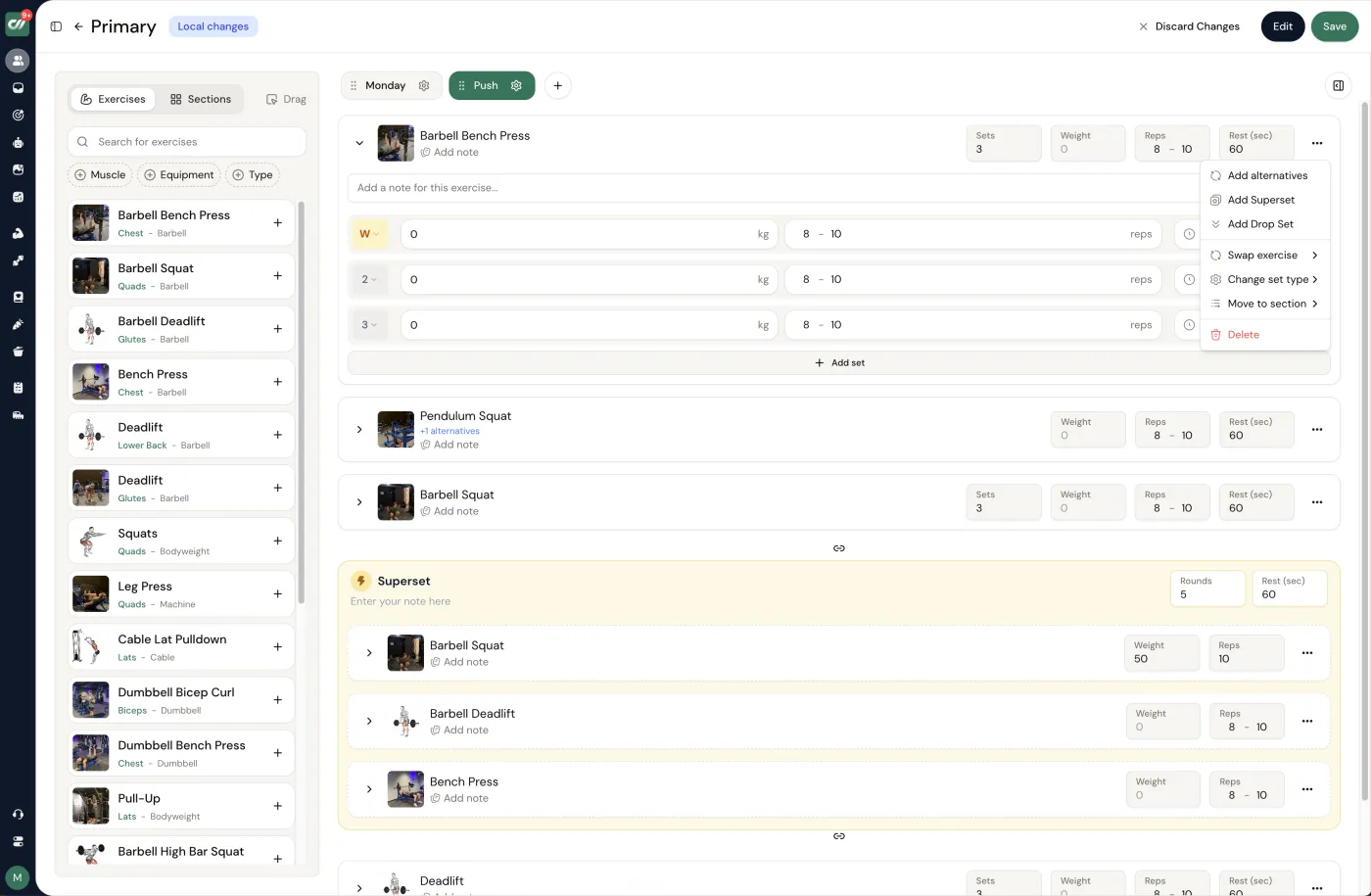
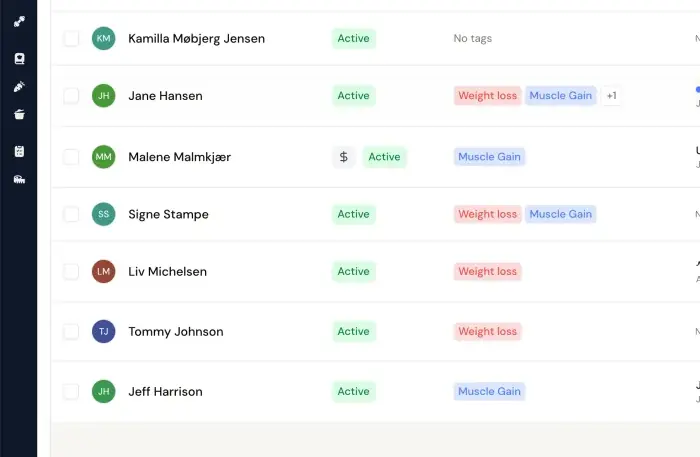
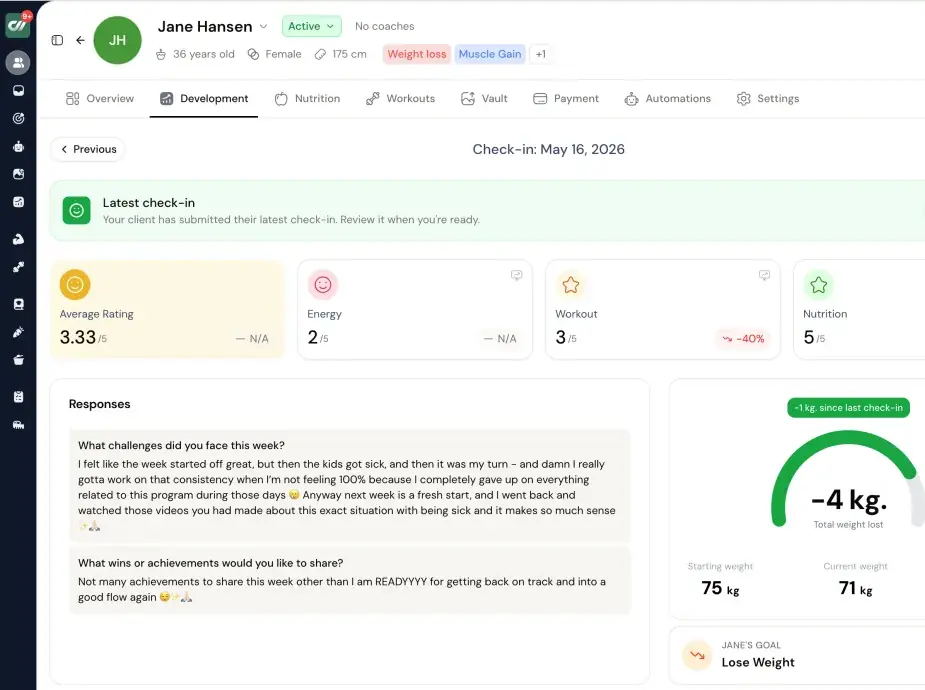
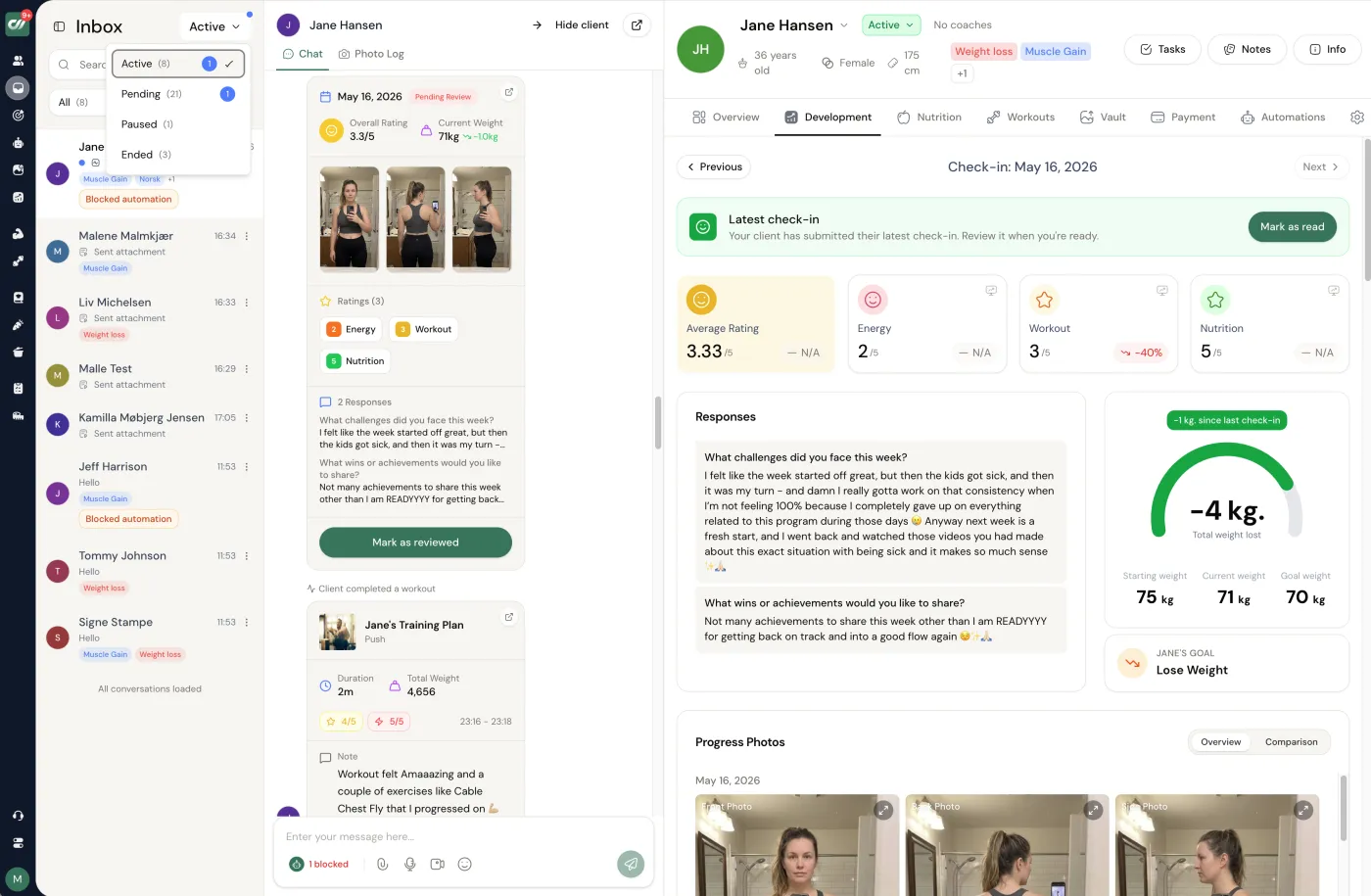
Workouts - Build training week by week from a full exercise library - supersets, dropsets, per-set logging.
Frequently asked.
What is the best running coaching software?
For coaching runners remotely, Coachway is the best pick: the plan, the logged runs, nutrition, check-ins, and payments live in one tab instead of six, so you handle more runners in less time - runs sync in through the client's phone health platform and you coach from what actually happened, at EUR 69 per month for up to 5 clients then EUR 9 per additional client. If your work is deep device-data analysis and fitness-fatigue modelling, TrainingPeaks leads that category. Final Surge and VDOT O2 are pace-first endurance specialists, and Trainerize is the general option for coaches whose runners are one slice of a broader client list.
Does Coachway sync Garmin or Strava for running?
Coachway syncs each runner's sessions and daily steps automatically, but through the phone's health platform rather than a direct device integration. On iPhone it reads Apple Health; on Android it reads Google Health Connect. That covers Apple Watch and Garmin, since Garmin Connect writes to both, so a run lands in Coachway with distance, pace, time, calories, and per-kilometer splits the next time the runner opens the app. It does not connect to Strava directly, and it does not model training-load scores like TSS or a performance-management chart - for that depth, TrainingPeaks is the right category.
How is running coaching software different from a training app like TrainingPeaks?
They solve two different problems. A training-analysis platform like TrainingPeaks is built around the numbers off the watch: training stress, fitness-and-fatigue curves, and structured workouts you analyse after the fact. Running coaching software is built around the coaching relationship: delivering the week to the client's app, logging every run, running nutrition and check-ins, and billing the client. Many endurance coaches who need both run one of each. Coachway sits firmly on the coaching-relationship side.
Can I program by pace and heart-rate zones?
Yes. In Coachway you write the target - an easy pace, a threshold pace, a heart-rate zone, or an effort cue - straight into the exercise notes on each session, so the runner reads it with the workout on their phone. There is no field that auto-recalculates paces from a threshold test, so you set the numbers yourself, which is how most experienced running coaches already work. Use the free running-pace and heart-rate-zone calculators to set the targets, then write them into the plan.
How much does running coaching software cost?
The categories price differently. Coaching platforms price per client: Coachway runs EUR 69 per month for up to 5 clients, then EUR 9 per additional client, with every feature included and a 14-day free trial that asks for a card. Training-analysis and endurance-specialist tools price by athlete count or subscription and move often - confirm current rates on each vendor's own page. Run the numbers at the client count you are aiming for, not the one you have today, because an entry tier that triples at 30 runners is not the deal it looks like.
Keep reading
all guidesSports coaching software: pick by the sport you coach (2026)
There is no single best sports coaching platform, because the unit you program in decides the tool: percentages of 1RM for strength, pace for running, power for cycling, macros for physique. Seven sports compared, and an honest line on where squad management is a different category entirely.
Read the guideHow to become a running coach: certifications and how to coach runners online (2026)
How to become a running coach: the certifications worth holding, how to program for runners, and how to coach them online. The path from qualified to coaching real runners. General information, not professional advice.
Read the guideHow to program for hybrid athletes and runners as an online coach (2026)
Programming for hybrid athletes and runners means balancing strength and endurance in the same week without one stealing from the other. A concurrent-training framework for sequencing, the interference effect, and tracking it remotely.
Read the guideUsing wearable data (Apple Watch, Whoop, Oura, Garmin) with coaching clients (2026)
Wearables give coaches a flood of data. What is signal and what is noise, how to use steps, sleep, and recovery without overreacting, and where the numbers stop and coaching starts.
Read the guideFree tools for this: Running Pace Calculator · Sweat Rate Calculator for Hydration Planning · VO2 Max Calculator
See how Coachway runs your remote running coaching
Plans in the client app, runs syncing in through the phone's health platform, nutrition, check-ins, and billing through your own Stripe - everything around one runner in one tab. Start the 14-day free trial and program a real training week: no charge today, cancel anytime under Billing.


