


How to program a client's return to running after a marathon, the reverse taper the coach actually builds.
A client crosses the finish line and wants the next plan by Tuesday. The coaching job is holding them back long enough to let damaged tissue repair, then rebuilding volume as a controlled ramp instead of a jump. This is post-marathon recovery worked as programming: what the race actually did to the body, a reverse-taper return-to-run timeline, when strength work comes back, what you monitor from a distance, and a four-week rebuild template you apply to a client.
By Markus Evers · Updated September 2026
Programming guidance for coaches, not medical advice. Refer any client with sharp or localised pain, a suspected injury, or symptoms beyond normal muscle soreness to a clinician.
the short version
To program a client's return to running after a marathon, run the recovery as a reverse taper. Give the body one to two weeks to repair muscle damage, clear fatigue and settle an immune dip, then rebuild volume from almost nothing as a controlled ramp - easy volume comes back early, intensity comes back last. Program the reduced weeks into the client's actual plan so the light sessions are what they open, and monitor soreness, resting heart rate, sleep, mood and session effort in the check-in. The programming is simple; getting a client who feels recovered to actually run it easy is the work.
What a marathon actually does to a client's body.
A marathon is not simply a long run. It is a repeated, hours-long eccentric loading of the legs that leaves measurable damage behind, and programming the return well starts from understanding why the first two weeks are for repair, not training.
Muscle fibres take real structural damage. Hikida and colleagues (1983) took gastrocnemius biopsies from marathon runners before and for seven days after a race and found muscle-fibre necrosis and inflammation most prevalent at one and three days post-marathon. This is not vague soreness - it is visible fibre disruption the body has to clear and rebuild, which is why loading the legs hard early makes it worse.
The blood markers confirm the damage lingers. Creatine kinase, an enzyme that leaks into the blood when muscle is damaged, climbs sharply after a marathon. Siegel and colleagues (1980) measured it in Boston Marathon runners before the race, twenty-four hours after, and four weeks later, and found it elevated throughout. So "I feel okay" on day four is not the same as "the tissue has healed."
The immune system dips, and clients get sick. In Nieman and colleagues' (1990) study of the Los Angeles Marathon, about 13% of runners who completed the race reported an infectious episode in the week afterwards, against roughly 2% of similarly trained runners who did not start, with higher mileage raising the odds further. This is the "open window", and a client who picks up a cold after the race is recovering from two things at once.
Sleep and appetite often go sideways. A night or two of broken sleep and a scrambled appetite are common after a hard race. Neither is a problem alone, but both cut into the recovery a client gets when they need it most, so they are worth watching.
Together these give you the window the whole plan is built around: for most amateur clients, roughly one to two weeks in which muscle damage, fatigue and immune function are still normalising. That window is not lost time - it is the repair the next block is built on. If your client is a repeat racer, the same logic sits inside how you already program for runners and hybrid athletes: recovery is a training phase, not a gap between them.
The reverse-taper return-to-run timeline.
A taper strips volume down so the client arrives fresh; a reverse taper builds it back up so they return without re-injuring themselves. Same idea, run backwards. The table below is the default shape for a healthy amateur after a full marathon - read the intensity cap as the hard limit and the last column as the signals that say progress or hold. Shift it earlier for a fast, experienced client and later for a first-timer.
| Window | Activity | Intensity cap | What the coach watches |
|---|---|---|---|
| Days 0-3 | Full rest or gentle walking. No running. Light mobility and easy movement to help blood flow. | Walking pace only. | Peak soreness, stiffness on stairs, sleep, appetite, any sign of illness. |
| Days 4-7 | First easy jogs of 15-30 minutes, or non-impact cross-training (bike, elliptical, swim) if still sore. | Conversational. No hills, no pace work. | How the client recovers from the first run, resting heart rate, whether soreness flares afterwards. |
| Week 2 | A few easy runs, slightly longer. Still no long run, no tempo, no intervals. Light strength reintroduced. | Easy aerobic only. | Effort ratings settling, sleep normalising, soreness clearing between sessions. |
| Week 3 | Lengthen the easy runs. Optionally add one gentle moderate session if markers are clean. Progress strength loads. | One controlled moderate effort at most. | Whether the moderate session is absorbed cleanly or costs the client for days. |
| Week 4+ | Rebuild real structure: a longer run and light quality work, ramping toward the client's normal training. | Reintroduce quality gradually, not all at once. | Trend of the whole picture - loads, mood, resting heart rate, motivation to train. |
The one line that governs the whole table: easy volume comes back early, intensity comes back last. There is reassuring evidence for the early-easy half. Martinez-Navarro and colleagues (2021) followed sixty-four marathon finishers who rested, ran easy, or cross-trained at 48, 96 and 144 hours after the race, and found light running did not slow muscle-damage recovery through eight days and slightly improved neuromuscular recovery versus complete rest. Gentle jogging in the first week is not the enemy. Early hard running - tempo, intervals, a premature long run - is what turns normal recovery into a setback.
When to bring strength work back.
Strength returns on the same logic as running: the legs took the eccentric damage, so heavy squats or deadlifts on top of already-damaged quads and calves are the double stress you are avoiding in the first week. The mistake is treating the gym as separate from the run plan and letting a client go straight back to normal lifting numbers while mileage is also climbing.
Week one: nothing that meaningfully loads the legs. Mobility, easy core and light upper-body work let the client feel productive without touching the tissue that is repairing.
Week two: reintroduce lower-body patterns at bodyweight or light load, several reps in reserve. The goal is movement quality and a gentle return to loading, not training effect.
Weeks three and four: progress the load as soreness clears and ratings hold steady, until strength is back to its normal place in the week. The hard rule is to never add heavy lifting and rebuilt mileage in the same week - stagger them, so if something flares you know which one to pull. The deload-week explainer covers the fatigue-versus-fitness picture a reverse taper is really an application of.
What the coach monitors, and the red flags that mean stop.
Coaching a recovery you cannot watch in person means the check-in is your only window into whether the client is repairing or digging a hole. Kellmann and colleagues (2018), in a consensus statement on recovery and performance in sport, argue that systematically monitoring the balance between stress and recovery is what lets you catch under-recovery before it becomes non-functional overreaching or overtraining. In a return-to-run block you do that by tracking a short cluster of signals and reading them together, not one at a time.
Build these into the post-race check-in so the pattern is visible:
- Muscle soreness - a simple 1-to-10 rating, tracked day to day. It should trend down, not spike after every run.
- Resting heart rate and, if the client has it, HRV - a resting heart rate that stays elevated for days is a useful flag that recovery is lagging.
- Sleep - quality and duration, because the days after a race are when it is most likely to be disrupted and most needed.
- Mood and motivation - a flat, irritable, unmotivated client is often an under-recovered one.
- Session RPE - how hard the easy runs feel. Easy runs that feel hard mean the client is not ready to progress.
- Appetite - a proxy for how the body is settling, worth a quick note in the first week.
When those move the right way together, you progress the plan. When several drift the wrong way in one week - soreness not clearing, resting heart rate up, sleep poor, mood flat - you hold the client and give it more days. Recovery is the budget the return spends against, and the same logic runs through the sleep and recovery picture: no clever programming outruns a client who is not actually recovering.
The red flags that mean stop and refer, not progress:
- Sharp, localised or one-sided pain, as opposed to the general symmetrical ache of muscle soreness
- Pain that worsens as a run continues, or that changes the client's gait
- Swelling, or dark or unusually coloured urine after the race
- Soreness that is getting worse rather than better beyond the first few days
- Signs of illness sitting on top of the fatigue
This is where the coaching lane ends. You program training and recovery within general guidance; you do not diagnose injuries or manage symptoms. If a client shows any of the above, the right move is to stop loading and send them to a clinician, and saying so plainly builds more trust than pretending a coach can assess it remotely.
The "too much too soon" mistake, and how to talk a client down from it.
The most common way a post-marathon block goes wrong is not a programming error - it is a client who feels good four or five days out, decides they are recovered, and jumps back into a full training week on their own. The feeling is real; the recovery is not complete. Muscle that is still repairing feels far better than it is, and a client on the high of finishing a marathon is highly motivated to prove they are fine.
Your job is to separate feeling recovered from being recovered, before the client acts on the wrong one. The best move is to pre-empt it: at the finish line, or in the first check-in, tell the client the next two weeks are deliberately easy, that they will feel ready to do more before they should, and that holding back now protects the training that comes next. A client told to expect the "I feel fine" trap recognises it when it arrives; a client who meets it cold quietly runs a hard session and pays for it.
When a client pushes anyway - "I feel great, can I just do my normal week?" - the line that works is honest and specific: "You feel great because the soreness has faded, but the muscle is still repairing for another week or so, and that is exactly when a hard session turns into a strain. We are running easy on purpose so that in three weeks you are training properly instead of nursing an injury. This is the fast way back, not the slow one." That reframes restraint as the route to their goal, which is the only framing a motivated client actually accepts.
A four-week rebuild template you apply to a client.
Here is the reverse taper as a program you can write straight into a client's plan, for a healthy amateur returning from a full marathon. Treat it as a starting template, not a prescription: compress it for an experienced runner, stretch it for a first-timer, and adjust every week from what the check-in tells you.
| Week | Running sessions | Structure | Strength |
|---|---|---|---|
| Week 1 | 0-2 sessions | Rest and walking through day 3, then 1-2 easy jogs of 15-30 minutes or cross-training. | Mobility, core, light upper body only. |
| Week 2 | 3 sessions | All easy aerobic, 20-40 minutes. No long run, no tempo, no intervals. | 1 light full-body session, bodyweight or light load, high reps in reserve. |
| Week 3 | 3-4 sessions | Easy runs plus one slightly longer run; optionally one gentle moderate effort if markers are clean. | 2 sessions, progressing lower-body load as soreness clears. |
| Week 4 | 4 sessions | Rebuild a proper long run and reintroduce light quality, ramping toward normal training. | Back to normal strength programming, staggered from the hardest runs. |
Once the client is back to normal training and rebuilding toward a goal pace, the running tools handle some of the arithmetic. A running pace calculator keeps the easy runs honestly easy with a target range rather than a vibe, a race time predictor resets realistic expectations for the next event once fitness is back, and a VO2 max calculator gives a rough baseline to track the rebuild against.
The half-marathon variant.
A client coming off a half marathon needs the same shape, roughly halved. The distance is genuinely damaging but well short of the muscle-fibre and glycogen cost of the full 42 kilometres, so most clients are back to easy running within three to five days and to normal training inside one to two weeks rather than three to four.
Do not switch methods - just run a shorter reverse taper. A day or two of rest or walking, easy jogs from around day three, light strength back inside the first week, and intensity held until the client moves normally with no lingering soreness. Individual variation is just as wide here, so the check-in still decides when quality returns. A first-time half-marathoner can need as long as an experienced runner does after a full, which is why you program the client in front of you, not the distance on the entry form.
Running the reverse taper on the check-in and the workout builder together.
Everything above depends on two things in one place: signals you can read, and a plan you can edit the moment they turn. When the check-in lives in a spreadsheet and the program in a PDF, the fatigue pattern is invisible until it is an injury. In Coachway the two sit side by side. You build the post-race check-in with the exact fields the decision needs - a soreness rating, a sleep score, resting heart rate, a mood field, a session-effort rating - as custom check-in questions, and review this week's answers next to the training log and progress tracking on one screen, so the cluster of signals that says hold or progress is something you see rather than miss.
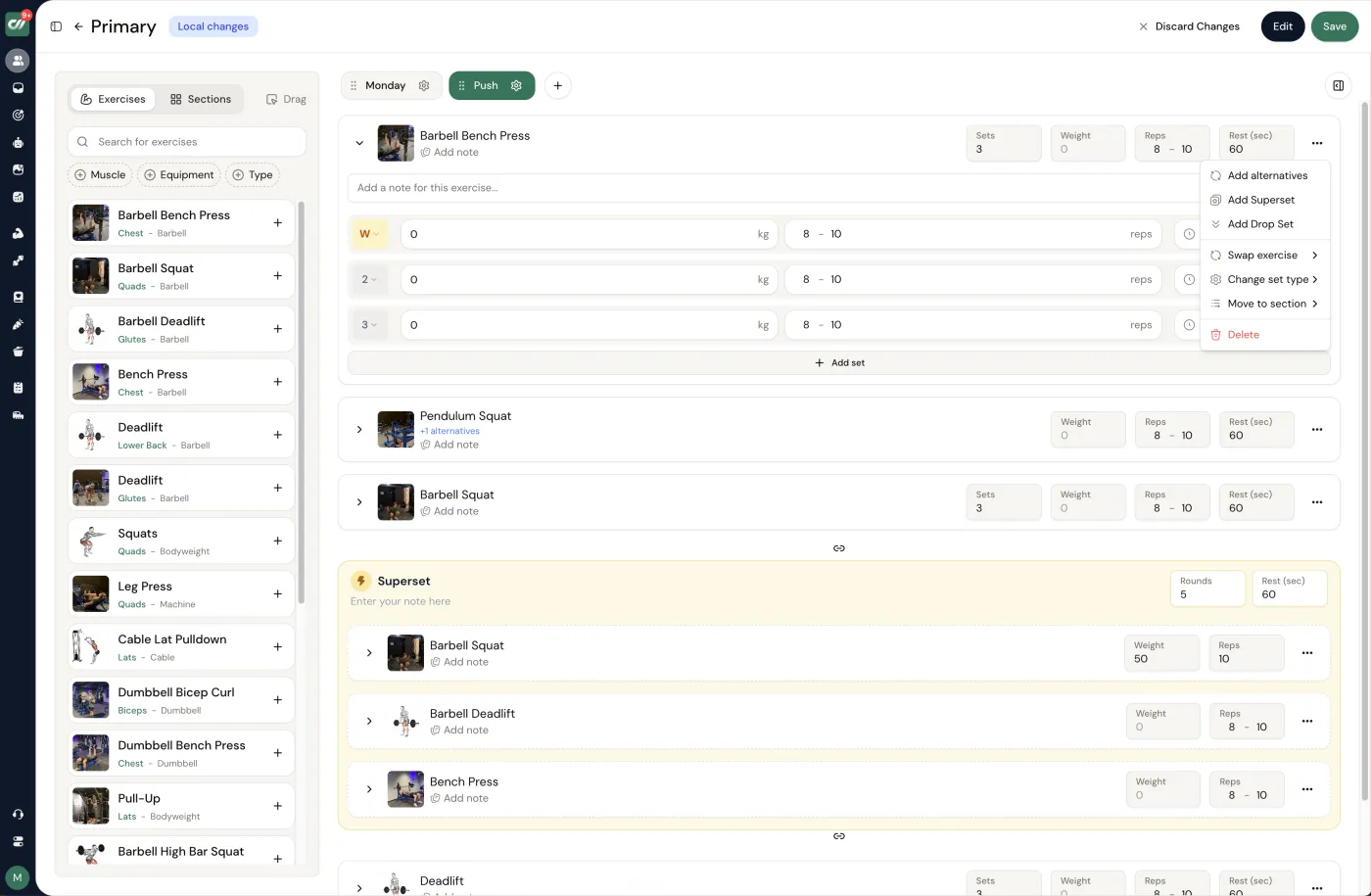
Then the workout builder lets you write the reverse taper into the coming weeks with RPE targets on each session, so "easy" is an instruction the client can see rather than a word they interpret, and the reduced weeks are what they open on their phone. When a client messages "I feel great, can I do more?", the in-app chat is where you hold the plan together. The programming is the easy part; keeping the signals and the plan in the same place is what makes a remote return-to-run block something you coach instead of guess at. You can start a free trial or book a demo to see the check-in and builder on one screen first.
Frequently asked questions about programming post-marathon recovery.
What is a reverse taper after a marathon?
A reverse taper is the taper into the race run backwards. Where the taper cut volume to almost nothing so the client arrived fresh, the reverse taper rebuilds volume from almost nothing so they return without re-injuring damaged tissue. In practice the first runs are short and slow, and duration then intensity climb gradually over three to four weeks until the client is back to their normal easy volume. Mileage returns as a controlled ramp, not a single jump, because muscle is repairing and fatigue clearing for one to two weeks after the race.
How many days off should a client take after a marathon?
For most amateur clients, program three to seven days with no running, then reintroduce easy movement. The first few days are when muscle damage and inflammation peak, so the default is rest or gentle walking through about day three, then short easy jogs or cross-training from day four to seven once soreness settles. Faster, experienced runners sit at the earlier end; first-timers and anyone still sore sit later. Treat the number as a starting assumption you adjust from the check-in, not a rule to hold while a client is clearly still wrecked.
What is a good return to running protocol after a marathon?
Run the first two weeks as easy aerobic work only. Week one is rest and walking, then a few short easy jogs. Week two adds a little duration but keeps every run conversational, with no tempo, intervals or long run. Week three you lengthen the easy runs and can add one gentle moderate session if markers look good. From week four you rebuild structure toward normal training. The rule that holds it together is that intensity comes back last: easy volume is safe to rebuild early, hard sessions re-damage tissue that has not finished repairing.
When can a client start strength training again after a marathon?
Light, non-damaging strength work can usually resume near the end of the first week, with heavier lower-body loading back in week three or four. The reasoning matches running: the legs took the eccentric damage, so heavy squats or deadlifts on already-damaged quads and calves are the double stress you avoid early. Start with mobility, core and light upper body, keep lower-body work to bodyweight or light loads with reps in reserve, and progress load only as soreness clears and ratings stabilise. Do not add heavy lifting and rebuilt mileage in the same week.
How long does it take to recover from a half marathon?
Roughly half the timeline of a full marathon for most clients. A half is genuinely damaging but well short of the muscle-fibre and glycogen cost of 42 kilometres, so many clients are back to easy running within three to five days and to normal training inside one to two weeks. Apply the same shape, a shorter reverse taper: rest or walking for a day or two, easy jogs from around day three, and intensity held until the client moves normally with no lingering soreness. Response varies widely, so let the check-in, not the calendar, decide when quality returns.
When should a client run again after a marathon?
When the acute soreness has clearly eased and daily movement feels normal, which for most clients is day three to day seven. The first run back is a test, not a session: fifteen to thirty minutes, easy enough to hold a conversation, on flat ground. If it feels fine and the client recovers well, you build from there. If it flares soreness or their ratings drop, you pull it back and give it more days. Gentle running earlier can even help; it is early hard running that causes problems, not early easy running.
Is it bad to run too soon after a marathon?
Easy running too soon is rarely the problem; hard running too soon is. Light aerobic movement in the first week does not appear to slow muscle-damage recovery and may help clear it, but tempo runs, intervals or long runs before the tissue has repaired turn normal soreness into a strain or a nagging injury. The usual version is a client who feels great four days out, reads that as recovered, and jumps into a full training week. Your job is to separate feeling recovered from being recovered, and hold the intensity back even when motivation wants to run through it.
How do you program a client's marathon recovery remotely?
You build the reverse taper into their actual plan and watch the check-in for the signals you cannot see. Write the reduced, easy weeks directly into the program so the light sessions are what the client opens, not a note to hold back that they ignore. Then add the recovery fields the decision depends on - a soreness rating, resting heart rate, sleep, mood, a session-effort rating - and read them next to the training log to tell when to progress and when to wait. The programming is simple; the remote coaching is the check-in that shows the fatigue and talking the client out of returning too fast.
Sources: Hikida et al. 1983, Journal of the Neurological Sciences (muscle fibre necrosis in marathon runners); Siegel et al. 1980, Yale Journal of Biology and Medicine (creatine kinase elevations in marathon runners); Nieman et al. 1990, Journal of Sports Medicine and Physical Fitness (infectious episodes before and after the Los Angeles Marathon); Martinez-Navarro et al. 2021, European Journal of Sport Science (running vs rest in the week after a marathon); Kellmann et al. 2018, International Journal of Sports Physiology and Performance (recovery and performance in sport consensus statement).
Keep reading
all guidesFlexible Dieting (IIFYM): What It Is
Flexible dieting (IIFYM) means hitting daily macro targets from any food. What it is, how it works, pros and cons vs rigid meal plans, and how coaches use it to build client adherence.
Read the guideIntermittent Fasting for Fat Loss: An Honest Guide
Intermittent fasting (16:8, 5:2, OMAD) is an eating-window tool, not metabolic magic - it works through the calorie deficit and adherence. What it is, who it suits, and how coaches handle it.
Read the guideWhat Are Macros? A Clear Guide to Macronutrients
Macros are the three energy-providing nutrients - protein, carbs, and fat. What each does, the calories they carry, and the protein-first method coaches use to set client targets.
Read the guideFree tools for this: Running Pace Calculator · Sweat Rate Calculator for Hydration Planning · VO2 Max Calculator
See what Coachway can do for your coaching business
Coachway was built on knowledge from working with 150 online coaches over 6+ years, who all hit the same wall - slow platforms, clunky workflows, wasted hours. Start your 14-day free trial and see what we fixed - the whole platform, no charge today, cancel anytime under Billing.


