Fitness business ideas for trainers: ranked by cost and speed.
Most lists of fitness business ideas mix apparel brands, supplement lines and gym franchises with coaching. This one is for trainers and coaches. It ranks seven ideas by what they cost to start and how fast they can pay you, says who each one suits, and shows how to test an idea in 30 days before you spend real money on it.
By Markus Evers · Updated October 2026
the short version
The best fitness business ideas for a trainer are the ones that are cheap to start and pay monthly: online 1:1 coaching, training plus nutrition coaching, and hybrid in-person and online coaching. Small-group training and corporate wellness come next once your method is proven. Digital programs need an audience first, and a gym or studio needs real capital. Start with the clients you already have and test the offer for 30 days before you invest.
Which fitness business ideas work best for a trainer?
For a trainer, the fitness business ideas that work best are the ones you can start with skills you already have and that bill every month. Online 1:1 coaching costs little to start and can pay quickly if you have a network. Adding nutrition coaching raises what each client is worth. Hybrid coaching mixes in-person sessions with online support between them. Small-group training and corporate wellness pay more per hour but need a proven method. Digital programs sell well only with an audience, and a gym or studio needs a lease, equipment and capital. Rank ideas by startup cost, time to first revenue and fit with your clients.
| Idea | Startup cost | Time to first revenue | What you need | Fits |
|---|---|---|---|---|
| Online 1:1 coaching | Low | Fast if you have a network | A clear offer, a coaching platform, a way to take payment | Trainers who already coach in person and want hours back |
| Training plus nutrition coaching | Low to medium (a nutrition course) | Fast with existing clients | Nutrition knowledge inside your scope, food logging and check-ins | PTs whose clients already ask what to eat |
| Hybrid in-person and online | Low (uses the gym you already train in) | Fast | Gym access, a booking tool for sessions, an app for the days between | Trainers with a local client base and a full calendar |
| Small-group and semi-private training | Low to medium (space and some equipment) | Medium | A space, a shared plan that scales across levels, a booking tool | Coaches who enjoy running a room and want more per hour |
| Corporate wellness | Low | Slow (company buying cycles) | A packaged program, proof from 1:1 work, a contact in HR or People | Established coaches who can sell to a business buyer |
| Digital programs and challenges | Low | Slow without an audience | A tested program, an audience or email list, a checkout | Coaches with followers who will buy without 1:1 contact |
| Gym or studio | High (lease, fit-out, equipment, staff) | Slow | Capital, a location, members before or soon after opening | Operators with proven local demand and a business partner or funding |
The bands are editorial judgements to help you compare, not measured averages or income promises. Your cost and speed depend on your market, your network and the proof you already have. If you are still choosing who to serve, read the most profitable fitness niches first: a niche is who you coach, and the ideas below are how you sell and deliver it.
Six coaching-led fitness business ideas, one by one.
Each idea below says what the business is, what it costs you to start, what usually slows it down and who it suits. They are listed roughly in the order most trainers should consider them, starting with the cheapest and fastest. Several combine well: a common setup is online 1:1 with nutrition as the core, with one more idea added on top later.
Idea 1 · low cost · fast with a network
Online 1:1 coaching
You write each client's training program, they train on their own, and you coach them through a weekly check-in and messages. There is no lease and no equipment to buy, and the client pays you every month. It is the starting point for most coaches because it uses the skill you already have and teaches you what clients actually need before you build anything bigger.
- What it costs to start: your existing certification, insurance, a coaching platform and a payment setup.
- What slows it down: no network and no clear offer. Vague offers sell slowly at any price.
- Watch out for: your hours. Income grows with clients, so time how long each client takes you.
- Next step: how to start an online coaching business walks the setup, and how to get your first online coaching client covers the first sale.
Idea 2 · low to medium cost · fast with existing clients
Training plus nutrition coaching
Your training clients already ask what to eat. Packaging nutrition into a higher-priced monthly service turns that question into revenue from people who already trust you, so it is often the quickest way to raise income without finding new clients. The work is weekly: targets or a plan, client food logging, and a check-in that reads food next to training.
- What it costs to start: a nutrition course if your PT qualification does not cover enough, and the time to build your package.
- What slows it down: unclear scope. General nutrition for healthy adults is coaching; treating a medical condition is not.
- Watch out for: meal plans. In some places individualized meal planning is limited to licensed professionals, so check your local rules.
- Next step: add nutrition coaching to your personal training business, then copy a structure from nutrition coaching packages.
Idea 3 · low cost · fast
Hybrid in-person and online coaching
The client sees you in person less often, for example once a week or once a fortnight, and follows your program, nutrition and check-ins online on the other days. You keep the relationship that in-person coaching builds, free up floor hours, and can charge for the support between sessions. For a trainer with a full calendar it is usually the gentlest way to move online.
- What it costs to start: little beyond what you already pay for gym access, plus an app for the online days.
- What slows it down: clients who think fewer sessions means less coaching. Sell the weekly check-in as part of the service.
- Watch out for: running two systems. Use a booking tool for sessions and one coaching app for everything else.
- Next step: what hybrid coaching is covers the formats and how to price the mix.
Idea 4 · low to medium cost · medium speed
Small-group and semi-private training
Two to a handful of clients train together on one plan that scales across levels. Each client pays less than for 1:1, but you earn more per hour, and the group keeps people turning up. It works best once you can program a single session that suits a mixed room, and once you have enough local clients to fill regular slots.
- What it costs to start: a space you can rent by the hour or share, and some equipment if the gym does not supply it.
- What slows it down: filling the slot. An empty group of two is a 1:1 session at a discount.
- Watch out for: mixed levels. Plan regressions and progressions for every movement before the first session.
- Next step: small group training ideas covers formats and pricing; how to run online group coaching covers the remote version.
Idea 5 · low cost · slow to close
Corporate wellness
You sell a packaged program to a company for its employees: a workshop, a multi-week program, a challenge, with optional 1:1 add-ons. The buyer is a business, so a single deal can be worth more than many individual clients, but it takes longer to close because companies approve budgets slowly. It suits coaches who already have results from 1:1 work and are comfortable selling to HR or People teams.
- What it costs to start: mostly your time to package the program and write a clear proposal.
- What slows it down: buying cycles. Offer a small paid pilot so the company can say yes without a big commitment.
- Watch out for: promising outcomes. Report participation and what the program delivered, not health results.
- Next step: how to start a corporate wellness coaching business.
Idea 6 · low cost · slow without an audience
Digital programs and challenges
You sell a set training program, a guide or a time-limited challenge that buyers follow with little or no 1:1 contact. It is cheap to build if you already have a program that works, and one program can sell many times. The catch is distribution: without an audience or an email list, a program sits unsold. For many coaches a program or challenge works better as a front door to coaching than as the main income.
- What it costs to start: the time to turn a tested program into something a stranger can follow, and a checkout.
- What slows it down: no audience. Build the audience first or sell to the one you have.
- Watch out for: "passive". Programs still need support, updates and marketing.
- Next step: how to sell workout programs online, fitness challenge ideas for coaches and passive income for fitness coaches.
If you want the income and time trade-off between 1:1, group, hybrid and courses as business models rather than as ideas to start, online coaching business models compares them side by side.
When does a gym or studio make sense?
A gym, studio or boutique space is a different business from coaching. You take on a lease, fit-out, equipment, insurance and often staff before the first member pays, and you carry those costs every month whether the room is full or not. It can be a good business, but it is a property and operations business as much as a coaching one. It makes sense when three things are already true.
- Proven local demand: you are already turning clients away, or your small groups are full and have a waiting list.
- Capital and runway: you can cover the fixed costs through slow early months without relying on members you do not have yet.
- Someone to run it: you, a partner or staff who will handle the lease, cleaning, scheduling and sales, not only the coaching.
The lower-risk route is to build the client base first with online, hybrid or small-group coaching, then open a space for clients who already pay you. The same logic applies to apparel, supplements and equipment lines, which need stock and distribution before they earn. If you do go physical, how to start a personal training business compares online-first with a studio, and the one-page personal trainer business plan helps you put the numbers on paper first.
What resources and platforms help you grow a fitness business?
A fitness coaching business needs a handful of resources, not dozens. You need a written offer and a simple plan, one coaching platform to deliver programs, nutrition, check-ins and chat, a payment processor for recurring billing, a booking tool if you train people in person, and a steady source of leads such as referrals and a form on your website. Coachway is one all-in-one option for coaches who coach training and nutrition online; it does not handle session booking. Add a tool only when it removes work you are already doing by hand.
| What you need | Where it usually comes from |
|---|---|
| Decide what to sell | Your own client notes, a written offer, a one-page plan |
| Deliver the coaching | A coaching platform for programs, nutrition, check-ins and chat |
| Book in-person sessions | A separate booking or calendar tool |
| Get paid | Recurring billing through a payment processor such as Stripe |
| Find clients | Referrals, a lead form on your site, social content that ends in a clear next step |
| Stay inside your scope | Your certification body and the rules in your country |
For growth itself, the cheapest resource is the clients you already have: ask for referrals on a schedule and make it easy to say yes. How to grow an online coaching business covers the full growth plan, how to get online coaching clients covers lead sources, and fitness business software compares the categories of tools. Free planning tools such as the coaching offer builder and the client capacity calculator help before you spend anything.
How do you test a fitness business idea in 30 days?
To test a fitness business idea in 30 days, sell it before you build it. Write the offer in one paragraph: who it is for, what they get each week, how long it runs and the price. Show it to people who already know your work and ask for payment, not interest. Deliver a small number of places properly, time how many minutes each client costs you a week, and ask for feedback at the end. If people pay, stay and refer someone, keep going. If not, change the offer or the audience before you spend on a website, equipment or ads.
- Days 1 to 3, write the offer. One paragraph, one price, a start date and a limited number of places. If you cannot write it in one paragraph, the idea is not ready to sell.
- Days 4 to 10, sell to people who know you. Current and past clients, gym members, your followers. Ask directly and take payment up front, so a yes means a real yes.
- Days 11 to 28, deliver and time it. Run the weekly routine exactly as you would at scale, and write down the minutes each client takes for programming, check-ins and messages.
- Days 29 to 30, decide. Did people pay, show up and want to continue? Does the price cover your minutes at the hourly rate you want? Keep it, change it or drop it.
While you test, use software with a free trial or monthly billing rather than an annual contract, and only buy what the test needs. To set the price from your own numbers, see how to price online coaching packages or try the coaching package pricing calculator.
Run the coaching ideas from one dashboard.
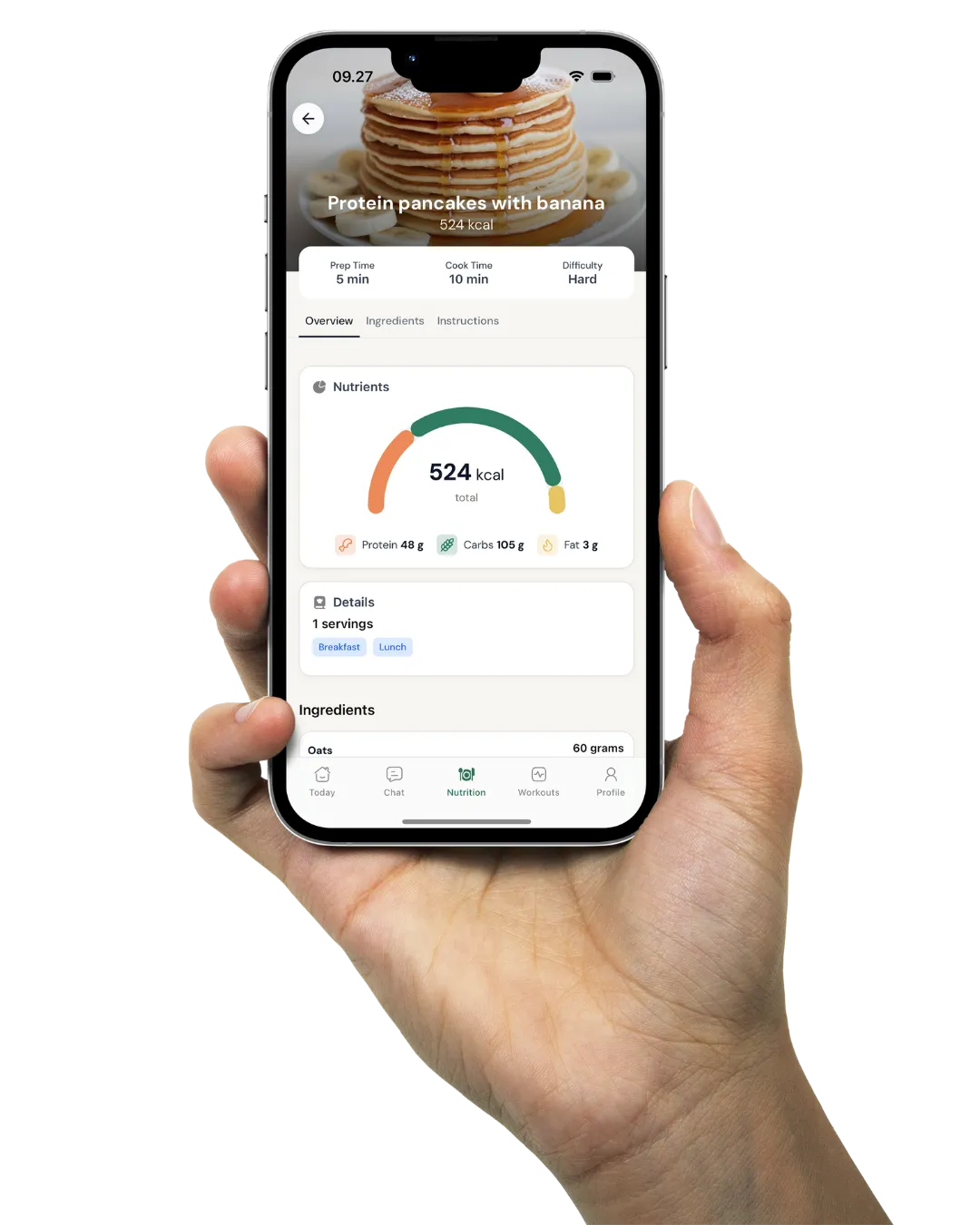
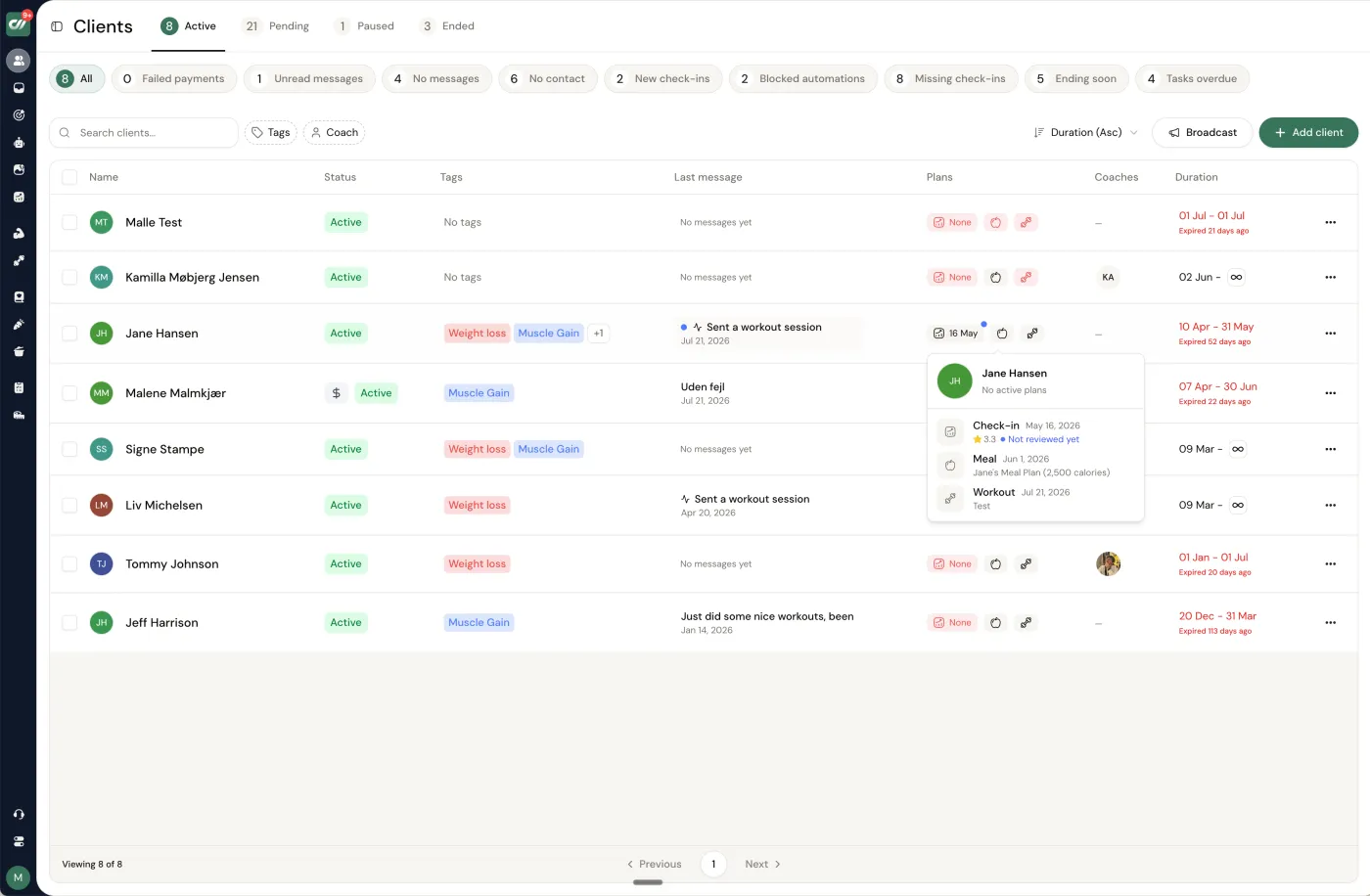
Coachway is an all-in-one platform for coaches who coach training and nutrition. Ideas 1, 2 and 3 run on it directly; small-group, corporate and program clients can run there as individual clients on a shared program. You get a workout builder with a 1,800+ exercise library with video demos, a meal planner and food logging, check-in forms and the Power Panel, chat with voice notes, automations, lead forms and payments through your own Stripe account. Clients use one app on iOS and Android, and Coachway runs in eight languages (English, Danish, Norwegian, Swedish, Finnish, German, Dutch and Spanish). Two honest limits: it is not built for session booking, so pair it with a calendar tool, and group coaching so far covers Communities, a shared feed for your clients that launched in October 2026, with more group coaching features on the way.
It costs EUR 69 a month including up to 5 active clients, then EUR 9 per extra active client, with every feature on one plan (USD 79 plus USD 10). At 20 active clients that is EUR 204 a month. Built-in payments cost 2.4% per transaction. Already on another platform? It depends on your platform; from some platforms our team moves your clients over for you, free. See switching to Coachway.
Frequently asked questions about fitness business ideas.
What is the most profitable fitness business idea for a trainer?
For most trainers it is recurring coaching, not a product: online 1:1 coaching or a training plus nutrition package, because the client pays every month and the startup cost is low. Which niche pays best depends on your audience and proof, not on the idea itself. Gyms and studios can earn more in total, but they need far more capital and carry more risk. Start with the idea that fits the clients you already have, then price it on the time it really costs you.
Which fitness business can I start with little money?
Online 1:1 coaching has the lowest startup cost of the common fitness business ideas. You need a certification you already hold, a clear offer, a coaching platform and a way to take recurring payments. There is no lease, no equipment and no staff. Hybrid coaching is the next cheapest if you already train clients in a gym, because the gym is already there. Digital programs are cheap to build but slow to sell unless you already have an audience.
Do I need a certification to start a fitness business?
In most places you should hold a recognised personal training certification before you coach clients, and many insurers ask for one. Nutrition coaching, corporate work and specialist niches can need more, and rules for nutrition advice differ by country and, in the US, by state. Check the scope your credential grants and your local rules before you sell. Certification costs vary by provider and change over time, so check each provider's current price rather than relying on a figure from an article.
Should I open a gym or start an online coaching business?
Start online or hybrid first unless you already have proven local demand and the capital to cover a lease, fit-out and slow early months. An online or hybrid business lets you test your offer and build a client base with almost no fixed cost. If you later open a space, you open it with paying clients instead of hoping they turn up. A gym makes sense when your local demand clearly outgrows the floor you rent today.
How do I test a fitness business idea before I commit?
Write the offer in one paragraph with a price, show it to the people who already know your work, and ask for a paid commitment within 30 days. Sell a small number of places, deliver them properly and time how long each client takes you each week. If people pay, stay and refer, the idea works. If nobody pays at a price that covers your time, change the offer or the audience before you spend money on a website, equipment or ads.
What software do I need to run a fitness coaching business?
Two systems are usually enough: one coaching platform to deliver programs and nutrition, collect weekly check-ins, message clients and take payment, plus a booking tool if you run in-person sessions. Coachway covers the coaching side, with a workout builder and a 1,800+ exercise library with video demos, for EUR 69 a month including up to 5 active clients, then EUR 9 per extra active client. It is not built for session booking, so pair it with a calendar tool for in-person work.
The cost and speed bands in this article are editorial comparisons, not measured averages or income promises, and nothing here is legal, financial or medical advice. Certification, insurance and scope-of-practice rules vary by country and state; check yours before you sell.
Picked an idea? How to start a personal training business covers certification, insurance and setup, and the best personal trainer certifications for online coaching helps if you still need the credential.
Keep reading
all guidesPersonal Trainer Job Description & Job Ad Examples
Five copy-paste personal trainer job-ad examples for in-person, online, group, assistant and lead roles, a modular duties and requirements bank, and a role-to-certifications table.
Read the guideInstagram Highlight Ideas & Names for Fitness Coaches
Fifty Instagram highlight name ideas for fitness coaches grouped by what each one sells, plus cover guidance, a starter order, and a copy-paste highlight names table.
Read the guideCoaching Philosophy Examples for Fitness & Online Coaches
15+ coaching philosophy examples grouped by niche, each as a one-liner, an about-page paragraph, or values bullets, plus a five-step scaffold to write your own.
Read the guideFree tools for this: Referral Value Calculator · Ad Spend Breakeven Calculator · Email List Value Calculator for Coaches
See what Coachway can do for your coaching business
Coachway was built on knowledge from working with 150 online coaches over 6+ years, who all hit the same wall - slow platforms, clunky workflows, wasted hours. Start your 14-day free trial and see what we fixed - the whole platform, no charge today, cancel anytime under Billing.