Exercises for obese clients, built for the body in front of you.
A larger-bodied client does not need a watered-down version of a lean client's plan. They need movements chosen for their joints, their capacity, and their confidence, delivered by a coach who leads with dignity and knows exactly where their scope ends. This guide covers assessment and goal-setting, low-impact aerobic and resistance starting points, mobility, a standard-to-low-impact regression table you can program straight from, a progression framework, and the medical-clearance and refer-out line you never cross.
By Markus Evers · Updated August 2026
the short version
Exercises for obese clients are low-impact, joint-friendly, and scalable movements - programmed by a coach for a client who has been medically cleared to exercise - that build strength, aerobic capacity, and mobility while keeping load off the joints and stacking early wins. Start with medical clearance, then assess with dignity and pick a start point the client can succeed at. Lead with supported resistance work, add easy low-impact cardio and a rising daily step target, and regress every standard movement to a chair, a wall, or a machine. Progress slowly, coach effort over the scale, and refer out the moment anything turns clinical. You program movement for a healthy, cleared adult; you never treat obesity.
Most plans fail larger-bodied clients before the first session.
A client in a larger body who quits in week two rarely lacks willpower. They were handed a plan built for someone else: floor exercises they cannot get up from easily, a run their joints were never going to tolerate, and a gym they dreaded walking into. The plan set them up to fail and then let them believe the failure was theirs. Coaching this client well is not about finding harder work. It is about choosing the right movements, protecting their joints and their dignity, and building a run of small wins that makes them want to come back. Done properly, a larger-bodied client is one of the most rewarding people you will ever coach, and one of the clearer examples of a specialist coaching niche where understanding the client beats any generic program.
A quick note on language before anything else. The search term is obese clients, and it is the clinical word, but it is not the word to use with the person. In conversation, lead with neutral, person-first language: a client in a larger body, a higher-weight client, a client carrying more weight. Let the client set the terms they are comfortable with, and never moralise. The words you choose in the first message set the tone for everything that follows.
Assess and set goals with dignity, not a scale.
Assessment for a larger-bodied client is where trust is won or lost. Before any movement screen, the first gate is medical clearance: ask the client to be cleared to exercise by their doctor, especially where there is cardiovascular history, joint injury, or a recent medical event. Once cleared, keep the assessment practical and kind. You are learning what the client can do comfortably today, what they want to be able to do, and what the environment around them allows, not producing a report card on their body.
01
Clear, then screen gently.
Get medical clearance first. Then screen movement you will actually use: sit-to-stand from a chair, stepping, reaching, a supported hinge. Keep the client seated or supported so nothing feels like a test they can fail.
02
Set goals off capability.
Anchor goals to daily life: climbing stairs without stopping, playing on the floor with a grandchild, walking further without knee pain. Capability goals keep a client motivated on weeks the scale stalls, which it will.
03
Fit the equipment and space.
Check weight ratings on benches and chairs, choose seats and machines the client fits comfortably, and plan positions that are easy to get into and out of. A start point that guarantees an early win beats an ambitious one that guarantees an early failure.
Nutrition sits alongside training rather than inside it, and if you are the one advising on it, set targets deliberately rather than by feel. A TDEE calculator gives you a maintenance estimate to work from, and our guide on how to set a client's calorie target walks through turning that into a sensible, sustainable deficit. Growing numbers of larger-bodied clients also arrive already on medication, which changes appetite and recovery; if that is your client, read strength training for GLP-1 clients and how to coach clients on GLP-1 before you build the plan. For the mechanics of a first-session intake in general, fitness assessments for new clients covers the wider template.
Low-impact aerobic options that spare the joints.
Running is the wrong first tool for most larger-bodied clients, because the impact through the ankles, knees, and hips is high and the risk of pain and dropout is higher still. The aim of early conditioning is a heart rate that rises comfortably with almost no joint impact, held for long enough to build a base. Nearly all of the benefit lives at an easy, conversational intensity, which is also the intensity a beginner will actually keep up.
Start here
- Walking, then incline walking as it gets easier
- Upright or recumbent cycling at low resistance
- Water walking or pool work where a client has access, since buoyancy removes almost all impact
- Seated or standing low-impact cardio circuits with no jumping
- An elliptical or cross-trainer once balance and confidence allow
How to dose it
- Begin with short bouts, even five to ten minutes, and build duration before intensity
- Keep effort conversational: the client can talk in full sentences
- Use daily steps as the low-friction base that runs underneath everything
- Add one small increment at a time, from a session that felt easy
- Watch for joint pain, not just breathlessness, and back off if it appears
To keep the easy intensity honest, give the client a target heart-rate range rather than a vague instruction to go gently. A max heart rate calculator gives you the ceiling, and the roughly 60 to 70 percent band, often called zone two, is the sweet spot for building an aerobic base without punishing the joints or the client's motivation. For the low-friction base that does more than any single session, lean on daily steps: a steps to calories calculator turns a step target into a number a client can see moving, and it is the most sustainable conditioning most larger-bodied clients will ever do. If a client asks how much conditioning they really need, how much cardio for fat loss sets sensible expectations.
Resistance training starting points.
Resistance training is the quiet workhorse of coaching a larger-bodied client. It protects muscle while the client is in a deficit, builds the everyday strength that makes standing, lifting, and walking easier, and tends to feel more rewarding than long cardio. Start supported and stable, keep the movements simple, and let the client feel strong early. Two to three short sessions a week is plenty to start, and a full-body structure means each session covers the whole body even if the week loses one.
Lead with supported, seated, and machine work.
Machines and seated variations give a larger-bodied beginner stability, a fixed path, and a safe way to fail a rep, which frees them to push a little without fear of falling or losing control. A leg press, a chest-supported row, a seated press, and a supported hinge cover most of the body while removing the balance and coordination tax of free weights. Choose compound movements first because they train the most muscle per exercise, which keeps sessions short and productive.
Keep effort well short of failure.
Program sets that end with several reps still in the tank. Working close to failure is a recovery cost a new, under-conditioned client cannot easily pay, and it makes the next session harder to show up for. Moderate reps, controlled tempo, and comfortable ranges of motion build strength and confidence at the same time, and they keep joints out of the end ranges where a heavier body feels least stable.
Pick ranges of motion the body allows today.
A larger body changes what is comfortable. Deep squats, floor exercises, and lying movements can be genuinely awkward, not because the client is unwilling but because there is more tissue in the way. Meet the body where it is: raise the start of a hinge, shorten the range of a squat to a box, press from a bench instead of the floor. A comfortable partial range done well beats a full range done in pain, and the range grows on its own as the client changes.
Mobility work that earns its place.
Mobility for a larger-bodied client is not a stretching routine bolted on at the end. It is the work that makes the strength and cardio possible: keeping the joints moving comfortably, improving the positions the client uses every day, and building the confidence to get down to the floor and back up again. Keep it standing or supported where you can, and choose movements that pay off in real life.
Prioritise these
Ankle and hip mobility for a stable squat and stairs, thoracic and shoulder range for reaching overhead, and a gentle, supported hip hinge so the client can pick things up without strain. Getting down to the floor and back up is a trainable skill worth practising on its own, with a chair or sturdy surface to push from.
Keep it comfortable
Favour standing and seated mobility over deep floor stretches that are hard to hold. Use a chair, wall, or rail for balance. Move through easy ranges rather than forcing end range, and thread short mobility drills into the warm-up so they get done rather than skipped. A little, often, beats a long routine the client dreads. That same simple-daily principle drives our breakdown of Tom Morrison's mobility method.
The regression table: standard movement to a low-impact swap.
Coaching a larger-bodied client is largely the skill of regression: taking a standard exercise and finding the version that trains the same pattern with less impact, less range, and more support. This table pairs common movements with a low-impact swap and the reason behind it. Use it as a starting menu, not a rulebook, and pick the version each client can own today.
| Standard exercise | Low-impact swap | Why it works better |
|---|---|---|
| Bodyweight or barbell squat | Box squat or sit-to-stand from a chair or bench | The box gives a depth target and a safe place to land, removing the deep-knee and balance demand while training the exact same stand-up pattern. |
| Walking lunge | Supported split squat holding a rail or a TRX | The hold removes the balance and the impact of stepping, so the client can load one leg at a time without any fear of falling. |
| Floor push-up | Incline push-up against a wall, counter, or bench | Raising the hands cuts the load and shortens the range, so the client presses with good form and lowers the surface over time. |
| Running or jogging | Brisk walking, incline walking, or a recumbent bike | Heart rate still climbs, but joint impact drops sharply; the recumbent supports the spine and removes the balance demand entirely. |
| Burpee | Step back to a squat, stand tall, and reach overhead | Keeps the full-body, heart-rate-raising effect without the floor transition and the impact landing that punish larger joints. |
| Jumping jack or plyometric | Step jack, side-to-side step, or standing march | Removes the repeated impact a jump sends through the ankles, knees, and hips while keeping the same rhythm and elevated effort. |
| Deadlift from the floor | Rack pull, trap-bar from blocks, or kettlebell from a box | Raising the start height shortens the range so the client can hinge from a taller position and hold a neutral spine without floor-level mobility. |
| Floor plank | Incline plank on a bench or counter, or a standing brace | Raising the upper body cuts the load on the wrists, shoulders, and lower back while training the same bracing skill. |
| High box step-up | Low step or a single stair with rail support | A lower step keeps the knee in a comfortable range, and the rail lets the client control the descent instead of dropping onto the joint. |
| Mountain climber | Standing knee drive or a slow march with hands on a bench | Trains the same core and hip-flexion pattern without putting bodyweight through the wrists on the floor. |
| Sit-up or crunch | Dead bug, seated brace, or a cable or band chop | Avoids the floor-to-standing transition and heavy spinal flexion while training the trunk from a supported, comfortable position. |
| Standing barbell overhead press | Seated dumbbell press or a landmine press | The seat removes the balance and lower-back demand, and the landmine arc is gentler on a shoulder that lacks full overhead range. |
The through-line in every row is the same: keep the movement pattern, remove the impact, add support, and shorten the range until the client can own it. As they get stronger and lighter, you walk each swap back toward the standard version, one variable at a time. That is regression and progression working as a single dial, and it is the core skill this client needs from you.
A progression framework built for the long game.
Progress for a larger-bodied client is measured in months, not weeks, and the coach's job is to keep it moving without ever making a session feel like too much. Change one variable at a time, progress from a session that felt easy rather than one the client barely survived, and hold steady through a hard week instead of forcing a jump. The plan that bends around a bad week is the plan that is still running a year later.
01
Progress the easy variable first.
Before adding load, add a rep, lower the incline of a push-up, add a minute to a walk, or improve control. Small, low-risk wins keep momentum and let joints and connective tissue catch up to the new demand.
02
Use overload, but patiently.
Apply progressive overload through double progression: earn the reps, then add a small amount of load. Never chase a jump on a low-energy day; holding load through a rough patch still protects the progress you have built.
03
Deload and rest on purpose.
Schedule a deload sooner than you would for a trained client, and treat sleep and recovery as part of the plan. A client early in their journey accumulates fatigue faster, so the reset earns its place more often.
Nutrition progress deserves the same patience. A long fat-loss goal is easier to sustain in structured phases than as one relentless deficit, and a weight-loss phase calculator helps you map realistic phases with breaks built in, so the client sees steady progress without the fatigue and rebound that come from cutting too hard for too long. Keep the training and the nutrition moving at a pace the client can hold, and check the trend at a steady cadence rather than reacting to any single week; our guide on running client check-ins covers the rhythm that catches drift early.
Communication and environment: where clients stay or quit.
For a larger-bodied client, the how of coaching matters as much as the what. Many arrive carrying years of bad experiences with fitness, with gyms, and with people who made them feel watched. The tone you set and the environment you build decide whether they keep going, and this is the area where a thoughtful coach separates from a generic program.
Do
- Use neutral, person-first language and follow the client's lead
- Coach effort, consistency, and skill rather than the scale
- Celebrate non-scale wins: more energy, easier stairs, better sleep
- Explain the why behind each regression so it feels smart, not lesser
- Make the first session a guaranteed win they leave proud of
Avoid
- Any language that moralises about food, weight, or willpower
- Before-and-after framing that reduces the client to a body
- Programming that exposes the client in a way that invites judgement
- Piling on volume or intensity to prove the plan is serious
- Treating a stalled scale as a failure instead of normal noise
The remote advantage.
Online coaching is often the better fit for this client, not a compromise. Training at home removes the single biggest barrier for many larger-bodied people, which is gym anxiety and the fear of being watched. They can move in private while confidence builds, start with little or no equipment, and progress into a gym later if they want to. Your part is clear video demonstrations of every movement, careful regressions written into the plan, an honest but kind review of the form clips they send, and a steady, warm check-in rhythm. The same delivery that keeps any client is what keeps this one; the principles carry straight over from coaching older adults online and coaching menopausal clients online, and consistent delivery is the engine behind retention and referrals.
Scope, clearance, and when to refer out.
This is the most important section in the guide, because coaching a larger-bodied client puts you closest to the edge of a fitness coach's scope. Obesity is a medical condition, and it often travels with others. You are not there to diagnose it, treat it, or manage it. You are there to coach movement for a client whose doctor has cleared them to exercise. Getting that boundary right protects the client, and it protects you.
Medical clearance and referral, in plain terms
Before a single session, ask the client to be cleared to exercise by their doctor, especially where there is any cardiovascular history, joint injury, diabetes, high blood pressure, or a recent medical event. That clearance is not a formality. It is the difference between coaching a healthy, cleared adult and stepping into territory you are not qualified for. Keep a short referral list of professionals you trust - a doctor, a physiotherapist, a registered dietitian - so you can hand a client on warmly the moment a conversation turns clinical.
Refer out, without hesitation, when a client reports chest pain, dizziness, or breathlessness beyond normal exertion, when there is pain that a regression does not resolve, when questions turn to medication, symptoms, or a diagnosis, or when you see any sign of an unhealthy relationship with food or weight. Referring out is not losing a client or admitting failure. It is the mark of a coach who knows the edge of their competence. For the full boundaries of what you can and cannot advise on, our guide to scope of practice for online coaches covers where the line sits and how to stay on the right side of it.
The line that keeps you credible: you coach training, movement, and general habits for a cleared adult. Diagnosis, treatment, medication, and the management of obesity and its conditions belong with the client's healthcare team. Get clearance first, program within it, and refer out the moment a question turns clinical.
- the scope-of-practice line every coach in this niche should hold
Demonstrate, regress, and check in - all in one place.
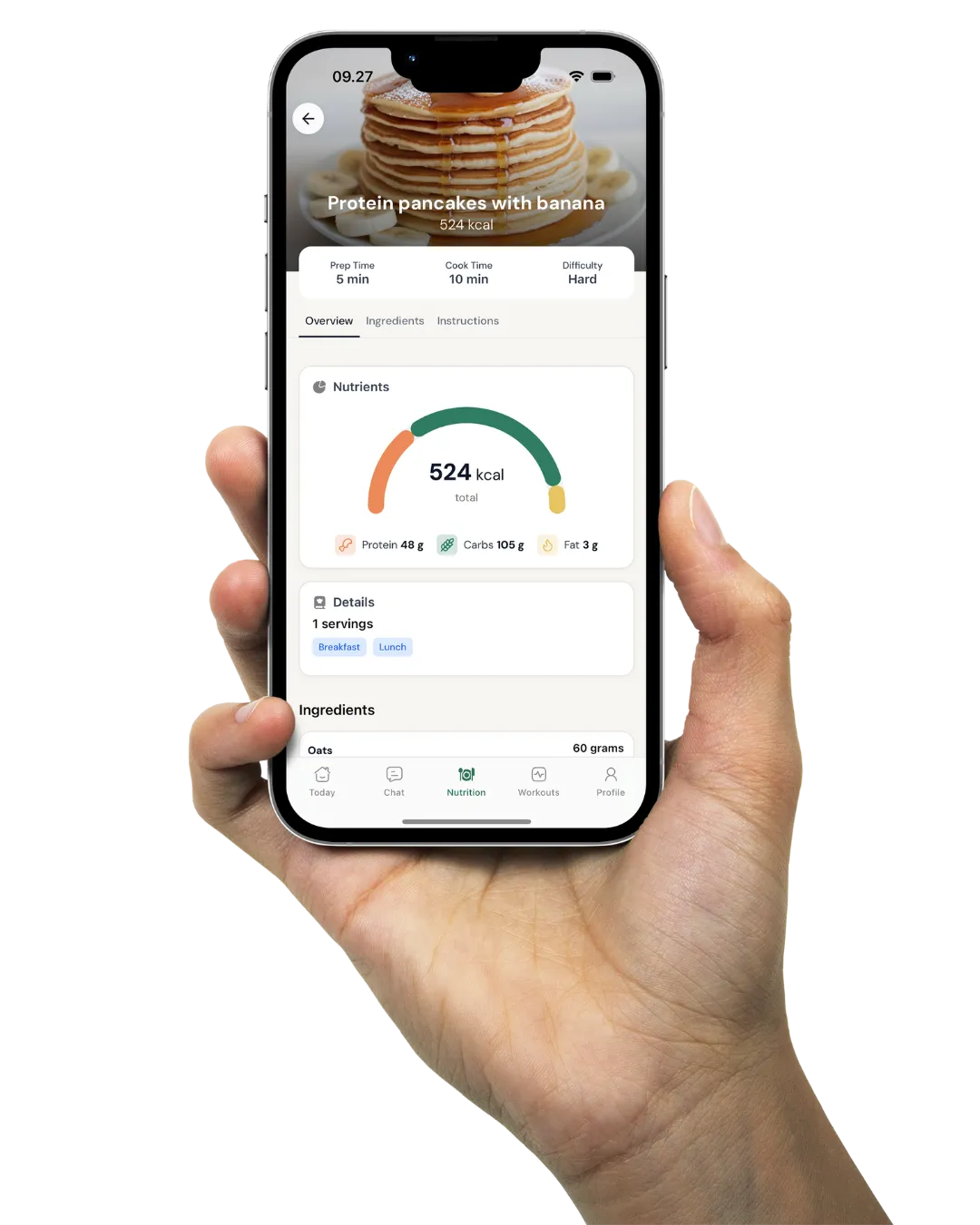
Coaching a larger-bodied client online lives or dies on clear demonstrations and a steady, kind check-in loop. Coachway carries the workout builder, the video demos, and the check-in forms on one screen, so you write a plan with the right regressions, the client sees exactly how each movement is done, and you review their week, their form clips, and their non-scale wins without jumping between apps. Coachway is EUR 69 per month for up to 5 clients, then EUR 9 per additional client, with every feature included and a 14-day free trial that asks for a card.
feature
Workout builder.
Build low-impact plans with the right regressions, video demos on every movement, and clear notes the client can follow at home.
feature
Check-in forms.
Weight trend, form clips, and notes on one screen, so you coach the non-scale wins and catch drift early.
free tool
TDEE calculator.
Set a realistic maintenance and deficit starting point before you build the plan around it.
Frequently asked questions about exercises for obese clients.
What are the best exercises for obese clients?
The best exercises are low-impact, joint-friendly, and scalable: supported or box squats, incline push-ups, seated and machine-based resistance work, walking and incline walking, and low-resistance cycling on an upright or recumbent bike. The goal is movements the client can perform with good form and full control, that keep impact off the joints, and that can be regressed to a chair or a wall and progressed as strength and confidence build. There is no single best exercise. The best choice is the one a cleared client can do consistently, comfortably, and without pain, which is usually a supported version of a basic strength and cardio pattern rather than anything advanced.
Is exercise safe for obese clients?
Exercise is generally safe and beneficial for people in larger bodies, but as a coach your first step is medical clearance, not a workout. Ask the client to be cleared to exercise by their doctor before you program anything, especially where there is any cardiovascular history, joint injury, or a recent medical event. Once a client is cleared, keep the load low-impact, start well within their capacity, watch for pain rather than pushing through it, and progress slowly. You are coaching movement for a healthy, cleared adult. Diagnosing, treating, or managing obesity and its medical conditions sits with the client's healthcare team, not with you.
Should obese clients start with cardio or strength training?
Both, but weight it toward what the client will actually keep doing, and lead with resistance training for most clients. Low-impact strength work protects muscle in a calorie deficit, builds the everyday capability that makes movement easier, and tends to feel more rewarding than long cardio sessions. Pair it with easy, low-impact aerobic work such as walking or cycling built up gradually, and use daily steps as the low-friction base rather than hard conditioning. For a larger-bodied beginner, two to three short resistance sessions plus a rising daily step target usually beats any plan built on high-impact cardio.
How do I coach a client in a larger body without shaming them?
Lead with respect and let the client set the frame. Use neutral, person-first language, ask what they want to be able to do rather than fixating on a number on the scale, and never moralise about food or weight. Check the practical details that protect dignity: equipment that fits and holds the load comfortably, positions that are easy to get into and out of, and a start point that guarantees an early win instead of an early failure. Coach effort and consistency, celebrate non-scale progress like more energy and easier daily movement, and remember that many clients arrive carrying bad past experiences with fitness. The environment you create is often the difference between a client who stays and one who quietly disappears.
Can I coach obese clients online?
Yes, and remote coaching has real advantages for this client. Training at home removes the gym anxiety that stops many larger-bodied clients from ever starting, lets them exercise in private while they build confidence, and needs little or no equipment to begin. Your job online is clear video demonstrations of every movement, careful regressions, a simple check-in rhythm, and honest form review from the videos or notes a client sends. It still starts with medical clearance and stays inside a coach's scope. What you cannot do remotely, or in person, is diagnose or treat, so keep a referral relationship with the client's healthcare team for anything clinical.
Keep reading
all guidesPersonal Trainer KPIs: The Metrics That Matter (2026)
Personal trainer KPIs split into two groups: client-progress signals you read weekly and business numbers you check monthly like churn, retention and LTV. Which to track, how often, and why leading indicators beat lagging ones.
Read the guide30 ChatGPT Prompts for Personal Trainers (Copy-Paste, 2026)
The best ChatGPT prompts for personal trainers do the writing you repeat every week - welcome emails, check-in replies, content hooks, sales-page drafts - and hand it back as a first draft you make yours. Thirty copy-paste prompts grouped by job, with the four-move brief that keeps AI output sounding like you, an honest line on what it must never touch (programming, nutrition, judgement), and the one rule running through all of them: describe the situation, never paste a client's health data.
Read the guidePersonal Training Upsells: What to Offer and Charge in 2026
The best upsells are a second offer to a client you already have. Six add-ons - nutrition, form checks, a group tier, paid challenges, priority access and digital products - with real price bands, which to run first, and how to introduce them without a pushy pitch.
Read the guideFree tools for this: Client Churn-Risk Reader · Client Check-in Builder · Client Onboarding Builder
See what Coachway can do for your coaching business
Coachway was built on knowledge from working with 150 online coaches over 6+ years, who all hit the same wall - slow platforms, clunky workflows, wasted hours. Start your 14-day free trial and see what we fixed - the whole platform, no charge today, cancel anytime under Billing.