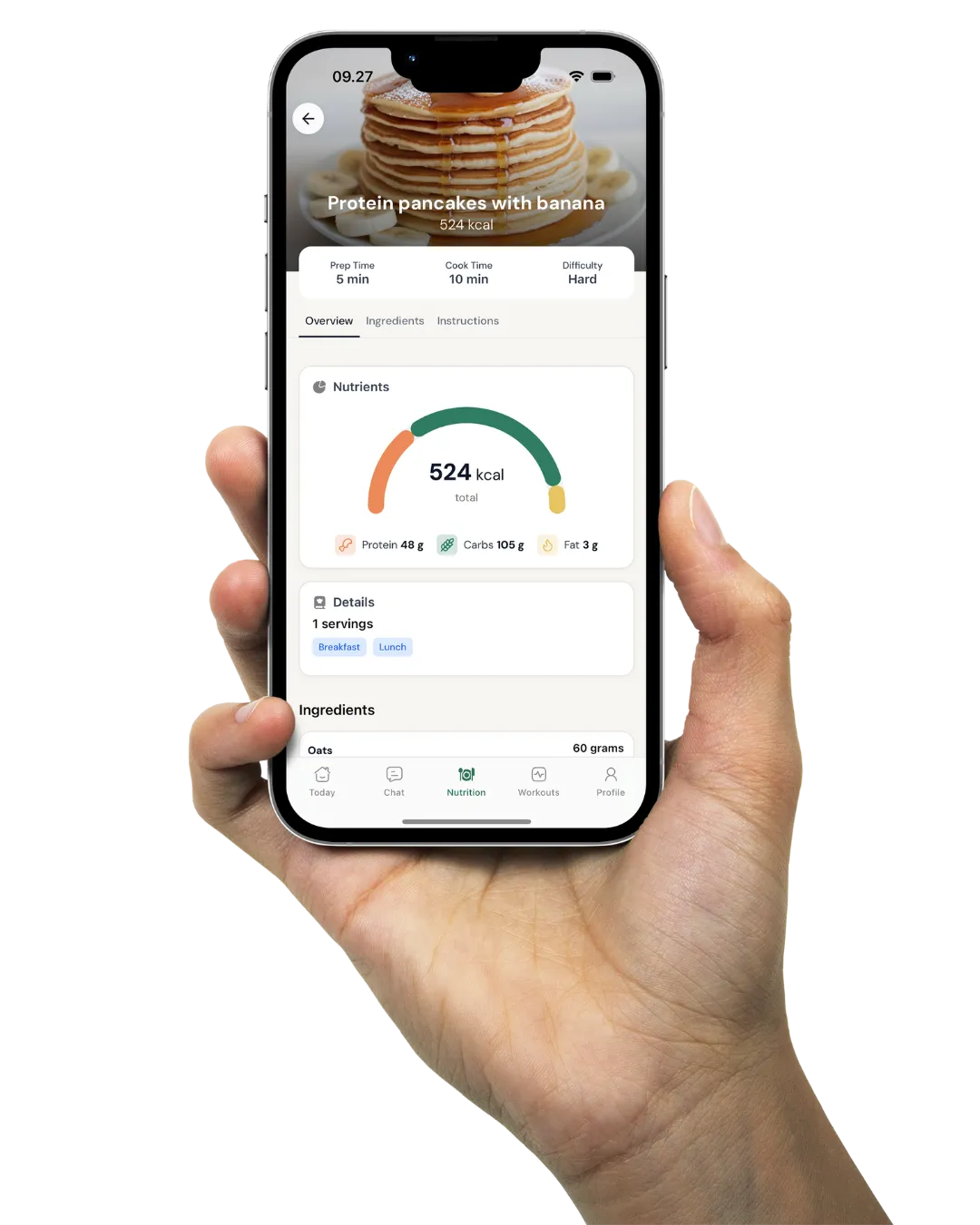
The true online coaching business costs - software, fees, insurance, tax and time.
Most guides tell you what to charge. Far fewer add up what it actually costs to run the business behind the charging. This is the honest line-by-line breakdown of online coaching business costs in 2026 - the recurring software, the fee on every payment you take, insurance, tax, and the biggest cost that never lands on an invoice: your own hours. Then how to read what is left as profit, and where the money quietly leaks.
By Markus Evers · Updated August 2026
the short version
For most solo coaches, the online coaching business costs that hit your bank account run to a few hundred euros a month, not a heavy overhead. The recurring cash lines are coaching software (commonly EUR 50 to 300 a month), card-processing fees on every payment (roughly 1.5% to 3% per transaction), professional insurance billed yearly, and accounting help. Coachway itself is EUR 69 a month for your first 5 clients and EUR 9 per additional client. On top of the cash sits tax, which is not profit even when it is in your account - and the largest cost of all, your unpaid delivery and selling hours. Read those two together and the real question stops being "what does it cost" and becomes "what is left, per client, after everything".
Why online coaching business costs are lower than coaches fear.
An online coaching business is one of the cheapest real businesses you can run, because it carries almost no inventory, no premises and no stock. There is no gym floor to rent, no equipment to replace, no products to buy before you sell them. That is exactly why the numbers feel slippery: the costs that would be obvious in a physical business - the lease, the fit-out - simply are not there, so coaches either assume it costs nothing or quietly overspend on tools without ever adding it up.
The honest way to see it is two ledgers. The cash ledger is the money that leaves your account every month or year: software, payment fees, insurance, accounting, advertising. The time ledger is the unpaid hours you pour into delivery, admin and sales - hours that never appear on a statement but decide how many clients you can hold and therefore what the business earns. The cash ledger is small and easy to control. The time ledger is where most coaching businesses are actually won or lost, and it is the one that the right systems change most.
What are the actual online coaching business costs, line by line?
Here is the full cash side for a typical solo online coach, from the largest recurring line down. Every range below is a planning range, not a quote - insurance, tax and processing vary by country - so treat the table as the shape of the bill, then price your own lines locally.
| Cost line | How it is billed | Typical range |
|---|---|---|
| Coaching software | Monthly, flat or per-client | EUR 50 to 300 / month |
| Card-processing fees | Per transaction | ~1.5% to 3% + small fixed fee |
| Professional insurance | Annually | Yearly premium, varies by country |
| Accounting / bookkeeping | Monthly or per return | From a small monthly fee upward |
| Marketing / advertising | Optional, monthly | EUR 0 to a chosen ad budget |
| Tax and VAT | On profit / on turnover | Set aside, not profit |
1. Coaching software - usually the largest recurring line.
This is where most of your controllable cash goes, and it is worth reading as cost per client rather than a flat monthly number, especially since the median Nordic coach charges EUR 181 per client per month according to our online fitness coaching statistics. Flat tiers run cheapest near the top of a tier and jump the moment you cross into the next one; per-client pricing tracks your client base, so the bill grows only as income grows; percentage platforms take a share of your coaching revenue, so they cost the most in absolute terms as you scale. The full detail of each model, and what it works out to at 10, 30 and 50 clients, is in the deep dive on what online coaching software costs. Coachway sits in the per-client camp at EUR 69 a month for your first 5 clients and EUR 9 per client after that, with every feature included and no add-on tiers. If you are starting with a handful of clients, compare what five clients cost on the main platforms before you pick.
2. Payment processing - a fee on every euro you collect.
Every card payment carries a processing fee, and this one is unavoidable no matter how you bill. Run your own Stripe checkout and you pay Stripe's standard card fee - broadly 1.5% to 3% per transaction plus a small fixed amount, depending on the card and country - and nothing to your platform. Some platforms add a fee on top of that when you use their built-in payments. Coachway's built-in payments are optional and carry a 2.4% per-transaction fee, while payments through your own Stripe checkout carry no Coachway fee at all, because the money settles in your own Stripe account and Coachway never holds it. The takeaway for your budget: card processing is always a line, a platform fee is only a line if you choose the convenience of built-in billing. More on the mechanics in how to take payments as an online coach.
3. Insurance - a small annual line that is easy to forget.
Professional liability or indemnity insurance is standard practice for anyone giving training and nutrition guidance, and it is billed once a year rather than monthly, which is exactly why it slips off the budget. The premium varies by country, cover level and whether you sit under a certifying body's group scheme, so the honest move is to get a quote in your market rather than trust a headline figure. Spread it across twelve months when you budget so it does not ambush you as a single annual hit, and keep the certificate current - lapsed cover is the kind of saving that costs the whole business if a client ever raises an issue.
4. Tax and VAT - real money, but not a cost you control.
Income tax and, once you pass your country's registration threshold, VAT are the biggest numbers in this whole guide, and the ones coaches most often mistake for profit because they land in the same account as everything else. The discipline is simple: the tax portion of every payment is not yours, so move it aside as it arrives rather than discovering the gap at year end. Two things make this far less painful than it sounds. First, legitimate business costs - your software, insurance, part of your phone and home office, courses - reduce the taxable figure, which is the whole point of tracking them; the deductions coaches can claim are worth knowing before you file. Second, if you sell across borders, the VAT rules for online coaches in Europe decide where and how you charge, and getting that right early is cheaper than fixing it later. None of this is legal advice - a local accountant is itself one of the smartest lines on the budget.
5. Marketing - the one line you set to zero or scale at will.
Client acquisition can cost nothing but time if you grow through content, referrals and your existing audience, or it can be a deliberate monthly ad budget once you know what a client is worth to you. Either way the calls you do book only pay off if they happen, so it is worth pricing what a no-show discovery call costs you before you scale spend. The number that keeps this line honest is not the ad spend itself but the ratio behind it: what you pay to win a client against what that client pays you over their time with you. Until you know that, treat paid acquisition as optional and lean on the free channels; once you know it, marketing stops being a cost and becomes an investment you can size on purpose.
The cost that never lands on an invoice: your own hours.
Add up the cash lines above and a solo coach with a handful of clients is often spending well under EUR 300 a month to run everything. That is not the number that decides whether the business is good. The number that decides it is how many hours each client takes, because your time is finite and every hour spent building a program by hand or copying a check-in between apps is an hour you cannot spend selling or serving another client. The unpaid time ledger is the real overhead of coaching, and it is invisible precisely because nobody sends you a bill for it.
This is why the smart lens on cost is per client, not per month. A tool that saves you a few hours a week is not an expense at that point - it has bought back the exact capacity you sell. It is worth knowing roughly how many hours online coaching actually takes per client, because that figure, more than any subscription, is what caps your income and sets the ceiling this whole business runs into.
The quiet leak: paying for a stack of half-used tools.
The cost that hides in plain sight is not any single line - it is the stack. A coach who bolts together a workout app, a separate nutrition tracker, a form tool, a scheduling app, a chat tool and a payment link is paying five or six subscriptions, none of which talk to each other, and paying again in the hours spent copying a client's details between them. Each tool looks cheap on its own; together they cost more than one platform and leak time at every seam. Adding it up is the first step - a tool-stack cost calculator shows the real monthly total once every subscription is on one screen, and it is usually higher than coaches expect.
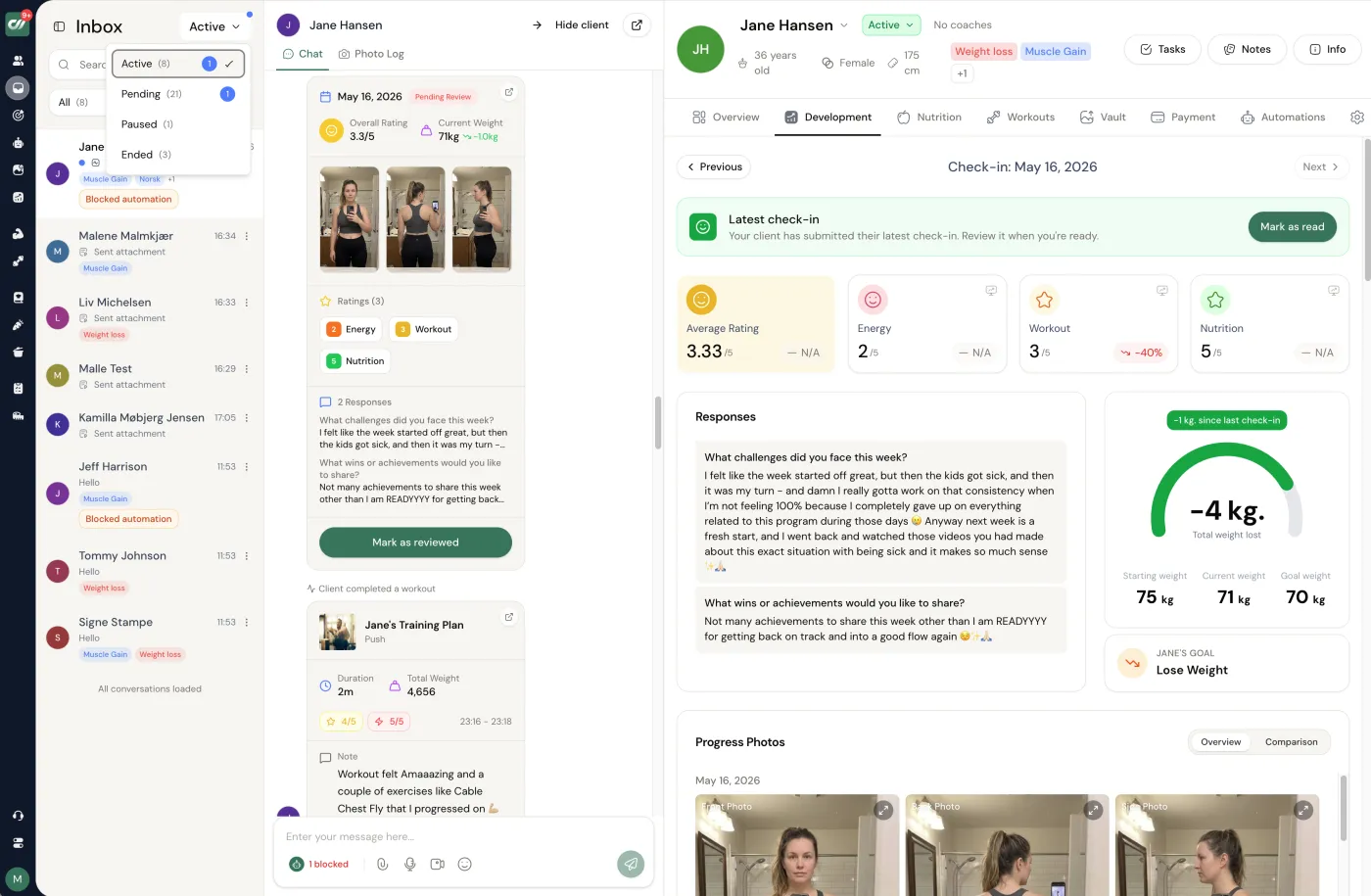
Consolidating that stack is where an all-in-one platform earns its keep on both ledgers at once: one predictable bill instead of six, and one client record instead of six copies to keep in sync. In Coachway the workout builder, nutrition and food logging, check-in forms, the client conversation and payments live in a single client file, so the admin tax between tools disappears and the cost becomes one line you can actually plan against. It is EUR 69 a month including your first 5 clients and EUR 9 per additional client, every feature included, built on knowledge from working with 150 online coaches over 6+ years. The 14-day free trial starts with a card held by Stripe and cancels under Billing before it renews - or book a demo and see the consolidated file first.
So what is left after the online coaching business costs?
Costs only matter next to revenue, so end the exercise the right way: net them out. Take a coach with 20 clients at EUR 150 a month - EUR 3,000 in billed revenue. Subtract a couple of hundred euros of software and processing fees and the cash margin is already high, because coaching has so little else to buy. What actually decides whether the business pays you well is the two lines that are easy to skip: the tax you must set aside, and the unpaid hours those 20 clients demand. A business that nets a healthy cash margin but eats every evening is not as profitable as the bank balance suggests.
The fastest way to see your own version of that picture is to put your real numbers in rather than trust a rule of thumb. A coaching profit calculator takes your client count, your prices and your costs and returns the figure that matters - what the business actually leaves you - and it turns "it feels like it should be profitable" into a number you can plan the next quarter against.
Frequently asked questions about online coaching business costs.
How much does it cost to run an online coaching business?
In 2026 the running cost of a small online coaching business is usually a few hundred euros a month in cash, plus tax and your own time, not a large fixed overhead. The recurring cash lines are coaching software (commonly EUR 50 to 300 a month depending on client count and pricing model), card-processing fees on the payments you take (roughly 1.5% to 3% per transaction), professional insurance billed yearly, and accounting help. Coachway itself is EUR 69 a month for your first 5 clients and EUR 9 per additional client, with every feature included. The largest cost is rarely on an invoice at all - it is the hours you spend delivering and selling, which is why coaches read cost per client and cost as a share of revenue rather than one flat monthly figure.
What are the biggest costs in an online coaching business?
The biggest costs split into cash and time. On the cash side, coaching software is usually the largest recurring line (EUR 50 to 300 a month for most coaches), followed by card-processing fees, professional liability insurance paid annually, accounting or bookkeeping help, and any paid advertising. On the time side - the cost coaches most often miss - are the unpaid hours spent on programming, check-ins, admin and sales, because those hours cap how many clients you can hold and are the real ceiling on profit. A useful habit is to price the software line as cost per client: one retained client typically covers the whole monthly software bill, so the tool stops being an expense and becomes leverage.
How much should coaching software cost as a share of revenue?
A comfortable range is roughly 3% to 8% of monthly coaching income spent on software. Below that you may be under-tooled and doing by hand what a platform would automate; well above it, the tool is eating margin that should stay in the business. Measured per client, software commonly runs EUR 2 to 15 per active client per month, and the higher end usually bundles a client app and built-in nutrition that cheaper tiers charge extra for. Coachway lands at EUR 69 a month for up to 5 clients and EUR 9 per client after that, so the share falls as your client base grows.
Do online coaches pay a fee on client payments?
It depends on how you take the money. If you connect your own Stripe account and run your own checkout, you pay Stripe's standard card-processing fee (broadly 1.5% to 3% per transaction depending on the card and country) and nothing to the platform. If you use a platform's built-in payments instead, some add a fee on top: Coachway's optional built-in payments carry a 2.4% per-transaction fee, while payments through your own Stripe checkout carry no Coachway fee. Coachway never holds your money - it settles in your own Stripe account - so the honest way to read the line is card processing always, plus a small platform fee only if you choose the built-in flow.
How do you work out the profit after online coaching business costs?
Take your monthly coaching revenue, subtract the cash costs - software, card-processing fees, insurance spread monthly, accounting, advertising - and you have operating profit before tax. Then set aside income tax and, where you are registered, VAT, because those are not profit even when they sit in your account. A quick example: a coach with 20 clients at EUR 150 a month bills EUR 3,000; after a couple of hundred euros of software and fees the cash margin is high, but tax and unpaid delivery hours are what decide whether the business actually pays you well. Running the figures through a profit calculator turns this from a guess into a number you can plan against.
Two calculators turn this guide into your own numbers: the tool-stack cost calculator adds up what your current subscriptions really total, and the profit calculator shows what is left after every cost. For the software line on its own, the full software-cost breakdown goes tier by tier.
Keep reading
all guidesHow to handle difficult coaching clients without losing your boundaries (2026)
Every coach meets the non-compliant, over-needy, never-happy, late-paying, and ghosting client. They are predictable - and most of the damage is preventable with clear expectations set early and boundaries you actually hold. A type-by-type playbook plus when to let a client go.
Read the guideHow to retain online coaching clients and reduce churn (2026 guide)
Most coaches chase new clients while quietly losing the ones they already have. This guide covers why retention beats acquisition economically, the real churn signals (missed check-ins, going quiet, slowing logins), early-warning alerts on an inactivity threshold, a consistent weekly check-in cadence, making progress visible with charts and photos, re-engagement and plateau plans, and the honest truth that some churn is healthy.
Read the guideHow to avoid burnout as an online fitness coach (2026)
Most coaches do not burn out from working hard. They burn out from an always-on inbox, too many clients, no real hours, the weight of carrying everyone's progress, and a price so low the only way to earn enough is to over-serve. The honest fix: cap the load, set boundaries you can keep, automate the repetitive parts, and put your human energy where it matters.
Read the guideFree tools for this: Client Capacity Calculator · Assistant Coach ROI Calculator · Client Churn Rate Calculator
See what Coachway can do for your coaching business
Coachway was built on knowledge from working with 150 online coaches over 6+ years, who all hit the same wall - slow platforms, clunky workflows, wasted hours. Start your 14-day free trial and see what we fixed - the whole platform, no charge today, cancel anytime under Billing.