


Retaining GLP-1-era clients - the business side of the shift.
A GLP-1-era client is a personal training client who reaches you already mid-weight-loss, with appetite handled by a medication their doctor prescribed. That one change rewrites your offer. The value you sell is no longer the calorie deficit, it is protecting muscle, guiding body recomposition, and building habits that hold when the fast loss slows down. This guide is about the business of that shift: tenure, packages, check-ins, positioning, and where the referral relationships sit. The training-and-nutrition mechanics live in the GLP-1 coaching overview.
By Markus Evers · Updated August 2026
the short version
To retain GLP-1-era clients, redesign the offer around the phase they actually need help with, not the one the medication already covers. These clients arrive mid-loss, so the retention risk is that fast early results make them feel finished before the durable work starts. Set expectations in week one, score progress on strength and habits rather than the scale, sell longer packages that carry through the maintenance phase, and position everything as coaching, not medicine. Do that, and the referral channel from clinics and healthy word of mouth starts working for you instead of against.
A note on scope. This is a business guide, written for coaches, about tenure, pricing, and positioning. It is not medical advice. GLP-1 medications are prescription drugs, and anything about starting, stopping, dosing, or managing them stays with the client's doctor or prescriber. Everything below is about the part a coach controls: the training, the food habits, the accountability, and the offer wrapped around them.
Why the GLP-1 era changes the offer, not just the client.
For most of the fitness industry's history, the coach owned the whole arc: create the deficit, hold the client to it, and manage the slow grind of appetite and willpower. GLP-1 medications took the first job off the table. The client who used to hire you to lose weight now arrives having already lost a chunk of it, with the appetite piece handled elsewhere. That is not a smaller job for a coach. It is a different one, and the coaches who keep treating it like the old job are the ones who feel replaced.
The industry has already turned to face this. In NASM's January 2026 survey of more than 600 fitness professionals, 56% named GLP-1 usage the year's top trend, with trainers pivoting toward the muscle-preservation and recomposition work these clients need. The demand is real, arriving pre-motivated, and looking for exactly the thing a good coach sells. The only question is whether your offer is built to hold it.
Here is the business consequence that matters most: the value moves down the timeline. The old money was in the fast loss. The new money is in what happens after it, protecting the muscle underneath, guiding body recomposition, and installing habits that survive the day the medication phase changes. That is later, longer, and quieter work than a 12-week transformation, and it is where retention either happens or does not.
Fast loss is the retention trap. Plan for it.
A client who watches the scale drop quickly can feel finished before the work that lasts has even started. That is the single biggest tenure risk of the GLP-1 era, and it is the opposite of the usual problem. Your job is not to keep a discouraged client motivated through a plateau, it is to keep an encouraged client from declaring victory in month two. Three moves handle almost all of it.
Set the arc in week one
Tell the client plainly that the fast loss is the easy part, and the reason they hired a coach is the phase after it. When the slowdown comes, it is the plan working, not a problem. A client who hears that on day one does not panic on day sixty.
Move the scorecard
Make strength, how clothes fit, energy, and habit streaks the headline metrics. When progress lives somewhere other than the scale, the client keeps seeing wins in the weeks the number stalls, and the reason to stay stays visible.
Name the next goal early
Before the loss slows, give the client a fresh target that has nothing to do with a smaller number: a first pull-up, a visible shape change, a habit that runs on autopilot. A client with a next goal does not treat the plateau as a finish line.
None of this is GLP-1-specific in spirit, it is retention. What is specific is the timing: the danger point arrives earlier and feels like success, so the expectation-setting has to happen sooner. The wider mechanics of keeping clients month after month are in how to retain online coaching clients, and the case for tracking beyond bodyweight is in tracking client progress beyond the scale.
Structure the package for the long tail, not the fast start.
A 12-week transformation package is built for a client who needs a coach to create and survive a deficit. A GLP-1-era client barely needs that part, so a short package sells them the phase they need least and stops right before the phase they need most. The packaging fix is to lengthen the default and shift what the commitment is for.
| Phase | What the client is doing | What the package should cover |
|---|---|---|
| Fast loss | Weight coming off quickly, appetite low, motivation high. Feels great, needs the least coaching. | Onboarding, training habit, protein-first structure, and above all the expectation that this phase ends. |
| Recomposition | Scale slowing, shape still changing. The muscle-protecting, strength-building work does its job here. | Steady check-ins, progressive training, a scorecard off the scale, and a clearly named next goal. |
| Maintenance | Result reached or the medication phase shifting. The moment habits either hold or unravel. | Habit durability, a lighter but real check-in rhythm, and the plan for keeping the result long term. |
Read down that table and the packaging answer is obvious: a 6-month or 8-month commitment carries a client through all three phases, where a 12-week one abandons them at the border of the second. Longer packages also raise lifetime value on the same acquisition effort, and they tend to produce better results, because the client has the time to actually build the habits. The full logic of package length and price sits in how to price online coaching packages and structuring personal training packages.
One caution on offer design: do not build the package around the drug. Build it around the outcome, muscle kept, a body that holds its shape, habits that run without you. The medication is the client's, and it may change. A package sold on the coaching outcome survives that change. A package sold as a bolt-on to a prescription does not. If you are shaping the offer from scratch, how to create an online coaching offer walks through the pieces.
Check-ins that hold a client through the quiet phase.
For a GLP-1-era client, the check-in is the retention tool, because it is where the moved scorecard actually shows up week to week. The rhythm matters more than the volume: a steady weekly touch that keeps surfacing non-scale progress beats a heavy monthly report that only tells the client what they already fear when the number flattens.
What to keep in front of the client
- Strength, first. Lifts holding or climbing is the clearest sign the recomposition work is landing, and it is a win the client can feel even when the scale sits still.
- Fit and photos over bodyweight. Make how clothes fit and monthly photos the headline, so a flat scale week still reads as progress instead of failure.
- Habit streaks. Consistency on training and protein-first meals is the thing that survives the medication phase, so celebrate the streak, not just the outcome.
- The next goal. Keep a forward target visible in every check-in, so the client is always moving toward something, not away from a number.
- A note for the prescriber's lane. If a client raises anything medical in a check-in, your answer is that it is one for their prescriber, and you log it. That is a business habit as much as a safety one.
The underlying mechanics of a fast, repeatable weekly review are in how to do client check-ins as an online coach, and the art of setting targets that clients actually stick to is in setting client goals that stick. The training side of this rhythm, and how it protects lean mass, is the focus of the GLP-1 strength training guide.
Market the coaching, never the medicine.
The fastest way to damage both your credibility and your legal footing is to position yourself anywhere near the drug. You do not prescribe it, dose it, replace it, or improve on it, so your marketing should not imply any of those things. Sell what a coach actually controls: strength kept while weight comes off, a body that holds its shape, habits that outlast the medication phase, accountability that a prescription cannot provide. That message is honest, it is defensible, and it happens to be the exact thing these clients are looking for.
Keeping the line clean is not just caution, it is positioning. A coach who is obviously non-medical, who refers anything clinical straight back, and who documents that they did, is a coach a client trusts and a clinic can safely work with. The boundaries are laid out in scope of practice for online coaches, and the training-and-nutrition specifics of staying in lane are covered in the GLP-1 coaching overview.
The referral relationship, done right
Clinics and providers prescribing these medications keep running into the same gap: they can handle the prescription, but not the training and habit side that makes the result last. A coach who is clearly in the coaching lane is the safe place for them to send those patients. That makes the healthcare referral one of the strongest client channels of this era, and it costs nothing but professionalism to earn.
Approach it as a specialist, not a salesperson. Introduce yourself as the person who owns resistance training, nutrition habits, and accountability, and who refers everything medical straight back to them. Make the relationship easy to trust by keeping clean client records and a tidy intake that flags who prescribed what. A provider who sees you stay in your lane once will keep sending clients, because you have made yourself the low-risk option. Stray out of it, even once, and the channel closes.
Retention runs on the phase after the fast loss.
Everything that keeps a GLP-1-era client, the moved scorecard, the steady check-in rhythm, the visible next goal, is delivery work that gets heavier the more of these clients you hold. You can run it on a form and a spreadsheet at first. The case for a platform shows up when tracking strength, fit, habit streaks, and dose context across a full client list starts eating your evenings.
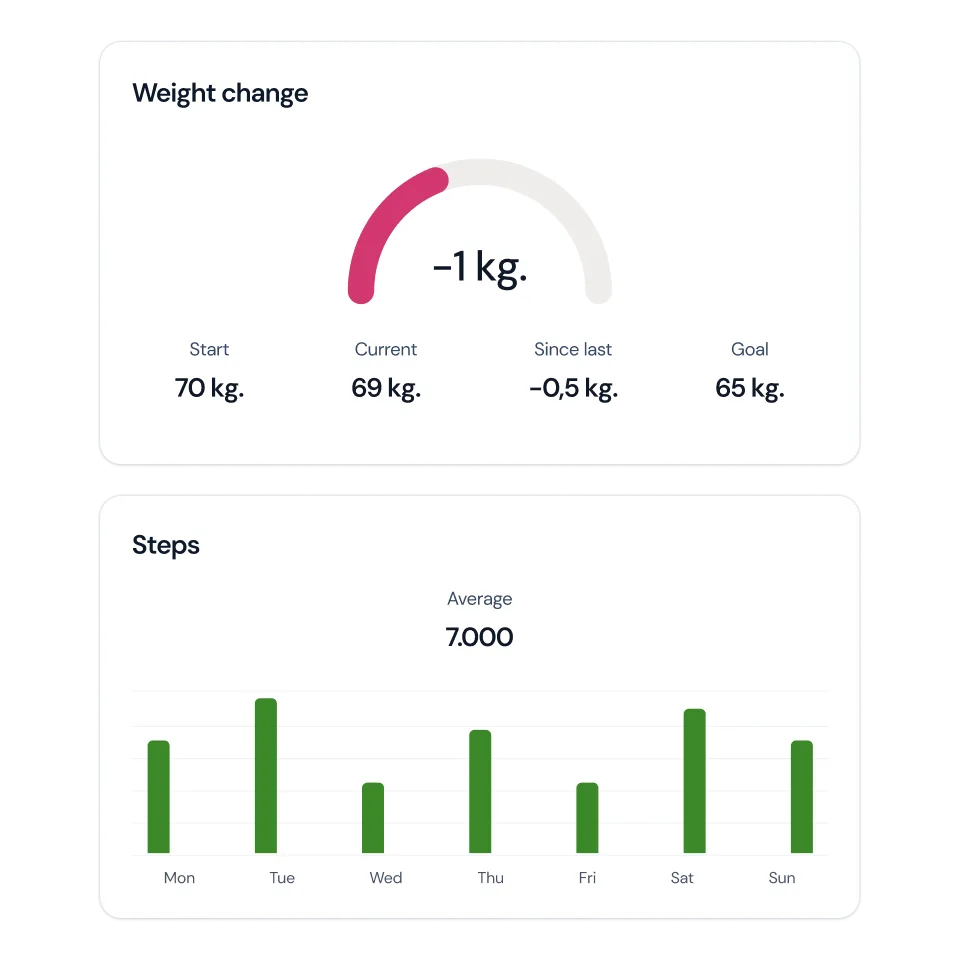
A scorecard off the scale
Custom check-in forms track strength, photos, fit, and habit streaks, so the win a GLP-1-era client needs to see is front and centre every week, not buried under a flat bodyweight number.
A rhythm that does not slip
Simple automated reminders keep the weekly touch steady across a long package, so the maintenance phase, where retention is won, does not go quiet the moment things feel handled.
A first week that lands
A branded client app with a real plan in the first hours sets the arc early, the single highest-leverage thing for keeping a client through the phase they were actually hired for.
Pricing that rewards longer
EUR 69 a month for up to 5 clients, then EUR 9 per additional active client, every feature included, on a 14-day trial that asks for a card. Predictable per-client cost, so the longer packages these clients need do not cost you more to run. See the full pricing.
Frequently asked questions about retaining GLP-1 clients.
What does a GLP-1-era client mean for my coaching business?
It means a growing share of new personal training clients arrive already mid-weight-loss on a GLP-1 medication their doctor prescribed, rather than starting from scratch with you. The appetite side is handled before they ever reach you, so the value you sell shifts from creating a calorie deficit to protecting muscle, building durable habits, and guiding body recomposition. In practice the coaching offer moves from short results-in-12-weeks packages toward longer, maintenance-minded relationships, because the phase these clients most need help with is the one after the fast loss slows down.
How do I retain GLP-1 clients when the weight comes off so fast?
Fast early loss is the retention risk, because a client who sees the scale drop quickly can feel finished before the work that lasts has even started. The fix is expectation-setting in week one and a scorecard that does not live on the scale. Frame the engagement around strength, how clothes fit, energy, and habits that hold, so the client can see progress in the weeks the scale stalls. Position the maintenance phase, when the fast loss ends, as the part you were hired for, not the wind-down. Clients who understand that up front stay through it.
How should I structure a package for a GLP-1 client?
Lean toward longer commitments than a standard 12-week transformation, because the durable-habit and recomposition work these clients need runs on a longer clock. A 6-month or 8-month structure gives the client time to build the training and eating habits that keep the result, and it raises lifetime value on the same acquisition effort. Keep the check-in rhythm steady rather than front-loaded, and make sure the package clearly covers the phase after the fast loss, since that is exactly when an under-scoped client tends to churn. Walk through the numbers in how to price online coaching packages.
Can I market to GLP-1 clients without making medical claims?
Yes, and staying non-medical is what keeps the positioning both legal and credible. Sell the coaching outcome, not the drug: strength kept, habits that last, a body that holds its shape when the medication phase changes. Do not claim to prescribe, dose, replace, or improve on any medication, and do not imply results that depend on the drug itself. Speak to what a coach actually controls, the training, the food habits, the accountability, and let the client's prescriber own everything medical. More on the boundary in scope of practice for online coaches.
Should I build a referral relationship with the client's doctor or clinic?
It can be one of the strongest client channels of the GLP-1 era, as long as you stay firmly in the coaching lane. Clinics prescribing these medications increasingly want somewhere to send patients for the training and habit side they cannot deliver, and a coach who is clearly non-medical, reliable, and good at documentation is a safe referral for them. Introduce yourself as the person who handles resistance training, nutrition habits, and accountability, refer anything medical straight back, and make the relationship easy by keeping clean records. Stay in your lane and the channel keeps sending clients.
Keep reading
all guidesHow to coach clients on GLP-1 medications (Ozempic, Wegovy, Mounjaro)
An evidence-informed guide for online coaches: your real role, preserving muscle, protein, side effects, expectations, and where the medical line is.
Read the guideHow to retain online coaching clients and reduce churn (2026 guide)
Most coaches chase new clients while quietly losing the ones they already have. This guide covers why retention beats acquisition economically, the real churn signals (missed check-ins, going quiet, slowing logins), early-warning alerts on an inactivity threshold, a consistent weekly check-in cadence, making progress visible with charts and photos, re-engagement and plateau plans, and the honest truth that some churn is healthy.
Read the guideHow to price your online coaching packages (2026 guide)
Most coaches do not have a pricing problem - they have an anchoring problem: they price the hours instead of the outcome, sell one-off blocks instead of recurring commitments, and never raise the number even when the waitlist says they should. This guide covers value-based vs cost-plus pricing, building good/better/best tiers, why monthly recurring wins, when to raise your prices, charging what your time is genuinely worth, and how predictable platform costs protect your margin.
Read the guideFree tools for this: Referral Value Calculator · Ad Spend Breakeven Calculator · Email List Value Calculator for Coaches
See what Coachway can do for your coaching business
Coachway was built on knowledge from working with 150 online coaches over 6+ years, who all hit the same wall - slow platforms, clunky workflows, wasted hours. Start your 14-day free trial and see what we fixed - the whole platform, no charge today, cancel anytime under Billing.


