A client progress tracker that reads six signals - not just the scale.
A client progress tracker that only reads the scale will lie to you about half your clients. Weight moves for a dozen reasons that have nothing to do with fat, and a client who weighs in after a hard training week, a salty meal or a broken night sees a number that seems to say the work is not working - and quietly starts to drift. This is the multi-metric method good coaches actually run: six signals read together, on a fixed cadence, so a flat morning never gets to overrule a month of real change.
By Markus Evers · Updated August 2026
the short version
A useful client progress tracker holds six signals, not one: the weekly weight average, body measurements, standardised photos, a performance marker, adherence, and one or two subjective scores like energy and sleep. Read the fast signals weekly, change direction every two to three weeks, and never let one line decide alone. Weight is the noisiest, so react to it last.
Why does the scale mislead so many clients?
Bodyweight is a single number standing in for a very noisy system. On any given morning it reflects hydration, glycogen, sodium, the last meal, the last workout, sleep, hormones and where a client is in their cycle - and only somewhere underneath all of that, the slow change in fat and muscle that coaching is actually meant to move. A client can lose a genuine half kilo of fat across a week and still see the scale rise because they trained hard on Thursday and ate salty food on Saturday. They do not read that as noise. They read it as failure, and a client who believes they are failing stops logging, stops replying and eventually stops paying.
This is why single-metric tracking is quietly one of the biggest drivers of churn in online coaching. It is not that the scale is useless - a rising or falling weekly average across a month is real information. The problem is the weight taken alone, read daily, and treated as the verdict on the whole plan. The fix is not a better scale or a smarter formula. It is refusing to let one number carry the entire story, and building a client progress tracker that surrounds weight with signals it cannot fake. When the scale is flat but the waist is down, the photos are leaner and a lift went up, the client is winning - and your job is to make that legible to them before they talk themselves out of the plan.
The six signals a client progress tracker should hold.
Each of the six catches something the others miss, and together they cross-check each other so no misleading line gets to drive the decision. You do not need all six for every client or every goal, but you want at least four in view whenever you decide whether to hold, push or adjust. When the month ends, the six signals become the one-page client progress report the client actually reads.
1. Weight, as a weekly average - not a daily verdict.
Keep weight in the tracker, but change how you read it. A single morning is mostly water; the seven-day average is where the signal lives. Ask for daily or near-daily weigh-ins so the average has something to work with, and compare this week's average to last week's rather than day to day. A rolling average smooths out the salt, the sleep and the hard leg session, and it turns a jagged, discouraging line into a trend a client can actually trust. This one change - average, not verdict - fixes most of the damage a scale does on its own.
2. Circumference measurements, every two to four weeks.
The tape catches what the scale cannot: a client whose weight holds steady while their waist drops is recomposing, gaining muscle as they lose fat, and that is a win the scale actively hides. Take the waist as the priority site, add hips and one or two others such as thigh and arm, and measure at the same time of day under the same conditions every two to four weeks. Measurements move slower than weight but they are far more honest about body-shape change, and they are often the first place a "stalled" client's real progress shows up.
3. Progress photos, standardised so they never lie.
The mirror frequently shows change the tape and the scale both miss, which is why photos belong in every tracker. The catch is standardisation: same light, same room, same pose, same time of day, similar clothing, ideally front, side and back. Without that, a flattering angle or better lighting reads as fat loss and you mislead yourself and the client. Taken properly and reviewed side by side against an earlier set, photos are the single most motivating signal a client sees. There is a full method for shooting and comparing them in our guide to client progress pictures, including the consent and storage side.
4. Performance - the number that keeps rising when weight does not.
A client getting measurably stronger or fitter is adapting, whatever the scale says. Track one or two clear performance markers that fit the goal: reps or load on a key lift, a distance or pace for endurance clients, or simply total volume trending up over a block. Performance is uniquely useful because it climbs on the exact weeks weight stalls, so it hands a discouraged client an unambiguous win when they most need one. It also protects the plan - a person losing weight while their lifts collapse is losing muscle, and the performance line is where you catch that early enough to fix it.
5. Adherence - the days-hit percentage behind every result.
Adherence is the signal that tells you whether a stall is a plan problem or a consistency problem, and it is the one most trackers skip. Measure it plainly: the share of planned training sessions completed, the share of days the nutrition target was hit, the check-ins actually submitted. A client at ninety percent adherence whose weight is flat needs a plan change; a client at fifty percent adherence does not need a new plan, they need to run the current one. Knowing which situation you are in stops you from cutting calories on someone who was never really following the plan in the first place. For the nutrition side of adherence specifically, the deeper method is in assessing client nutrition progress.
6. Subjective markers - energy, sleep, hunger, mood, stress.
The felt signals are not soft extras; they are the guardrail that tells you whether a result is sustainable. Score two or three of them weekly on a simple one-to-five or smiley scale - energy, sleep quality, hunger, mood, stress. A client losing weight while every one of these collapses is not succeeding, they are heading for a rebound, and the number that looks best on paper is the one setting up the failure. Read the other way, a client whose scale is flat but whose energy and sleep are climbing is building the exact conditions that make long-term change stick. These markers are how you coach a human being rather than a spreadsheet.
How do you actually run six signals without drowning in data?
The risk with a multi-metric tracker is that it becomes a wall of numbers nobody reads. Keep the per-client panel in its own log; the one-row-per-client client tracker spreadsheet only needs the two-week weight average and the date of the last check-in. The fix is cadence: fast signals get a light weekly touch, slow signals get a proper review every two to three weeks, and only the review triggers a change. For the calorie target specifically, the review is the two-week adjustment protocol, which decides hold, small cut or add back from the weekly averages and the adherence figure. Run it in three moves.
Weekly: a light touch on the fast signals.
Each week the check-in brings in the weight average, adherence and the subjective scores. Glance at them, acknowledge the client, and watch for anyone going quiet - a missed check-in is itself a progress signal. This is accountability, not a decision point. Resist the urge to change calories or training off one week, because a single week of poor sleep or a holiday weekend will move these numbers without meaning anything. The weekly touch keeps the client feeling seen and catches drift early; it does not steer the plan.
Every two to three weeks: the whole-panel review.
On the slower clock you lay all six signals side by side - the weight trend, the fresh measurements and photos, the performance line, adherence and the felt scores - and only now do you decide whether to hold, push or adjust. Two to three weeks is roughly the window over which real body change becomes visible, so it is the shortest honest interval for a direction change. Reading them together is the whole point: four of six moving the right way means hold the course even with a flat scale; the scale dropping while performance, energy and sleep all fall with it is a warning, not a win.
Show the client the panel, not just your conclusion.
The tracker only earns its keep when the client sees it too. A person staring at a stalled scale needs to be shown the waist that dropped, the photo that looks leaner and the lift that went up, in their own numbers, or they will not believe the plan is working no matter how confidently you say it. Retention lives here: making progress visible is one of the strongest levers against churn, and a client who can see four things moving forgives the one that is not. When a genuine plateau does arrive, change one variable at a time so you learn what worked - the method is in our guide to breaking through a plateau.
Keeping the whole tracker in one client file.
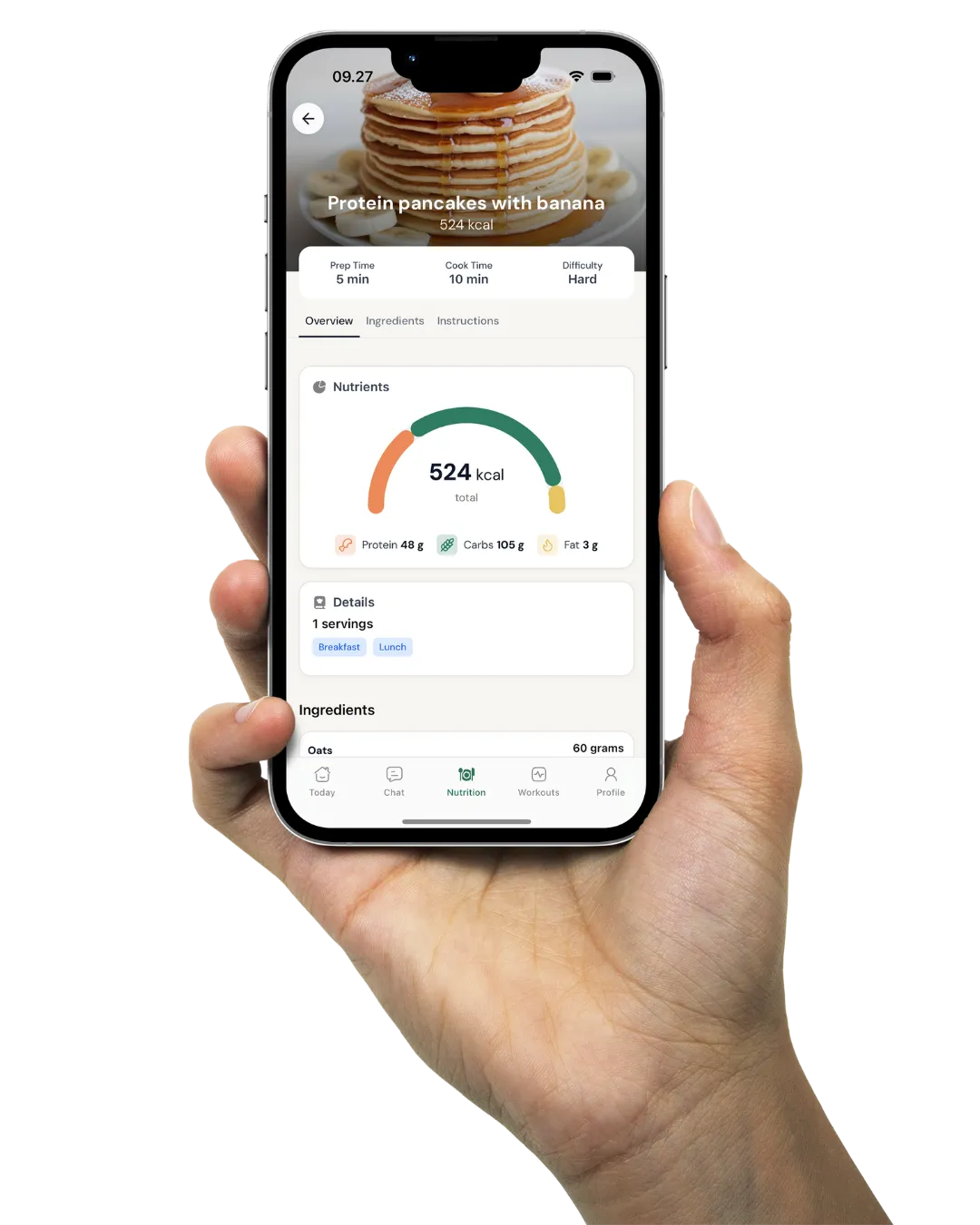
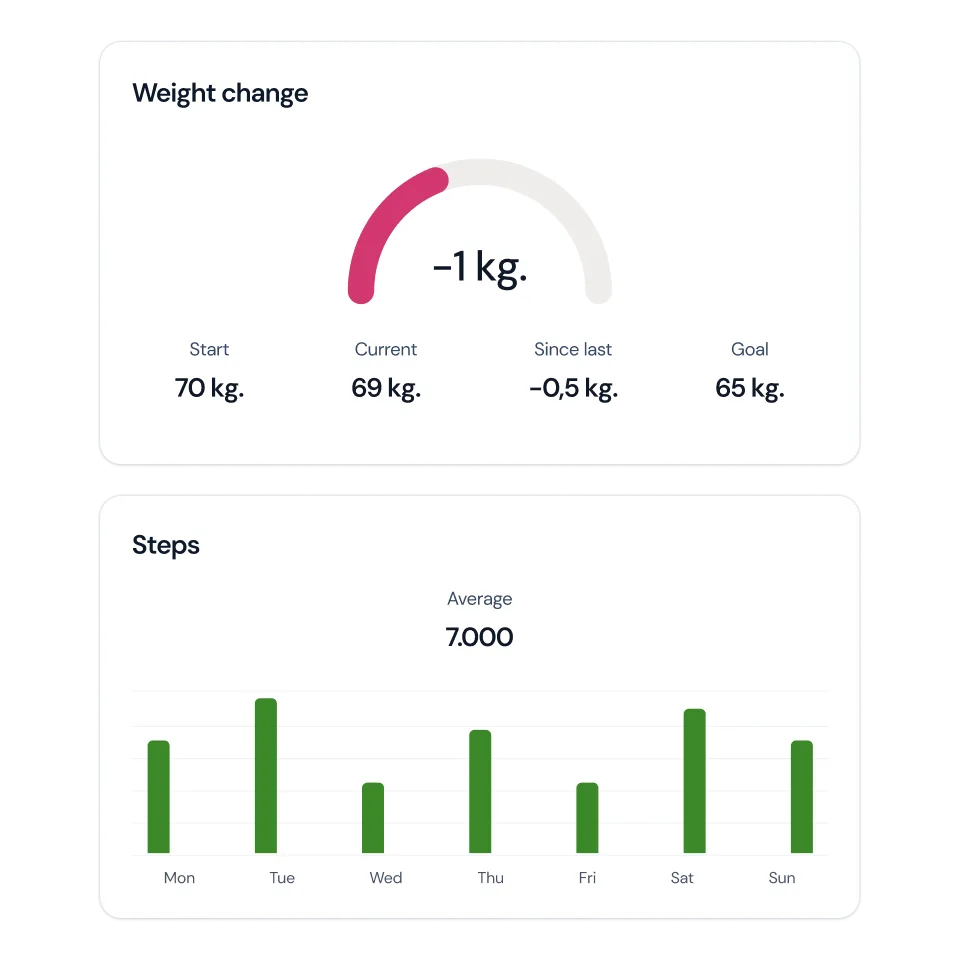
Six signals scattered across a weigh-in app, a photo folder, a training log and a notes doc is how a tracker quietly falls apart - the review takes an hour, something always goes missing, and you end up back at the scale because it is the only number in front of you. The point of a client progress tracker in one place is that the panel assembles itself. In Coachway the drag-and-drop check-in form builder collects weight, circumference measurements, progression photos, smiley or star ratings and any custom metric you add, on a schedule you set per client with automatic reminders. The check-ins tab then puts this week's answers next to the weight trend and the progress photos on one screen, so the whole-panel review is a glance rather than a scavenger hunt, and the client app carries a weight-change card plus run, ride, walk and step import so the day-to-day movement stays visible. The coach dashboard is in English; the client app is available in English, Danish, Norwegian, Swedish, Finnish and German. It is built on knowledge from working with 150 online coaches over 6+ years, and it costs EUR 69 a month with your first 5 clients included and EUR 9 per additional client after that, every feature included. The 14-day free trial starts with a card held securely by Stripe and cancels under Billing before it renews - or book a demo and see the check-in review first. The client count at which that file outgrows a spreadsheet, by the coaches who report it, is in when a spreadsheet stops being enough.
Frequently asked questions about tracking client progress.
How do you track client progress beyond the scale?
You stop reading one number and start reading a small panel of signals together. A working client progress tracker holds six of them: the weekly weight average rather than any single morning, body measurements taken every two to four weeks, standardised progress photos, a performance marker such as reps or load on a key lift, adherence measured as the share of planned days the client actually hit, and one or two subjective markers like energy, sleep and hunger scored on a simple scale. No single line decides anything. When four of the six are moving the right way, the plan is working even if the scale is flat, and when the scale drops while performance, energy and sleep all fall with it, that is a warning rather than a win. The discipline is to review the whole panel on a fixed cadence, not to react to whichever number moved most this morning.
What should a client progress tracker actually measure?
Six things, chosen because each one catches what the others miss. Weight, but as a seven-day average, so daily water and food swings stop masquerading as fat change. Circumference measurements at the waist, hips and one or two other sites, because a stable weight with a shrinking waist is recomposition, not a stall. Progress photos in the same light, pose and clothing, since the mirror often shows change the tape misses. A performance number, because a client getting stronger or fitter is adapting whatever the scale says. Adherence, the days-hit percentage that tells you whether a stall is a plan problem or a consistency problem. And subjective markers - energy, sleep, hunger, mood, stress - scored weekly, because a body that is losing weight while every felt signal collapses is not succeeding. The point of measuring all six is that they cross-check each other, so no single misleading number gets to drive the coaching decision.
How often should you review client progress?
Read the fast signals weekly and make direction changes every two to three weeks. Weight average, adherence and the subjective scores come in with the weekly check-in and are worth a quick look, but a single week is too short and too noisy to justify changing calories or training - one bad week of sleep or one holiday weekend will move those numbers without meaning anything. The measurements and photos update on a slower clock, every two to four weeks, which is roughly the window over which real body change becomes visible. So the honest rhythm is a light weekly touch to keep the client accountable and to catch anyone going quiet, and a proper fortnightly or three-weekly review where you lay the whole panel side by side and decide whether to hold, push or adjust. Reacting faster than that mostly means reacting to noise.
What do you do when the scale stalls but the client is doing everything right?
First confirm the stall is real by ignoring the scale for a moment and reading the rest of the tracker. A genuinely adhering client whose weight is flat is very often still changing: the waist measurement is down, the photos look leaner, a lift went up, energy is steady. That is recomposition and progress hiding inside a flat number, and the right move is to show the client the other signals, not to cut their food. If the weight average is truly flat across three or more weeks and the measurements and photos have also stopped, then it is a real plateau and you change one variable at a time so you learn what worked. The mistake to avoid is slashing calories the first week the scale disagrees with you, because you will usually be reacting to normal water noise and you will have burned a lever you did not need to spend.
How does Coachway help track client progress beyond weight?
Coachway is built to hold the whole panel in one client file rather than in scattered apps. The drag-and-drop check-in form builder collects weight, circumference measurements, progression photos, ratings and any custom metric you add, on a schedule you set per client, with automatic reminders. The check-ins tab then shows this week's answers next to the weight trend and the progress photos on one screen, and the client app carries a weight-change card and step and activity import so the day-to-day movement is visible without a spreadsheet. The coach dashboard is in English; the client app is available in English, Danish, Norwegian, Swedish, Finnish and German. Coachway costs EUR 69 a month with your first 5 clients included and EUR 9 per additional client, every feature included, and the 14-day free trial starts with a card held securely by Stripe that you can cancel under Billing before it renews.
A progress tracker is one half of retention; the weekly rhythm that feeds it is the other. See what a good client check-in collects, how making progress visible retains clients, and how to read the nutrition side of progress when weight alone stops moving.
Keep reading
all guidesMeal Prep for Clients: A Coach's Adherence Guide
Meal prep is one of the biggest adherence levers a coach can teach. What it is, why it moves results, how to build a simple weekly component-based system that hits macro and calorie targets, and how to teach the skill so it lasts.
Read the guideCreatine for Clients: A Coach's Honest Guide
Creatine is a compound stored in muscle that aids short, intense efforts - one of the most-researched supplements in fitness. The honest evidence, the ~3-5 g/day monohydrate dose, the water-weight nuance, and how coaches frame it.
Read the guideHow to run remote form checks and video technique reviews online (2026)
A remote form check is how an online coach reviews a client video and sends back precise feedback. How to set clients up to film, review efficiently with async video, and give feedback that fixes one thing at a time.
Read the guideFree tools for this: Lift Progression Reader · Client Check-in Reader · Goal Weight Date Calculator
See what Coachway can do for your coaching business
Coachway was built on knowledge from working with 150 online coaches over 6+ years, who all hit the same wall - slow platforms, clunky workflows, wasted hours. Start your 14-day free trial and see what we fixed - the whole platform, no charge today, cancel anytime under Billing.