


Platforms that help personal trainers find clients.
Lead sites, directories, Google, social media and the gym down the road all promise clients. They work in very different ways: some charge you for every enquiry, some cost nothing but time, and some hand you the warmest leads you will ever get. This roundup sorts them by how they charge, who ends up owning the client and who each one suits, then covers the part every platform leaves to you: keeping the leads you win.
By Markus Evers · Updated October 2026
the short version
Five kinds of website and platform send personal trainers clients. Lead marketplaces such as Thumbtack and Bark charge per lead or per introduction. Directories, including certification listings like Find an ACE Pro, help people find and check you. Google Business Profile wins local searches once you have reviews. Social platforms build trust over months. Gyms, studios and referral partners send the warmest leads. Whichever you use, capture every lead in one place and reply within a day.
Are there online platforms that help personal trainers find clients?
Yes. The websites and tools that put personal trainers in front of new clients fall into five groups. Lead marketplaces such as Thumbtack and Bark list you and pass on people looking for a trainer, and you pay per lead or per introduction. Directories, including the find-a-trainer listings run by certification bodies such as ACE, help people find and check a qualified trainer. Google Business Profile shows you in local search and maps. Social platforms such as Instagram, TikTok, YouTube and LinkedIn build an audience that trusts you. Gyms, studios and referral partners send warm leads. None of them keeps the client for you; that part is your follow-up.
| Platform type | Examples | How you pay | Who owns the client | Speed | Best for |
|---|---|---|---|---|---|
| Lead marketplaces | Thumbtack, Bark | Per lead or per introduction; on some Thumbtack jobs a percentage of the customer's payment instead | The site owns the first contact; you own the client only once they move to you | Days to weeks | New trainers who need first conversations now |
| Directories and certification listings | Find an ACE Pro, local and niche directories | Varies by listing; check each one | You, once they contact you | Slow, steady | Trust: people checking you are qualified |
| Google Business Profile | Google Search and Maps | Free to set up; costs time and review asks | You | Weeks, then compounding with reviews | Anyone who trains people in person |
| Social platforms | Instagram, TikTok, YouTube, LinkedIn | Free to post; ads optional | The platform owns the audience; you own the leads you capture | Months | Online coaches and trainers with a clear niche |
| Gyms, studios and referral partners | Your gym floor, physios, clubs, workplaces | Usually a relationship, sometimes rent or a referral fee | You | Weeks, once trust is built | Local trainers; the warmest leads you can get |
How each platform charges was checked on the vendors' own pages in October 2026 and can change; confirm on their sites before you sign up. This page is about where clients come from. For the full client-getting system, from the referral ask to the discovery call, see how to get personal training clients.
Are lead sites like Thumbtack and Bark worth it for personal trainers?
They can be, as a fast way to get first conversations, but they are rented demand. On Thumbtack, according to its own pro guide, you set the price you pay for each lead that matches your preferences, and for some job types it takes a percentage of the customer's payment instead. Bark says on its sellers page that it charges a small fee for each introduction and no commission, at the time of writing. Either way you usually pay before you know whether the person will buy, and other trainers may contact the same person. Use them while your own channels grow, track the cost of each client you actually win, and move every lead into your own system.
Thumbtack has a personal trainers category, and its search lets people filter by training location, including remote or online training as well as the trainer's gym or studio, their own home or a public outdoor spot, so it is not only for in-person work. Bark also says it sends you every lead that matches what you do.
When a lead site makes sense
- You are new, your warm network is used up and you need conversations this month.
- You moved city and have no local reviews or partners yet.
- You can reply within hours, because speed matters when several trainers see the same request.
- You know what a client is worth to you over a year, so you can judge what a lead is worth.
How to use one without burning money
- Write the profile for one client type and one place, so the leads you pay for fit.
- Set a weekly spend limit and a review date before you start.
- Track spend divided by clients won, not spend divided by leads.
- On first reply, move the person to your own intake form or a call, so their details live with you.
The number that decides whether a paid lead source is worth it is what a client is worth to you over their whole time with you. If you have not worked that out yet, client lifetime value and acquisition cost for coaches walks through it with simple arithmetic.
Do directories and certification listings bring clients?
Directories bring fewer leads than marketplaces, but the people who find you there are often further along: they want a qualified trainer and are checking options. The most useful ones for most trainers are the listings run by certification bodies. ACE, for example, runs Find an ACE Pro, a directory of ACE-certified professionals that people can search by location, specialty and type of credential. If your certification body has a similar listing, fill it in completely, with your specialty, where you train and whether you coach online.
Beyond that, local business directories, community sites and niche listings (for example for pre and postnatal training or older adults) can help, mostly by making you easier to find and verify. Keep your name, location and contact details the same everywhere, because consistent details also help your Google profile.
A directory listing is a supporting act. It works best when the person who finds you there can also see recent reviews and a clear page that says who you help. The local search side of that, including how listings feed into it, is in SEO for personal trainers.
Why Google Business Profile is the platform most local trainers underuse.
When someone searches "personal trainer near me", Google shows a map with a few local profiles above the ordinary results. Each profile shows the trainer's name and category, where they train or the area they cover, photos, a star rating with recent reviews, and buttons to call, get directions or visit the website. That is the difference from a marketplace listing: it is free to set up, you do not pay for each enquiry, and the person contacts you directly rather than through someone else's inbox. What it costs is keeping it complete and earning reviews, and replying to each one; templates are in how to respond to Google reviews as a personal trainer.
If you only coach online, a profile matters less, since you are not tied to one area. If you train anyone in person, even part time, it is usually the first free platform to set up.
Gyms, studios and referral partners send the warmest leads.
The best "platform" for many trainers is not a website at all. In practice a referral arrangement is usually simple and informal: a physiotherapist sends you patients who are finishing rehab, and you send clients with a niggle back to them; a gym lets you train clients on its floor in return for rent; a running club has you run a strength session once a month. Agree up front how a referral is introduced (a short email to both of you works well), whether there is a thank-you for each one, and keep a note of who referred every client, so you can thank them and see which partners are worth your time.
Your current clients are referral partners too; a client referral program for coaches sets out how to ask, and how to get freelance personal training clients covers the gym relationship if you work for yourself.
Marketplace leads or your own channels: what is the trade-off?
Every platform above is either rented or owned. Rented demand, such as a lead site, gives you leads quickly and stops the day you stop paying. Owned channels, such as reviews, content, referral partners and your own enquiry form, are slow to build and keep working. Most trainers need a bit of both early on and should shift towards owned channels as they grow.
| Marketplace and lead sites (rented) | Google, referrals, content, your own form (owned) | |
|---|---|---|
| What you pay | Money per lead or introduction, often before you know if the person buys | Time up front: a profile, content, partner conversations |
| Who owns the relationship | The platform, until the person moves to your own channel | You, from the first message |
| Competition on each lead | Often several trainers contact the same person | The person chose you specifically |
| Speed to a first lead | Fast | Slower, then steadier |
| What happens if you stop | Leads stop the day you stop paying | Reviews, content and partners keep working |
| Best use | Filling a gap while your own channels grow | The long-term base of the business |
One rule covers both columns: wherever a lead starts, it should end up in one place you control, with their name, contact details, goal and the date you last spoke. A lead that lives only in a marketplace inbox or an Instagram DM is a lead you can lose the day the platform changes its rules.
How can personal trainers use online platforms to find clients?
Pick one or two platforms that match how you train, not all of them. A local in-person trainer usually gets the most from a complete Google Business Profile with reviews, a certification listing and two or three referral partners. An online coach leans on one social platform where their ideal client already spends time, plus a lead site while the audience is still small. On every platform, say plainly who you help and where, answer enquiries within a day, and send people to one place: a short form that captures their details, so no lead lives only in a DM or an inbox.
- In-person, starting out: Google Business Profile, your certification listing, one gym or studio relationship, and a lead site for a few weeks if the diary is empty.
- In-person, established: reviews and referrals first; drop paid lead sites once owned channels fill your week.
- Online coach: one social platform, a lead magnet or short application form, and referrals from current clients.
- Hybrid: local channels for in-person clients, one social platform for online clients, and the same enquiry form for both.
Online coaches have a different path from first post to first client; how to get online coaching clients covers the offer, the application and the call in order.
Where does coaching software like PT Distinction fit?
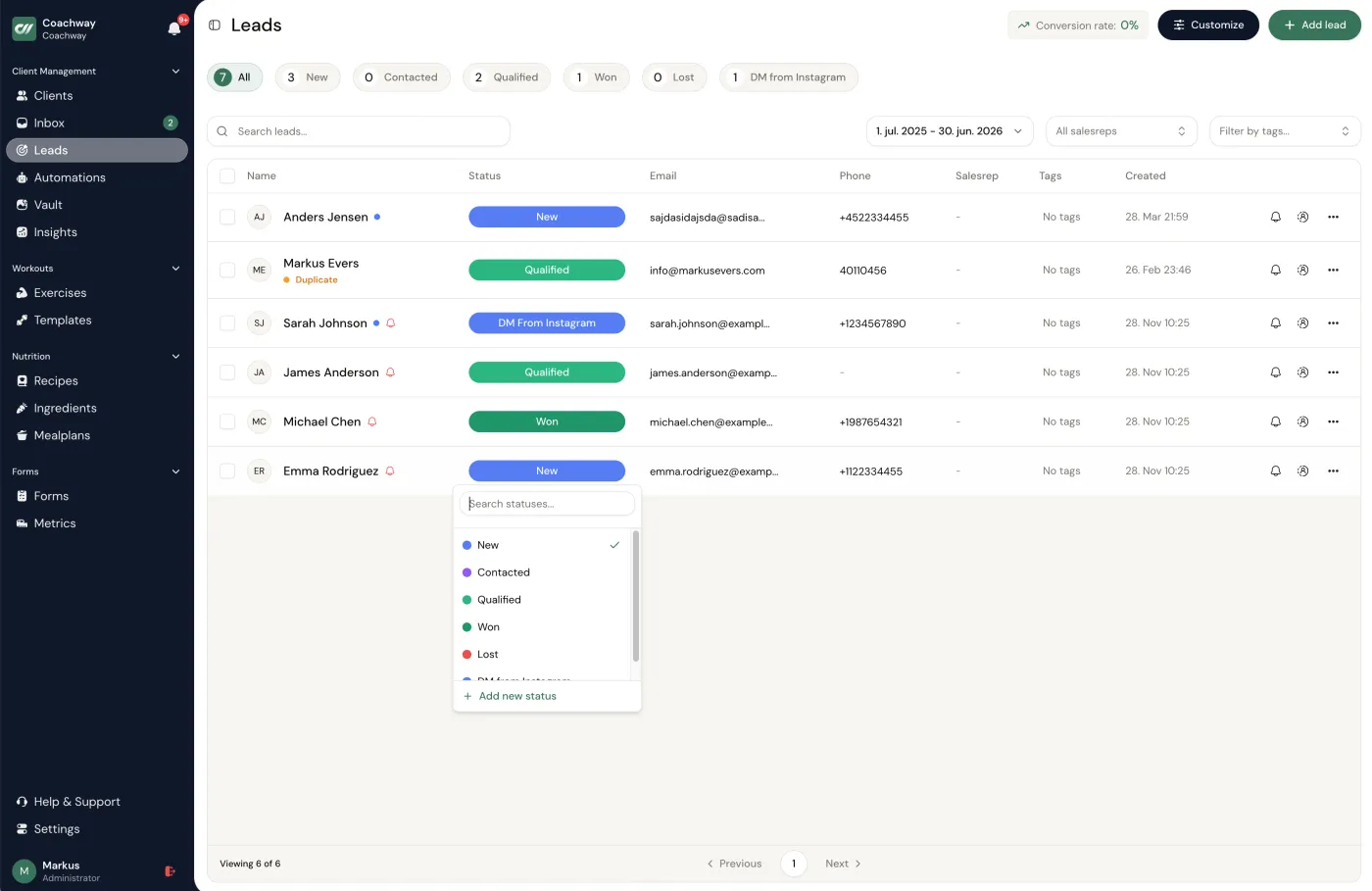
Coaching software, such as PT Distinction, Trainerize or Coachway, sits after the client channels on this page. It is where you deliver the coaching, typically programs, check-ins and messages. Some tools add marketing or lead-capture features, so check each vendor's own feature list, but do not choose coaching software expecting it to send you a stream of clients the way a lead site does. Choose it for how well it captures, onboards and keeps the clients your channels bring in: look for a lead form you can share from any platform, a pipeline that shows every enquiry and its stage, and onboarding that starts without you retyping anyone's details.
If you are comparing tools on that basis, the best client management software for personal trainers ranks them on client handling, and the PT Distinction review looks at that platform in detail.
Where leads go next: capture, follow-up and onboarding.
Platforms get you an enquiry. What happens in the next 48 hours decides whether it becomes a client. Most lost leads are not rejected, they are forgotten: a DM that slid down the inbox, a marketplace message nobody answered on a busy Saturday, a name on a sticky note. Three habits fix most of it.
- One intake form for every platform. Whether they found you on Thumbtack, Google or Instagram, send them to the same short form, so every lead lands in one list with the same details. The coaching client intake form guide lists the questions worth asking.
- A visible pipeline. New, contacted, call booked, won or lost. When you can see every lead and its stage, follow-up stops depending on memory. Lead generation automation for coaches covers what to automate and what to keep personal.
- A first week that is ready before they say yes. Welcome message, first program, first check-in date. A client who starts smoothly is the one who stays and later refers. See how to onboard online coaching clients.
Coachway does not find you clients. It keeps the ones you find.
To be plain about it: Coachway is not a marketplace, it does not list you to the public or send you clients, and it is not a booking or calendar tool. It is the place leads from every platform above can land. You embed a lead or intake form on your site, link it from your Instagram bio or send it in reply to a marketplace message, and each enquiry appears in a lead pipeline where you move it from new to won. When someone says yes, you convert the lead into a client, and an onboarding automation flow sends the welcome steps while check-in reminders keep the first weeks on track. Chat in the app includes voice notes and video messages, so the conversation that started on a platform carries on in one place.
Clients pay you through your own Stripe account; the subscription takes no share of your coaching revenue, and built-in payments cost 2.4 % per transaction. Coachway costs EUR 69 a month including up to 5 active clients, then EUR 9 per extra active client, with every feature on one plan. You can try the lead pipeline free for 14 days and see how your current enquiries would look in it. More detail is on the leads feature page.
Frequently asked questions about platforms for finding clients.
Which platform should a new personal trainer start with?
If you train people in person, start with a complete Google Business Profile and your certification listing, then build one gym, studio or physio relationship. Add a lead site for a few weeks only if your diary is empty. If you coach online, start with one social platform where your ideal client already spends time, and send every enquiry to the same short form. Add a second platform only once the first one brings in leads.
Is Thumbtack or Bark worth it for personal trainers?
They can be, as a short-term source of first conversations, if you judge them on cost per client rather than cost per lead. If you spent a month's lead budget on the site and signed two clients from it, your cost per client is that budget divided by two. If that is well below what a client is worth to you over a year, keep going; if not, stop.
What is the best free way for a personal trainer to find clients?
For a trainer who sees clients in person, a complete Google Business Profile with genuine reviews is usually the best free channel, because it shows you to people already searching for a trainer nearby. For an online coach, it is usually one social platform used consistently, plus referrals from happy clients. Both cost time rather than money, and reviews and referrals keep bringing enquiries in during weeks you are too busy to market.
Do certification directories like Find an ACE Pro bring clients?
They bring some, but mainly they add trust. People who search a certification body's directory often want to confirm a trainer is qualified, so a complete listing with your specialty and location helps when someone is already comparing options. Treat it as a supporting listing next to Google and referrals, not as your main lead source, and check what your own certification body offers and charges.
Is coaching software like PT Distinction a platform for finding clients?
Usually not. Coaching software delivers the coaching to clients you have already won; some tools add marketing features, so check each vendor's own feature list, but do not expect a stream of new clients from it. Coachway, for example, does not find or send clients: it gives you a lead form and a pipeline so enquiries from every platform land in one place, then onboards and coaches the ones who say yes.
Are there apps that find clients for personal trainers?
Yes, in the sense that lead marketplaces such as Thumbtack and Bark list you where people looking for a trainer can find and contact you, and Bark also offers a mobile app for professionals. Coaching apps are different: they are where you deliver programs, check-ins and messages to clients you already have, and they do not send you clients.
How fast should I reply to a lead from a platform?
Reply the same day if you can, and within a day at the latest. On lead marketplaces other trainers are often contacting the same person, so the first useful reply has an edge. On every platform, the reply should do one job: move the person from the platform's messages to your own channel, usually a short intake form or a call, so the conversation and their details are in one place you control.
Platform names are given as examples, not endorsements, and how each one charges can change; check the vendor's own site before you sign up. Nothing on this page is a promise of a number of leads or clients.
Once leads are coming in, the steps to get more personal training clients cover the discovery call and the referral ask, and the lead numbers worth tracking show whether each platform is paying off.
Keep reading
all guidesWhat Is a Lead Magnet? A Definition for Coaches (2026)
A lead magnet is a free, specific resource you trade for a prospect's email - the first move in owning an audience instead of renting one. The plain-English definition, why an online coach needs one, what makes a lead magnet actually convert for fitness audiences (specific, fast, wired to a follow-up), and where the opt-in leads next.
Read the guideWhat is a coaching package? Definition and examples
A coaching package is the bundled, fixed-term offer a coach sells instead of hourly: deliverables, a defined duration and one price. The three parts, the good/better/best tiers coaches actually use, an example table, and how to price one.
Read the guide60+ Personal Trainer Slogans and Tagline Examples (2026)
A swipe file of 60+ personal trainer slogans grouped by vibe, plus a four-step framework to write a memorable one of your own.
Read the guideFree tools for this: No-Show Cost Calculator · Referral Value Calculator · Ad Spend Breakeven Calculator
See what Coachway can do for your coaching business
Coachway was built on knowledge from working with 150 online coaches over 6+ years, who all hit the same wall - slow platforms, clunky workflows, wasted hours. Start your 14-day free trial and see what we fixed - the whole platform, no charge today, cancel anytime under Billing.


Social platforms: slow to start, yours to keep.
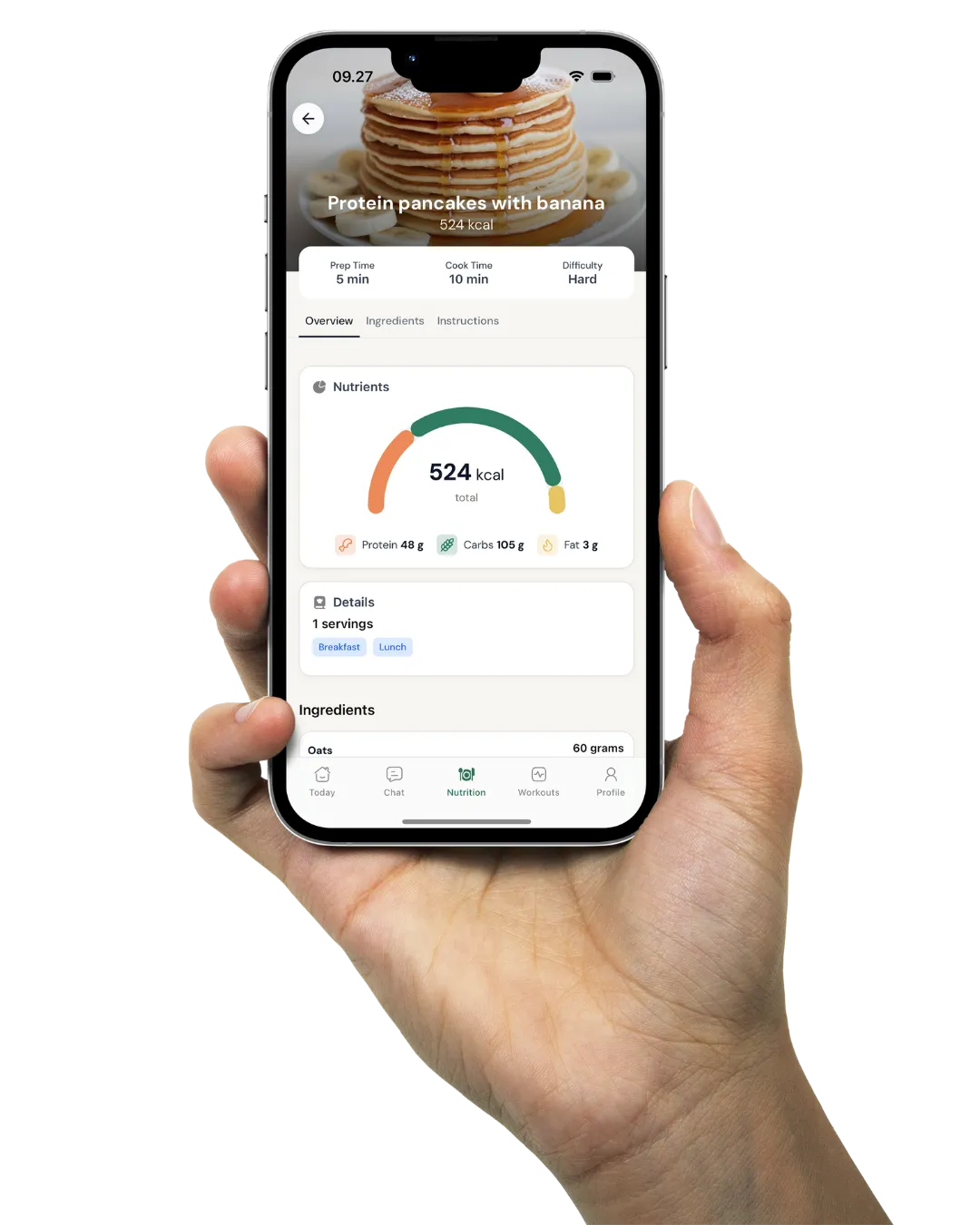
Social media does not hand you leads; people message you once they trust you, which takes months. Most of those enquiries arrive as DMs, and a DM is easy to lose. So the profile itself has to do the converting: a bio that names who you help and whether you coach online or in a city, one link that goes straight to a short enquiry form rather than a page of links, a pinned post or highlight that shows what working with you looks like and what to do next, and a saved reply for DMs that answers the question and sends the form link. Then the conversation moves out of the inbox and into a list you keep.
For the platform itself, see how to get coaching clients on Instagram or on LinkedIn, and the best social media platform for fitness coaches to choose between them. If you would rather not build on social at all, getting clients without social media covers the alternatives.