


What is a client check-in in online coaching? The touchpoint between sessions.
If you coach online, the client check-in is the single most important thing you do between sessions. It is the recurring moment when the plan on paper meets the life your client is actually living - and where retention is quietly won or lost. This is a plain-English definition of what a client check-in is, the formats coaches use, and why the humble weekly check-in, not the flashy program, is the engine that keeps clients paying.
By Markus Evers · Updated August 2026
definition
A client check-in is the recurring, usually asynchronous touchpoint between coaching sessions where a client reports how the week actually went (training, nutrition, weight, energy, adherence, sometimes photos) and the coach reads it and adjusts the plan. It is the heartbeat of online coaching, and because it needs no live call, it lets one coach hold many clients accountable.
What are the common client check-in formats?
"Check-in" is one word for a few different formats, and most coaches settle on a blend. They separate cleanly by how the client reports and how much the coach has to type back.
The weekly check-in form.
The workhorse. A structured form the client fills in on a set day - weight or a weekly average, measurements, training completed, nutrition adherence, steps, a sleep or energy rating, and a couple of open questions about what felt hard. Ratings and numbers make a week readable at a glance; the open questions catch the story the numbers miss. This is the format most online coaching runs on, and the check-in template shows exactly which fields earn their place. To build one section by section and print it, use the weekly check-in form builder.
The video or voice check-in.
The client records a short video or voice note walking through their week, or the coach replies with one instead of a wall of text. It carries tone the form cannot - you hear whether "fine" means fine - and a spoken reply feels personal at a fraction of the effort of a live call. Many coaches pair a form for the data with a voice note for the human bit, which is also the fastest way to keep a check-in reply warm without over-writing it.
The metrics and progress-photo review.
The data half of the check-in read as a trend rather than a single number: the weight line over four weeks, the measurement change, this week's photos beside the starting ones. A single weigh-in lies; a trend does not. Reviewing the progression next to the client's own words is what turns a check-in from a status update into a coaching decision, and it is the part that makes a client feel genuinely seen.
Why is the check-in the retention engine of online coaching?
A client does not stay because the program was clever. They stay because they feel accountable to someone who is paying attention. The check-in is that attention, made regular. It is the appointment that replaces the gym-floor moment where a trainer used to notice, in person, that something was off - and online, if you remove it, the relationship goes quiet, the client drifts, and the cancellation email arrives before you saw it coming.
It is also your early-warning system. A missed check-in, a check-in that suddenly gets terse, weight that stalls for a fortnight - these are churn signals, and they only exist because the check-in exists to surface them. A coach reading check-ins closely catches the wobble in week three and fixes it, rather than reading about it in a refund request. That is why the same skill that makes a check-in useful - reading it fast and replying with one clear adjustment - is really a retention skill wearing a delivery hat. Get the check-in right and most of the coaching relationship takes care of itself; get it wrong and no program will save it. If you want the step-by-step, the check-in workflow breaks down the exact loop.
What does a check-in look like inside a coaching platform?
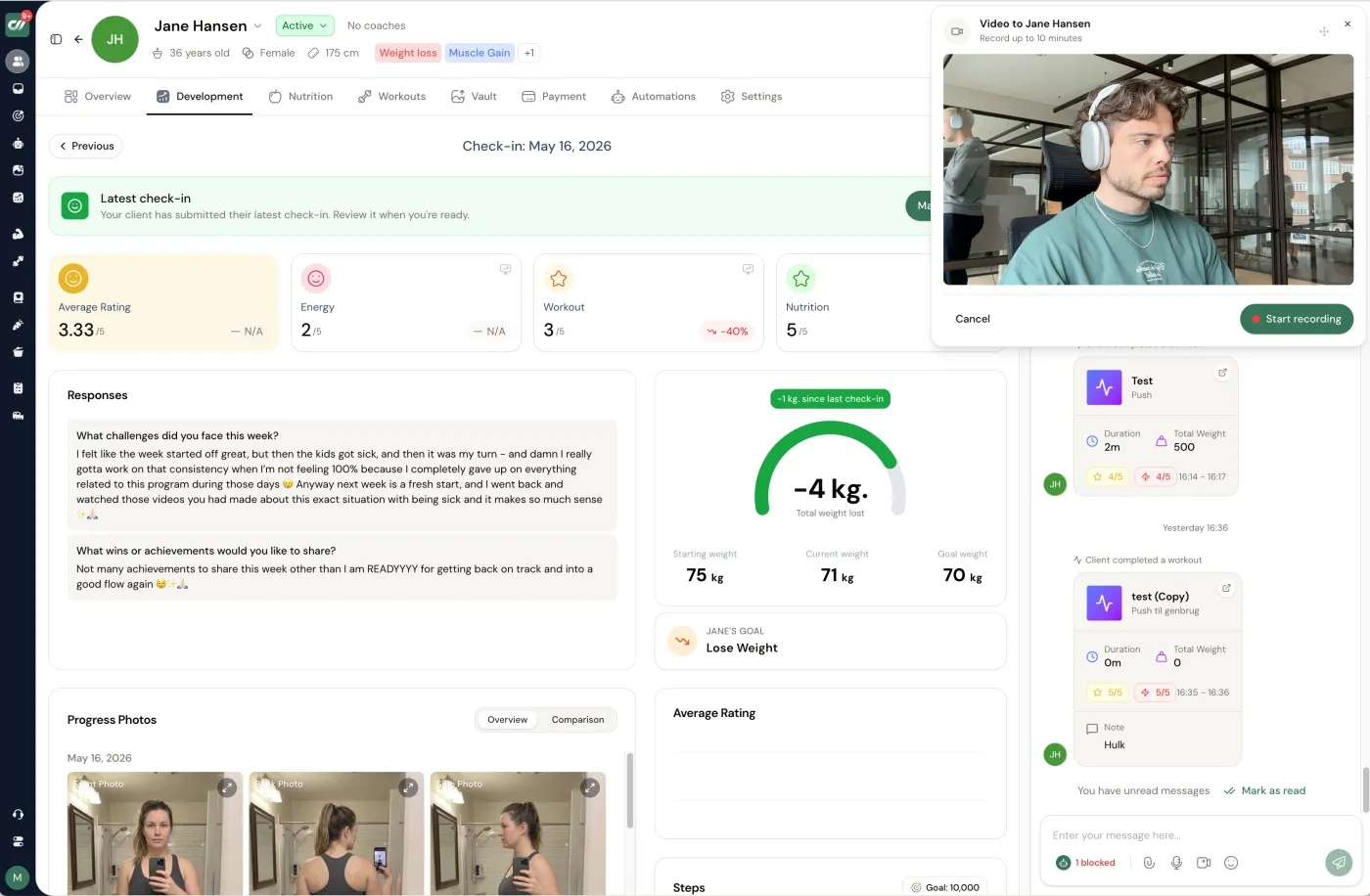
In practice a check-in is only as good as how fast you can read it, and a scattered setup - a form here, photos in a chat thread, weight in a spreadsheet - is what makes a coach dread Sunday. A purpose-built platform pulls the whole thing onto one screen. Coachway, which we make, runs check-ins through a drag-and-drop form builder - ratings, measurements, custom metrics, progress photos, with automatic reminders - and then shows this week's answers side by side with the weight trend, the photos and the training log, so you read a client's week in a glance and reply with one adjustment. It is built on knowledge from working with 150 online coaches over 6+ years, and it costs EUR 69 a month including your first 5 clients, then EUR 9 per additional client, every feature included. The 14-day free trial starts with a card held by Stripe and cancels under Billing before it renews - or book a demo to see the check-in flow first.
Frequently asked questions about client check-ins.
What is a client check-in in online coaching?
A client check-in is the recurring, usually asynchronous touchpoint between coaching sessions where a client reports how the week actually went - training, nutrition, weight, measurements, energy, adherence, sometimes progress photos - and the coach reads it and adjusts the plan. It is the heartbeat of online coaching: the moment the plan on paper meets the life the client is actually living, and the point where a good coach earns their fee by responding to real data rather than assuming the program is being followed. Unlike a live call, a check-in does not need both people awake at the same time, which is exactly why it scales across time zones and busy schedules.
How often should a client check-in happen?
Weekly is the default for most online coaching because it matches the rhythm of a training block: seven days is long enough to see a real trend in weight, adherence and energy, and short enough that a problem gets caught before it becomes two lost weeks. Some coaches move steady, self-managing clients to a fortnightly check-in, and some run a lighter daily habit log alongside the weekly review, but the weekly check-in is the backbone the rest hangs off. The cadence matters less than the consistency: a check-in the client can rely on landing every Sunday builds accountability that a random, whenever-there-is-time message never will.
What is the difference between a check-in and a coaching session?
A coaching session is usually live and synchronous - a call where coach and client talk in real time. A check-in is the asynchronous touchpoint between those sessions: the client submits a structured report on their own schedule, and the coach reviews and replies on theirs. In fully online coaching, the check-in often replaces the weekly call entirely, because a written or video check-in captures the same information - the data, the photos, the how-did-it-feel - without forcing two calendars to line up. Many coaches keep occasional live calls for onboarding or a monthly deep-dive and let the weekly check-in carry the ongoing relationship.
What should a weekly check-in include?
A useful check-in captures both the numbers and the story. On the data side: body weight or a weekly average, key measurements, training completed, nutrition adherence, steps or activity, and sleep or energy on a simple rating. On the human side: one or two open questions about what felt hard, what got in the way, and what the client wants help with. Progress photos on a set cadence round it out. The point is not to collect everything - it is to collect the few signals that actually change your next decision, presented so you can read a client's week in under a minute and reply with one clear adjustment.
Once the definition is clear, the practice is three linked reads: the check-in workflow, a ready-made check-in template, and the reply that keeps a client accountable week to week.
Keep reading
all guidesHow to Coach Nutrition Clients Without Calorie Counting
Not every client should count calories, and for some it does harm. How to coach nutrition with no numbers (set plan, habits, hand-portions, photo check-ins), the per-client access setting that makes it practical, and the clinical line a coach must not cross.
Read the guideNick Littlehales on Programming Sleep and Recovery (Coach Breakdown)
Nick Littlehales's R90 sleep method, broken down for coaches: reframe sleep from an 8-hour target into programmable recovery - 90-minute cycles, a fixed wake time, planned recovery windows - coached within scope.
Read the guideBill Campbell on Preserving Muscle During Weight Loss (Coach Breakdown)
Dr. Bill Campbell on muscle preservation during rapid and GLP-1-assisted weight loss, broken down for coaches: resistance training plus adequate protein protect lean mass while fat comes off - with a clear line between coaching and the physician. Not medical advice.
Read the guideFree tools for this: Client Check-in Reader · Client Churn-Risk Reader · Client Check-in Builder
Ready-made template: Weekly Check-In Form
See what Coachway can do for your coaching business
Coachway was built on knowledge from working with 150 online coaches over 6+ years, who all hit the same wall - slow platforms, clunky workflows, wasted hours. Start your 14-day free trial and see what we fixed - the whole platform, no charge today, cancel anytime under Billing.


