


How to become a menopause fitness coach - a real niche, done properly.
A menopause fitness coach is an online fitness coach who specialises in training women through perimenopause and menopause, focusing on strength, movement, recovery, and steady habits rather than generic fat loss. It is one of the clearest examples of a coaching niche where being a specialist genuinely beats being a generalist. This guide covers why the demand is growing, what the work actually involves at the fitness level, which certifications exist, and how to position, price, and fill the offer.
By Markus Evers · Updated August 2026
the short version
To become a menopause fitness coach, build the base of a general fitness coach, then specialise. Add a continuing-education menopause or women's-fitness course on top of a recognised foundational certification, get crisp about the exact woman you help, and coach strictly at the fitness level: strength training, movement, recovery, and habit support. Anything clinical, from symptoms to hormone therapy, stays with the client's doctor. Then position the offer as a specialist, price the outcome, and fill your first spots with content and referrals.
Why this niche is growing.
Most fitness content is still built for a 25-year-old with endless recovery. Meanwhile a large, motivated group of women in their forties and fifties keeps being handed the same plans and told to try harder. That gap is the whole opportunity. Three forces make menopause fitness coaching one of the strongest specialist niches you can pick right now.
A large demographic
Every woman goes through this life stage, and the population moving through it is huge and growing. That is a deep, durable audience rather than a passing trend, which is exactly what you want under a coaching business.
Chronically under-served
These clients have usually tried the generic programs and felt let down by plans that ignore their life stage. A coach who names their situation directly feels understood before the first call, and that is a real conversion advantage.
High intent to invest
This is a life stage where women often reset priorities and are willing to invest in feeling strong and capable again. High-intent clients who value being understood tend to support a specialist price and stay longer than bargain hunters.
The practical takeaway: a narrow, honest positioning wins here. If you are still deciding whether to go this specific or how to frame it, work through choosing a coaching niche and attracting the right clients first. New to terms like retention, LTV, or check-in? The coaching glossary explains them in plain language.
What a menopause fitness coach actually does.
The work sits firmly at the fitness and lifestyle level. You are coaching training, movement, and daily habits for a woman in a specific life stage, and helping her stay consistent when motivation dips. You are not diagnosing, prescribing, or managing symptoms. Here is where your hours actually go.
Strength training first. Progressive resistance training tends to be the centrepiece of this niche. Most clients want to keep building strength, hold onto muscle, and feel capable in everyday life, so a well-structured, gradually progressed lifting program usually does the heavy lifting of the offer. For a coach-level look at building that program, see how Debra Atkinson coaches strength training after menopause.
Movement and recovery. Sensible training volume, deloads, and realistic expectations about energy on any given week. You coach recovery as a lifestyle habit, sleep routines, walking, stress load, without ever framing it as treatment for a medical condition. For a client still cycling through perimenopause, a general menstrual cycle phase calculator can set a rough day-and-phase estimate against how a given week feels, though perimenopausal cycles are often irregular enough to make any date-based guess approximate.
Nutrition habits, not diets. Enough protein, enough food, and a sustainable pattern the client can hold for years. The specialist angle is patience and consistency over aggressive cutting, which suits this audience far better than a crash plan.
Behaviour and consistency. A lot of the value is helping a busy woman keep showing up when life is loud. This is coaching, not willpower, and a structured approach helps. Our primer on behaviour-change frameworks is a good foundation.
The medical boundary. When a client raises symptoms, hormone therapy, medication, or anything that needs a diagnosis, that conversation belongs with her doctor. You listen, you adjust training around how she feels, and you refer out. Knowing where your lane ends is part of the professionalism.
The rule that keeps you safe and credible: coach the training and the habits, and send everything clinical to the doctor. Clients discuss symptoms and treatment with their own physician. You handle strength, movement, and consistency.
- the scope-of-practice line every specialist should hold
Certifications that exist in this space.
There is no single licensing body for "menopause fitness coach", so treat it as two layers. First, a recognised foundational certification as a personal trainer or health coach, the same base any fitness coach builds. Second, a continuing-education specialist course that adds the life-stage knowledge on top. Two established specialist options are below. Always confirm the current curriculum, format, and prerequisites on each provider's own site before enrolling.
| Course | What it is | Good fit if |
|---|---|---|
| Girls Gone Strong - Menopause Coaching Specialist Certification | A menopause-specific certification for health and fitness professionals, covering training, nutrition, and behaviour coaching for women through perimenopause and beyond, framed around working within your scope of practice. | You want a course built entirely around this exact niche. See the provider page. |
| NASM - Women's Fitness Specialization (WFS) | A broader women's-fitness specialization for certified trainers and coaches that covers female physiology across life stages and includes a dedicated menopause chapter alongside pregnancy and postpartum material. | You want women's fitness broadly, with menopause as one strong module. See the provider page. |
A certification signals seriousness and sharpens your knowledge, but it does not build the business. Plenty of strong specialists start with a solid foundational cert plus one focused course, then let real client results do the rest of the convincing. If you are still weighing the whole path into online work, how to become an online fitness coach maps the full route.
Positioning and pricing your offer.
The specialist positioning is the point. "Online fitness coach" competes with everyone; "strength coaching for women in perimenopause and menopause" competes with almost no one and speaks straight to the person reading it. Say who you help, what changes for them, and why your approach suits their life stage. Then price it like a specialist offer, not a commodity.
Price the outcome, not the hour
Clients are buying strength, energy, and feeling in control again, not a number of sessions. A clear specialist offer usually supports a healthier price than generic coaching, but earn it with proof before you raise it.
Sell longer commitments
This audience benefits from patience, so a three or six-month package fits the results better than a four-week block. Longer commitments raise lifetime value and give clients the runway to actually feel the change.
For the mechanics of setting a number you can defend, work through setting your pricing, and if you want a sense of the ceiling, how much online fitness coaches make gives realistic ranges. The specialist angle mostly helps you charge nearer the top of whatever range fits your market.
Finding your first clients.
The good news about a sharp niche is that you do not need a huge audience to start, you need the right handful of people to feel seen. Your early job is proof, not scale.
Content that names her exactly
Post about the specific frustrations this client has with generic plans, in her words. Specificity is what makes a stranger stop and think "this is for me". The mechanics of that are in getting online coaching clients.
Start with your network
Your first one or two clients often come from people who already know you, or from a warm referral. A specialist positioning makes those introductions easy, because friends know exactly who to send your way.
Turn one result into the next three
One client who gets strong and feels great, shown honestly and with permission, is your best marketing. Delivery is what makes that happen, and it is the same engine behind retention and referrals.
From there, the growth playbook is the same as any coaching business: build a relevant audience, convert it, and keep clients long enough that referrals start doing the work. If you want the full picture, how to grow an online coaching business is the map.
The specialist promise lives or dies on delivery.
A menopause client is buying a coach who pays attention over months, adjusts the program to how she actually feels, and keeps her progressing. That is a delivery job, and it is exactly where good software carries the weight so you can keep your time on coaching and content.
Programs that progress properly
Build and adjust strength programs in the workout builder, so a gradual, well-managed lifting plan is simple to run and easy for the client to follow week to week.
Check-ins that catch the drift
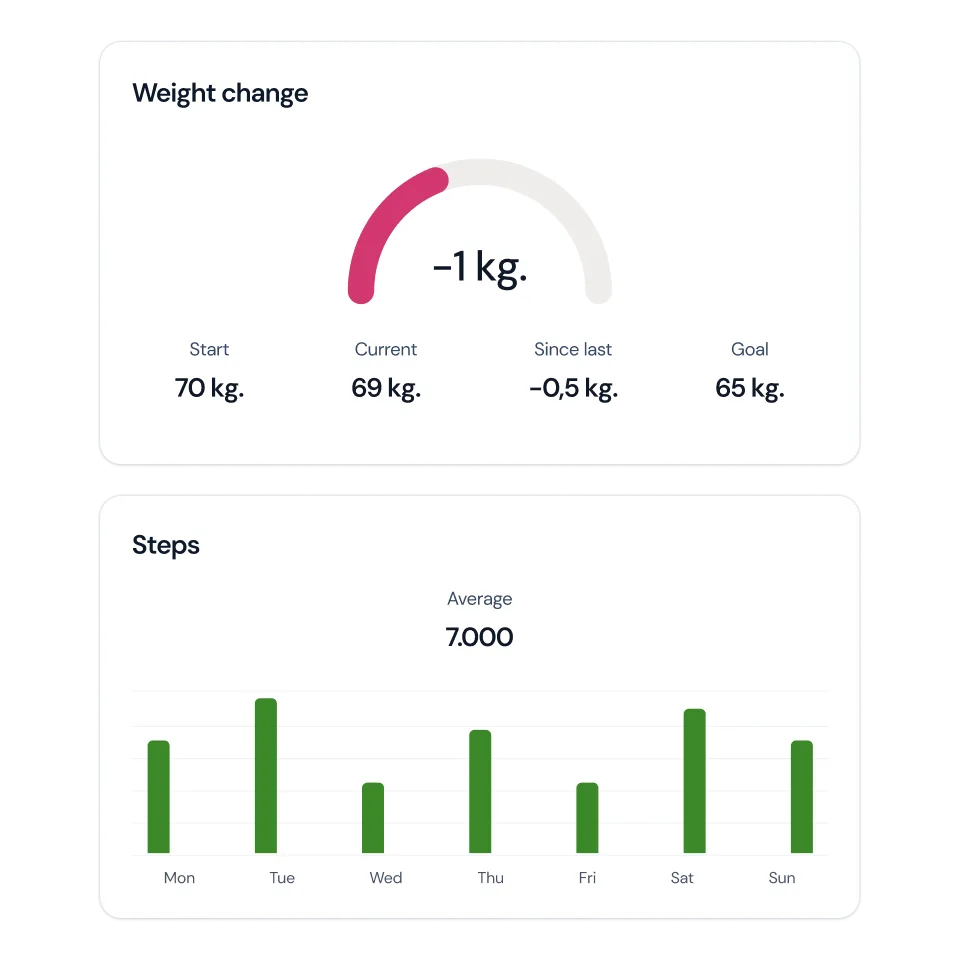
Regular check-in forms plus gentle automated reminders keep the weekly rhythm going, so you notice a dip in energy or adherence early and adjust before a client drifts.
A branded home for the work
Your plan, messages, and progress live in one client app under your name, which makes a specialist offer feel as considered as it sounds.
Pricing that fits a small, careful client list
Coachway is EUR 69 a month for up to 5 clients, then EUR 9 per additional active client, with every feature included and a 14-day trial that asks for a card. See the full pricing.
No tool wins you the niche, that is your positioning and your reels. But once a client says yes, the difference between a five-month client and a loyal, referring one is delivery, and that is the part Coachway is built to carry. See how other coaches run their delivery in the case studies.
Frequently asked questions about becoming a menopause fitness coach.
Do I need to be a doctor to become a menopause fitness coach?
No. A menopause fitness coach works at the fitness and behaviour level: strength training, movement, recovery, and habit support. Anything clinical, such as symptoms, hormone therapy, or medication, belongs with a client's own doctor. Your job is to coach training and lifestyle inside your scope of practice, and to refer out the moment a question turns medical. Most coaches build the base with a recognised foundational certification first, covered in how to become a fitness coach.
What certification do I need to coach menopause fitness?
There is no single licensing body for menopause coaching. Most coaches hold a recognised foundational personal-training or health-coaching certification, then add a continuing-education specialist course. Two established options are the Girls Gone Strong Menopause Coaching Specialist Certification, which is menopause-specific, and the NASM Women's Fitness Specialization, a broader women's-fitness course that includes a dedicated menopause chapter. Check current curriculum and prerequisites on each provider's own site before you enrol.
Is menopause fitness coaching actually in demand?
It is a large and growing audience that has historically been under-served by generic fat-loss programming. Women moving through their forties and fifties are actively looking for coaching that speaks to their life stage rather than a plan built for a 25-year-old. A clear specialist positioning tends to convert better here than a broad one, because the client feels understood before the first call. More on that in attracting the right clients.
What should I charge as a menopause fitness coach?
Price the outcome, not the hour, and sell longer commitments rather than short blocks. A specialist offer usually supports a higher price than generic coaching, but earn it with proof first. Longer packages, such as a three or six-month commitment, tend to raise lifetime value and give clients enough runway to actually feel the change, which is what earns referrals. Walk through the mechanics in setting your pricing.
Where do I find my first menopause fitness clients?
Start narrow and let the niche do the work. Post content that names the exact woman you help and the exact frustrations she has with generic plans, so the right person feels seen. Early clients often come from your existing network, referrals, and a handful of relevant followers rather than a large audience. One good result, shown honestly, becomes the proof that fills the next few spots. The full playbook is in getting online coaching clients.
Keep reading
all guidesHow to Switch From Personal Trainer to Online Coach (2026)
You already know how to coach - the hard part of going online is rebuilding what the gym floor gave you for free: the live feedback loop, the accountability of an appointment, and an offer that is no longer a paid hour. This guide for the in-person trainer making the switch covers hybrid vs fully online, which current clients to move first and how to pitch it, replacing the feedback loop with check-ins and form-video reviews, pricing the month not the hour, the tools that replace the gym floor, and the shift from selling hours to selling outcomes.
Read the guideHow to handle price objections in online coaching, without discounting (2026)
When someone says your coaching is too expensive, defending the price or quietly discounting are both usually wrong. An objection is rarely a flat no; it is a question the person has not finished asking. This guide covers diagnosing the real concern, re-anchoring on the outcome not the hours, why discounting attracts the wrong client, payment plans as a genuine option, and being okay to walk away.
Read the guideHow to keep online coaching clients accountable (2026)
Online clients fall off in private, with no studio door to walk through. Accountability is how you replace that missing structure: a steady weekly rhythm, small clear commitments, visible progress, fast acknowledgement, and a nudge when someone goes quiet. Honest about the limit too - you cannot want it more than the client does.
Read the guideFree tools for this: Email List Value Calculator for Coaches · Free Trial Conversion Calculator · Discovery Call Calculator
Ready-made templates: Client Onboarding Checklist · Coaching Contract Template
See what Coachway can do for your coaching business
Coachway was built on knowledge from working with 150 online coaches over 6+ years, who all hit the same wall - slow platforms, clunky workflows, wasted hours. Start your 14-day free trial and see what we fixed - the whole platform, no charge today, cancel anytime under Billing.


