


ChatGPT prompts for price objections. Rehearse the call with a prospect who will not tell you the real reason, then draft the reply in your voice.
The moment after you say the price is the one most coaches handle worst, and it is the one you can practise. These eight prompts do two jobs. The first has the model play a prospect with a hidden concern and score you on the four steps that work: listen, acknowledge, explore, respond. The rest draft your replies to the five objections that cover almost every call, in your voice, with the five things a model does when it thinks it is helping you close (discount, urgency, invented results, arguing, a second ask) banned in every one. The word-for-word scripts for the live call live on their own page; this one is for practising and for the DM that arrives afterwards.
By Markus Evers · Updated September 2026
the short version
Use ChatGPT for price objections in two ways: rehearse, by having it play a prospect with a hidden concern and score you on listen, acknowledge, explore, respond; and draft, by giving it your offer and the objection verbatim so it writes a short reply that answers only the named concern, with no discount. Eight prompts below.
How do you rehearse price objections with ChatGPT?
Rehearse price objections by giving the model your offer and price, asking it to play a prospect who objects while holding a real concern it will not volunteer, and answering in writing exactly as you would on the call. It stays in character until one of your questions earns the real concern, then scores you on the four LAER steps and quotes your best and worst sentence. The five objections below cover almost every call; the table says what each rehearsal is really practising. For the "I could do it myself" objection, the client-side answer is written out in is it worth paying for online coaching if you could do it yourself, which a coach can send as it is.
| Objection | What you are practising | Prompts |
|---|---|---|
| "It is too expensive" | Finding out whether it is the amount or the belief it will work, with one question, before answering anything. | 1 and 3 |
| "I need to think about it" | Asking "what part?" calmly, resolving the named part on the spot, and agreeing a date if they genuinely need time. | 1 and 4 |
| "I need to ask my partner" | Giving them the two or three sentences to say at home and offering a ten-minute call with both of them. | 1 and 5 |
| "It is not the right time" | Asking what would need to be different, then showing the smallest version of week one. | 1 and 2 |
| "I tried coaching before and it did not work" | Asking what the last coach did in the bad week, and naming the specific thing you do differently at that point. | 1 and 2 |
What the prompts refuse to do. Discount, invent urgency, invent a result, argue, or ask for the decision twice. A model asked to "help me close" will do all five; every prompt here carries the bans in its header, so the draft you get is the one a person would trust. The reasoning behind never dropping the price on the spot is in how to handle price objections in online coaching.
For what to actually say out loud when the objection lands on the call, use the price objection scripts; the minute-by-minute call around that moment, including where the price goes and the silence after it, is in the sales call script for online fitness coaches.
Which prompts rehearse objections and draft the replies?
Eight prompts: one role-play rehearsal, one prep-sheet builder, four reply drafts (too expensive, think about it, ask my partner, the walk-away), the not-a-fit message, and a scorer for your own reply. Prompts 1 to 7 share a header with your offer, your voice and the reply rules, so paste it once and change only the bottom block. Nothing in any draft goes to a prospect without you reading it aloud first.
Rehearsal: play the prospect with a hidden concern
When to use it: Ten minutes before a week with sales calls, or after a call you lost.
What to paste in: Your offer block, the objection verbatim if it is a real one, and which hidden concern the model should hold (or let it pick).
MY OFFER (facts, do not change or embellish)
What it is: [e.g. 1:1 online coaching, weekly check-ins, plan rewritten monthly]
Price and billing: [e.g. EUR 180 a month, billed monthly, cancel any month]
Who it is for: [YOUR AUDIENCE]
What I never do: discount on the spot, invent urgency, promise a result, argue.

MY VOICE
Two messages I wrote to prospects: [PASTE]
Words I never use: [PASTE]

RULES FOR ANY REPLY YOU DRAFT
Structure: acknowledge in one sentence (no "but"), one question if the real concern is unclear, then answer only the concern they named with one specific element of my coaching. Four to six lines for a DM. No discount, no deadline, no "limited spots", no benefit list, no second ask. Label it "DRAFT FOR COACH REVIEW".

ROLE-PLAY
You are a prospect at the end of a discovery call with me. You liked the call. Now I have said the price and gone quiet. You object with: "[THE OBJECTION, e.g. it is a lot of money right now / I need to think about it]".

Secretly, your real concern is [PICK ONE OR LET ME GUESS: the monthly amount collides with a car repair / you are afraid of paying to fail again / your partner handles money / you cannot see where the sessions fit]. Do not reveal it unless my question earns it. Stay in character. Answer only what I ask. If I discount, add urgency, argue, or ask two questions at once, note it silently and carry on.

After I write "END", step out of character and score me on four things, one line each: did I listen without interrupting, did I acknowledge in one sentence, did I explore with one question that found the real concern, did I respond to that concern only and without a discount. Then quote the single best and single worst sentence I wrote.

Begin with your objection.
Build my top-5 objection prep sheet
When to use it: Once per offer, and again after you change the price or the package.
What to paste in: Your offer block and any objections you have actually heard, verbatim.
MY OFFER (facts, do not change or embellish)
What it is: [e.g. 1:1 online coaching, weekly check-ins, plan rewritten monthly]
Price and billing: [e.g. EUR 180 a month, billed monthly, cancel any month]
Who it is for: [YOUR AUDIENCE]
What I never do: discount on the spot, invent urgency, promise a result, argue.

MY VOICE
Two messages I wrote to prospects: [PASTE]
Words I never use: [PASTE]

RULES FOR ANY REPLY YOU DRAFT
Structure: acknowledge in one sentence (no "but"), one question if the real concern is unclear, then answer only the concern they named with one specific element of my coaching. Four to six lines for a DM. No discount, no deadline, no "limited spots", no benefit list, no second ask. Label it "DRAFT FOR COACH REVIEW".

Objections I have actually heard, verbatim: [PASTE, or "none yet"]

Build my objection prep sheet for this offer as a table with five rows: the objection in the words a prospect would say it, what it usually means underneath for this audience, the one explore question that surfaces the real concern, and the shape of an honest reply that answers that concern with a specific element of my offer. Include the five common ones (too expensive, think about it, ask my partner, not the right time, tried coaching before) unless my real list replaces one. No discounts, no urgency, no invented results anywhere in the table. Add one line under the table: the objection I should rehearse first and why.
Draft my DM reply to "it is too expensive"
When to use it: The objection came by message, after a call or an enquiry.
What to paste in: Their message verbatim and, if you asked already, the concern they named.
MY OFFER (facts, do not change or embellish)
What it is: [e.g. 1:1 online coaching, weekly check-ins, plan rewritten monthly]
Price and billing: [e.g. EUR 180 a month, billed monthly, cancel any month]
Who it is for: [YOUR AUDIENCE]
What I never do: discount on the spot, invent urgency, promise a result, argue.

MY VOICE
Two messages I wrote to prospects: [PASTE]
Words I never use: [PASTE]

RULES FOR ANY REPLY YOU DRAFT
Structure: acknowledge in one sentence (no "but"), one question if the real concern is unclear, then answer only the concern they named with one specific element of my coaching. Four to six lines for a DM. No discount, no deadline, no "limited spots", no benefit list, no second ask. Label it "DRAFT FOR COACH REVIEW".

Their message, verbatim: [PASTE]
The concern they named, if I already asked: [amount / belief it will work / unknown]

Draft my reply. If the concern is unknown, the reply acknowledges in one sentence and asks one question: whether it is the monthly amount or whether it will work for them this time. If the concern is the amount, the reply names the billing rhythm and what the fee replaces, without lowering it. If the concern is belief, the reply names the specific thing in my coaching that addresses the obstacle they told me about on the call: [PASTE THE OBSTACLE IN THEIR WORDS]. End with one line that makes no a fine answer. Give me two versions, A shorter and B warmer, both in my voice.
Draft my reply to "I need to think about it"
When to use it: They asked for time, on the call or by message.
What to paste in: Their message verbatim and what you think the unspoken concern is.
MY OFFER (facts, do not change or embellish)
What it is: [e.g. 1:1 online coaching, weekly check-ins, plan rewritten monthly]
Price and billing: [e.g. EUR 180 a month, billed monthly, cancel any month]
Who it is for: [YOUR AUDIENCE]
What I never do: discount on the spot, invent urgency, promise a result, argue.

MY VOICE
Two messages I wrote to prospects: [PASTE]
Words I never use: [PASTE]

RULES FOR ANY REPLY YOU DRAFT
Structure: acknowledge in one sentence (no "but"), one question if the real concern is unclear, then answer only the concern they named with one specific element of my coaching. Four to six lines for a DM. No discount, no deadline, no "limited spots", no benefit list, no second ask. Label it "DRAFT FOR COACH REVIEW".

Their message, verbatim: [PASTE]
What I think is underneath: [price / time / partner / belief / genuinely need time]

Draft my reply. First line: take it at face value, no pressure. Second: one question, "what part do you want to think over?" in my words. If they have already answered that, skip the question and answer the part they named. If they genuinely need time, propose a specific day to talk again and say what would make it a yes or a no for them, so the decision has a shape. No deadline invented by me, no "spots are filling". Four to six lines.
Draft the reply to "I need to ask my partner"
When to use it: Money is shared, or they want backing for a decision they are nervous about.
What to paste in: Their message verbatim and what they told you about the goal.
MY OFFER (facts, do not change or embellish)
What it is: [e.g. 1:1 online coaching, weekly check-ins, plan rewritten monthly]
Price and billing: [e.g. EUR 180 a month, billed monthly, cancel any month]
Who it is for: [YOUR AUDIENCE]
What I never do: discount on the spot, invent urgency, promise a result, argue.

MY VOICE
Two messages I wrote to prospects: [PASTE]
Words I never use: [PASTE]

RULES FOR ANY REPLY YOU DRAFT
Structure: acknowledge in one sentence (no "but"), one question if the real concern is unclear, then answer only the concern they named with one specific element of my coaching. Four to six lines for a DM. No discount, no deadline, no "limited spots", no benefit list, no second ask. Label it "DRAFT FOR COACH REVIEW".

Their message, verbatim: [PASTE]
Their goal and obstacle, in their words from the call: [PASTE]

Draft my reply in two parts. Part one, to them: acknowledge, then ask what they think their partner will ask. Part two, three sentences they could say at home that describe the coaching plainly (what it is, what it costs and how billing works, what it is for), in the words a partner would want to hear, with no marketing in them. End by offering a ten-minute call with both of them, at a time that suits the partner. Four to seven lines total.
Draft the walk-away reply when it is a real no
When to use it: You surfaced the concern, answered it honestly, and they are still out.
What to paste in: The conversation so far, in short, and the concern that stayed.
MY OFFER (facts, do not change or embellish)
What it is: [e.g. 1:1 online coaching, weekly check-ins, plan rewritten monthly]
Price and billing: [e.g. EUR 180 a month, billed monthly, cancel any month]
Who it is for: [YOUR AUDIENCE]
What I never do: discount on the spot, invent urgency, promise a result, argue.

MY VOICE
Two messages I wrote to prospects: [PASTE]
Words I never use: [PASTE]

RULES FOR ANY REPLY YOU DRAFT
Structure: acknowledge in one sentence (no "but"), one question if the real concern is unclear, then answer only the concern they named with one specific element of my coaching. Four to six lines for a DM. No discount, no deadline, no "limited spots", no benefit list, no second ask. Label it "DRAFT FOR COACH REVIEW".

What they said in the end, verbatim: [PASTE]
The concern that stayed: [PASTE]

Draft the reply that respects the no. One line that makes clear it is fine. One specific pointer that helps them anyway (a free resource, a routine, a habit to start), chosen from what they told me: [PASTE THE POINTER OR LET THE DRAFT SUGGEST ONE MARKED "CHECK"]. One line leaving the door open without a date or a condition. No "if you change your mind, I have a spot", no last offer. Three to five lines.
Draft the "you might not need a coach for this" message
When to use it: The honest answer is that they can do it alone, or they need a different professional.
What to paste in: Their situation from the call and why coaching is not the right fit right now.
MY OFFER (facts, do not change or embellish)
What it is: [e.g. 1:1 online coaching, weekly check-ins, plan rewritten monthly]
Price and billing: [e.g. EUR 180 a month, billed monthly, cancel any month]
Who it is for: [YOUR AUDIENCE]
What I never do: discount on the spot, invent urgency, promise a result, argue.

MY VOICE
Two messages I wrote to prospects: [PASTE]
Words I never use: [PASTE]

RULES FOR ANY REPLY YOU DRAFT
Structure: acknowledge in one sentence (no "but"), one question if the real concern is unclear, then answer only the concern they named with one specific element of my coaching. Four to six lines for a DM. No discount, no deadline, no "limited spots", no benefit list, no second ask. Label it "DRAFT FOR COACH REVIEW".

Their situation, in their words: [PASTE]
Why coaching is not the right thing right now: [e.g. they already train consistently and just need a programme / their goal needs a physio first / they want a running coach]

Draft the message that says so plainly and kindly. Name what they already have. Say what I would do in their position, specifically. If it is a referral to another professional, say which kind and why. Offer one thing I can give for free that fits. No apology, no self-deprecation, no "but if you ever want to work together". Four to six lines.
Score my own reply before I send it
When to use it: You have written a reply to an objection and want to know if it reads as pushy, defensive or discounting.
What to paste in: Their message and your draft reply.
Read the exchange below as a sceptical prospect who has been sold to before.

Their message: [PASTE]
My draft reply: [PASTE]

Score my reply from 0 to 10 on three things, one line each, quoting the exact words that cost me points: pushing (deadlines, urgency, a second ask, "just"), defending (justifying the price, listing benefits, "but" after the acknowledgement), discounting (any lower number, payment plan offered before they asked, "for you"). Then tell me in one line which concern my reply actually answers, and whether that is the concern they raised. Then rewrite only the sentences that cost me points, keeping everything else exactly as I wrote it. Do not add anything.
Before the objection: the frame decides the number
Most price objections are decided before the price is said. If the prospect is comparing your month to a gym membership, no reply rescues it; if they are comparing it to another year of the obstacle they described, the number is small. The frame is built in the reflect-back before the price, and in how the offer is priced in the first place, which is in how to price online coaching packages. After the yes, the conversation moves to Coachway, where the intake, the first check-in and payments through your own Stripe sit on one client screen; the objection handling stays yours.
Show the prospect what one week of coaching looks like.
"Not the right time" and "I tried coaching before" often mean the person cannot picture what the money buys. Walk them through one ordinary week instead of a feature list: which days they train and what the sessions are, what a working day of eating looks like, and when the check-in happens and what you do with it. Prompt 2 surfaces the doubt; a concrete week is what answers it.
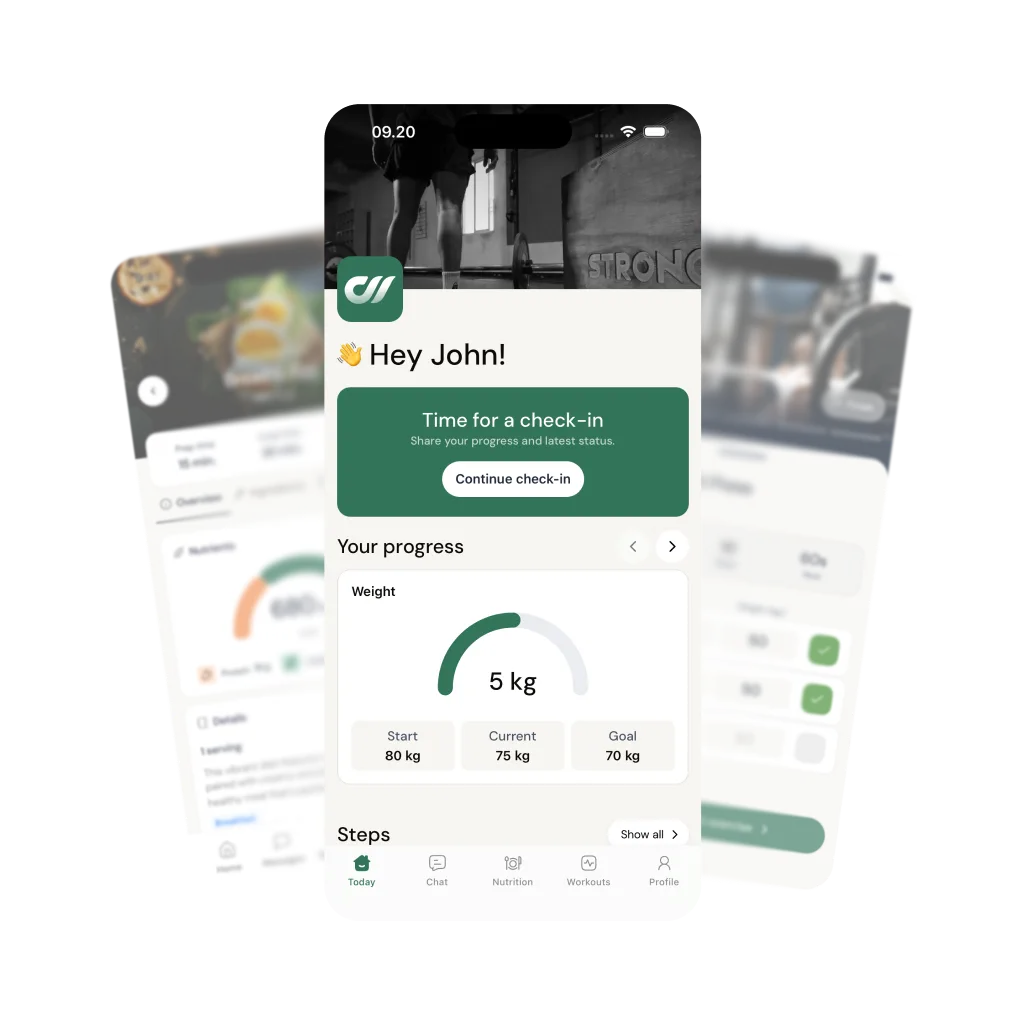
In Coachway that week sits in one client app on iOS and Android, in the client's own language: the training program with every session and set, the meal plan with the day's calories and macros, the check-in form, and chat with you. Build one real week of your program and meal plan in it, and on the call you can show the screen rather than describe it.
Frequently asked questions about ChatGPT prompts for price objections.
How do I practise handling price objections with ChatGPT?
Ask the model to play a prospect at the end of a sales call with a hidden real concern (time, money, belief it will work, or a partner), give it your offer and price, and have it object. You answer in writing as you would on the call; it stays in character until you find the real concern, then scores you on the four LAER steps: did you listen, acknowledge, explore with one question, and respond to the named concern without a discount. Ten minutes a week is enough to stop freezing at the price.
Can ChatGPT write my reply to "it is too expensive"?
It can draft one in your voice if you give it your style card, the price with what it covers, and the one concern the person named. The draft should acknowledge in one sentence, ask one question if the concern is still unclear, and answer the concern with a specific element of your coaching. Read it aloud, cut anything that sounds like a closer, and never let it add a discount or a deadline. The word-for-word versions for the call itself are in the price objection scripts.
What should a price objection prompt never do?
Never discount, never invent urgency ("only two spots left tonight"), never invent a client result or a testimonial, never argue with the person, and never write the reply as if the coach has already decided the person is wrong. Every prompt on this page carries those five bans, because a model will do all five if it thinks it is helping you close.
What are the most common price objections in online coaching?
Five: it is too expensive, I need to think about it, I need to ask my partner, it is not the right time, and I have tried coaching before and it did not work. Each usually means something more specific, and the prep-sheet prompt on this page builds that list for your offer, with the explore question that surfaces the real concern for each.
How do I know if my reply to an objection sounds pushy?
Paste it into the feedback prompt, which scores it for pushing, defending and discounting, and quotes the exact words that triggered each. The tells are predictable: "but" after the acknowledgement, a second question before they have answered the first, a benefit list, any mention of a lower price, and a closing line that asks for the decision twice. A reply that names their concern and answers only that one rarely reads as pushy.
Should I ever tell a prospect they do not need coaching?
Yes, when it is true, and one prompt here drafts that message. If the person already has the structure, the knowledge and the consistency to reach their goal alone, or their goal needs a different professional, saying so plainly costs you one sale and earns a referral and a reputation. The prompt keeps the door open with a specific pointer, not a vague "good luck".
Can I use these prompts for DMs as well as calls?
Yes; most price objections in online coaching now arrive as a DM after a call or an enquiry, and the draft prompts are written for that. Keep DM replies to four to six lines, acknowledge first, ask one question, and answer only the concern they named. For the live call, rehearse with the role-play prompt and use the scripts page for the exact wording.
How often should I rehearse objections?
Ten minutes before any week with sales calls in it, and once after any call you lost, using that objection verbatim. The role-play prompt takes the real sentence the person said, so the rehearsal is of the conversation you actually had, not a generic one. Three rehearsals of the same objection is usually enough to stop reaching for a discount.
Rehearse the silence after the price with a prospect who will not tell you why, and the real one is easier. The reply that works answers the one concern they named and leaves no as a fine answer. Coachway costs EUR 69 per month for up to 5 clients plus EUR 9 per additional client, every feature included, with a 14-day free trial; the numbers are on pricing, and the AI tools worth a coach's time lists what sits around it. The objection lands at step six of the seven-step coaching sales call, after the price and the silence; rehearse it there.
Keep reading
all guidesPrice objection scripts for coaches (without discounting)
Word-for-word responses to "it is too expensive" and "let me think about it" for online coaches. Surface the real concern - time, money, or will-it-work - answer it honestly, never discount on the spot, and respect a genuine no.
Read the guideHow to handle price objections in online coaching, without discounting (2026)
When someone says your coaching is too expensive, defending the price or quietly discounting are both usually wrong. An objection is rarely a flat no; it is a question the person has not finished asking. This guide covers diagnosing the real concern, re-anchoring on the outcome not the hours, why discounting attracts the wrong client, payment plans as a genuine option, and being okay to walk away.
Read the guideCoaching Sales Call Script: The 7-Step Call Coaches Close With (2026)
A sales call script for online fitness coaches: the six beats word for word, the 25-minute split (2 to frame, 12 to 15 to diagnose, reflect back, one package, price then silence, ask for the decision), a copyable run sheet, LAER objection handling and a top-5 objection prep sheet.
Read the guideFree tools for this: Discovery Call Calculator · No-Show Cost Calculator · Referral Value Calculator
Ready-made templates: AI Prompt Pack for Online Coaches · Discovery Call Script
Where the yes goes next
Intake, first check-in, the plan and payments through your own Stripe, with everything around one client on one screen. Start the 14-day free trial and move one client over: cancel any time under Billing.


