What is asynchronous coaching? Coaching on the client's own time.
Ask most coaches what asynchronous coaching is and they will describe how they already work: no weekly call, just check-ins, messages and video reviews the client picks up whenever it suits them. This is a plain-English definition of asynchronous coaching, how it differs from live coaching, what it actually includes, and why it is the format that lets a coach scale past a full calendar.
By Markus Evers · Updated August 2026
definition
Asynchronous coaching is coaching delivered on the client's own time, with no live call required. Instead of meeting on a scheduled video call, the client sends structured check-ins, progress photos, training logs and voice or video messages whenever it suits them, and the coach reviews everything and replies on their own schedule. Feedback, program adjustments and accountability all travel through messages, recorded video reviews and check-in forms rather than a shared hour in a calendar. Because neither person has to be online at the same moment, asynchronous coaching is the format that lets one coach hold dozens of clients accountable across time zones and busy weeks - and it is why online coaching can scale past a full calendar.
How is asynchronous coaching different from live coaching?
The difference is one thing: whether both people have to be online at the same time. Live, or synchronous, coaching is the scheduled call. Asynchronous coaching is everything that happens on a delay. Most online coaches run a blend, but the async layer is the one that does the heavy lifting and the one that decides how many clients a coach can hold.
| Asynchronous coaching | Live (synchronous) coaching | |
|---|---|---|
| When it happens | On a delay, on each person's own schedule | At a fixed time both people attend |
| Main channels | Check-in forms, messages, recorded video and voice | Video or phone call, in real time |
| Best for | Ongoing accountability, feedback, program tweaks | Onboarding, live technique, hard conversations |
| Works across time zones | Yes - no overlapping hours needed | Only where calendars overlap |
| Effect on capacity | Scales past a full calendar | Capped at one hour per client per week |
What does asynchronous coaching actually include?
Asynchronous coaching is not one channel - it is a small set of them that together replace the weekly call. Each one carries a different part of the job.
Structured check-ins.
The backbone. A form the client fills in on a set day - weight or a weekly average, measurements, training completed, nutrition adherence, energy on a rating, a couple of open questions and progress photos. It is the asynchronous version of "so, how did the week go?", except the coach can read it in under a minute and reply with one clear adjustment. If you want the anatomy of one, this is the weekly check-in in full.
Recorded video and voice.
The part that keeps async personal. The client films a set for a form check and the coach sends back a recorded reply talking over it, or a voice note carries the tone a typed message cannot. A recording has one quiet advantage over a live call: the client can watch it twice and keep it. This is where async stops feeling like email and starts feeling like coaching.
Messaging and automated touches.
The connective tissue between check-ins - a question mid-week, a nudge, a quick win acknowledged. A lot of the routine can send itself: an onboarding sequence, a reminder when a check-in is due, a scheduled video at the start of a new block. Automating the predictable touches is what frees the coach to spend their real attention on the reply that actually needs a human.
Why does asynchronous coaching let a coach scale?
Live coaching has a hard ceiling: an hour with a client is an hour you cannot give to anyone else, and there are only so many hours in a week that line up with a client's calendar. Asynchronous coaching removes that ceiling. You are no longer trading one fixed hour per client per week; you are reading a check-in and replying when it suits you, which takes a fraction of the time and can happen at 6am or 10pm regardless of where the client lives. That is how a coach goes from a calendar full of calls to holding dozens of clients well.
The catch is that async only scales if it stays personal, and it only stays personal if it is organised. A patchwork of a form here, photos in a chat thread and weight in a spreadsheet turns every reply into an admin hunt, and the coaching quietly gets thinner as the client count climbs. This is why the coaches who scale online coaching without burning out tend to run their async on one platform, and why going async-first across time zones is less a compromise than the whole point.
What does asynchronous coaching look like inside a platform?
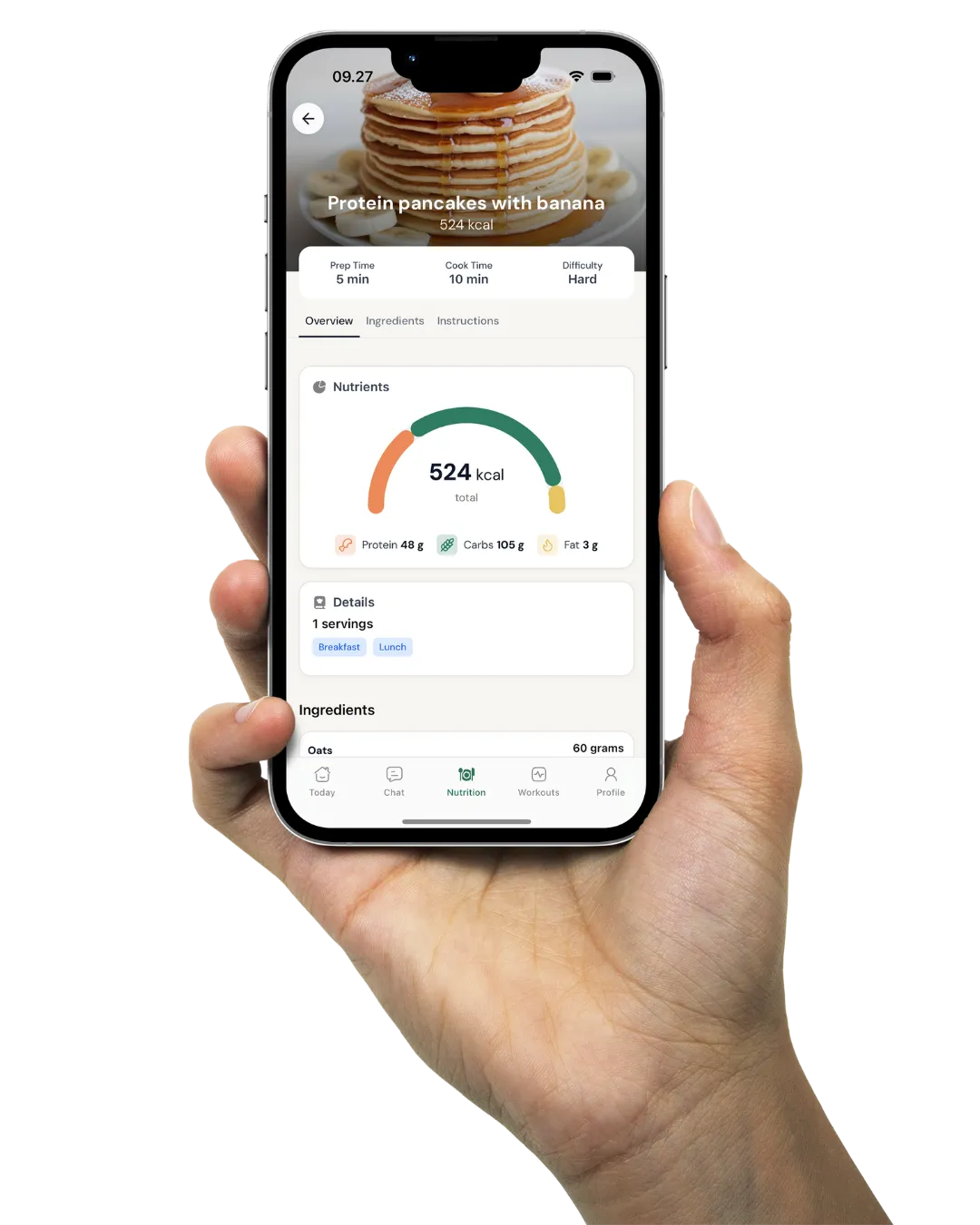
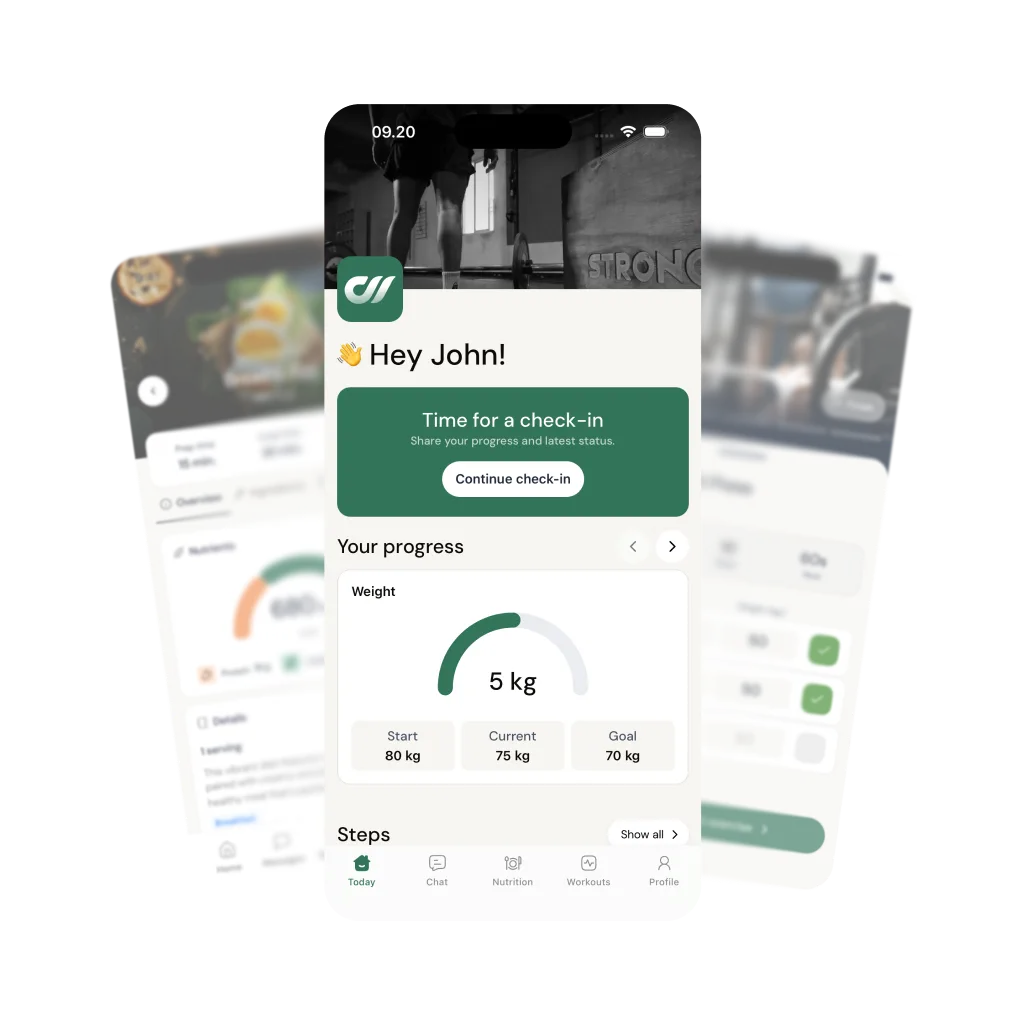
In practice, asynchronous coaching lives or dies on how little friction stands between the client sending something and the coach replying well. A purpose-built platform is the async delivery layer: it collects the structured check-ins, holds the messaging and recorded video, shows the plan and the progress on one screen, and gives the client a branded app to open on their own time. Coachway, which we make, runs check-ins through a drag-and-drop form builder with automatic reminders, puts the conversation beside the live client file, and lets onboarding and follow-ups send themselves - so async stays personal as the client count grows. It is built on knowledge from working with 150 online coaches over 6+ years, and it costs EUR 69 a month including your first 5 clients, then EUR 9 per additional client, every feature included. The 14-day free trial starts with a card held by Stripe and cancels under Billing before it renews - or book a demo to see the async flow first.
Frequently asked questions about asynchronous coaching.
What is asynchronous coaching?
Asynchronous coaching is coaching delivered on the client's own time, with no live call required. Instead of meeting on a scheduled video call, the client sends structured check-ins, progress photos, training logs and voice or video messages whenever it suits them, and the coach reviews everything and replies on their own schedule. Feedback, program adjustments and accountability all travel through messages, recorded video reviews and check-in forms rather than a shared hour in a calendar. Because neither person has to be online at the same moment, asynchronous coaching is the format that lets one coach hold dozens of clients accountable across time zones and busy weeks.
What is the difference between asynchronous and synchronous coaching?
Synchronous coaching happens live: coach and client are online at the same time on a call, and the value is the real-time back-and-forth. Asynchronous coaching happens on a delay: the client submits their week whenever they can, and the coach responds whenever they can, so nobody has to line up two calendars. Most online coaches run a blend - occasional live calls for onboarding or a monthly deep-dive, with the weekly asynchronous check-in carrying the ongoing relationship. The async layer is what makes the business scale, because it removes the fixed one-hour-per-client-per-week ceiling that live-only coaching runs into.
Is asynchronous coaching as effective as live coaching?
For most fitness and nutrition clients, a well-run asynchronous model is at least as effective, because the results come from what the client does across the whole week, not from a single hour of talking. A structured check-in captures the same information a call would - the numbers, the photos, the how-did-it-feel - and a recorded video reply can be watched twice and kept for reference, which a live call cannot. Live coaching wins when the work genuinely needs real-time interaction, such as live technique coaching or a difficult conversation, which is why many coaches keep a small number of calls and deliver everything else asynchronously.
What tools do you need for asynchronous coaching?
At a minimum you need a way to collect structured check-ins, a place to exchange messages and recorded video, and somewhere the client can see their plan - which is why most coaches move off a patchwork of forms, a chat app and a spreadsheet onto one coaching platform. A purpose-built platform runs the check-in forms, the messaging, the program and the progress tracking in one place, adds automated onboarding and reminders so routine touches send themselves, and gives the client a branded app to open on their own time. Coachway, which we make, does this for EUR 69 a month including your first 5 clients, then EUR 9 per additional client, every feature included.
Async coaching is built from three linked reads: the structured weekly check-in, the recorded remote form check, and the systems that let you run it all across time zones without losing the personal touch.
Keep reading
all guidesClient Progress Tracker: How to Track Beyond the Scale
A client progress tracker that only reads the scale misleads you about half your clients. The multi-metric method good coaches run: six signals read together on a fixed cadence, so a flat morning never overrules a month of real change.
Read the guideWhat is group coaching? Definition and how it differs (2026)
Group coaching is one coach guiding several clients through a shared program and community at once, with individual check-ins so no one gets lost. Here is a clear definition and how it differs from 1-on-1 on leverage, price and touch.
Read the guideHow to Do Online Personal Training: The Delivery Guide 2026
Learning how to do online personal training means moving four things off the gym floor and into an app: a personalised program the client opens daily, a demo video on every exercise, a structured weekly check-in that replaces the standing appointment, and form review from filmed working sets. The mechanics of each piece, why live calls are optional, and how one system keeps the loop from leaking across five apps.
Read the guideSee what Coachway can do for your coaching business
Coachway was built on knowledge from working with 150 online coaches over 6+ years, who all hit the same wall - slow platforms, clunky workflows, wasted hours. Start your 14-day free trial and see what we fixed - the whole platform, no charge today, cancel anytime under Billing.