Skip to content
platform · definition

What is a coaching platform?

A coaching platform is the all-in-one software a coach runs their business on - programming, messaging, check-ins, payments and a branded client app in one login. This page gives the plain definition, shows exactly which everyday tools a platform replaces, and clears up how a platform differs from a coaching app and from a CRM, so you know what the word actually means before you compare tools.

By Markus Evers · Updated August 2026

the short answer

A coaching platform is the all-in-one software a coach runs their business on: it holds programming, messaging, check-ins, payments and a branded client app in one login, replacing the spreadsheet, PDF and DM stack most coaches start with. Instead of a workout tool in one tab, a payment link in another and progress tracked in a notes app, everything the coach delivers and everything the client touches lives in one connected system. For an online coach with no in-person session, the platform is where the coaching actually happens.
what it replaces

What does a coaching platform actually do?

Most coaches do not set out to buy a platform. They start with the tools they already have - a spreadsheet for programs, a PDF for the meal plan, DMs for accountability, a separate link for payments - and only feel the seams once the client count climbs. A coaching platform pulls those scattered jobs into one place. The point is not more features; it is fewer tools to reconcile.

In practice, a coaching platform covers four surfaces at once, and it is the connection between them - not any single one - that makes it a platform rather than a pile of apps.

Programming and delivery

Workouts and meal plans are built once and pushed straight to the client's app, instead of exported to a PDF and emailed. The client sees today's session, ticks it off, and the coach sees it land - no attachment to hunt for.

Messaging and check-ins

Chat and structured weekly check-ins sit in one thread beside the client's progress, rather than scattered across Instagram DMs, WhatsApp and email. Answers, photos and measurements arrive in the same place the coach reviews them.

Payments

Subscriptions, payment plans and invoices run on a schedule instead of a monthly chase over a separate payment link. On Coachway the money settles in the coach's own Stripe account, so the platform never holds it.

A branded client app

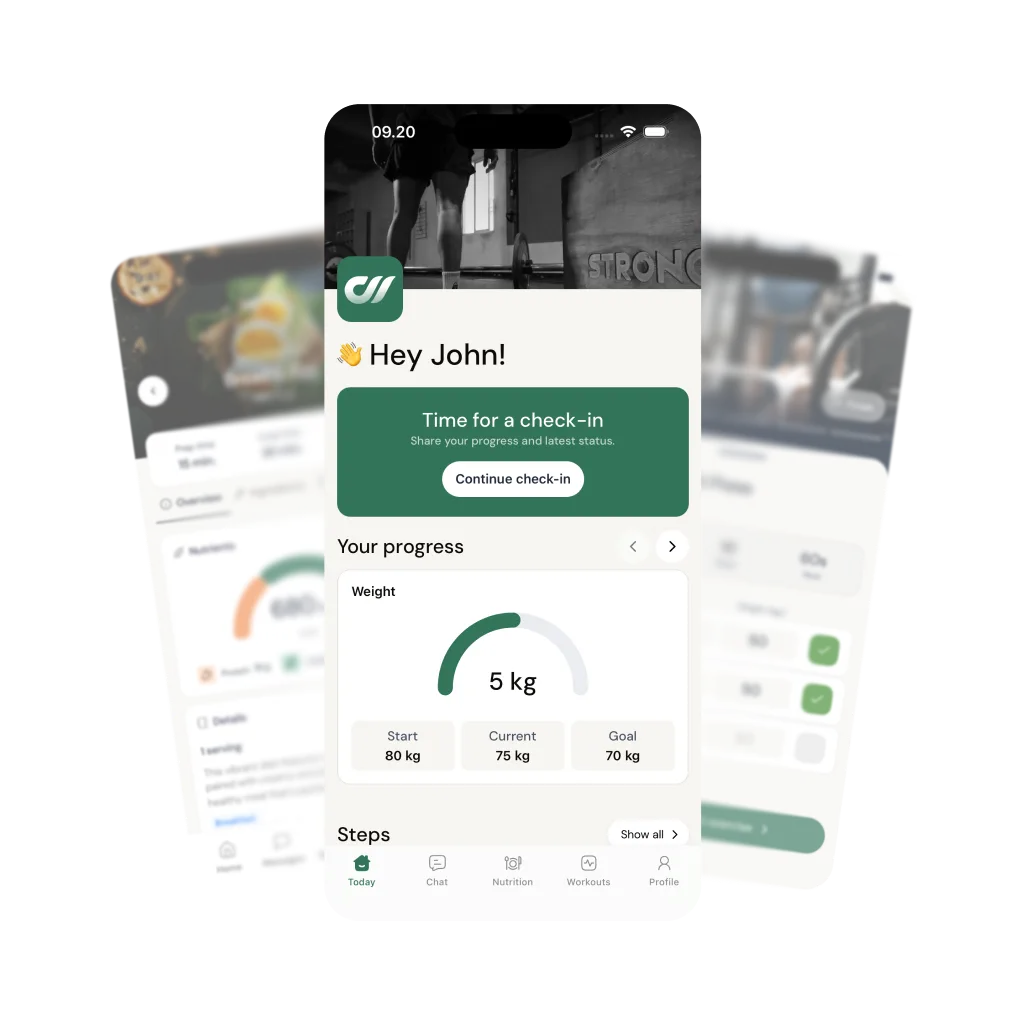
The client opens one app carrying the coach's logo and colours - program, nutrition, chat and progress in a single place - instead of juggling three consumer apps that do not talk to each other.

When a tool covers every one of those surfaces from a single login, it is usually described as an all-in-one coaching platform. The full picture of how the surfaces fit together - and how to weigh one platform against another - is laid out in the online coaching platform guide.

clearing up the labels

Platform vs app vs CRM: what is the difference?

The three words get used as if they mean the same thing, and they do not. The quick version: a client app is what the client sees, a CRM is where the relationship is tracked, and a coaching platform contains both and then handles delivery too.

Aspect Client app CRM Coaching platform
Primary jobShow the client their program and let them logTrack leads, records and follow-upRun the whole coaching business in one place
Who logs inThe clientThe coachBoth - coach dashboard and client app
Delivery (programs, check-ins)Displays itNoBuilds and delivers it
PaymentsNoRarely, usually a bolt-onBuilt in
Lead pipelineNoYes, its core jobYes, as one part of the whole

So a platform is the widest of the three: it includes a client app and does the CRM job, then adds the delivery and payments a CRM never touches. If you are weighing whether the relationship layer alone is enough for now, the piece on what a CRM for personal trainers does breaks that job down on its own.

right-sizing it

When does a coach actually need a coaching platform?

A platform is a tool, not a milestone. With a few clients and a light lead flow, a spreadsheet and a chat app will hold together fine, and buying software you do not need yet just adds admin. The moment it earns its place is when the glue between separate tools starts costing more than the tools themselves - PDFs nobody opens, check-ins slipping, payments chased by hand, and a nagging sense you are re-typing the same client details in three places.

When that point arrives, the value of a platform is consolidation. One place for programming, one place clients live in, one place the money runs - which keeps your tool count low as you scale. A platform can also carry real depth: Coachway ships 1,800+ exercises and a food database of 3.7 million foods, and its client app runs in six languages (English, Danish, Norwegian, Swedish, Finnish and German), while the coach dashboard itself is in English.

Coachway is one example of the all-in-one route. It captures leads, runs a pipeline through new, contacted, qualified, won and lost stages, builds programs and meal plans, runs structured check-ins, and one-click converts a won lead into an active client with a branded app and payments through the coach's own Stripe account. Pricing starts at EUR 69 per month with your first 5 clients included and EUR 9 per additional client, every feature in one plan. There is a 14-day free trial; a card is required to start, held securely by Stripe, and you can cancel anytime under Billing. If you are still deciding, the walk-through on when you actually need a coaching platform covers the timing in more detail.

questions coaches ask

Frequently asked questions.

What is a coaching platform?

A coaching platform is the all-in-one software a coach runs their business on: it holds programming, messaging, check-ins, payments and a branded client app in one login, replacing the spreadsheet, PDF and DM stack most coaches start with. Instead of a workout tool here, a payment link there and progress tracked in a notes app, everything a coach delivers and everything a client touches lives in one connected system. For an online coach, the platform is the operational spine - it is where the coaching actually happens once there is no in-person session.

What is the difference between a coaching platform and a coaching app?

A coaching app is usually the client-facing half - the phone app where a client sees their program, logs food and messages the coach. A coaching platform is the whole system: the coach's dashboard where programs, check-ins and payments are managed, plus that client app as one part of it. Most platforms include a client app, but not every app is a full platform. If a tool only shows the client their workouts and stops there, it is an app; if it also runs the coach's pipeline, billing and delivery, it is a platform.

Is a coaching platform the same as a CRM?

No. A CRM tracks the relationship - leads, client records, pipeline and follow-up - and stops at that layer. A coaching platform does the same relationship tracking and then keeps going into delivery: programming, meal plans, check-ins, payments and a branded app the client uses daily. A CRM answers who your leads and clients are and what you owe them next; a platform also handles what you deliver once they say yes. Many coaches replace a standalone CRM with a platform that covers the CRM job as one part of the whole.

Do I really need a coaching platform, or can I use a spreadsheet?

If you coach three or four clients and get one lead a week, a spreadsheet, a chat app and a disciplined follow-up habit can hold it together. The honest signal that you have outgrown that setup is friction you can feel: programs going out as PDFs nobody opens, check-ins slipping, payments chased by hand, and clients asking where to find things. A platform pays for itself once the admin of stitching separate tools together costs more time than the software does.

How much does a coaching platform cost?

Prices range widely - some tools bill per active client, others charge a flat monthly fee, and a few take a cut of what you earn. Coachway starts at EUR 69 per month with your first 5 clients included and EUR 9 per additional client, every feature in one plan with no tiers. It runs a 14-day free trial; a card is required to start, held securely by Stripe, and you can cancel anytime under Billing. Client payments run through your own Stripe account, and the optional built-in payments carry a 2.4% per-transaction fee.

See what Coachway can do for your coaching business

Coachway was built on knowledge from working with 150 online coaches over 6+ years, who all hit the same wall - slow platforms, clunky workflows, wasted hours. Start your 14-day free trial and see what we fixed - the whole platform, no charge today, cancel anytime under Billing.

No charge today - cancel anytime under Billing
Built for efficiency 6 languages DenmarkNorwaySwedenFinlandGermanyUnited Kingdom
The coaching platform you've been waiting for
