All-in-one coaching platform - what the label actually has to deliver.
An all-in-one coaching platform should run your whole coaching week - workouts, nutrition, check-ins, messaging, payments and a client app - from one login, not five. Most tools use the phrase; fewer pass the test. This is the honest way to check the claim in 2026: the surfaces a real all-in-one has to cover, the ones that quietly get bolted on, and what genuine consolidation saves once you total the stack you already pay for.
By Markus Evers · Updated September 2026
the short version
An all-in-one coaching platform is one product that runs the whole coaching relationship - programming, nutrition, check-ins, messaging, payments, leads and a client app - from a single client record. The label is easy to print and hard to earn, so test it against a real coaching week rather than a feature list: if adjusting a client's plan, reading their check-in, replying and billing them forces you to open five separate tools, the platform is a patchwork with a good tagline. Genuine consolidation saves less on the sticker price than on the tax you stop paying - five logins, five bills, and the warm handovers that leak between tools. Price the version that includes every surface you actually use, not the entry tier the marketing quotes.
What does all-in-one actually mean?
An all-in-one coaching platform means one product that delivers the coaching itself and runs the business around it, so a client's whole week - the plan they follow, the food they log, the check-in they submit, the message they send, the payment they make - lives in one place instead of scattered across tools that do not talk to each other. That is the honest bar. It is not the same as a workout app with a payment link stapled on, or a CRM that organises clients but never delivers a programme. The phrase describes a spread of surfaces held together by one client record, and the whole promise is that nothing has to be copied by hand from one tool into the next. For the narrower tool, see what a CRM for personal trainers is.
The reason the distinction matters is that "all-in-one" has become a marketing default rather than a description. Almost every platform in the category uses it, including tools that make you bolt on nutrition, route billing to a third party, or lock the branded app behind the top tier. So the useful question is never whether a site says all-in-one; it is which surfaces are genuinely inside the product you can afford, and which quietly sit in another subscription. The rest of this guide gives you the surfaces to check and the way to price the real, complete version rather than the entry tier.
The eight surfaces a real all-in-one has to cover.
Run one real coaching week in your head and count the tools it touches. A genuine all-in-one coaching platform covers all eight of these surfaces without sending you to another subscription. The right-hand column is where the label most often breaks - the surfaces that get sold separately, gated to a higher tier, or handed to a third-party tool.
| Coaching surface | What it has to do | Where the label commonly breaks |
|---|---|---|
| Programming | Workout builder with a real exercise library | Usually included - this is the surface most tools start from |
| Nutrition | Meal planning plus client-side food logging | Often a thin add-on, not a real logging database |
| Check-ins | Custom forms, ratings, photos, measurements, trends | Sometimes a basic form, not a side-by-side review |
| Messaging | In-app chat beside the full client file | Pushed to a separate chat app or plain email |
| Payments | Subscriptions and plans, settled in your account | Routed to an external tool or a third-party wallet |
| Client app | A native iOS and Android app the client opens every day | Custom branding or a standalone app gated to the top tier |
| Leads | Capture form and a visible pipeline to convert | Missing entirely, or a separate CRM subscription |
| Automations | Onboarding flows, reminders, drip follow-ups | Reserved for higher tiers or handed to email tools |
Nutrition is where the label thins out first.
A macro field on a workout card is not nutrition coaching. A real nutrition surface means meal planning your clients can follow and a food-logging database they can search, scan and photograph into - a different depth of product entirely. When you test an all-in-one coaching platform, open its nutrition tool as a client would and ask whether a member could actually log their day inside it. If the honest answer is "they would still use a separate calorie app", the platform has not consolidated nutrition; it has referenced it. This is the single most common place the all-in-one promise quietly breaks, so check it before anything else, and see what a full nutrition surface looks like in the nutrition-platform comparison.
Payments tell you who holds the money.
Two platforms can both say "payments included" and mean very different things. In one, billing settles into your own account and the platform never holds your money; in another, you are routed to an external checkout or the platform sits between you and your income. Both are technically all-in-one on the marketing page, but only one keeps you in control of your own cash flow. Ask where the money lands and who owns the payout account before you trust the label, and if built-in processing carries a per-transaction fee, factor that into the real cost. The payments guide walks through the options.
Read the pricing page, not the homepage.
A surface that only unlocks at the top tier is a bolt-on with extra steps. The all-in-one claim is made on the homepage; the truth is on the pricing page, where you can see which tier holds the branded app, the automations, the team permissions and the nutrition tools. Price the version that includes every surface you actually use - if the branded app or your assistant coach sits three tiers up, that is the number to compare, not the entry price the marketing quotes. A clean signal to look for is a single price with every feature included, because tier-climbing is how a "complete" platform stays incomplete until you keep paying. The 12-point checklist turns this into a scored decision.
What does genuine consolidation actually save?
The obvious saving is the bill: replacing five subscriptions with one usually lowers what you pay, though by how much depends entirely on the stack you are replacing, so total it before you decide. The bigger saving is the tax you stop paying around the tools - the part no invoice shows. A patchwork stack costs you a warm handover every time a client crosses a seam: a lead who signs up in one tool has to be re-created by hand in the next, a check-in submitted in a form never reaches the tab where you bill them, a plan lives somewhere the client cannot see it. Those gaps are where clients quietly drift, and drift is far more expensive than any subscription.
So the real comparison is not "platform price versus one tool", it is "one platform versus the whole stack plus the leakage between its parts". Before you judge whether an all-in-one coaching platform is worth it, add up every tool a client touches in a week - messaging, programming, nutrition, forms, scheduling, billing, email - and be honest that the total is almost always higher than you remember once the small ones are counted. Run your own numbers with the tool-stack cost calculator, then set that figure against a single platform. For a fuller map of every job in the stack and which five belong in one tool, the coaching tech-stack guide lays it out.
How Coachway holds all eight surfaces on one screen.
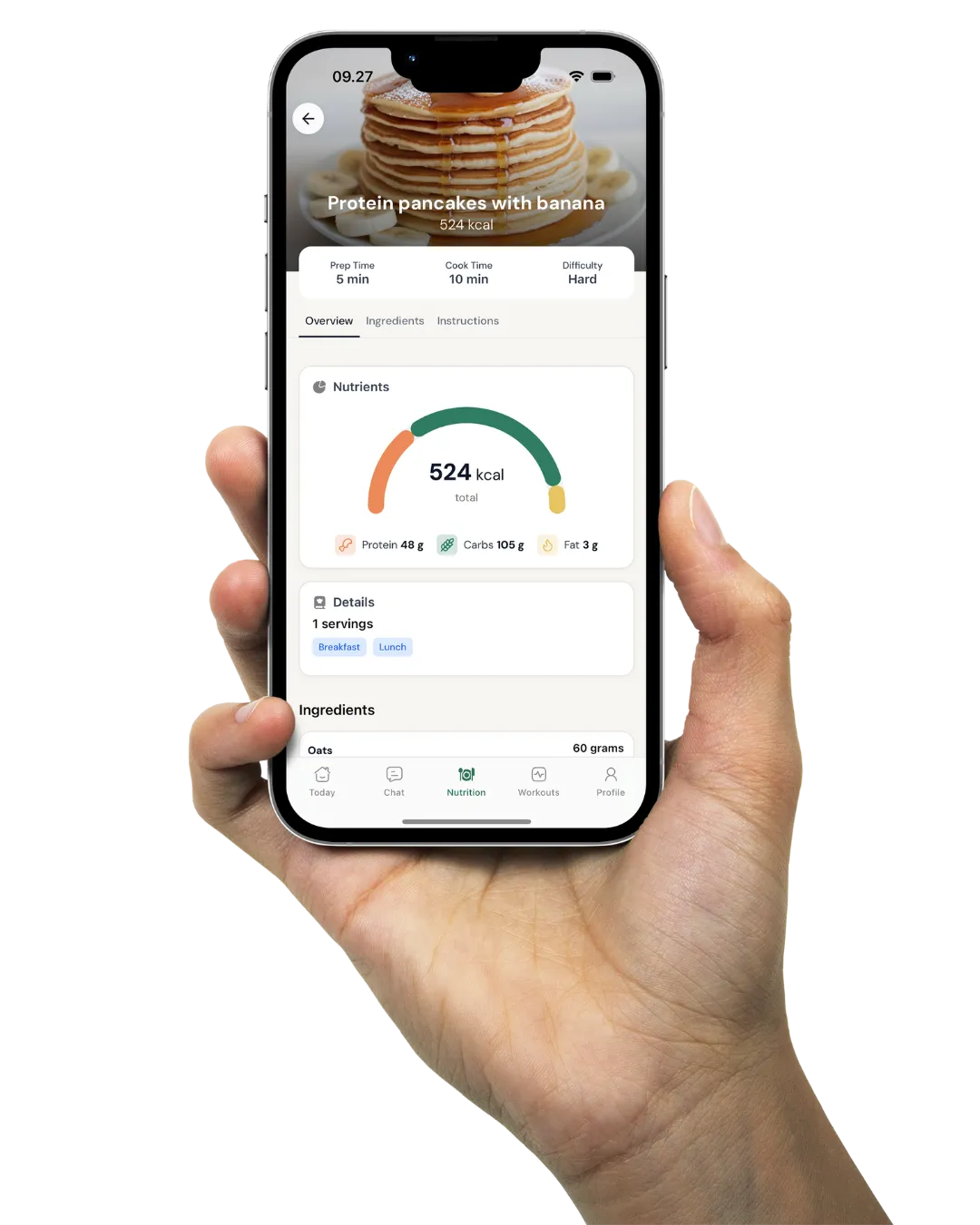
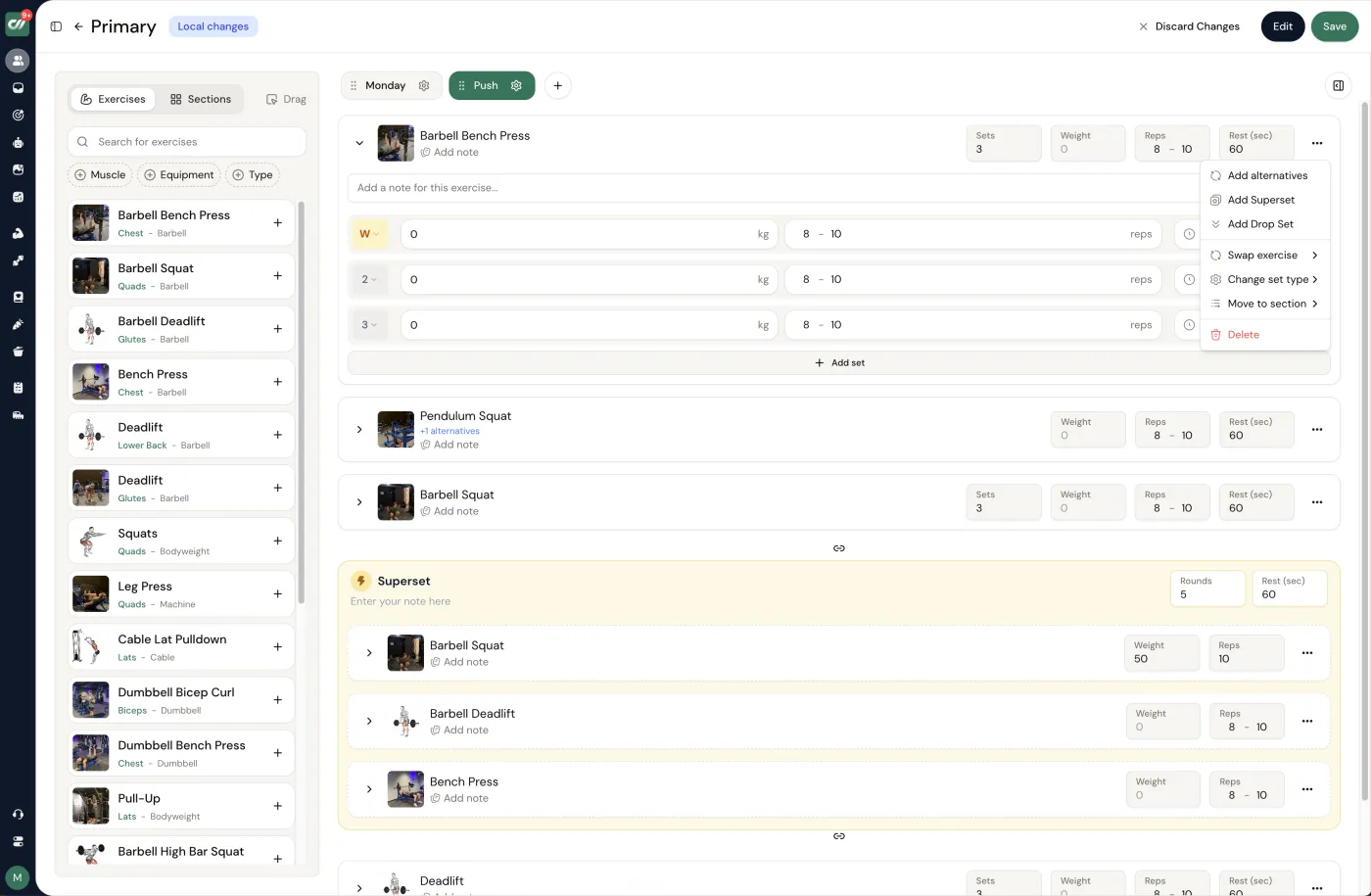
We make Coachway, so treat this as the disclosed example rather than a neutral pick. It is built to pass the surfaces test rather than print the label: the workout builder ships with 1,800+ exercises, nutrition is a real logging surface with 1,100+ recipes, 3,900+ ingredients and a food database of 3.7 million items clients scan and photograph into, check-ins are a drag-and-drop form builder reviewed side by side with progress photos, and the Power Panel puts the client list, the conversation and the live client file on one screen instead of three tabs. Payments settle in your own Stripe account - Coachway never holds your money - with optional built-in processing that carries a 2.4% per-transaction fee, and the client app is included on every plan, carrying your own plans, check-ins and prices; Coachway does not sell custom app branding or a store listing under your name. The Coachway client app your clients download runs on iOS and Android in six languages: English, Danish, Norwegian, Swedish, Finnish and German.
The pricing is the part that maps to this guide's argument about reading the tier. Coachway is one price with every feature included and no modules to unlock: EUR 69 a month covers your first 5 clients, then EUR 9 per additional client, so the client app, the automations, the payments and the nutrition tools are all in the number rather than gated three tiers up. It is built on knowledge from working with 150 online coaches over 6+ years. The 14-day free trial starts with a card held securely by Stripe and cancels under Billing before it renews, and you can book a demo to see the whole workflow on one screen before you switch anything.
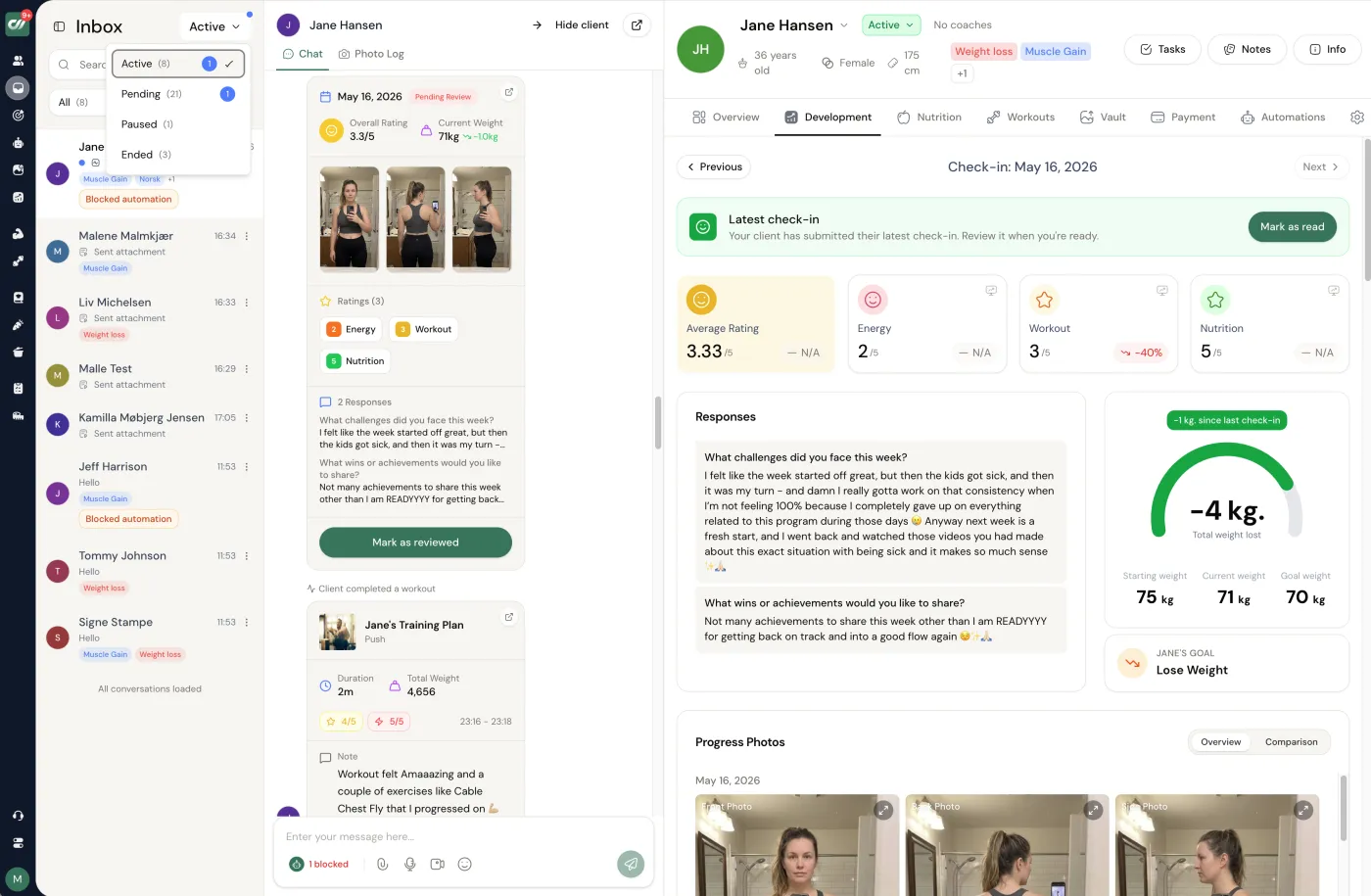
Click through the surfaces that used to need five separate tools.
Every tab here is one of the surfaces the eight-point test asks about, and they all sit behind a single login instead of five subscriptions. Move through the workout builder, the meal planner and client progress, and watch the same client record carry across each tab - no re-typing, no export step, no separate app to open.
- One record, every surface. The client you program is the client you feed, review and message - their file follows them across tabs instead of being re-created in the next tool.
- Nothing gated behind a tier. Programming, nutrition, check-ins and messaging all sit on the one price, not scattered across upgrades you unlock later.
- The whole week on one screen. The daily coaching loop - plan, feed, check in, reply - never leaves the product, which is exactly where a patchwork stack leaks clients.
See the real product
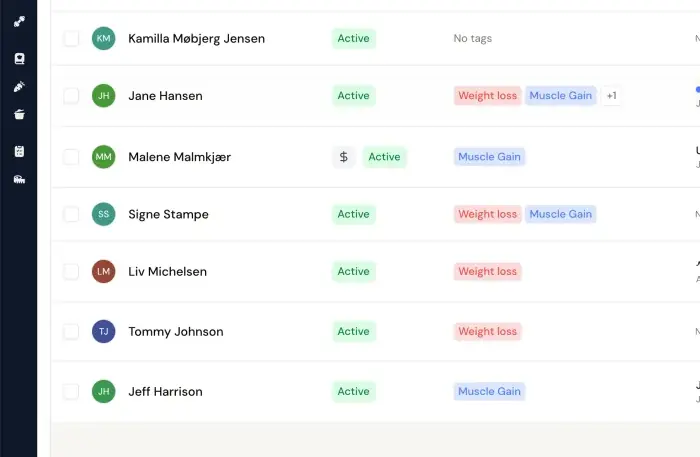
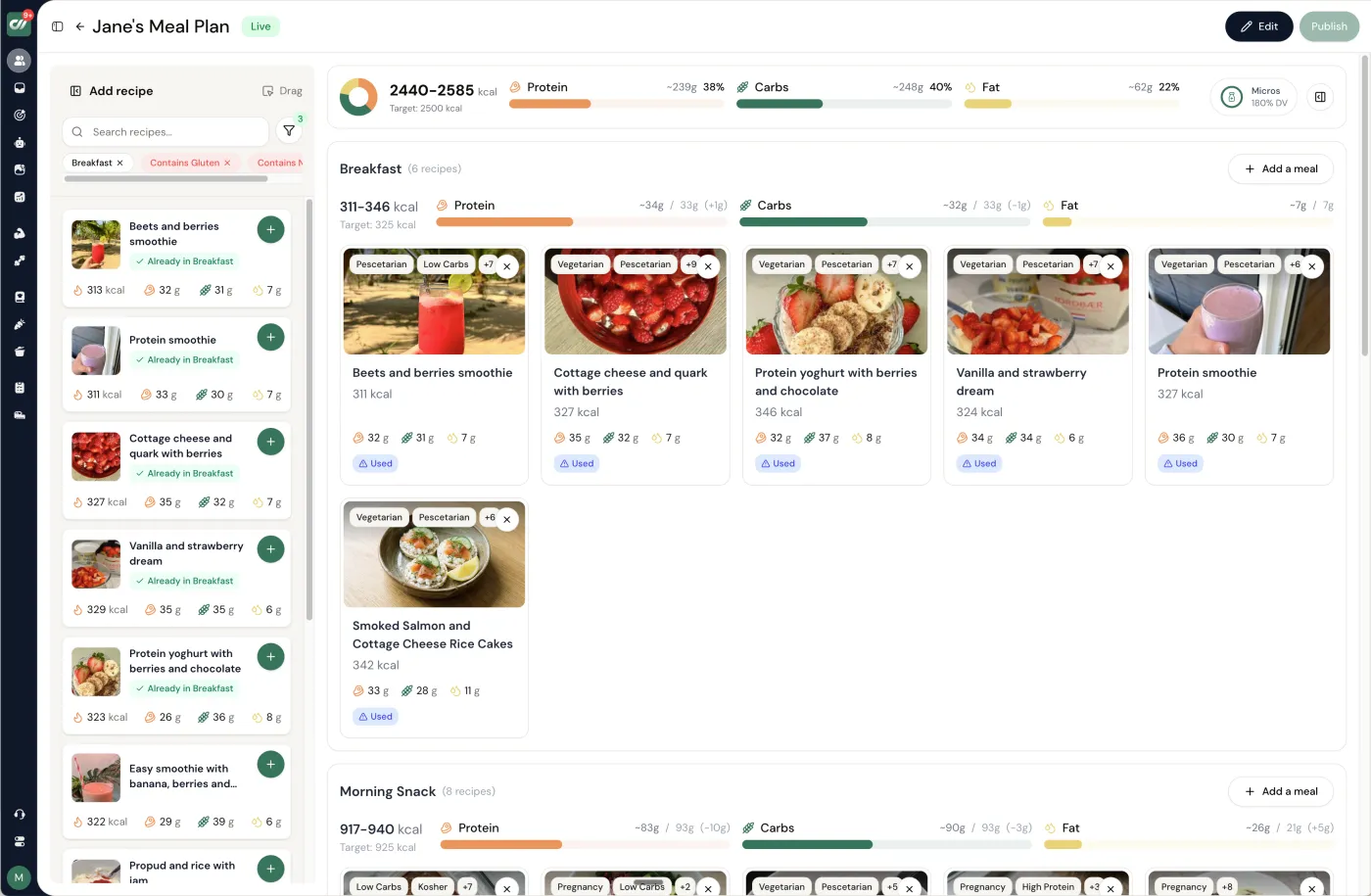
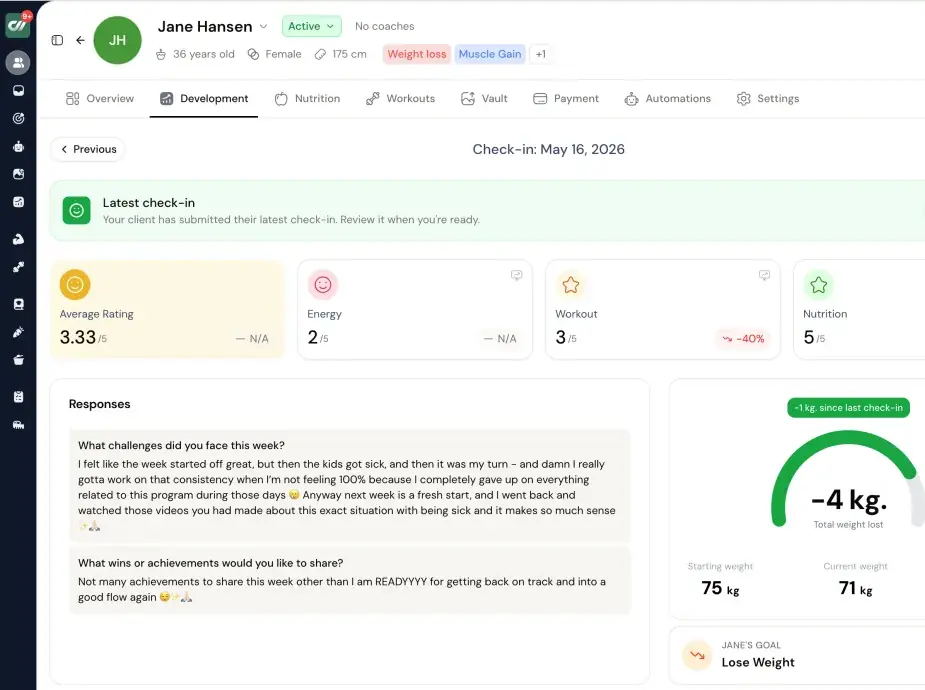
Clients - Every client in one table with status and goal tags - see where all of them stand at a glance.
Frequently asked questions about all-in-one coaching platforms.
What is an all-in-one coaching platform?
An all-in-one coaching platform is software that runs the whole online coaching workflow from one login: a workout builder, nutrition and meal planning, weekly check-ins with progress photos and measurements, in-app messaging, payments, automations, lead capture and a client-facing app. The test is not whether the marketing page uses the phrase, but whether a real coaching week - programming a client, adjusting their macros, reading a check-in, replying, and billing them - happens inside one product or forces you to open a chat app, a spreadsheet, a separate workout tool, Stripe and an email platform in turn. If any core surface lives in a separate subscription, you are still running a patchwork stack that only calls itself all-in-one.
What should an all-in-one coaching platform include?
At minimum it should cover eight surfaces without a bolt-on: a workout builder with an exercise library, nutrition and meal planning plus client-side food logging, a drag-and-drop check-in and onboarding form builder, a unified inbox that shows the conversation beside the client's full file, payments, automations for onboarding and reminders, lead capture with a pipeline, and a client app on iOS and Android. Two surfaces are where most platforms quietly break the promise: nutrition depth and payments. Many workout-first tools treat meal planning and food logging as thin add-ons, and several route billing to an external tool rather than settling into your own account. Read the pricing page for the tier each surface sits on, because a feature that only unlocks at the top tier is a bolt-on with extra steps.
Does an all-in-one coaching platform really save money?
Usually, but the saving is in overhead and lost clients more than in the sticker price. A coach running separate subscriptions for messaging, programming, nutrition, forms and billing pays five bills, reconciles five logins and loses the warm handover between them - a lead who signs up in one tool has to be re-created by hand in the next. Consolidating removes that tax. Coachway, for example, is EUR 69 a month including your first 5 clients and EUR 9 per additional client, with every feature in one price and no tiers to climb. Whether that beats your current stack depends on how many tools you replace, so total your own subscriptions before you decide - the real number is almost always higher than coaches expect once every small tool is counted.
What do all-in-one platforms still make you bolt on?
The four surfaces most often sold separately are a fully standalone white-label app, deep nutrition and food logging, payments that settle in your own account, and team or assistant-coach permissions. A branded in-app experience - your logo, colours and cover image - is commonly included, but a fully standalone app on your own App Store listing is typically a paid upgrade. Nutrition is the surface where the all-in-one label most often thins out: a real food-logging database and meal planning is a different depth of product than a macro field on a workout card. Before you trust the label, price out the version of the platform that includes every surface you actually use, not the entry tier the marketing quotes.
Is an all-in-one coaching platform better than best-of-breed tools?
For most solo and scaling online coaches, one platform that holds the whole client wins, because the value is in the seams. A best-of-breed stack can give you a slightly better workout builder or a slightly better email tool, but every join between two tools is a place a client falls through: a check-in that never reaches the person billing them, a lead who is never converted, a plan that lives where the client cannot see it. The coaches for whom best-of-breed still makes sense are usually those with one dominant surface - a pure strength coach who lives in programming, say - and a genuine reason to specialise there. Everyone managing the full relationship, from lead to payment to weekly check-in, tends to be better served by fewer tabs and one client record.
Once you have tested the label, two guides carry the decision the rest of the way: the ranked platform comparison for which tool fits how you coach, and the tech-stack map for which jobs belong in one platform and which you may still run separately.
Keep reading
all guidesEverfit vs TrueCoach: Honest 2026 Comparison
Everfit vs TrueCoach for online fitness coaches: free tier vs no free tier, pricing, bundled vs add-on payments, branded app, nutrition, and which fits your coaching.
Read the guideTrueCoach vs PT Distinction: Honest 2026 Comparison
A fair, head-to-head comparison of TrueCoach and PT Distinction for online fitness coaches: pricing tiers and client caps, branded app gating, nutrition tooling, payments and country support, and which platform fits how you actually coach.
Read the guideHubFit vs Trainerize: Honest 2026 Comparison
A fair head-to-head between HubFit and Trainerize for online fitness coaches: bundled all-in-one pricing vs a low entry point with paid add-ons, branded app cost, nutrition tooling, language support, payments, and which platform fits how you actually coach.
Read the guideFree tools for this: Coaching Tool Stack Cost Calculator · Coaching Profit Calculator · Client Capacity Calculator
See what Coachway can do for your coaching business
Coachway was built on knowledge from working with 150 online coaches over 6+ years, who all hit the same wall - slow platforms, clunky workflows, wasted hours. Start your 14-day free trial and see what we fixed - the whole platform, no charge today, cancel anytime under Billing.