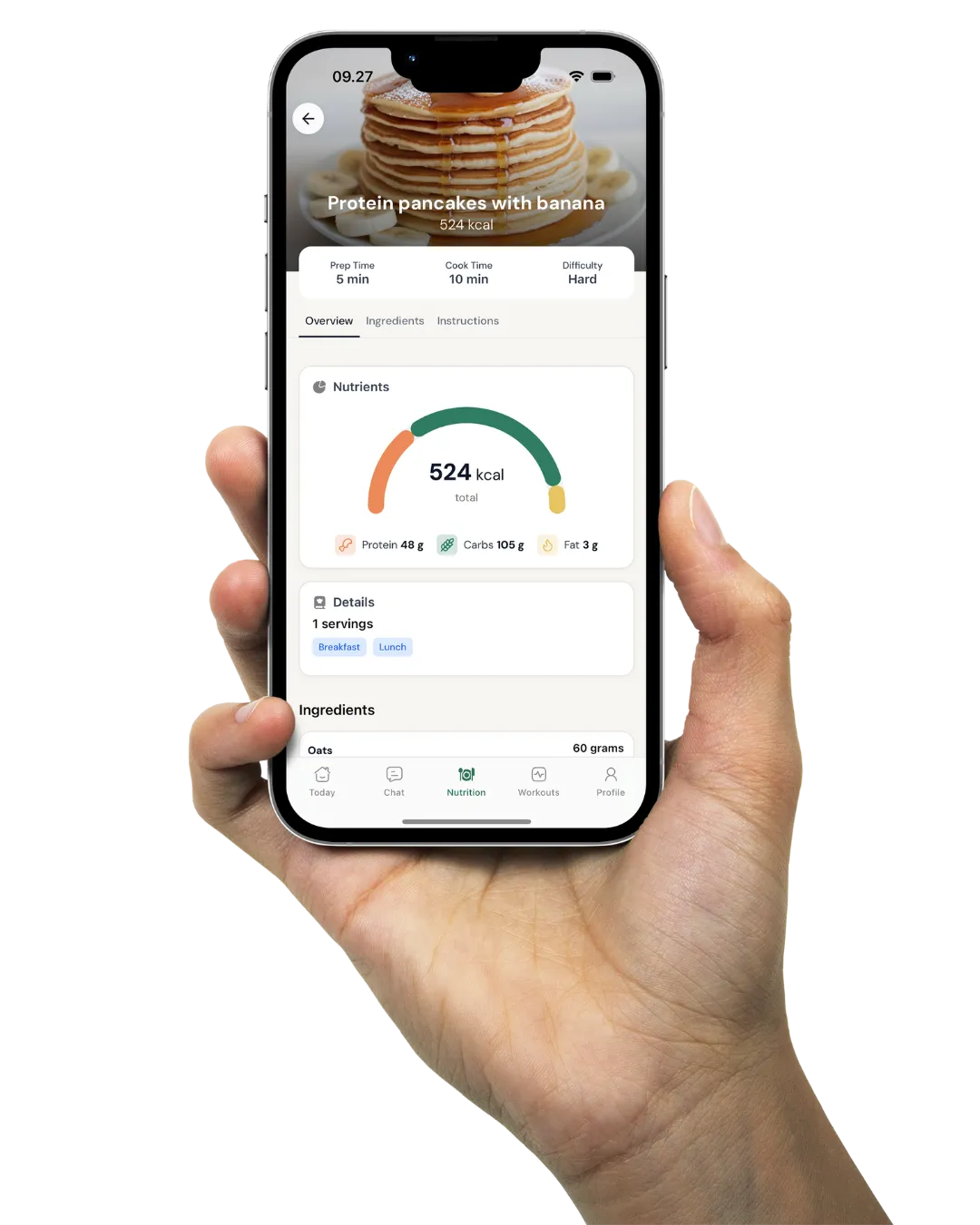
Nutritionist vs dietitian vs nutrition coach.
Three food-and-health titles people mix up constantly - and the differences are real, not cosmetic. A dietitian is the regulated clinical professional; "nutritionist" means very different things depending on where you are; and a nutrition coach is the non-clinical third path most guides leave out. Here are the honest lines, and how to tell which one you need.
By Markus Evers · Updated September 2026
the short answer
A dietitian - in the US a registered dietitian (RD or RDN) - is a regulated, credentialed clinical professional trained to assess nutrition-related conditions and provide medical nutrition therapy. "Nutritionist" is a looser title: protected in some countries and US states, unregulated in others. A nutrition coach is non-clinical, coaching everyday eating habits and accountability, and refers anything medical out.
Before you read on: this article is general information, not legal, medical or dietetic advice. Titles, regulation and licensing vary by country and US state and change over time, so verify the current rules where you live. If you have a medical condition, see a physician or a registered dietitian.
What is a dietitian?
A dietitian is the most strongly protected of the three titles and the clinical nutrition professional. In the US the credential is Registered Dietitian (RD) or Registered Dietitian Nutritionist (RDN) - the two are used interchangeably. The path is long and regulated: an accredited degree, a period of supervised practice, and a national credentialing exam, and in many US states a licence to practise on top of that. In recent years a graduate degree has been required to sit the US exam - a rule worth verifying against the current requirements, because credentialing standards change.
What sets a dietitian apart is scope: they are trained and authorised to assess nutrition-related conditions and provide medical nutrition therapy for diagnosed disease, which is why they work in hospitals and clinical settings. A note on spelling - "dietitian" is the standard professional spelling and "dietician" is a common variant of the same word. Internationally the mechanism differs but the pattern holds: in the UK, for instance, "dietitian" is a legally protected title, while the protections around "nutritionist" are looser.
What is a nutritionist?
"Nutritionist" is the word that causes the confusion, because it is not consistently protected. In some places anyone can use it with no credential at all; in others - including some US states - the title or the practice of nutrition is regulated or licensed. So the same word can describe a self-taught enthusiast or a highly qualified clinician, depending entirely on the person and the location.
At the qualified end sits a credential like the CNS (Certified Nutrition Specialist), an advanced nutritionist qualification that generally requires a graduate degree, supervised practice and an exam, and whose holders may be licensed to provide clinical nutrition care where local law allows. In the UK, "nutritionist" is not legally protected, but the Association for Nutrition runs a voluntary register (the RNutr and ANutr designations) as a quality signal. The practical takeaway is simple: the word "nutritionist" tells you little on its own, so ask what specific qualification is behind it.
What is a nutrition coach?
The nutrition coach is the option the medical-authority explainers usually leave out. It is a non-clinical role focused on the everyday side of eating: building sustainable habits, general healthy-eating guidance, portions and structure, and the accountability that turns intentions into a routine - for generally healthy clients. Most nutrition coaches are credentialed through coaching certifications such as Precision Nutrition, ACE or NASM rather than a licensure pathway, and recognition varies by body, so it pays to compare them.
The boundary is what makes it work. A nutrition coach does not diagnose conditions, prescribe therapeutic or medical diets, or treat disease - that is dietitian and physician territory - and refers anything clinical out. Held properly, it is a genuinely useful role for the large group of people who are healthy and simply want to eat better with support. If becoming one is what brought you here, the full path is in how to become a nutrition coach, and the neighbouring role is compared in health coach vs nutrition coach.
Nutritionist vs dietitian vs nutrition coach, at a glance.
| Role | Education & training | Regulation & title | Scope of practice | Who needs which |
|---|---|---|---|---|
| Dietitian (RD / RDN) | An accredited degree, supervised practice hours and a national credentialing exam. In the US a graduate degree has been required in recent years - verify the current rule. | A regulated, and in many places licensed, clinical title. The most consistently protected of the three. | Can assess nutrition-related conditions and provide medical nutrition therapy for diagnosed disease. | Anyone with a diagnosed condition or who needs a therapeutic diet - diabetes, kidney disease, an eating disorder. |
| Nutritionist | Varies widely - from no formal requirement to a graduate-level credential such as the CNS (Certified Nutrition Specialist). | Inconsistent - the title or the practice of nutrition is protected in some countries and US states, and unregulated in others. | Depends on the specific credential and local law; clinical scope only where the person is licensed for it. | Depends entirely on their qualification - ask what credential they hold before relying on clinical advice. |
| Nutrition coach | A coaching certification (for example Precision Nutrition, ACE, NASM) rather than a licensure pathway; recognition varies by body. | Not a protected title. A non-clinical role by definition. | Everyday eating habits, general healthy-eating guidance, structure and accountability - no diagnosis or prescription. | A generally healthy person who wants habit change, structure and accountability, not treatment. |
This is the spirit of each role, not a legal definition - actual scope is set by the person's credential and local law, not by the title on the door. Verify before you rely on it.
Can a nutritionist do what a dietitian does - and which do I need?
Sometimes, but you cannot assume it from the title. Whether a nutritionist can provide clinical care depends entirely on their specific credential and local regulation; the RD or RDN is the title most consistently authorised to deliver medical nutrition therapy. Where a nutritionist holds a clinical credential and licence - a CNS in a state that permits it, for example - they may do similar clinical work, but that has to be verified, not presumed.
So the safe default is straightforward. For a diagnosed medical condition or a therapeutic diet, a registered dietitian - or your doctor first. For general habits, structure and accountability, a nutrition coach. For anyone calling themselves a nutritionist, ask what qualification sits behind the word before you rely on their advice.
A one-glance routing guide.
If you have a diagnosed condition or need a therapeutic or medical diet
see a registered dietitian (or your doctor).
If you want expert nutrition guidance and are checking a specific credential
see a nutritionist - verify their exact qualification and local licensing.
If you are generally healthy and want habit change, structure and accountability
see a nutrition coach.
This is a general guide, not medical advice. When in doubt about a health condition, start with your doctor.
Where the nutrition coach fits - and the line it never crosses.
The nutrition coach role only works because the boundary is clear. Here is what sits inside the lane, what sits outside it, and when to refer.
Inside the lane
Everyday eating habits, general healthy-eating guidance, portions and structure, and week-to-week accountability for generally healthy clients.
Outside it
Diagnosing conditions, treating disease, and prescribing therapeutic or medical diets - that is the registered dietitian's and physician's territory, not a coach's.
When to refer
Eating disorders, diabetes and kidney disease, pregnancy, and medication interactions all cross the line - refer to a dietitian or doctor, every time.
Holding that line is not a limitation - it is what makes coaching trustworthy. The fuller version for coaches is in scope of practice for online coaches.
How a nutrition coach delivers non-clinical coaching.
If the non-clinical coach path is the one that fits you, the day-to-day is habits and accountability, not prescriptions. In Coachway that means intake forms, guided weekly check-ins with habit and goal tracking, and messaging - all reaching the client through a branded app under your own name. General healthy-eating guidance can go out through the meal planner, kept non-clinical - it is a coaching tool for healthy clients, not a medical-nutrition-therapy system.
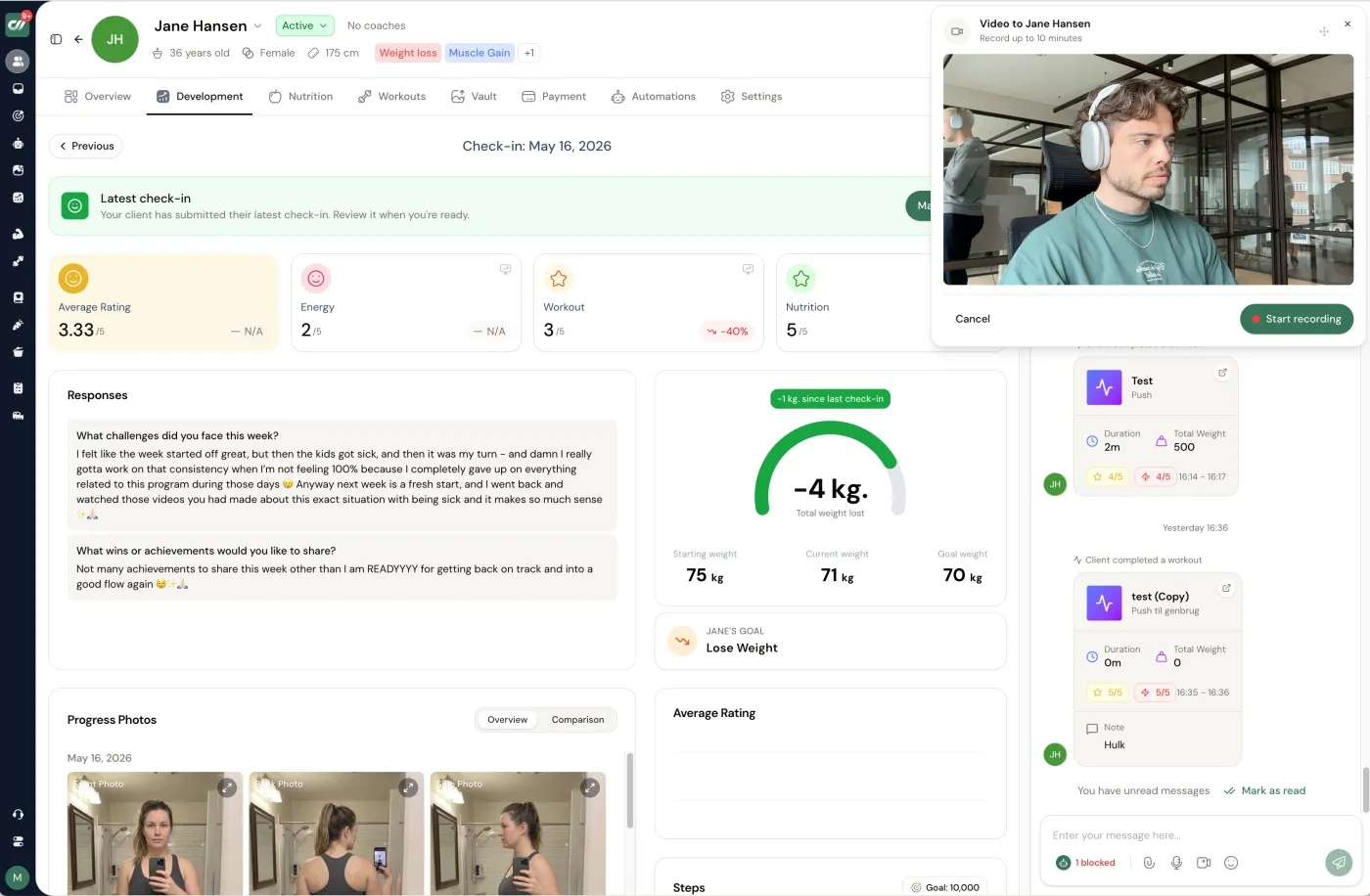
Coachway is EUR 69 a month including your first 5 clients, then EUR 9 per additional active client, with your own Stripe for payments. It is built for the non-clinical coach delivering habit and accountability work - if that is your path, the 14-day free trial is the quickest look, and the wider field is in the best online nutrition coaching platforms.
Nutritionist, dietitian and nutrition coach - frequently asked questions.
Is a nutritionist the same as a dietitian?
No. Every dietitian is a nutrition professional, but not every nutritionist is a dietitian. "Dietitian" - in the US a registered dietitian, RD or RDN - is a regulated, credentialed clinical title. "Nutritionist" varies: it is protected in some countries and US states and unregulated in others, so the word alone tells you little about a person's training.
Can a nutritionist prescribe diets or give medical nutrition therapy?
It depends on their credential and local law. Medical nutrition therapy for a diagnosed condition is most consistently the dietitian's domain. Some nutritionists hold clinical credentials, such as the CNS, and are licensed to provide clinical care where state law allows; many are not. Verify the specific qualification. This is general information, not medical advice.
Is "nutritionist" a protected title - can anyone call themselves one?
In some countries and US states the title or the practice of nutrition is regulated; in others there is no restriction and, in practice, anyone can use the word. Because it varies so much by location, check your local rules and ask what qualification the person actually holds rather than relying on the title.
What is the difference between a nutrition coach and a dietitian?
A dietitian is a clinical professional who can assess and treat nutrition-related medical conditions and provide medical nutrition therapy. A nutrition coach is non-clinical: they support general healthy eating, habits, structure and accountability for generally healthy clients, and refer anything medical to a dietitian or doctor. They are different roles, not different levels of the same one.
Can a nutrition coach create meal plans?
A nutrition coach can commonly offer general healthy-eating guidance and structure for generally healthy clients. Therapeutic or medical meal plans for a diagnosed condition are the dietitian's territory. The safe rule is to stay general, keep it non-clinical, and refer to a dietitian the moment a medical condition is involved.
Which do I need - a nutritionist, a dietitian, or a nutrition coach?
For a diagnosed medical condition or a therapeutic diet, a registered dietitian, or start with your doctor. For general habits, structure and accountability, a nutrition coach. For a "nutritionist", verify the specific credential first, because the title covers a wide range. The routing card above lays this out in one glance.
Do you need a degree to be a nutritionist or a dietitian?
Becoming a dietitian requires an accredited degree, supervised practice and a credentialing exam - and in the US a graduate degree in recent years, which you should verify against current rules. "Nutritionist" requirements vary widely, from none at all to a graduate-level credential like the CNS. A non-clinical nutrition coach is credentialed through coaching certifications rather than a degree.
This article is general information, not legal, medical or dietetic advice. Professional titles, regulation, licensing and scope of practice vary by country and US state and change over time - verify the current rules where you live before relying on them. For a diagnosed medical condition, see a physician or a registered dietitian.
Leaning toward the coach path? Start with how to become a nutrition coach and what an online nutrition coach does, compare the credential routes in health coach certifications, and hold the line with scope of practice for online coaches.
Keep reading
all guidesHealthie alternatives: the best picks for non-clinical coaches (2026)
Healthie is excellent for US registered dietitians who need HIPAA charting and insurance billing, but most health, wellness, behaviour-change and fitness coaches never touch that clinical machinery. This fair roundup names the best live alternatives for non-clinical coaches, with Coachway as the focused pick for habits, nutrition and training in one branded app, plus a which-one-fits-you decision table.
Read the guideBest AI tools for online fitness coaches in 2026
Most "AI for coaches" lists try to sell you a robot that programs and chats for your clients. That is the wrong job for AI. This is an honest rundown of the small admin kit worth your time - where AI genuinely saves a coach hours, where it quietly hurts the relationship clients pay for, and the all-in-one platform you actually run the business on around it.
Read the guideChatGPT vs Claude vs Gemini for Fitness Coaches (2026): 12 Tasks
ChatGPT, Claude and Gemini compared across the 12 tasks a fitness coach actually gives them, with a lean per task, the honest line that none of them programs unsupervised, the client-data rules that apply to all three, and three identical paste-in tests with a score sheet so you judge them in your own voice.
Read the guideFree tools for this: Navy Body Fat Calculator · Calorie Deficit Calculator · Goal Weight Date Calculator
Chosen the non-clinical coach path?
Coachway runs the day-to-day of habit and accountability coaching - intake forms, weekly check-ins, habit tracking and messaging in a branded app under your name - from EUR 69/month for up to 5 clients, then EUR 9 per active client. Start the 14-day free trial when your first clients are ready: no charge today, cancel anytime under Billing.