


How to become a lifestyle coach - and what the role actually is.
A lifestyle coach helps clients fix the everyday habits that decide how a whole week feels - sleep, stress, movement, food and routine - not one narrow goal. This guide defines the role, separates it cleanly from wellness, health and life coaching, walks the steps to become one, holds the scope-of-practice line, and shows how to deliver it once you have clients.
By Markus Evers · Updated September 2026
the short answer
A lifestyle coach helps clients change everyday habits - sleep, stress, movement, food, routines and work-life balance - so their whole week works better, rather than fixing one narrow goal. It is a non-clinical role built on behaviour change and accountability: you coach and support, you do not diagnose or treat. To become one, pick a focus, earn a recognised behaviour-change or wellness credential, and build a simple coaching offer.
A note before you start: this article is general information, not legal, medical or psychological advice. Lifestyle coaching is a non-clinical role, and what a coach may do varies by country and state. Verify local requirements, and never present coaching as treatment.
What a lifestyle coach actually is.
A lifestyle coach works on the ordinary machinery of a person's week - when they sleep, how they handle stress, whether they move, what and when they eat in general terms, and how work and life fit together. It is the broadest of the wellbeing coaching roles, because it does not stop at the gym or the plate: the aim is a week that runs better across the board. The value is not information - most clients already know they should sleep more - it is the coaching that turns knowing into doing, week after week.
It is also, importantly, a non-clinical role. A lifestyle coach educates, structures and holds accountable; they do not diagnose, treat or prescribe. Get that boundary right and lifestyle coaching is one of the most flexible ways to work with people, because almost everyone has a habit they want to change and cannot do alone.
Lifestyle coach vs wellness, health and life coach.
These four roles overlap so much that people use the words interchangeably, but they are not identical - and knowing where you sit decides your training, your marketing and your clients. Here is the honest split, with the deeper guide for each.
Lifestyle coach
Everyday habits across the whole of life - sleep, stress, movement, food, routines, time and energy. The broadest of the wellbeing roles, and firmly non-clinical.
Wellness coach
Heavily overlapping, usually more certification-driven and health-leaning. If you want the recognised credential route, that page maps it.
Read how to become a wellness coach →Health coach
Often works closer to healthcare, with board recognition (NBHWC) mattering more. Still non-clinical, but the credential bar is higher.
Read how to become a health coach →Life coach
Centres on goals, mindset, career and relationships more than daily wellbeing habits - broader than lifestyle, less habit-mechanical. If that is your lane, the platform that runs it is covered here.
Read software for life coaches →How to become a lifestyle coach, in five steps.
There is no single licence to sit for, which is freeing and confusing at once. These five steps are the route most working lifestyle coaches actually take.
Pick the corner of life you coach
Nobody hires a coach for "everything". Choose a lane - busy professionals fixing sleep and stress, new parents rebuilding routines, career-changers steadying their energy - and let it shape your offer and your marketing.
Get a recognised behaviour-change credential
There is no single lifestyle-coach licence, so credibility comes from a recognised behaviour-change, wellness or health-coaching credential. The routes, costs and recognition are compared in the certification pages below - do not overpay for a name your clients do not need.
Define your offer and your price
A clear promise, a set length (8 or 12 weeks is common), and a price you can say out loud. New coaches underprice far more often than they overprice - work backward from an income goal rather than guessing.
Get your first clients
Content that speaks to one problem, a simple way to book a call, and asks to your existing network. The channels that actually win clients are the same ones every online coach uses.
Deliver consistently
Retention and referrals come from clients feeling coached every week, not just at sign-up. This is where the tooling matters - habit tracking, check-ins and a branded app do the consistency for you.
On step two, the credential: because there is no lifestyle-coach board, the recognised routes run through wellness and health coaching. Compare them honestly in health coach certifications and how to become a wellness coach before you pay for a course - do not buy a big name your clients will never ask about. And on step four, the full playbook for finding clients is how to get online coaching clients.
Scope of practice: what a lifestyle coach does not do.
The freedom of the role comes with a hard boundary. A lifestyle coach supports habits, routines, accountability and general wellbeing for generally healthy adults. You do not diagnose conditions, treat disease, prescribe therapeutic diets, or provide mental-health therapy - that is the work of physicians, registered dietitians and licensed therapists, and the moment a client's needs cross into it, the right move is to refer, not to improvise.
Eating disorders, depression and anxiety, chronic disease, pregnancy complications and medication questions all sit outside the coaching lane. Build relationships with professionals you can point clients to, put the boundary in writing in your client agreement, and treat referring out as a mark of a coach who can be trusted - not a weakness.
How lifestyle coaches deliver it without the week running away.
Lifestyle coaching lives or dies on consistency - a client has to feel coached every week, not just at sign-up. That is a tooling problem as much as a coaching one. In Coachway you set each client's keystone habits and goals, they tick them and complete a guided weekly check-in in a branded app under your name, and you review the week, reply with a voice note, and adjust - all in one place. Intake runs on custom forms, and automations handle the onboarding sequence and the nudges so nobody quietly drifts.
The lifestyle-coaching workflow
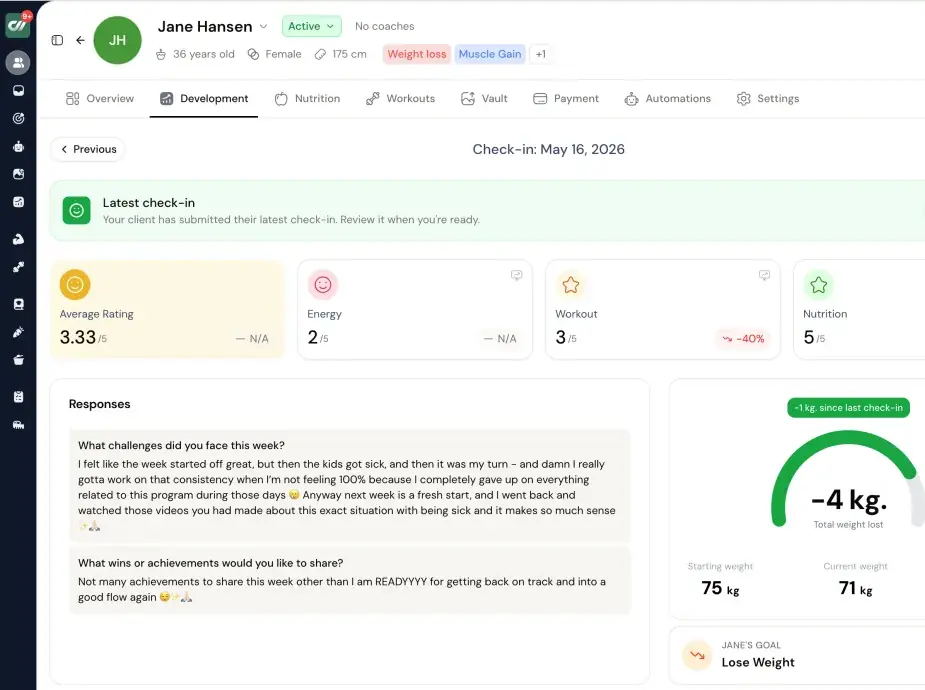
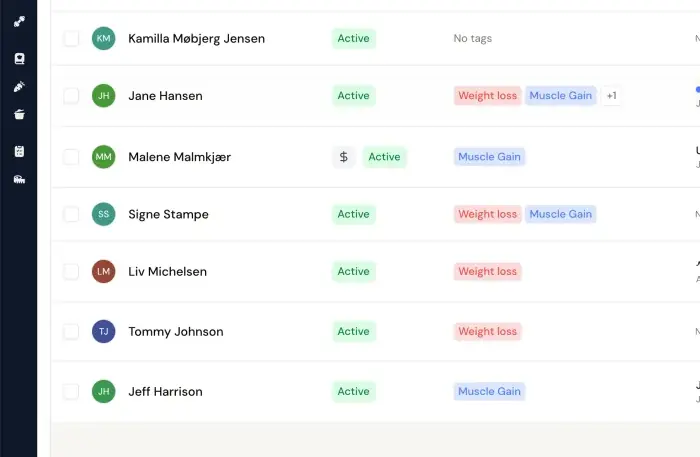
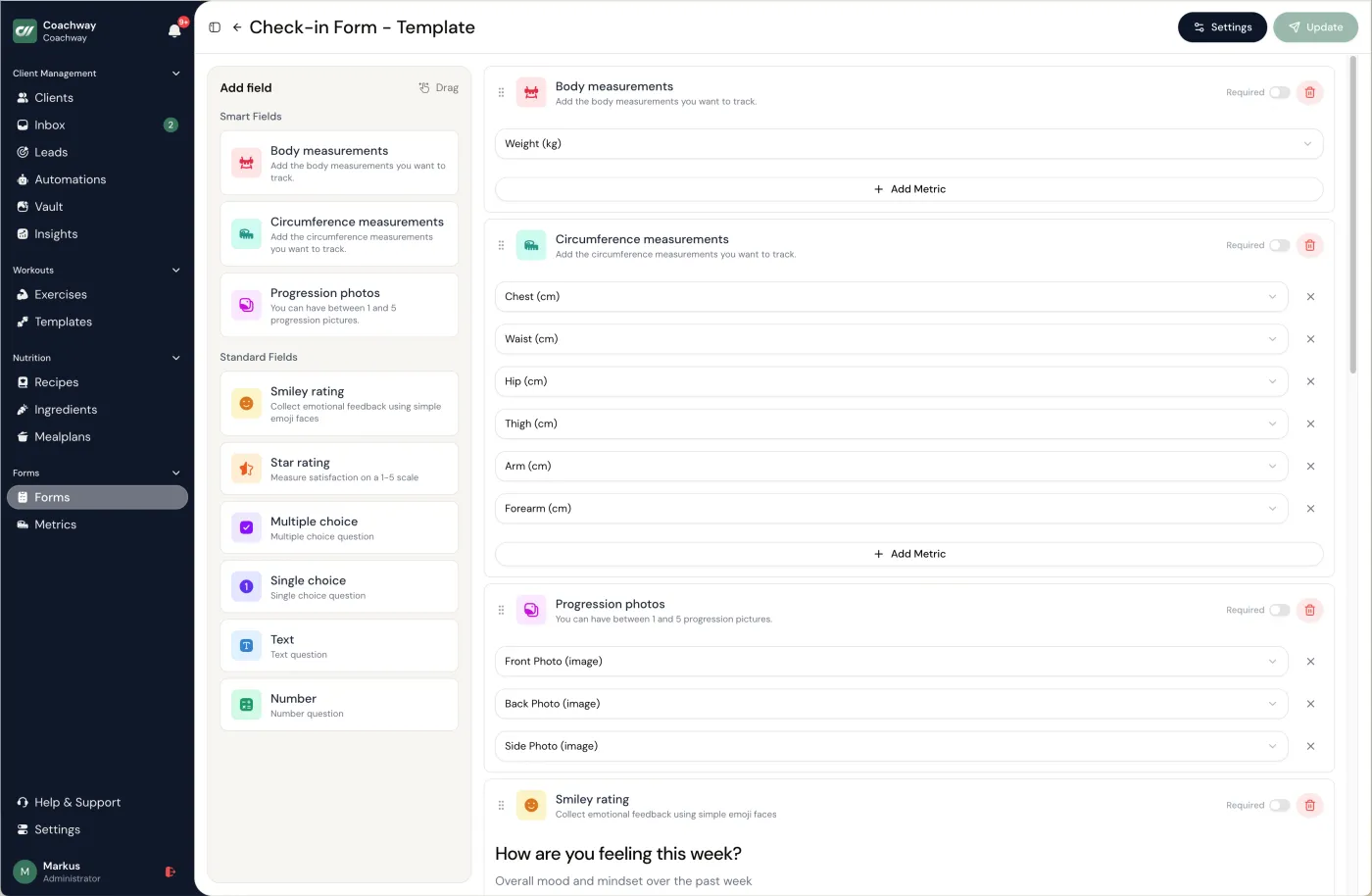
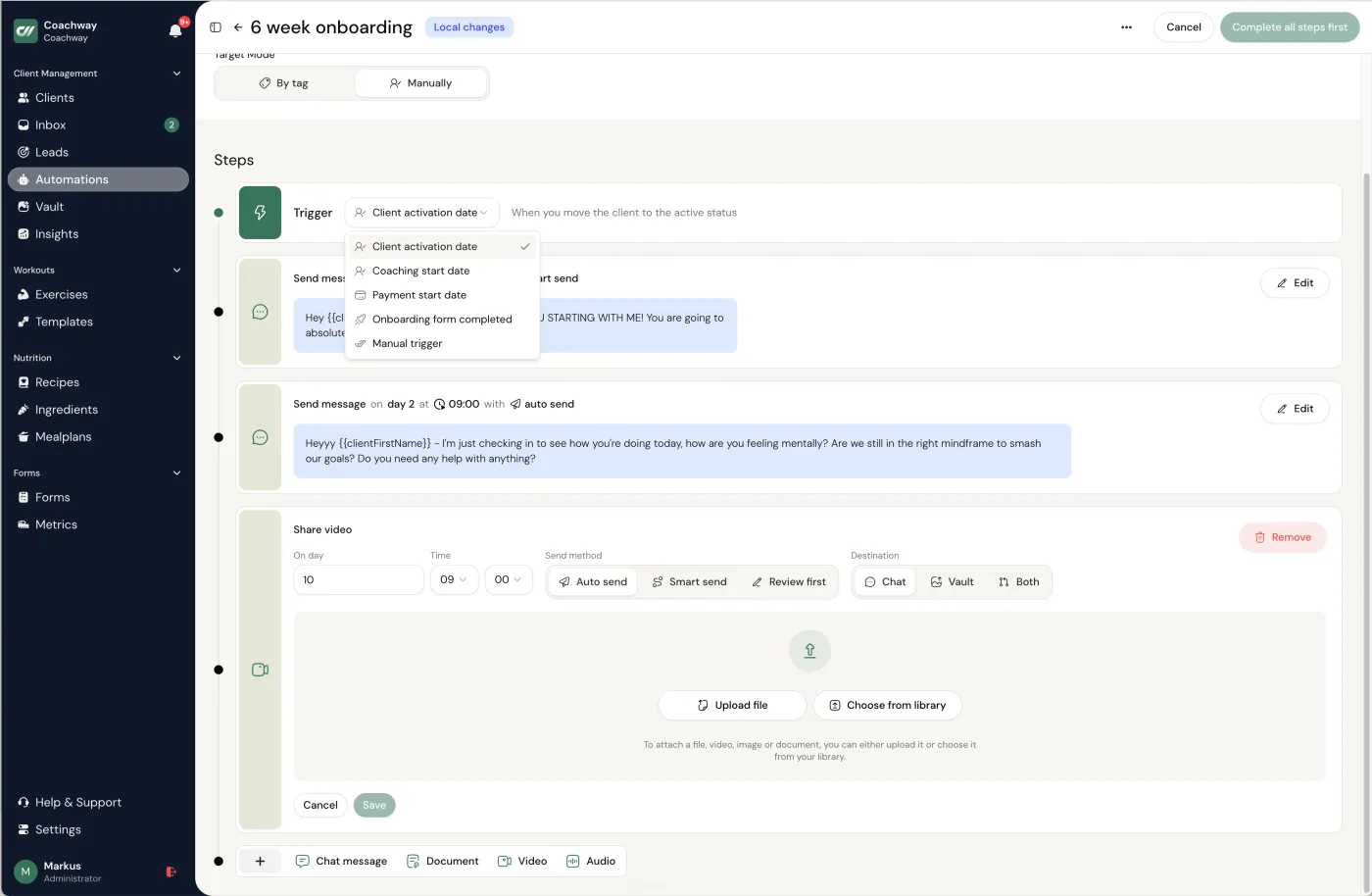
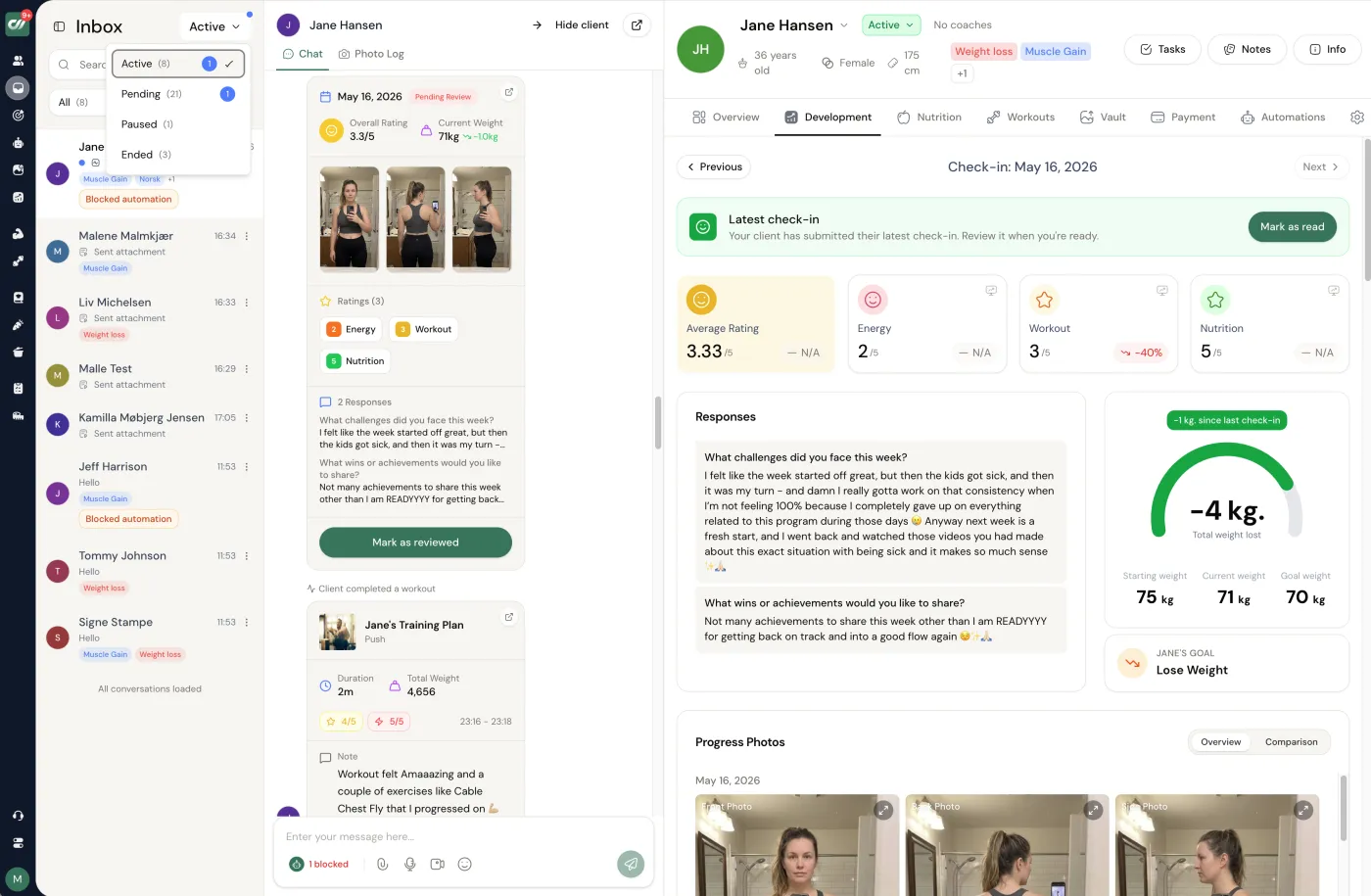
Check-ins — Ratings, responses and the weight trend sit next to the conversation. Review, mark done, move on.
Everything reaches the client through a native branded app, in their own language, so the daily habit builds around your brand rather than a generic tool. Coachway is EUR 69 a month including your first 5 clients, then EUR 9 per additional active client, with every feature included and your own Stripe for payments. When your first clients are ready to onboard, the 14-day free trial is the quickest way to see the weekly loop in action.
Design a client's first four weeks of habits
The hardest part of lifestyle coaching is picking the right small habits in the right order. Paste your client's situation into ChatGPT with this prompt and it drafts a realistic four-week keystone-habit plan you can refine - one habit a week, anchored, tracked, with the check-in question to ask.
Four-week keystone-habit plan
When to use it: At the start of a new client, to turn their situation into a paced habit plan.
What to paste in: Your client's situation, their goal, and what their current week looks like.
Act as a lifestyle coach. My client is [SITUATION - e.g. a busy professional sleeping 5-6 hours, stressed, no routine]. Their goal is [GOAL]. Their current week looks like [ROUTINE]. Design a realistic 4-week habit plan: one keystone habit per week, the cue or existing routine to anchor it to, exactly how the client tracks it, and the single check-in question I should ask them each week. Keep every habit small enough that a busy, tired person cannot talk themselves out of it, and note the one habit most likely to fail and why.
Lifestyle coaching - frequently asked questions.
What is a lifestyle coach?
A lifestyle coach helps clients build better everyday habits across the whole of their life - sleep, stress, movement, nutrition in general terms, routines, and work-life balance - and holds them accountable week to week. The job is behaviour change and consistency, not information: most clients already know roughly what to do, and pay a coach to actually do it. It is a non-clinical, supportive role.
What is the difference between a lifestyle coach and a life coach?
A lifestyle coach works mainly on daily wellbeing habits - how you sleep, eat, move, and manage stress and energy. A life coach works more on goals, mindset, career and relationships. They overlap, and many coaches do both, but "lifestyle" leans toward the practical habits of a healthy week while "life coaching" leans toward direction and decisions.
Do you need a certification to be a lifestyle coach?
In most places you are not legally required to certify to coach general habits and wellbeing, but a recognised credential is commonly expected for credibility, for insurance, and for understanding your scope. Because there is no single "lifestyle coach" board, most credible coaches hold a behaviour-change, wellness or health-coaching certification. Rules vary by country and state, so check local requirements. This is general information, not legal advice.
Is lifestyle coaching the same as wellness coaching?
They overlap heavily and the labels are often used interchangeably. In practice "wellness coach" tends to be the more certification-driven, health-leaning term, while "lifestyle coach" is broader and covers routines, time and energy alongside health habits. If you want the recognised credential path, the wellness-coach route is the one to study; the day-to-day coaching skill is the same.
What does a lifestyle coach actually help with?
Common work includes building a sustainable sleep routine, reducing and managing stress, adding movement to a sedentary week, steadying energy through better meal timing and general nutrition habits, and untangling work-life balance so the week stops running the person. The coach sets small keystone habits, tracks them, and adjusts based on what the client actually manages - not what looks good on paper.
How much do lifestyle coaches charge?
It varies widely by niche, experience and market, so treat any figure as a range rather than a rule, and remember no credential guarantees income. Most coaches sell a package - a set number of weeks with weekly check-ins - rather than one-off sessions. Working backward from an income goal to a price per client is far more reliable than copying someone else's number; a coaching rate calculator does that math for you.
Can a lifestyle coach give medical or diet advice?
No. A lifestyle coach supports habits, accountability and general wellbeing for generally healthy clients. You do not diagnose conditions, treat disease, prescribe therapeutic diets, or provide mental-health therapy - that is the territory of physicians, registered dietitians and licensed therapists. When a client's needs are clinical - an eating disorder, depression or anxiety, chronic disease, pregnancy complications - the right move is to refer, not to improvise.
How do I get lifestyle coaching clients?
The same way every online coach does: content that speaks to one specific problem you solve, an easy way for interested people to book a call, and direct asks to the people who already know you. Pick one channel you can sustain rather than spreading thin, and make the first step obvious on every page and post.
Deciding your exact lane? The neighbouring roles are mapped in how to become a wellness coach and how to become a health coach, the credential routes in health coach certifications, and turning any of them into a practice in how to get online coaching clients.
Keep reading
all guides10 Instagram Story Ideas for Fitness Coaches That Get Replies (2026)
Thirty Instagram story ideas organized by the job each one does, from daily relatability and interactive polls to permission-based client proof and turning a tap into a DM conversation.
Read the guideInstagram and Gym Captions for Fitness Coaches: 30 + 40 (2026)
Eight fill-in-the-bracket caption frameworks (myth correction, client win, objection killer, mistake list, behind the scenes, contrarian take, teardown, permission slip) with the 2026 keyword-CTA mechanics, plus thirty finished copy-paste captions grouped by the posts a coach actually makes.
Read the guideInstagram Captions That Don't Sound Like AI: 12 Rules for Coaches
The 12 rules for Instagram captions that don't sound like AI, 10 before-and-after rewrites, a 300-word master prompt built on your own voice samples and 8 sub-prompts for hooks, stories, CTAs, carousels, reels, client wins, myth-busts and day-in-the-life posts.
Read the guideFree tools for this: Free Trial Conversion Calculator · Discovery Call Calculator · No-Show Cost Calculator
Ready-made templates: Client Onboarding Checklist · Coaching Contract Template
Coach the habits - let Coachway carry the consistency
Set each client's keystone habits, run guided weekly check-ins, and keep everyone on track from a branded app under your own name - from EUR 69/month for up to 5 clients, then EUR 9 per active client. Start the 14-day free trial when your first clients are ready: no charge today, cancel anytime under Billing.


