Coaching prompt generator.
Pick the coaching task you need to write, add your niche and one thing about the client, and this builds a ready-to-paste prompt for ChatGPT or any AI assistant - plus two alternate ways to ask. Every prompt tells the AI to check with you for anything it is missing and to keep clear of medical advice. Nothing is stored and no field is required.
build your prompt
What do you need to write?
Tone
Output length
Leave any field blank and the prompt adapts around it. Describe the client in neutral words - never paste a name, condition or health data into a public AI tool.
Full brief
A complete brief the AI can run in one go.
two more ways to ask
Two versions
Asks for two drafts with different angles so you can pick.
Outline first
Gets the structure as bullets before any prose, so you stay the editor.
the short answer
A good coaching prompt gives the AI a role, the real situation in your own plain words and one clear job, and asks for a draft you edit, not a message to send blind. This generator assembles that structure around the task you pick, so you copy a ready-to-paste prompt in one tap. Keep the coaching judgement with you.
Want fully written prompt libraries to read first? See our ChatGPT prompts for online fitness coaches, prompts for nutrition coaches, and prompts for fitness marketing, then come back here to build your own.
How to use these prompts with clients.
Paste the prompt into ChatGPT, Claude, Gemini or whichever assistant you use, then swap anything in square brackets for your own neutral words - the client's goal, their level, the topic of a post. Read the reply as a first draft, not a finished message. Cut the lines that do not sound like you, add the one specific detail only you know, and check every fact before it reaches a client. The prompt does the blank-page work; the judgement stays yours. The generator fills the six parts of a coaching prompt for you; prompt engineering for fitness coaches explains what each part does so you can edit the result.
What never goes in: a client's name, their photos, their injuries, medication, diagnoses or anything that points back to a real person. Health data is a special category under GDPR, so describe the coaching situation in neutral terms and keep the sensitive picture inside your own coaching system, not a public chatbot. Every prompt here is written to make that easy - it hands the AI the shape of the problem and asks it to check with you for anything it is missing.
And keep the AI on the right side of the line. It is genuinely useful for the writing around coaching and a poor, sometimes unsafe fit for the coaching itself - the programming decision, the nutrition prescription, anything clinical. Let it draft the check-in reply; you decide what the client actually needs.
A starter library of coaching prompts.
Ready-to-use prompts grouped by the job they do. Copy one as-is, or use it as the seed for the generator above. Every prompt asks the AI to check with you for missing detail and to keep clear of medical advice.
Client check-ins and retention
Reply to weekly check-ins in your voice, and open the hard conversations early.
Turn rough check-in notes into a warm reply
You are helping me, an online fitness coach, reply to a client's weekly check-in. Here are my rough, non-identifying notes for the week: [paste your own neutral notes]. If anything important is missing, ask me before you draft. Turn them into a warm, specific reply in my voice - name what went well, address the one thing to adjust, and set a single focus for next week. About 140 words, honest but encouraging, and give no medical advice.
Reply to a client after an off week
A client had an off, low-motivation week and sounds flat, described in general terms: [paste]. Ask me for any detail you need, then write a supportive reply that takes the shame out of it, normalises the dip, and gives one tiny next step to rebuild momentum. Do not lecture, keep it under 120 words, and offer no medical or clinical advice.
Open the conversation when a client hints at quitting
A client has hinted they might stop coaching. Before you draft, ask me anything you are missing. Write an opening message that invites an honest conversation instead of a hard sell - thank them for being straight, ask one open question about what changed, and make it safe to tell me the real reason. Around 90 words, no pressure, no medical advice.
Summarise a long check-in into three priorities
Below is a long client check-in written in general, non-medical words: [paste]. If key context is missing, ask me first. Summarise it into the three coaching priorities for the week ahead, in order of importance, each with a one-line reason. Give me the summary only so I can review it before I reply in my own words, and do not add any medical advice.
Celebrate a milestone without the cheese
Help me congratulate a client on a real milestone in a way that feels genuine, not like a greetings card. Ask me for the specifics if I have not given them. Tie it to the work they put in, name the habit that got them there, and point at the next chapter. Under 90 words, warm and grounded, with no medical claims.
Onboarding and welcome
The first messages a new client reads, and the checklist that keeps onboarding consistent.
The welcome message a new client actually reads
Write a warm welcome message for a new coaching client. Their goal in my own words is [goal] and their first session is [date]. If you need anything else, ask me before you write. Keep it under 180 words, sound like a real person and not a brochure, set out the three things that happen in week one, and end with one small action they can take today. Do not promise a specific result or timeline, and give no medical advice.
A first-two-weeks expectations note
Write a short note telling a new client what the first two weeks of coaching with me will feel like: setup, the first plan landing, the first check-in, and the fact that early motivation always dips and the plan is built for that. Ask me for any missing context first. Reassuring, no hype, about 150 words, and nothing that reads as medical advice.
A repeatable onboarding checklist
Help me build a step-by-step onboarding checklist for a new online client, from the moment they pay to their first check-in, so nothing gets missed and it feels the same for everyone. If you need to know how I work, ask me first. Group it into day one, week one and end of week two, and keep it free of any medical instruction.
A what-to-expect FAQ for new clients
Write six short question-and-answer pairs for a new client covering how we communicate, how often we check in, what happens if they fall behind, how plans get adjusted, and how to reach me. Ask me for anything specific to my coaching that you need. Calm and clear, and give no medical advice.
Sales, DMs and objections
Start real conversations and answer the hesitations without pressure.
A DM opener that is not spam
Someone new followed me and engaged with a post about [topic]. Before you write, ask me anything you need about them. Draft a genuine opening message that starts a conversation, not a pitch - reference what they engaged with, ask one real question, and leave space for them to reply. Under 40 words, nothing that reads like a copy-paste template, and no medical claims.
Re-open a discovery call that went quiet
A prospect had a good discovery call with me and then went quiet for a week. Ask me for the details if I have left them out. Draft one low-pressure follow-up that references we spoke, restates the one problem they wanted solved, and gives them an easy yes or no. Under 90 words, not needy or salesy, and with no medical advice.
An objection-handling FAQ for my offer
Write six question-and-answer pairs that calmly handle the real objections to my coaching - time, whether it works for beginners, what happens if they fall behind, how it differs from a free app, and cancellation. Ask me about my offer if you need to. Honest and reassuring, no pressure tactics, no invented results, and no medical claims.
Turn features into benefits
Here is what my coaching includes, described as features: [list]. If anything is unclear, ask me before you rewrite. Turn each one into the benefit a client actually feels, in plain human language, with no hype words like game-changer or transform. Keep it honest and specific, and make no medical promises.
A price-increase note that keeps clients
Help me write an email telling a client my rate is changing while I honour their loyalty for a set period. Ask me for the figures and dates - do not invent them. Grateful and confident, no apology and no over-explaining, and make the loyalty point the hero. Around 130 words, and nothing that reads as medical advice.
Marketing and content
Hooks, scripts and captions that teach one point and still sound like you.
Ten hooks from one idea
Give me ten scroll-stopping opening lines for a post about [topic], aimed at [who my clients are]. If the topic or audience is vague, ask me to sharpen it first. Mix curiosity, contrarian and problem-first angles, with no clickbait I could not back up and no fake statistics or medical claims.
A week of content from one pillar
Take this one core idea I teach: [your idea]. Ask me for anything you need about my niche first. Break it into a week of content - one long post, three short posts, and two story or reel prompts - each standing alone and hitting a different angle of the same idea so I am not repeating myself. No invented numbers and no medical advice.
A 30-second reel script
Write a 30-second talking-to-camera reel script about [topic]. Ask me who it is for if I have not said. Open with a hook, make one clear point, give one practical takeaway, and end with a soft reason to follow for more. Conversational, the way a coach really talks, mark roughly where the on-screen text should change, and include no medical claims.
Rewrite a caption in my voice
Here is how I actually write: [paste two or three of your own real captions]. Ask me for the draft if I have not given it. Now rewrite my draft caption to match that voice, keeping my rhythm and my kind of words, without making it more corporate or more hyped than my samples. No invented statistics and no medical claims.
A myth-buster that is not smug
Draft a post that corrects a common fitness myth: [myth]. If the myth is unclear, ask me first. Explain why people believe it, what is actually true in plain language, and what to do instead - confident but kind, never mocking the reader, with no invented studies and no medical advice.
Programming and training plans
Draft the structure and explain the plan - you stay in charge of the training itself.
A training plan structure I will finish
Draft the structure of a training plan for a healthy client whose goal is [goal] and who trains [days] a week. Ask me for their experience level and any equipment limits before you draft. Give me the split, the focus of each session and the progression logic only - I set the exact exercises, loads and reps myself. Give no medical advice and nothing aimed at treating an injury or condition.
Explain a training decision to a client
Help me explain to a healthy client, in plain language, why their plan is built the way it is - for example why we are starting lighter than they expect. Ask me for the specifics of their plan first. Reassuring and clear, under 130 words, and with no medical or rehab advice.
Turn a plan into simple client instructions
Here is a training week I have written for a healthy client: [paste the plan]. Ask me anything you need first. Rewrite it as short, friendly instructions the client can follow - what to do each day and how hard it should feel - without changing the training itself. Keep it non-clinical and give no medical advice.
General warm-up ideas for a session
Suggest a simple, general warm-up a healthy client can do before a [session type] session at home with no equipment. Ask me about any limitation before you answer. Keep it to general movement preparation for a healthy adult, five to eight minutes, and give no rehab or medical advice - I confirm anything injury-related with the client directly.
Reframe a plateau for a client
Write a short message that helps a healthy client understand a plateau without panic - what a stall often means in plain terms, why patience beats a drastic change here, and the one variable we will watch for two weeks. Ask me for their context first. Calm and reassuring, under 130 words, and with no medical advice.
Nutrition guidance (non-clinical)
Meal ideas, swaps and simple education for healthy clients - ideas you finish into the plan.
A week of meal ideas around a goal
Brainstorm meal ideas for a healthy client whose goal is [goal], who eats [dietary preference] and dislikes [foods]. Ask me for anything you are missing. Give me twelve simple ideas across breakfast, lunch and dinner - ideas only, not a prescription, nothing aimed at treating a medical condition, and I set the portions and build the actual plan myself.
A higher-protein version of a recipe
Here is a recipe a client likes: [paste the ingredients and method]. Ask me for the goal if I have not said. Rewrite it as a higher-protein version that still tastes like the original, noting the swaps you made. Do not invent exact macro numbers, keep it suitable for a healthy adult, and give no medical advice - I recalculate the macros myself.
A grocery list from a set of meals
Here are the meals a client is eating this week: [paste the meals]. If any are unclear, ask me first. Turn them into one organised grocery list grouped by supermarket section, combining duplicate ingredients and leaving a quantity column for me to fill in per client. General food help only, with no medical or supplement advice.
Explain a nutrition idea simply
Explain to a healthy coaching client, in plain and friendly language, why [nutrition topic, e.g. protein] matters for their goal and roughly how to approach it day to day. Ask me for their goal if I have not given it. Keep it to general education for a healthy adult, avoid exact gram prescriptions, and give no medical or disease framing.
A no-scales portions guide using the hand
Create a simple, no-scales portion guide for a healthy client using the hand method - palm, fist, cupped hand and thumb - so they can build a balanced plate without weighing food. Ask me about their goal or preferences if it helps. One line per cue, flexible and non-clinical, a rough starting point they adjust with me, and no medical advice.
A good draft still has to reach the client.
A prompt gets you a fast, well-shaped message. What decides whether it lands is where the client reads it. If the welcome note, the check-in reply and the plan all live in different apps and inboxes, the coaching feels scattered no matter how good the writing is. The experience has to match the message - one place your client opens for everything.
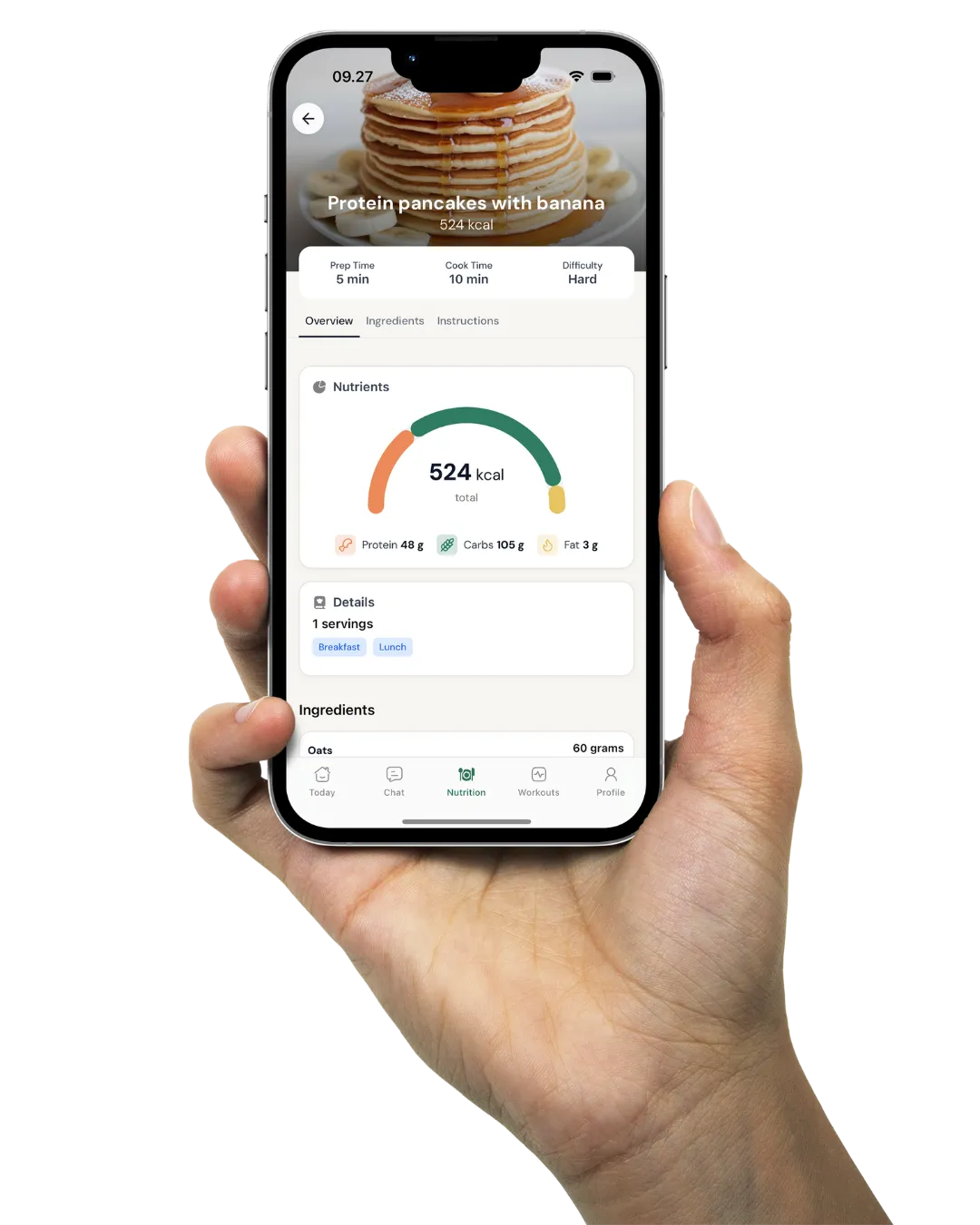
That is what Coachway is for. Your clients land in one client app on iOS and Android in six languages, read your messages and check-ins in one thread, follow the plan you built, and log workouts and meals as they go. You collect payment through your own Stripe account. The prompt writes the draft; the app is where the coaching actually happens.
Give your drafts somewhere worth landing. Start free and set it up in an afternoon.
No charge today - cancel anytime under Billing.Frequently asked questions.
Can ChatGPT write a workout program for my client?
It can draft a structure, not a finished program you hand over blind. Use it for the split, the session focus and the progression logic, then set the exact exercises, loads and reps yourself - that judgement is what your client is paying for. Keep it to general training for a healthy adult, never let it treat an injury or a condition, and always read the draft as a starting point you edit, not a plan to send as written.
Is it safe to put client data into ChatGPT?
Not their personal or health data. Health data is a special category under GDPR and needs far more care than an ordinary name and email, so describe the coaching situation in neutral, non-identifying words and strip out names, conditions, medication and injuries. The model only ever needs the shape of the problem, not the person. Every prompt here is written with generic placeholders on purpose so this stays easy to do.
What are the best ChatGPT prompts for personal trainers?
The ones that give the AI a role, the real situation in your own words, and a clear job - and that ask for a draft rather than a finished piece so you stay the editor. The strongest use it for the writing around coaching: check-in replies, onboarding messages, sales and DM replies, captions and testimonial requests. The starter library on this page is grouped exactly that way, and the generator builds one around your task, niche and a single client detail.
How do coaches use AI for check-ins?
They turn their own rough, non-identifying notes into a warm, specific reply, or compress a long check-in into the two or three priorities worth coaching that week. The AI drafts, the coach edits and sends. It never sees the client's identity or health details, and it never makes the coaching decision - it just gets the blank page filled so the reply takes minutes instead of an evening.
Will an AI-written message sound like me?
Only if you show it how you write. Paste two or three of your own real messages or captions and ask it to match that rhythm and those words, then rewrite the draft with a detail only you have. Raw AI output reads the same across every coach's feed, and people can feel it. The speed comes from the AI; the voice, and the reason someone stays with you, has to come from you.
Can I use these prompts for nutrition coaching?
Yes, for the non-clinical side: meal ideas, recipe swaps, grocery lists and simple client education for a healthy adult. Every nutrition prompt here tells the AI to hand you ideas and structure rather than a prescription, so you set the portions and build the actual plan. Keep anything that touches a medical condition, allergy or clinical need out of the tool and with a qualified professional.
Do I need a paid ChatGPT plan to use these?
No. Every prompt on this page works on the free tier of ChatGPT, or in Claude, Gemini or any other major AI assistant - just paste it in. The generator and the starter library run entirely in your browser, nothing you type is uploaded or saved, and there is no sign-up to copy a prompt.
The prompts this tool builds are starting points, not finished messages. Swap in the exact words your client would use, keep only what you can stand behind, and edit every draft before it reaches anyone.
Keep going: read 30 ChatGPT prompts for personal trainers, the companion set of ChatGPT prompts for nutrition coaches, and 30 ChatGPT prompts for fitness marketing.
More free calculators
See all free tools ->Difficult Client Responder
Pick the situation - over-messaging, unrealistic expectations, a refund, comparing coaches, not doing the work, scope creep, disrespect - and get the boundary, the move, and an honest, warm-but-firm message to send.
Open calculator ->Client Onboarding Builder
Build a structured first-week onboarding sequence for a new client from the coaching type and steps you run.
Open calculator ->Coaching Business Health Check
A 2-minute diagnostic: score your business on admin, retention, systems, pricing and client experience, and see your biggest leak.
Open calculator ->Coaching Scope-of-Practice Check
Coach it or refer it out? Sort a client situation into refer-now, proceed-with-clearance or in-your-lane, with a copy-ready referral message and a file note.
Open calculator ->GLP-1 Client Coaching Planner
Build the muscle-preserving training, protein-first nutrition and habit plan for a client on Ozempic, Wegovy or Mounjaro, with a coordinate-with-the-prescriber guard.
Open calculator ->Coaching Offer Builder
Build a clear, copy-ready coaching offer from your model, length and what is included, for a sales page or DM.
Open calculator ->Where your coaching actually happens
A prompt writes the draft. Coachway is where the client reads it - one client app in six languages, workout and meal builders, weekly check-ins, and payments through your own Stripe, all in one place. Start free and set it up in an afternoon.