How to coach clients through perimenopause and menopause, without leaving your lane.
Menopause-stage coaching is forecast to be one of the fastest-growing competencies in fitness, and most of what is written about it either overpromises or panics. The honest version: the fundamentals hold, the priorities shift - toward strength, protein, and recovery - and part of the job is knowing exactly which questions belong to a doctor instead of a program.
By the Coachway team · Updated August 2026
General information for coaches, not medical advice. Perimenopause and menopause involve medical decisions - hormone therapy, medication, diagnosis - that belong with a client's doctor, not her coach.
the short version
When a client enters perimenopause or menopause, the coaching fundamentals do not get thrown out - the priorities shift. Falling estrogen speeds up muscle and bone loss, changes body composition, and disrupts sleep and recovery, which pushes resistance training, protein, and recovery management to the front of the plan. Your job as a coach is to adjust training and nutrition within general guidance, set honest expectations, and recognise when a symptom belongs to a doctor rather than a program.
What actually changes physiologically.
Perimenopause is the transition leading up to a client's final period, and menopause is confirmed once she has gone twelve months without one. The through-line across both is declining estrogen, and it changes several things you program around.
Bone loss accelerates. According to the Bone Health & Osteoporosis Foundation, a woman can lose up to 20% of her bone density in the five to seven years following menopause. That is a window, not a fixed outcome, but it explains why loading and strength work stop being optional in this stage.
Body composition shifts even when weight does not. In the Study of Women's Health Across the Nation, Greendale and colleagues (2019) found that at the start of the menopause transition the rate of fat-mass gain roughly doubled while lean mass declined, with those changes continuing until about two years after the final period. The practical read: a client can lose muscle and gain fat while the scale barely moves, so scale weight alone is a poor progress metric here.
Vasomotor symptoms are common and can last years. Hot flashes and night sweats are the classic ones. In the same SWAN cohort, Avis and colleagues (2015) reported a median total duration of frequent vasomotor symptoms of 7.4 years. That is a duration figure, not a prevalence figure - it describes how long frequent symptoms tend to persist in women who have them, not what share of all women are affected.
Sleep and recovery take a hit. In their review of sleep across the menopausal transition, Baker and colleagues (2018) reported that 40% to 56% of women in the transition and postmenopause report difficulty sleeping, compared with about 31% in the late-reproductive stage. Worse sleep means worse recovery, which directly affects how much training volume a client can absorb week to week.
The last thing to hold onto: symptom load varies enormously between clients. Two women the same age can have completely different experiences, so program the client in front of you, not the life stage. For a wider coaching view of how female physiology shifts through midlife, see Stacy Sims on training for female physiology - useful framing, still within a coach's lane rather than a medical one.
Training adjustments that have evidence.
Make resistance training the anchor. The strongest single trial to point to is LIFTMOR (Watson et al., 2018). Postmenopausal women with low bone mass did eight months of twice-weekly, thirty-minute, supervised high-intensity resistance and impact training - five sets of five repetitions above 85% of one-rep max. The training group improved bone mineral density at the lumbar spine (+2.9% versus -1.2% in controls) and femoral neck (+0.3% versus -1.9% in controls), with high adherence and only one minor adverse event. Two caveats matter for how you use this: the participants were screened and the sessions were supervised, and the group had low bone mass to begin with. So the takeaway is that appropriately loaded, well-coached strength training can protect bone and function - not that every deconditioned client should jump straight to near-maximal fives.
Load the skeleton, then progress. Because bone responds to mechanical stress, progressive loading and, where appropriate, impact work are how training defends bone density. Build the base first, earn the intensity, and progress deliberately. For a coach-level walkthrough of programming this stage, see how Debra Atkinson coaches strength training after menopause.
Raise the priority on protein. Muscle is harder to hold onto in this stage, and protein needs rise with age generally. The PROT-AGE Study Group position paper (Bauer et al., 2013) recommends that healthy older adults aim for 1.0 to 1.2 grams of protein per kilogram of body weight per day, above the standard 0.8 g/kg reference intake. Pairing adequate protein with progressive resistance training is the combination that protects lean mass - the same logic as setting TDEE and macros for any client, with the protein floor treated as non-negotiable.
Manage recovery as a programmed variable, not an afterthought. When sleep is disrupted, autoregulate. Watch performance in the check-in, keep some sessions in reserve on bad-sleep weeks, and treat recovery capacity as something that fluctuates rather than a constant you can ignore.
The myths to avoid.
There is no magic "menopause diet." Energy balance still governs fat loss, and a sensible deficit still works. What changes is the context around adherence: poor sleep, symptom flare-ups, and higher stress make aggressive deficits harder to sustain and more likely to cost muscle. So the honest adjustment is usually a smaller, more sustainable deficit with protein and strength protected - not a special food list. For a fuller coaching walkthrough of this, see how Susan Niebergall coaches fat loss over 50, which lands on the same fundamentals-first approach.
Do not promise that exercise will fix hot flashes. This is where evidence-honesty matters. The Cochrane review by Daley and colleagues (2014), covering five trials and 762 women, concluded there was insufficient evidence to determine whether exercise is an effective treatment for vasomotor symptoms. Train your client for strength, bone, cardiometabolic health, and mood - all well supported - but be straight that exercise is not a reliable hot-flash treatment, and that symptom management is a medical conversation.
Do not get timid with loading out of fear. The instinct to wrap a menopausal client in bubble wrap usually backfires. Under appropriate coaching and, where relevant, medical clearance, loaded strength training is protective. Backing off intensity entirely tends to accelerate exactly the muscle and bone loss you are trying to prevent.
Do not overhaul everything the day she mentions it. Perimenopause is not a reason to tear up a working plan. Shift priorities toward strength, protein, and recovery, keep what is already working, and adjust from the client's actual data.
The coaching conversation.
How to ask. Open the door without playing doctor. Something as simple as "How's your sleep and energy been lately, and have you noticed anything changing month to month?" invites the information you need. Normalise it, keep it routine, and never speculate about diagnoses or hormones. The same opt-in, written-check-in approach we recommend for coaching around the menstrual cycle applies here: disclosure stays the client's choice. For a perimenopausal client who still has periods, a cycle phase calculator can help her note where she is when symptoms shift week to week.
What to track in check-ins. Add a few fields beyond weight and training logs: sleep quality and duration, a simple symptom-load rating, daily energy, training performance and recovery, and any changes in cycle regularity. Trends in these tell you when to push and when to pull back far better than bodyweight does on its own.
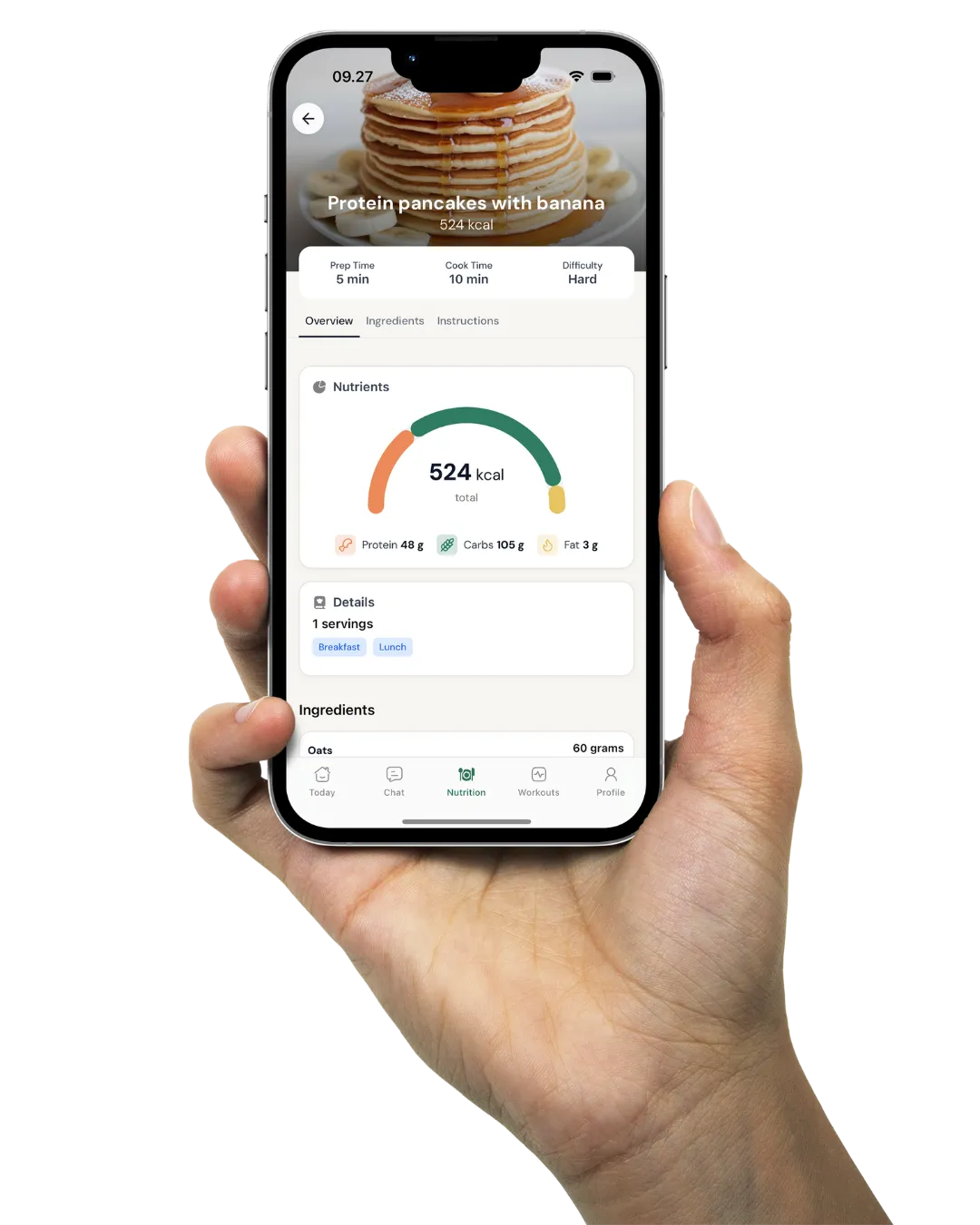
In Coachway, you can build custom check-in metrics - a sleep score, a symptom-load rating, an energy field - alongside the training and nutrition you program and deliver through the client app, so the signals that matter in this stage show up in one place instead of scattered across messages. Keep the coaching in your lane and let the tracking make the pattern visible.
When to refer out. Some things are not yours to manage, and part of good coaching is knowing the handoff. Refer a client to her doctor promptly for any of these:
- Any vaginal bleeding after twelve months without a period - postmenopausal bleeding always warrants medical evaluation
- Symptoms severe enough to disrupt daily life, work, or relationships
- Signs of low mood, anxiety, or depression
- Chest pain, palpitations, dizziness, or fainting
- Sudden or severe bone pain, or a suspected fracture
- Any question about hormone therapy, supplements, or medication
HRT, diagnosis, and prescriptions are doctor territory, full stop. You adjust training and nutrition within general guidance; you do not manage symptoms medically, and saying so plainly builds more trust than pretending otherwise.
Coaching through menopause FAQ.
Do I need a special certification to coach clients through menopause?
You need to work within your existing scope. A qualified fitness or nutrition coach can adjust training and nutrition within general guidance for a menopausal client. What you cannot do is diagnose, prescribe, or manage hormones or medication - that stays with her doctor. Extra education on the life stage makes you a better coach; it does not expand your scope into medical care.
Should I change my client's whole program the day she mentions perimenopause?
No. Shift priorities rather than starting over: make resistance training the anchor, raise protein, and treat recovery as a variable you program around. Keep what is already working and adjust from her check-in data, not from the calendar.
My client's weight has stalled at menopause - is her metabolism broken?
Almost certainly not. The SWAN body-composition data (Greendale et al., 2019) show fat gain speeding up and lean mass declining during the transition, which can leave scale weight flat while composition changes underneath. Stop leaning on bodyweight as the only metric, protect muscle with protein and strength work, and check whether sleep and symptom load are quietly undermining adherence before assuming the plan is wrong.
Can strength training actually protect her bones?
The evidence is encouraging. In the LIFTMOR trial (Watson et al., 2018), supervised high-intensity resistance and impact training improved bone density at the spine and hip in postmenopausal women with low bone mass. The important caveats: participants were screened and supervised, so progress loading appropriately and get medical clearance for anyone with diagnosed osteoporosis or a fracture history before loading heavily.
Will exercise get rid of her hot flashes?
Be honest here. The Cochrane review (Daley et al., 2014) found insufficient evidence that exercise treats vasomotor symptoms. Train her for the outcomes exercise genuinely delivers - strength, bone, cardiometabolic health, mood, sleep support - and point her to her doctor for symptom management rather than promising relief you cannot back up.
When should I stop coaching a symptom and send her to a doctor?
Any postmenopausal bleeding, symptoms that are disrupting her life, signs of depression, chest pain or palpitations, suspected fractures, or any question about HRT or medication. When in doubt, refer out. It is the safer call and the more professional one.
Sources: Bone Health & Osteoporosis Foundation, What Women Need to Know; Greendale et al. 2019, JCI Insight; Avis et al. 2015, JAMA Internal Medicine; Baker et al. 2018, Nature and Science of Sleep; Watson et al. 2018 (LIFTMOR), Journal of Bone and Mineral Research; Bauer et al. 2013 (PROT-AGE), JAMDA; Daley et al. 2014, Cochrane Database of Systematic Reviews.
Keep reading
all guidesWhat is group coaching? Definition and how it differs (2026)
Group coaching is one coach guiding several clients through a shared program and community at once, with individual check-ins so no one gets lost. Here is a clear definition and how it differs from 1-on-1 on leverage, price and touch.
Read the guideHow to Do Online Personal Training: The Delivery Guide 2026
Learning how to do online personal training means moving four things off the gym floor and into an app: a personalised program the client opens daily, a demo video on every exercise, a structured weekly check-in that replaces the standing appointment, and form review from filmed working sets. The mechanics of each piece, why live calls are optional, and how one system keeps the loop from leaking across five apps.
Read the guideWhat is 1-on-1 online coaching? Definition (2026)
1-on-1 online coaching is one coach working with one client remotely: an individual plan, direct messaging and personal check-ins built around one person. Here is a clear definition, what it includes, and how it differs from group coaching on price and leverage.
Read the guideFree tools for this: Macro Calculator · One-Rep-Max Calculator · Warm-Up Set Calculator
See what Coachway can do for your coaching business
Coachway was built on knowledge from working with 150 online coaches over 6+ years, who all hit the same wall - slow platforms, clunky workflows, wasted hours. Start your 14-day free trial and see what we fixed - the whole platform, no charge today, cancel anytime under Billing.