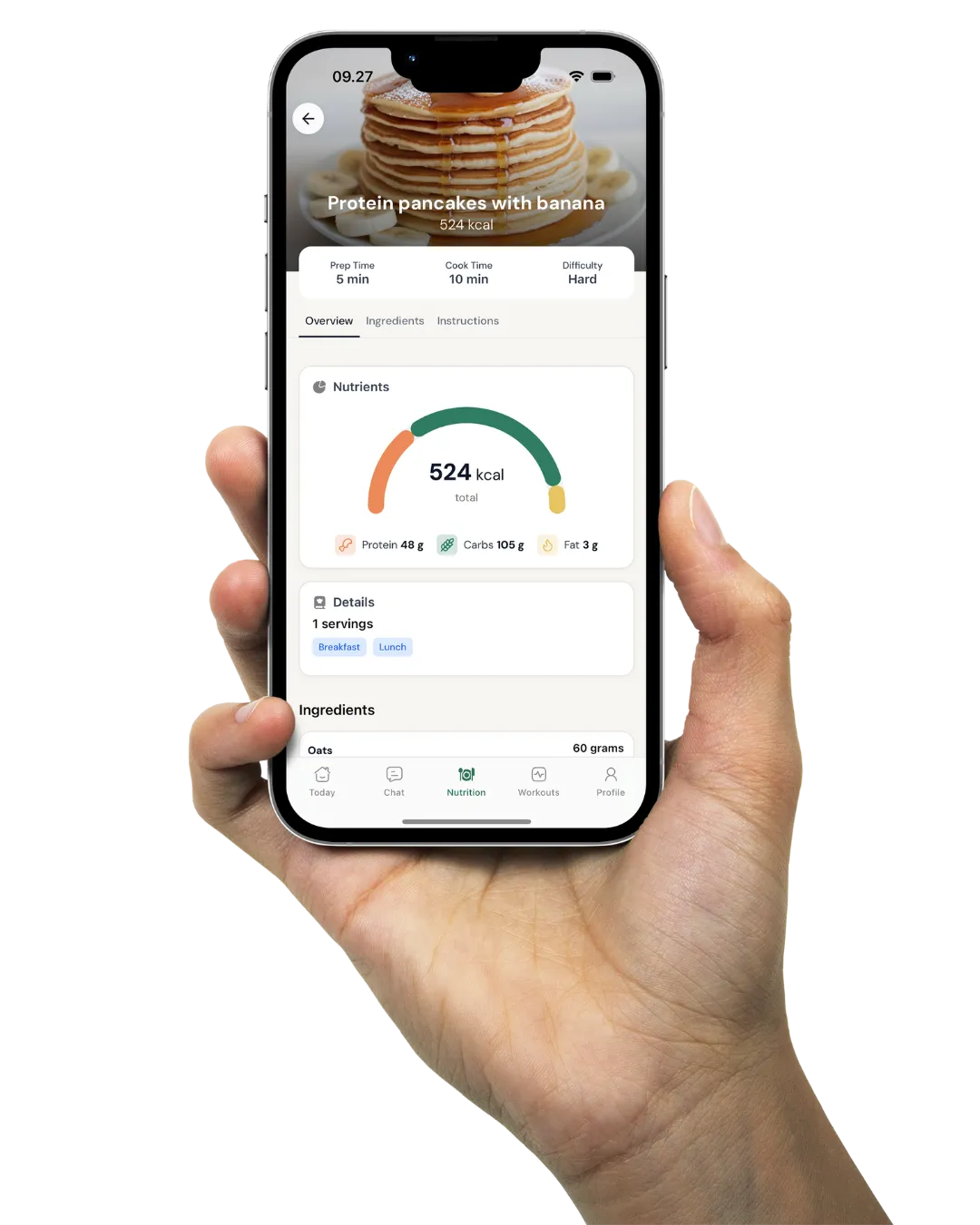
What is group coaching?
What is group coaching? It is a model where one coach guides several clients at once through a shared program and community, instead of building everything one client at a time. Everyone moves through the same core training and nutrition plan, checks in on the same cadence, and leans on the group for accountability, while the coach personalizes only where it matters. This page defines the model and shows how it differs from 1-on-1 on leverage, price and touch.
By Markus Evers · Updated August 2026
definition
Group coaching is a coaching model in which one coach delivers a single, shared program to many clients at the same time, wrapped in a community for accountability, with individual check-ins so each member still gets a personal reply. It sits between a self-paced course and 1-on-1 coaching: more feedback than a course, more leverage than one-to-one.
How does group coaching differ from 1-on-1?
The two models are not better or worse in the abstract; they trade three things against each other. Group coaching buys leverage and an accessible price by sharing the program. The 1-on-1 coaching model buys depth and confidentiality by building everything around one person. Reading those three levers is the fastest way to know which one a given client needs.
| Group coaching | 1-on-1 coaching | |
|---|---|---|
| Leverage | One program serves the whole group | One plan built per client |
| Price to the client | Lower, a shared program plus community | Higher, fully bespoke attention |
| Personal touch | Individual check-ins on a shared plan | Everything tailored to one person |
| Accountability | Peer momentum plus the coach | The coach alone |
| Best when | Clients share a common goal | Context or complexity is high |
For most coaches the honest answer is not either-or: keep a premium 1-on-1 tier and run a separate group program in parallel for the price-sensitive segment. If you want to put real numbers on the two revenue models side by side, the group vs 1-on-1 coaching calculator does the math on both. When you are ready to move existing clients across, follow our guide to moving from 1:1 to group coaching.
What does a group coaching program actually include?
A working group program has three parts, and dropping any one of them is what makes a group fall apart.
Shared programming
One training and nutrition plan the whole group follows, built once and reused. This is where the leverage comes from.
A community
A shared space, chat or broadcasts where members see each other's progress. Peer accountability is a feature of the model, not a bonus.
Individual check-ins
A weekly check-in per member with photos, measurements and notes, and a personal reply, so no one becomes a face in a crowd.
A group can run as a fixed cohort or as an ongoing community, and it can charge anywhere from an entry price to a premium depending on how much live access members get. For the full build, from structure to retention, see how to run online group coaching.
Delivering group coaching without losing the personal touch
The reason group coaching stays profitable is that the heavy work is built once. In Coachway, the platform we make for online coaches, one onboarding flow, one program and one meal plan carry across the whole group, while automations send the predictable check-in reminders and follow-ups so the coach spends their time on personal replies rather than admin. Coachway is EUR 69 per month with your first 5 clients included and EUR 9 for each additional client, every feature included, which keeps the cost of adding a group member predictable as the group grows.
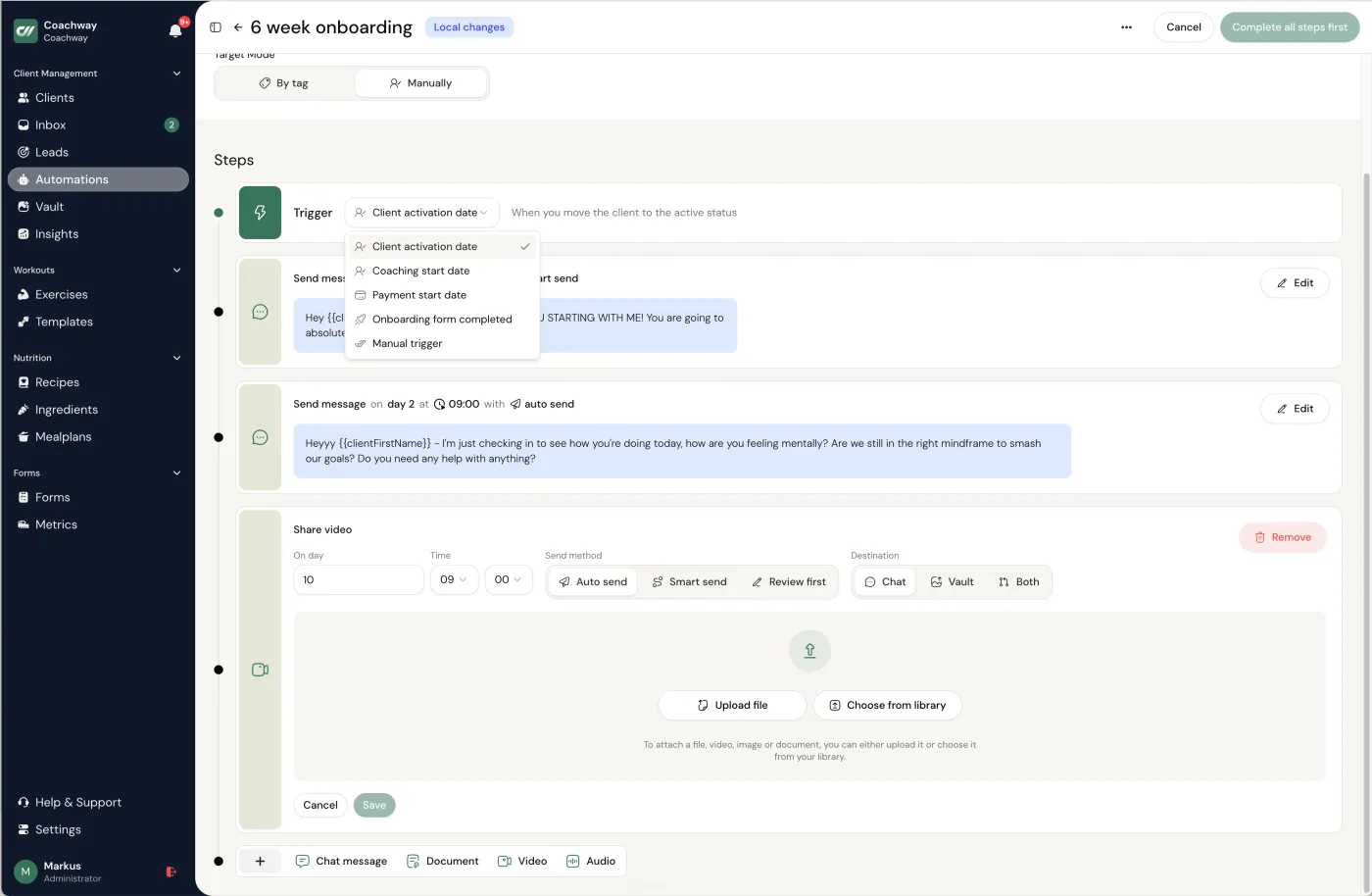
For the feature checklist a group program needs, from community to broadcasts to check-ins at scale, see group coaching software, or book a 15-minute demo to see it on your own program.
Group coaching, common questions
What is the difference between group coaching and 1-on-1 coaching?
In 1-on-1 coaching the coach builds and adjusts a plan around one person. In group coaching one coach guides several clients through the same core program and community at the same time, and personalizes only where it matters, usually through individual check-ins. The trade is leverage for depth: group coaching serves more people at a lower price, 1-on-1 goes deeper on one person for a higher one.
Is group coaching cheaper than 1-on-1?
Almost always, because the client is buying a shared program plus community rather than a fully bespoke plan and undivided attention. A group place is typically priced well below the same coach's 1-on-1 rate, which is exactly why group coaching opens premium coaching to people who could not afford one-to-one. Most coaches charge a monthly subscription per member so income stays predictable.
Does group coaching still include personal feedback?
It should. The program is shared, but the accountability is individual: each member still submits a weekly check-in with photos, measurements and notes and still gets a personal reply, so no one disappears into the crowd. A group without that personal touch is really a mailing list, and it churns.
What is a good group coaching size?
There is no fixed number. The real limit is not how many plans you can write, because the program is built once and reused, but how fast you can review check-ins and reply to messages. With one shared program, individual check-in forms and automations handling the predictable nudges, a coach can support a meaningfully larger client base than a fully bespoke 1-on-1 model allows.
Should group coaching run as a cohort or an ongoing community?
A cohort starts everyone together on a fixed date and moves through the program on a shared timeline, which drives completion and a tight community. An ongoing or evergreen community lets people join any time and start at their own week one, which is easier to sell continuously but harder to keep synced. New group programs usually start with cohorts to build proof, then add an evergreen on-ramp later.
Once you have chosen the model, the next question is the number. Our online coaching pricing guide covers how to price a group place against a 1-on-1 rate.
Keep reading
all guidesStephanie Buttermore's All In: Recovery From Restriction (Coach Breakdown)
Stephanie Buttermore's All In approach, broken down for coaches: what recovery from chronic under-eating looks like, how to spot the signs in a client, and how to program a recovery phase responsibly - and when to refer out.
Read the guideNatacha Oceane on Why Hard-Working Clients Still Stall (Coach Breakdown)
Natacha Oceane's science-based, myth-busting take on fat loss, muscle gain and performance, broken down for coaches: why effort alone doesn't guarantee results, and how to audit a stalled client instead of adding more work.
Read the guideHampton Liu on Calisthenics Progressions: Bodyweight Ladders for Coaches
Hampton Liu's progression-based calisthenics, broken down for coaches: how his shame-free pushup ladder works, and how to build a bodyweight progression system you can assign and track across a client list.
Read the guideFree tools for this: Client Check-in Builder · Client Onboarding Builder · Coaching Business Health Check
See what Coachway can do for your coaching business
Coachway was built on knowledge from working with 150 online coaches over 6+ years, who all hit the same wall - slow platforms, clunky workflows, wasted hours. Start your 14-day free trial and see what we fixed - the whole platform, no charge today, cancel anytime under Billing.