Skip to content
nutrition · macros

How to calculate TDEE for clients.

This is how to calculate TDEE for clients and turn that number into protein, fat, and carb targets you can actually coach from. TDEE - total daily energy expenditure - is the calorie anchor for every deficit, maintenance, or surplus you set. This guide walks the formula step by step with a worked example, then shows how to set macros and adjust them from real results instead of trusting the math blindly.

By Markus Evers · Updated June 2026

the short answer

To calculate TDEE for a client, estimate basal metabolic rate with a common equation, multiply by an activity factor that reflects their real step count and training, then set a calorie target from the goal. Translate that target into macros by setting protein first, then fat, and letting carbs fill the rest. The number is a starting point, not a verdict - adjust it from two to three weeks of real check-in data, never from the formula alone.

This article is general information for coaches, not nutrition or medical advice. The equations below are common estimates, and individual needs vary by age, training, health status, and country. Refer clinical cases - eating disorders, pregnancy complications, or managed medical conditions - to a registered dietitian or clinician, and stay inside the limits of your certification.

the anchor number

What TDEE is, and why it anchors everything.

TDEE is the total number of calories a client burns in a normal day. It breaks down into basal metabolic rate - the energy the body spends just keeping the lights on - plus everything they do on top: walking, training, fidgeting, and digesting food. Get a reasonable estimate of that number - the steps below, or a quick TDEE calculator to sanity-check the math - and you have the anchor for every nutrition target. A deficit sits below it, maintenance matches it, a surplus sits above it. Skip it and you are guessing. Our broader guide on how to do nutrition coaching online covers the approach; this page is about the math underneath it.

The honest part to say out loud is that TDEE is an estimate, not a measurement. Equations were built on population averages, so any single client can sit above or below the number the calculator spits out. That is fine. The job is not to nail the exact figure on day one - it is to get close enough to start, then let the client's real results tell you where the truth actually is. Coaches who treat the calculator as gospel end up arguing with the scale; coaches who treat it as a hypothesis adjust and move on.

So the workflow is simple in shape: estimate, set, observe, adjust. Estimate TDEE, set calories and macros from the goal, observe a few weeks of real data, and adjust the target from what you see. The rest of this guide walks each step, including a worked example you can follow with your own client's numbers.

process checklist

What a reliable TDEE-and-macro process includes.

Before you reach for any calculator, make sure your process covers these. The math is the easy part - the system around it is what keeps targets accurate across a full client base, week after week.

  • A single BMR equation you apply the same way for every client, so estimates stay comparable across your client base instead of drifting by tool.
  • An activity multiplier you choose from real behavior - step count, training days, job type - not the client's optimistic self-rating.
  • A clear goal-based calorie target (deficit, maintenance, or surplus) rather than one generic number applied to everyone.
  • Protein set first as a per-bodyweight target, with fat and carbs filling the rest of the calorie budget afterward.
  • A way to log and chart actual weight, measurements, and adherence over a few weeks, so you adjust from data instead of trusting the math.
  • The macros translated into food the client can actually hit, with portions and recipes, not just three abstract numbers.
  • A check-in cadence where the targets get reviewed and revised, so nutrition stays a moving target rather than a one-time calculation.
  • A written note of why each number was set, so future you - or a sub-coach - can see the reasoning behind the plan.
  • A clear referral line for clinical cases, so anything beyond general nutrition guidance goes to a registered dietitian or clinician.
pick the right factor

Activity multipliers, and why most clients overestimate.

BMR becomes TDEE when you multiply by an activity factor. The figures below are commonly cited starting points, not exact values - read them as a band, then refine from the client's real step count and training days. The single biggest TDEE error in coaching is letting a client self-select "very active" when their data says otherwise.

Activity level What it usually looks like Common multiplier (a starting point)
SedentaryDesk job, little walking, no structured trainingAround 1.2
Lightly activeSome daily steps, 1-3 light sessions a weekAround 1.35-1.45
Moderately activeSolid step count, 3-5 real training sessionsAround 1.5-1.6
Very activeHigh steps plus 5-6 hard sessions, or active jobAround 1.7
Highly activePhysical job and daily intense training1.8 and up

These are estimates to start from, not exact figures. When a client wears a tracker, steps are the most reliable everyday signal, so use real step data to settle which row they actually belong in.

step by step

How to calculate TDEE for clients, step by step.

Here is the full sequence with a worked example. The client below is hypothetical and the numbers are illustrative - run the same five steps with your own client's height, weight, age, and activity.

  1. 01

    Estimate the client's BMR

    Start with basal metabolic rate, the calories the body burns at rest. A commonly used estimate is the Mifflin-St Jeor equation: 10 x weight in kg, plus 6.25 x height in cm, minus 5 x age, plus 5 for men or minus 161 for women. Worked example: a hypothetical 35-year-old woman at 70 kg and 168 cm lands near 1,410 calories. Treat this as an estimate, not a measured value.

  2. 02

    Apply an activity multiplier for TDEE

    Multiply BMR by an activity factor to reach total daily energy expenditure. Commonly cited starting points run from roughly 1.2 for sedentary to about 1.7-plus for very active, and most people overestimate here. Using a lightly active factor of about 1.45, our example client lands near 2,050 calories. Lean on the client's real step count and training days, not how active they feel.

  3. 03

    Set the calorie target by goal

    From maintenance (TDEE), set the target by goal: a modest deficit for fat loss, maintenance to hold, or a small surplus for a gaining phase. A common rule of thumb, not a rule, is a 10-20% adjustment rather than a crash deficit. For a fat-loss goal, our example client might start near 1,700 calories - aggressive enough to move, gentle enough to sustain.

  4. 04

    Translate calories into macros

    Set protein first, commonly cited around 1.6-2.2 g per kg of bodyweight, then fat (often a floor near 0.6-0.8 g per kg), and let carbs fill whatever calories remain. For our 1,700-calorie example: about 130 g protein and 60 g fat leaves roughly 160 g carbs. Protein and carbs run about 4 calories per gram, fat about 9, which is how the budget balances.

  5. 05

    Adjust from two to three weeks of real data

    The calculator is a starting line, not the answer. Watch weight, measurements, energy, and adherence over two to three weeks, then move the calorie target if the trend stalls or drops too fast. Adjust the number, not the equation - real-world results always beat the formula.

Put together, the example client lands near 1,700 calories with roughly 130 g protein, 60 g fat, and 160 g carbs as a fat-loss starting point - a split you can reproduce in seconds with a macro calculator, or set the protein target alone first. Those are opening numbers, not a prescription. The food side matters as much as the math - our guide on meal planning software for personal trainers covers turning targets into meals a client will actually follow.

adjust from data

Why the calculator is a starting point, not the answer.

Every equation is built on averages, so the real number lives in the data, not the formula. The most common mistakes are treating the calculated figure as fixed, chasing decimal-point precision, and ignoring adherence. Consistency beats precision: a target the client actually hits, reviewed every couple of weeks, will always outperform a "perfect" number they cannot sustain.

Move the number, not the equation

After two to three weeks of real weight and adherence data, adjust the calorie target in small steps. The formula gave you a starting line; the trend tells you where the client actually maintains.

Chart it, do not guess

Coachway auto-charts weight, measurements, and any custom metric you add, so a stall or a too-fast drop is obvious at a glance instead of buried in a spreadsheet you have to rebuild each week.

Translate macros into food

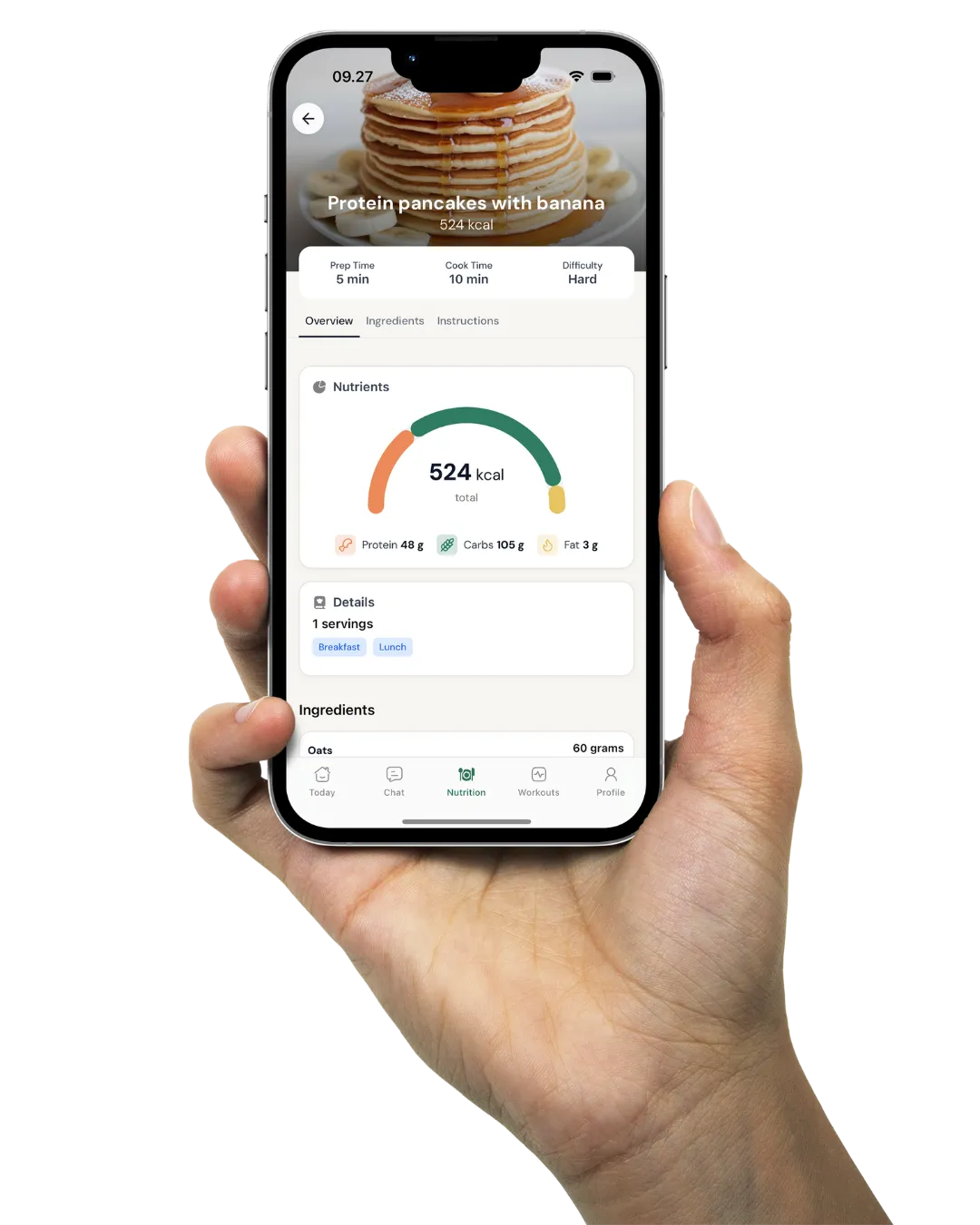
The Coachway meal planner turns targets into recipes with macro and micronutrient detail, portion scaling, and a downloadable PDF, so the client eats the plan instead of staring at three numbers.

The cleanest place to run all of this is the weekly review. Build the targets into your client check-ins, watch the charted trend, and revise the calorie target when the data - not a single day - asks for it. See how the numbers become meals in the meal planner, or step back to the wider nutrition coaching software overview.

questions coaches ask

Frequently asked questions.

How do I calculate a client's TDEE?

Estimate basal metabolic rate with a common equation such as Mifflin-St Jeor, then multiply by an activity factor that reflects the client's real step count and training load. The result is an estimate of total daily energy expenditure - the calories they burn in a typical day - which becomes the anchor for any deficit, maintenance, or surplus target. Treat the figure as a starting point you refine from real check-in data.

What activity multiplier should I use?

Choose the multiplier from observed behavior, not the client's self-rating, because most people overestimate. Commonly cited ranges run from roughly 1.2 for largely sedentary clients up to about 1.7 or higher for very active ones, with most coaching clients landing somewhere in the middle. Step count and weekly training days are far more reliable inputs than how active someone feels, so use those to pick the factor.

How do I set macros from calories?

Set protein first, then fat, and let carbohydrate fill the remaining calories. Protein is commonly cited around 1.6-2.2 g per kilogram of bodyweight, fat often has a floor near 0.6-0.8 g per kilogram for hormonal health, and carbs make up the rest of the budget. Protein and carbs sit near 4 calories per gram and fat near 9, which is the arithmetic that keeps the split adding up to the calorie target.

How much protein should a client eat?

A common rule of thumb, not a rule, is roughly 1.6-2.2 g of protein per kilogram of bodyweight per day for an active client in a fat-loss or muscle-building phase, with the higher end useful during a deficit to protect lean mass. Individual needs vary with age, training, and health status, so treat the range as a starting band and adjust from adherence and results rather than chasing a single exact gram count.

How often should I adjust calories and macros?

Review the numbers at each check-in but only change them when the trend - not a single day - tells you to, which usually means waiting two to three weeks for a clear signal. If weight and measurements are moving at a sensible pace and the client is adhering, hold steady. When progress stalls or moves too fast, adjust the calorie target in small steps and keep the equation out of it.

A closing reminder: this is general information for coaches, not nutrition or medical advice, and individual needs vary. Program training and general healthy-eating habits inside your scope, and refer eating disorders, pregnancy complications, and managed medical conditions to a registered dietitian or clinician. When you are ready to keep targets, meals, and progress in one place, the nutrition coaching software overview shows how the pieces fit together, and physique coaches running cuts and bulks will find the macro-and-check-in workflow in our bodybuilding coaching software guide.

See what Coachway can do for your coaching business

Coachway was built after working with 150+ coaches who all had the same frustrations - slow platforms, clunky workflows, wasted hours. Book a demo and see what we fixed. 15 minutes, and you'll know if it's the right fit.

Built for efficiency 6 languages DenmarkNorwaySwedenFinlandGermanyUnited Kingdom
The coaching platform you've been waiting for