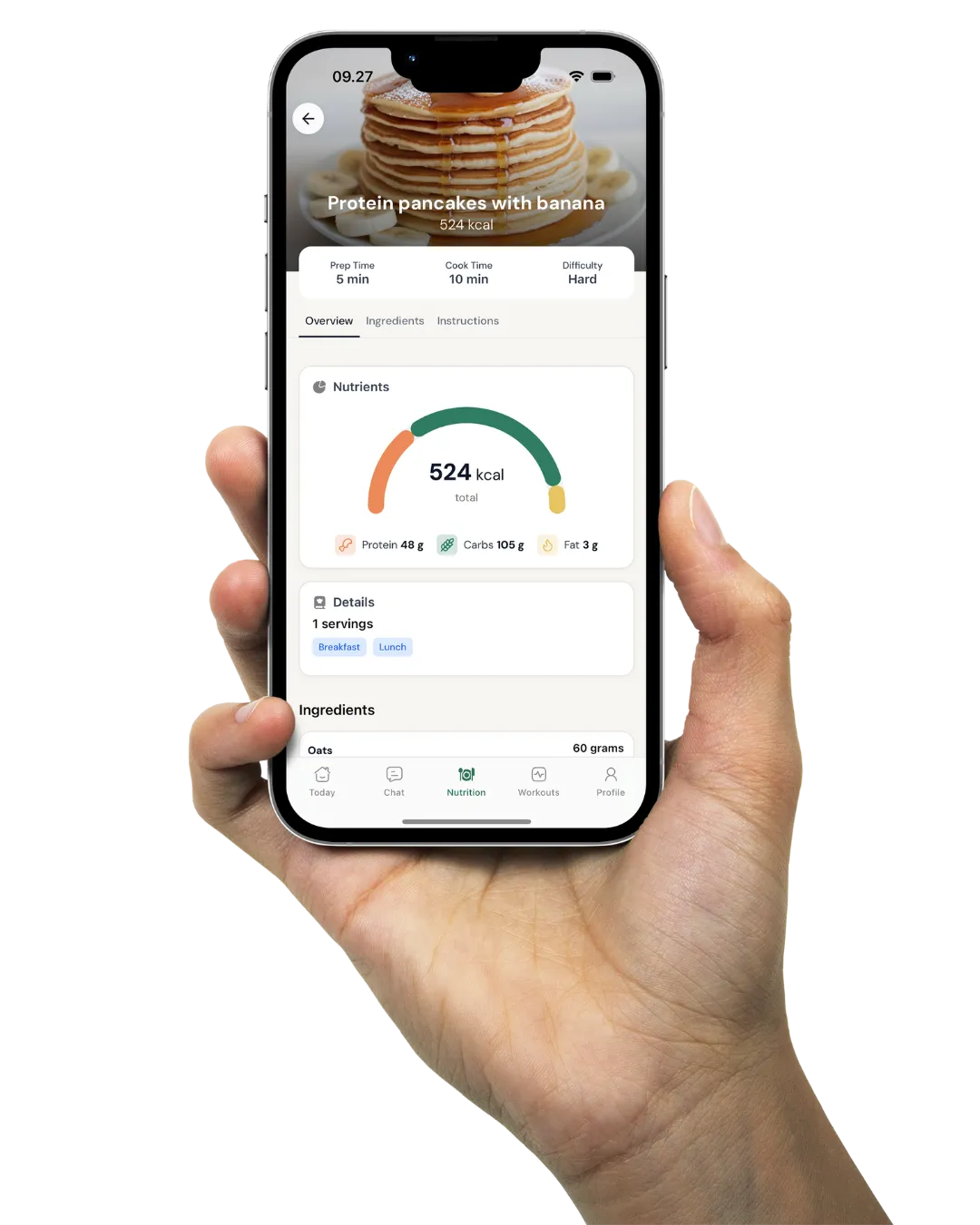
White-label coaching apps: who includes it, who charges extra (2026).
Every coaching platform advertises "your branded app", but almost none of them say plainly whether branding is included, a paid add-on, or gated to a top tier - and that single detail changes your real monthly cost more than the headline price. We compared 10 platforms on exactly that column, with documented figures where they exist.
By Markus Evers · Updated July 2026
How this comparison is made: we check every competitor's pricing and features against their live websites and re-verify them on a recurring basis. Coachway is our product - we flag it where it appears, we credit real competitor strengths, and we say who each platform fits better than us. Browse all platform comparisons.
the short version
A white-label coaching app puts the coach's own branding on the client-facing app instead of the software vendor's. coachway includes the branded in-app experience - the coach's logo and colors throughout the client app - on every plan at EUR 69/month for up to 5 clients; a fully white-labeled standalone app under the coach's own store listing is a separate paid option.
Across the 10 platforms compared here, branding splits three ways: included (Coachway's in-app branding on every plan, Everfit's on Pro, PT Distinction's on Pro and Master), a paid add-on (Trainerize one-time USD 169, My PT Hub one-time EUR 95 or EUR 145/month for full white-label, Vagaro around USD 100/month), or gated to a top or quote-only tier (FitBudd Super Pro, Kahunas Ultimate, Everfit Enterprise for the standalone app, Exercise.com and Virtuagym by sales quote). The full breakdown, with the documented figures, is below.
Branded in-app experience vs full white-label: know which one you are buying.
"White-label" is a marketing word, not a standard, and vendors use it for two very different things. A branded in-app experience means your logo and brand colors carry across every screen your clients use - workouts, check-ins, meal plans, chat - inside the platform's app; the App Store listing and home-screen name stay the platform's. A full white-label app goes further: your own app icon and your own App Store and Google Play listing, so clients download an app published under your name - which usually also means your own Apple and Google developer accounts and store compliance to manage.
For most coaches the branded in-app experience is the level that matters: clients see your brand every time they open the app to log a session, which is where the retention and pricing power come from. The full white-label listing earns its cost once your brand is the reason clients download in the first place. Both are a fraction of the alternative - a custom-built app realistically starts around EUR 20,000 plus ongoing maintenance; the full build vs platform breakdown covers that decision.
When you compare vendors, pin down four things: which of the two levels you get, on which tier it unlocks, what it costs on top of the subscription, and whether the platform's own name still shows on the login screen, push notifications, or emails. That is the comparison below.
How we compared the platforms.
We ranked 10 platforms that offer a branded or white-label client app, judged on one primary question - is branding included, a paid add-on, or gated, and at what tier - plus the depth of the branding, iOS and Android coverage, and how well the platform serves an online coach's day-to-day workflow around the app. Costs are stated only where the vendor publishes them or our own pricing research has verified them; quote-only vendors are marked as such rather than guessed at. For the broader all-round ranking beyond branding, see the best coaching apps for online coaches.
Included, add-on, or gated: the 10 platforms compared.
| Platform | Branded in-app experience | Full white-label (own store listing) | Documented cost (2026) |
|---|---|---|---|
| Coachway | Included on every plan | Separate paid option | In-app branding at no extra cost; plans EUR 69/mo up to 5 clients, then EUR 9/client |
| FitBudd | From Pro (USD 79/mo) | Super Pro (USD 149/mo) | One-time USD 75 setup, plus your own Apple (USD 99/yr) and Google (USD 25) accounts |
| Everfit | From Pro, no add-on fee | Enterprise only | Enterprise is custom quote; not on free Starter |
| PT Distinction | Included on Pro and Master | Not offered as own-listing app | Pro USD 59.90/mo, Master USD 89.90/mo; not on Basic |
| Trainerize | Paid add-on on Pro | Included on Studio Plus | One-time USD 169 on Pro; Studio Plus USD 248/mo per location |
| Kahunas | Lower tiers carry Kahunas branding | Ultimate tier only | Ultimate USD 99/mo unlocks branded iOS/Android and own listings |
| My PT Hub | Paid add-on | Paid add-on | Custom branded app one-time EUR 95; full white-label EUR 145/mo |
| Exercise.com | Part of the core product | Yes, first-class product | Quote-only pricing; sold to gyms and training businesses |
| Virtuagym | Branded member app | Yes, capability confirmed | Demo-gated; tier and cost not publicly itemized |
| Vagaro | Not the core product | Paid add-on | Around USD 100/mo on top of the subscription, plus store developer fees |
All figures as documented in 2026; pricing and tiers change often, so always confirm current rates on each vendor's own pricing page. The ranked breakdown is below.
01 · branding included on every plan
Coachway
Coachway treats the branded client app as part of the core product, not a luxury tier. On every plan, clients train, check in, follow their meal plan, and message you inside an app carrying your logo and brand colors on every screen, on both iOS and Android, in six languages. Setup is uploading a logo and picking colors - minutes, not a dev project - and new features inherit your branding automatically. If owning your own App Store and Google Play listing matters, a fully white-labeled standalone app published under your own name exists as a separate paid option. Around the app sits the full coaching stack: workout builder, meal planner, check-ins in the Power Panel, chat, and billing through your own Stripe. See the branded client app feature page and the pricing page.
Want to see your own logo and colors inside the client app? A 15-minute demo shows the branded experience live, or start the trial and set your branding up today.
No charge today - cancel in 2 clicks.The trade-off: on the standard plans the App Store listing and home-screen name are Coachway - your brand carries the in-app experience, not the store page. The fully white-labeled standalone app closes that gap, but it is a paid option, not free, and Coachway is one of the younger platforms here, so its catalog of third-party integrations is still growing.
02 · own-listing standalone app
FitBudd
The most branded-app-centric platform in this list. FitBudd's signature is a fully white-labeled standalone app on the coach's own App Store and Google Play listing, so clients download your app, not a generic platform app. Branding comes in two steps: in-app theming and a branded website start on the Pro plan (USD 79/mo), while the standalone own-listing app requires Super Pro (USD 149/mo) plus a one-time USD 75 setup fee - and you bring your own Apple developer account (USD 99/year), Google Play account (USD 25 one-time), and a D-U-N-S number. Full breakdown in our FitBudd pricing guide.
The trade-off: the standalone app carries real overhead - your own developer accounts, a setup fee, and store compliance - and several reviewers cite a click-heavy workout builder for the coaching work around the app.
03 · in-app branding without an add-on fee
Everfit
A modern-feeling platform whose branding story is clean at the in-app level: custom branding - your logo and colors in the client app - is included on the Pro and Studio plans with no separate add-on fee, which several bigger names cannot say. The catch sits at the extremes: the free Starter tier carries Everfit branding, and the full standalone white-label app is reserved for the custom-priced Enterprise tier, which means a sales conversation. Other features stack as paid add-ons, so total cost needs checking against our Everfit pricing breakdown.
The trade-off: the standalone white-label app requires a quote-only Enterprise conversation, and the add-on model for automation, payments, and meal plans pushes the real monthly total above the slider price.
04 · branded apps on the working tiers
PT Distinction
A UK-built platform where custom-branded iOS and Android apps - your color scheme and app icon - are included on the Pro (USD 59.90/mo) and Master (USD 89.90/mo) tiers with no separate branding fee. The entry Basic tier ships working apps but without custom branding, so if the branded client experience is why you are here, the real starting price is Pro, not Basic. Around the app, the programming and nutrition depth is genuine. Tier details in our PT Distinction pricing guide.
The trade-off: the interface is dated compared with newer apps, and Nordic and DACH localization is limited.
05 · one-time branded-app fee
Trainerize
One of the most established workout-first platforms in North America, with an unusually honest add-on price: the Custom Branded App is a one-time USD 169 on the Pro plan - a single payment rather than a recurring line item - and it is included at no separate cost on the Studio Plus plan (USD 248/mo per location). The wider pattern is the same though: payments (USD 10/mo) and advanced nutrition (USD 20 to 45/mo) are also paid add-ons, so the headline plan price understates the real total. Full math in our Trainerize pricing guide.
The trade-off: branding, payments, and deeper nutrition are all separate costs on top of the plan, and native-language support for Nordic and DACH coaches is limited.
06 · white-label on the top tier
Kahunas
Kahunas runs three tiers, and the fully branded white-label app - branded iOS and Android apps with your own App Store and Google Play listings - is exclusive to the Ultimate tier at USD 99/mo with unlimited clients. The lower Essentials and Growth tiers ship native apps that carry standard Kahunas branding, so if your own app icon is the deciding factor, USD 99/mo is the real entry price. It is a coaching-capable platform around the app, but English-first. Tier details in our Kahunas pricing guide.
The trade-off: everything branded sits on the top tier, the platform is English-first for European coaches, and there is no public pricing page to sanity-check against.
07 · branding as stacked add-ons
My PT Hub
A simple, affordable UK-built platform whose branding sits entirely outside the subscription: as of 2026 a custom branded app is a one-time EUR 95, and a full white-label app is a separate EUR 145 per month on top of your plan. The base plans themselves are cheap - Premium at EUR 59/mo carries unlimited clients - which is exactly why the branding line items deserve attention before you compare headline prices. Full ladder in our My PT Hub pricing guide.
The trade-off: the white-label add-on at EUR 145/mo can cost more than the plan itself, and coaches tend to outgrow the platform as their workflow gets more complex.
08 · enterprise white-label, quote-only
Exercise.com
A US-built, enterprise-grade platform where the white-label app is a first-class product, not an afterthought: a genuinely white-labeled branded app under your own app-store listing, sold to gyms, studios, and training businesses with staff. The catch for a solo coach is the shape of the deal - pricing is quote-only, reviewers describe a steep onboarding curve, and the platform's center of gravity is business management, not solo coaching. If you go this route, get the complete number in writing: branded app, payment processing, onboarding fees, and contract length. More in our Exercise.com review.
The trade-off: quote-only pricing and enterprise onboarding make it oversized for a solo online coach, and nutrition is not its center of gravity.
09 · facility white-label, demo-gated
Virtuagym
An Amsterdam-built gym and club platform, running since 2008, with a genuinely strong white-label capability: a native branded member app under the business's own brand, with its own App Store and Google Play listing, is confirmed - and it is the strength its reviewers keep confirming. What is not confirmed is the price: pricing is demo-gated, and which tier includes the branded app and what it costs are not publicly itemized, so you would need to get it in writing from sales. Coaching is one module inside club software, not the core. More in our Virtuagym review.
The trade-off: no public pricing and unpublished white-label conditions make comparison shopping hard, the platform carries club-management weight a solo coach never uses, and its interface languages include no Nordic options.
10 · booking software, app as add-on
Vagaro
Vagaro is appointment and point-of-sale software for salons, spas, studios, and class-based gyms - and it belongs in this comparison only because it does sell a custom-branded client app, as a separate paid add-on billed around USD 100 per month on top of the subscription, typically plus the usual app-store developer fees. There is no coaching depth around it: programming, nutrition, and check-ins are not what Vagaro is for. If booking and a till are your core business, it is strong software; if coaching is, look higher up this list. More context in our Vagaro alternatives guide.
The trade-off: the coaching feature set is thin or missing, and costs climb as add-ons stack - the branded app alone can exceed the base subscription.
Pick by what you actually need branded.
- You want your logo and colors in the client app without a branding line item. Coachway includes the branded in-app experience on every plan; Everfit and PT Distinction include it from their mid tiers.
- You want your own App Store listing, whatever it takes. FitBudd is built around exactly that (Super Pro plus setup fee and your own developer accounts); Coachway offers it as a separate paid option on top of the standard plans.
- You are already on a workout-first platform and just want the app branded. Trainerize's one-time USD 169 is the cheapest documented add-on route in this list.
- You run a gym or studio, not an online coaching business. Exercise.com or Virtuagym - both offer real white-label, both price it on a sales call, so get every number in writing.
- You coach in Danish, Norwegian, Swedish, Finnish, or German. Coachway ships the client app in each of those languages, so your branding and the interface your client reads are both native. Check the current language list with any platform here before you commit.
- Branding is one factor among many. Zoom out to the full ranking in best coaching apps for online coaches and the criteria in how to choose an online coaching platform.
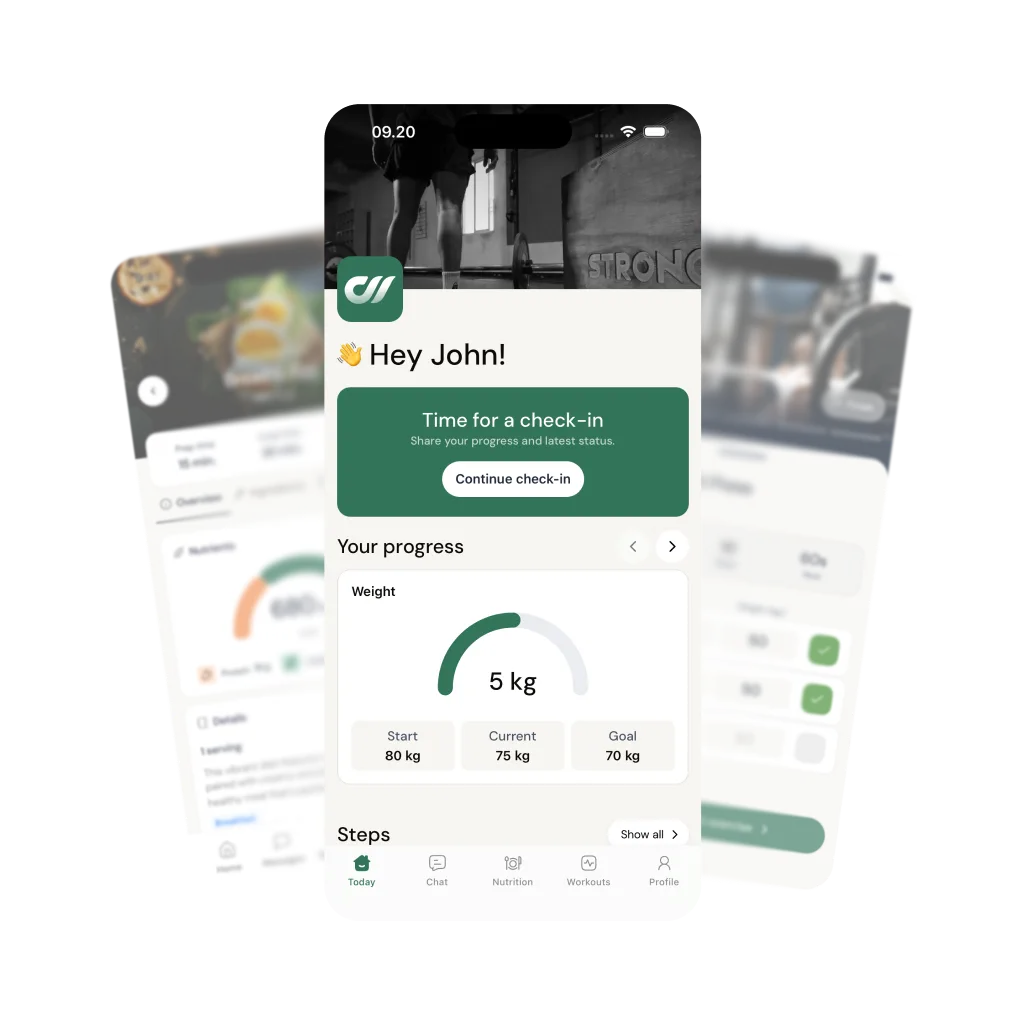
If included in-app branding is what brought you here, Coachway is the shortest path: upload your logo, pick your colors, and your clients see your brand this week.
No charge today - cancel in 2 clicks.Why the app icon quietly decides who owns the client relationship.
A coaching client opens their app five to ten times a week - logging workouts, submitting check-ins, reading your reply, tracking meals. That makes the app the single most frequent brand touchpoint in the entire coaching relationship, more frequent than your Instagram, your emails, and your calls combined. When it carries the platform's branding instead of yours, the platform quietly becomes the product and you become interchangeable; when it carries your brand, the client is paying for you, and the app is simply how you deliver. That distinction shows up in retention and in what clients consider a fair price.
One honest caveat: a branded app will not rescue weak coaching. Retention is still won with results, communication, and consistent check-ins and client care - the branded app just makes sure the credit for all of it lands on your brand instead of someone else's.
Frequently asked.
Is a white label fitness app the same as a white label coaching app?
Yes. White label fitness app, white label coaching app and white label personal training app all describe the same product: a client-facing mobile app that carries your brand rather than the platform vendor's. The wording usually just reflects who is asking, with personal trainers saying fitness app and online coaches saying coaching app. What actually differs between vendors is the depth of the branding you get for the price. A branded in-app experience puts your logo and colours inside the vendor's app, and is included on every Coachway plan. A fully white-labeled standalone app, published under your own App Store and Google Play listings, is a separate paid option here and is gated to a higher tier or a setup fee on most platforms in this comparison. Decide which of the two you actually need before you compare prices, because vendors quote both under the same words.
What is a white-label coaching app?
A white-label coaching app is a coaching platform's client app delivered under the coach's brand instead of the platform's. Clients see the coach's logo, colors, and - on full white-label tiers - the coach's own app icon and store listing, while the platform runs the workouts, check-ins, meal plans, and chat underneath. It gives a coach the look of a custom app without building one.
What is the difference between a branded app and a full white-label app?
A branded in-app experience means your logo and colors carry across the screens your clients use inside the platform's app; the App Store listing stays the platform's. A full white-label app goes further: your own app icon and your own App Store and Google Play listing, so clients download an app under your name. Most platforms price these two levels very differently, which is exactly what the comparison on this page maps out.
Which coaching platforms include a branded app at no extra cost?
On Coachway, the branded in-app experience - your logo and brand colors throughout the client app - is included on every plan at no extra cost; a fully white-labeled standalone app under your own store listing is a separate paid option. Everfit includes in-app branding from its Pro plan with no add-on fee, and PT Distinction includes custom-branded apps on its Pro and Master tiers. On most other platforms, branding is a paid add-on or gated to a top tier.
How much does a white-label fitness app cost?
It varies enormously by platform. Documented examples as of 2026: Trainerize charges a one-time USD 169 for its branded app on Pro, My PT Hub charges a one-time EUR 95 for a custom branded app or EUR 145 per month for full white-label, FitBudd's standalone white-label app requires its Super Pro plan at USD 149 per month plus a one-time USD 75 setup fee, and Kahunas gates its white-label app to a USD 99 per month tier. Several vendors, including Exercise.com and Virtuagym, only quote white-label pricing on a sales call. Always confirm current rates with each vendor.
Will my clients see the Coachway name in the app?
Inside the app, clients see your logo and your brand colors on every screen - workouts, check-ins, meal plans, and chat. The App Store listing and home-screen name are Coachway on the standard plans. If owning your own store listing and app icon is essential, Coachway offers a fully white-labeled standalone app as a separate paid option - ask about it on a demo.
Is a branded app worth it with fewer than 20 clients?
Usually yes, because the app is your most frequent brand touchpoint: clients open it several times a week to log workouts and check in. A branded experience supports premium pricing and makes referrals easier, since clients recommend your app rather than a generic platform. If branding is included in your plan, there is no reason to wait; if it is a paid add-on, weigh the cost against your current client revenue.
Should I build a custom app instead of using white-label?
Only if you need genuinely unique features no coaching platform offers and you have the budget: custom builds start around EUR 20,000 plus ongoing maintenance, app store reviews, and updates for every new iOS and Android release. For delivering coaching - workouts, check-ins, meal plans, chat - a branded platform app gets most of the result at a fraction of the cost and ships in days, not months.
Danish-built, down to the details.
coachway is developed in Denmark and built on more than six years of work with 150 online coaches. Billing runs through the coach's own Stripe account, so payments go directly to the coach, with EU VAT and invoicing handled automatically through Stripe Tax. Client data handling is GDPR-aligned, with export to CSV and PDF at any time, and the client app is localized in six languages - English, Danish, Norwegian, Swedish, Finnish and German. Most international coaching platforms offer none of the Nordic languages.
- - Developed in Denmark, built on work with 150 online coaches over 6+ years
- - Payments direct to your own Stripe, EU VAT and invoicing via Stripe Tax
- - GDPR-aligned data handling, export to CSV and PDF at any time
- - Client app in six languages, reviewed by native-speaking coaches
Keep reading
all guidesBest Coaching Apps for Online Coaches (7 Picks, 2026)
The best coaching apps for online fitness and nutrition coaches in 2026, compared on features, branded client app, payments, and who each one fits.
Read the guideBuild your own coaching app, or use a platform?
An honest build-vs-buy guide for fitness coaches: the real cost and time of a custom app vs a branded app on a platform that is live in days.
Read the guideHow much does it cost to build a fitness app? (2026)
Fitness app development cost explained: MVP vs full custom build ranges, yearly maintenance, and why a coaching platform is cheaper and faster for most coaches.
Read the guideHow to choose an online coaching platform (12-point checklist)
The decision framework used by online coaches managing 50+ clients. Twelve criteria, weighted, with red flags and trade-offs explained. The most leveraged technology decision you make.
Read the guideSee your brand inside the client app.
The branded in-app experience - your logo and colors on every screen your clients use - is included on every Coachway plan, no add-on fee. Start the 14-day free trial with no charge today and cancel in 2 clicks, or let us show you the branded app live on a 15-minute demo.