Skip to content
nutrition · supplements

Beta-alanine: what to tell clients who ask.

Beta-alanine is the supplement behind the famous pre-workout tingle - and one your clients will ask about more than its modest evidence deserves. This guide is for the coach fielding that question: what it actually is, what the research honestly shows for high-rep work, the simple dose you can recommend, how to handle the harmless tingle, where to steer the money instead, and how to tell a client who genuinely benefits from one who can skip it.

By Markus Evers · Updated June 2026

the short answer

Beta-alanine is an amino acid the body uses to make carnosine, which buffers the acidity that builds up in muscle during hard efforts. At about 3 to 5 g per day taken consistently for weeks, it can give a modest boost to high-rep, short-duration work - roughly 1 to 4 minute efforts - and it is best known for a harmless skin tingle. Most general clients do not need it.

This article is general information for coaches, not medical or dietetic advice - individual needs vary, so any client with a health condition, medication, or pregnancy should check with a doctor or registered dietitian before starting a supplement.

the basics

What beta-alanine actually is.

Beta-alanine is an amino acid. The body uses it to build carnosine, a compound stored in muscle that acts like a buffer. During hard, sustained work, muscles produce hydrogen ions and the local environment gets more acidic - and that acidity is one of the things that limits how long a client can keep pushing. Carnosine soaks up some of that acid, and topping up muscle carnosine is the entire reason anyone supplements beta-alanine.

Here is the part clients miss: beta-alanine does nothing the moment you take it. It is not a stimulant and it has no acute kick. It works only by slowly raising muscle carnosine over several weeks of daily use, like topping off a tank one cup at a time. A client who takes it once before a workout and feels "nothing" has misunderstood how it works, not bought a dud.

It sits in the same category of small helpers as a good protein routine - it works alongside training and food, never instead of them. If a client is still sorting out the fundamentals, our guide on what macros are is a far better first stop than any supplement, and the better-supported performance aid for most clients is creatine.

the evidence

What the research honestly shows.

Beta-alanine is well studied, but the honest takeaway is narrower than the marketing suggests. The benefit is real but modest, and it only shows up in a specific kind of work: hard, high-rep, roughly one-to-four-minute efforts where muscle acidity is the limiter. For a one-rep max, a short explosive lift, or a long steady run, it does little to nothing. The table below is the honest summary you can give a client.

Area What the evidence shows The honest caveat
High-rep, short-duration work Modest help for hard efforts roughly 1 to 4 minutes long, where muscle acidity builds up and limits output. The effect is small and shows up in the right kind of work - not in a heavy single or a long run.
Strength and a single max Little to no meaningful benefit for one-rep maxes or short, explosive lifts under about a minute. Creatine is the better-supported choice for short, high-power efforts.
Dose and form About 3 to 5 g per day of beta-alanine, taken consistently for weeks, is what raises muscle carnosine. A single dose does nothing acutely - it works by building up over time, like topping off a tank.
The tingle (paresthesia) A harmless skin-tingling sensation, usually on the face, neck, and hands, common after larger single doses. It is not a sign anything is wrong - splitting the dose smaller usually removes it entirely.

The short version for clients: beta-alanine helps a narrow slice of training a little, and only after weeks of daily use. It will not out-train poor sleep, low protein, or an inconsistent week - and for clients chasing endurance, the basics in our guide on muscular endurance move the needle far more than any scoop. If a client is leaning on a supplement to fix the wrong problem, point them back to the fundamentals.

dose and protocol

The simple protocol - and the tingle.

The protocol is short. About 3 to 5 g per day of beta-alanine, taken consistently for several weeks, is what slowly raises muscle carnosine. Timing within the day barely matters, because it works by building up over time, not by acting in a single session. There is no loading window to hit and no pre-workout ritual to perfect - the version a client takes daily for weeks is the version that does anything at all.

Then there is the tingle. A larger single dose often causes paresthesia - a harmless skin-tingling sensation, usually on the face, neck, and hands, that fades within about an hour. It is not an allergic reaction and not a sign of harm. It is simply the most noticeable thing beta-alanine does, which is why some clients assume it is "working" when they feel it, even though the buffering benefit is the slow build, not the tingle. If a client finds it uncomfortable, splitting the daily amount into smaller doses through the day usually removes it entirely.

Because there is no acute effect to chase, simple beats clever here. A small daily amount the client actually remembers beats an elaborate dosing schedule they abandon by week two. The same "habit over perfection" logic shows up across nutrition - it is why protein timing matters less than total daily protein, and why getting the basics consistent always comes first.

how coaches handle it

Framing beta-alanine with a client.

The product is simple, and for most clients the honest answer is "you probably do not need it." The coaching is in how you say that - so a client trusts your judgement, takes it correctly if it applies to them, reads the tingle correctly, and knows where your advice ends and a doctor's begins. Five things to get right.

  1. 01

    Lead with food and training first

    Beta-alanine is near the bottom of the priority list. A client who is not training consistently, sleeping enough, or eating enough protein will not be rescued by it. Get the fundamentals in place - progressive training, adequate calories, enough protein - before this is even part of the conversation. For most clients, it is an optional finishing touch on an already-working program, not something they need at all.

  2. 02

    Be honest that most clients do not need it

    Unlike a daily protein habit, beta-alanine helps a narrow slice of training: hard, high-rep, 1 to 4 minute efforts where muscle acidity is the limiter. A general client doing strength work, walking for steps, and eating well has no real reason to buy it. Say that plainly. Recommending the supplements a client does not need quietly erodes the trust that makes them listen when something actually matters.

  3. 03

    Set the expectation: it builds up slowly

    Beta-alanine does nothing the day a client takes it. It works by slowly raising muscle carnosine over several weeks of daily use, which buffers some of the acid that builds during hard efforts. A client expecting a pre-workout kick will be disappointed and quit early. Frame it as a slow top-up, not a same-session boost, so they take it long enough to see the modest benefit it can offer.

  4. 04

    Explain the tingle before they feel it

    The skin-tingling feeling, called paresthesia, is the number-one question clients ask. Warn them first: a larger single dose often causes a harmless tingle on the face, neck, or hands that fades within an hour or so. It is not an allergic reaction or a sign of harm. If it bothers a client, splitting the daily amount into smaller doses usually removes it. Naming it in advance turns a worried message into a non-event.

  5. 05

    Hold your scope of practice

    You can educate on general use, dose, and habits. You cannot clear a client medically. If a client is pregnant or breastfeeding, takes medications, or has any health condition that worries them, send that question to a doctor or registered dietitian before they start. Beta-alanine is generally well tolerated in healthy adults, but the medical clearance is not a coaching job - and referring it out protects both the client and you.

A client asking about beta-alanine is usually asking a bigger question about supplements in general. Most of the time the better answer points back to food and recovery: our guide on creatine covers the one performance aid with broad support, and sleep and recovery matters far more for performance than any niche scoop ever will.

scope of practice

Where coaching ends and a doctor begins.

This is the line that protects both you and the client. As a coach, you can educate on general use, the standard dose, and the habit of taking it - the same way you would explain protein or hydration. What you cannot do is medically clear a client to take it. Those are two different jobs, and keeping them separate is part of being a coach clients trust.

Refer the question out the moment it turns medical. A client who is pregnant or breastfeeding, anyone on regular medications, or any client with a health condition that worries them should hear the same thing from you: that is a great question for your doctor or a registered dietitian before you start. Beta-alanine is generally well tolerated in healthy adults, but interactions and individual conditions are firmly outside a coach's lane.

Saying "that one is for your doctor" is not a weakness in your coaching - it is a sign of a coach who knows their scope, and clients trust that more, not less. The same honesty applies to every nutrition topic you cover, from macros to building a sustainable practice the right way, which our guide on nutrition coaching online walks through end to end.

delivering the nutrition side

Keeping the fundamentals front and center.

Beta-alanine is a footnote next to the things that actually move a client - protein, calories, training, sleep, and consistency. The job of a coaching platform is to keep those fundamentals visible so a client never reaches for a niche supplement to fix a problem that food and training would solve faster.

Macro targets and meals

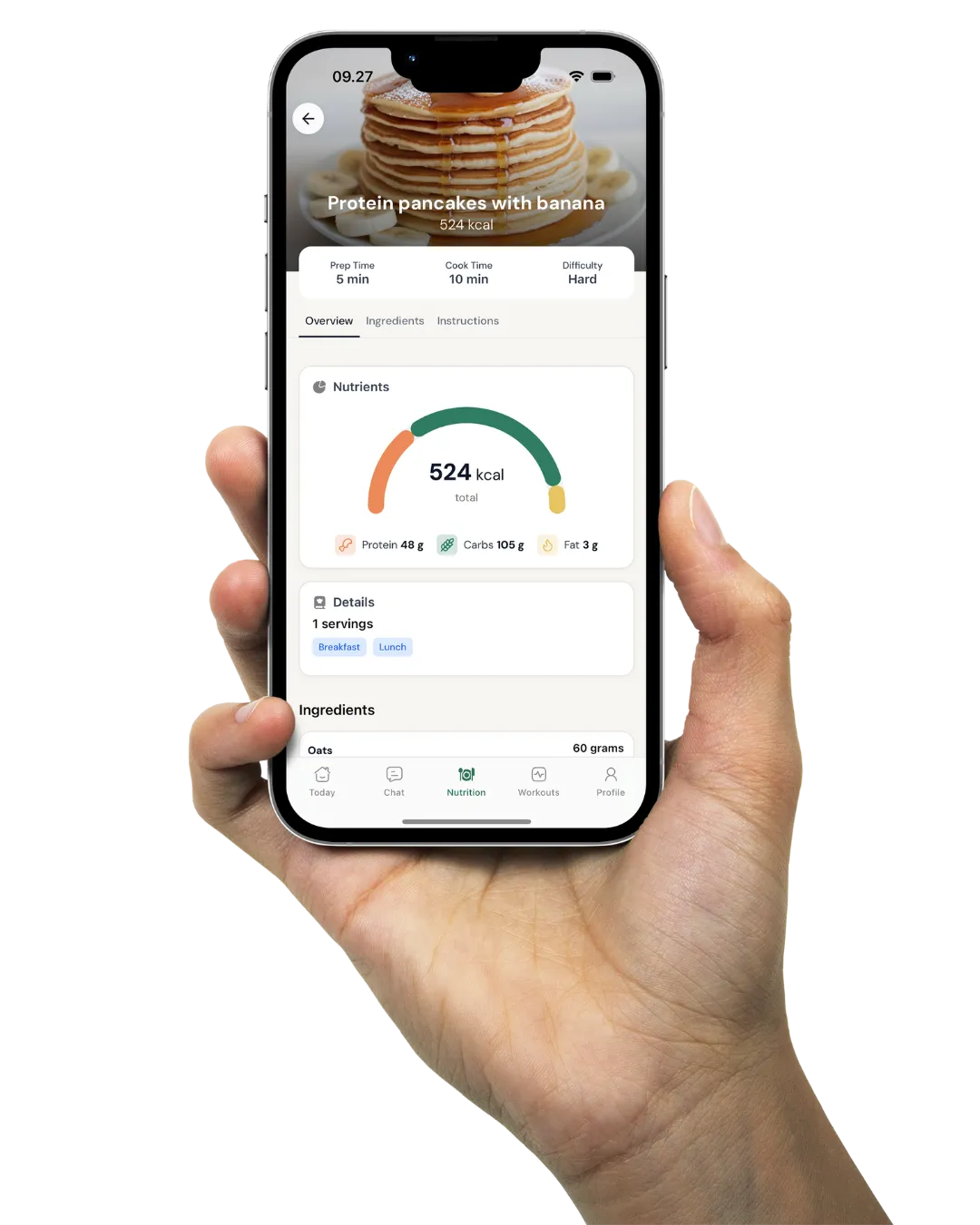
Coachway includes native nutrition with a meal planner, 1,100+ recipes, and clear macro targets, so a client can hit their protein before they ever think about a scoop or a pill.

Habit and progress tracking

Track habits and training over time, so when a client tries beta-alanine you can judge it against the trend across weeks - the only timescale on which it could do anything - instead of a single session.

A branded client app

Clients follow their plan and message you in a native branded app, so the place they ask "should I take beta-alanine?" feels like your business, not a generic portal.

The supplement conversation is easy when the fundamentals are handled. With macro targets, a meal planner, and habit tracking in one app, a client sees clearly that beta-alanine is an optional finishing touch at best, not the foundation. See how the nutrition side works on the meal planner page, and pair it with a quick macro calculator to set a starting point.

questions clients ask

Frequently asked questions.

What is beta-alanine?

Beta-alanine is an amino acid that the body uses to make carnosine, a compound stored in muscle. Carnosine helps buffer the acidity that builds up during hard, sustained efforts. As a supplement, about 3 to 5 g per day taken consistently for several weeks slowly raises muscle carnosine, which can give a small boost to high-rep, short-duration work. It does nothing acutely - the benefit comes from building up over time, not from a single dose.

Does beta-alanine actually work?

The honest answer is: modestly, and only for the right kind of work. The evidence supports a small benefit for hard efforts lasting roughly one to four minutes, where muscle acidity is a limiting factor. It does little to nothing for one-rep maxes, short explosive lifts, or long endurance. For most clients doing general strength and conditioning, it is an optional extra at best, not a supplement they need.

How much beta-alanine should a client take?

The studied protocol is about 3 to 5 g per day of beta-alanine, taken consistently for several weeks to raise muscle carnosine. Timing within the day does not matter much, since it works by building up over time rather than acting in a single session. Splitting the daily amount into smaller doses through the day is common, mainly because it reduces the harmless tingling sensation a larger single dose can cause.

Why does beta-alanine make you tingle?

That tingling feeling is called paresthesia, and it is a normal, harmless effect of beta-alanine, usually felt on the face, neck, and hands. It tends to appear after a larger single dose and fades within about an hour. It is not an allergic reaction or a sign that anything is wrong. If a client finds it uncomfortable, splitting the daily amount into smaller doses through the day usually removes it entirely.

Who actually benefits from beta-alanine?

The clients most likely to see a small benefit are those doing repeated hard, high-rep, or one-to-four-minute efforts - think higher-rep training to failure, certain conditioning intervals, or repeated sprints. A general client focused on strength, daily steps, and good nutrition has little reason to use it. For most people, food, training, and consistency matter far more, and beta-alanine is an optional finishing touch rather than a need.

Is beta-alanine safe for clients?

For most healthy adults, beta-alanine at standard doses is generally well tolerated, with the harmless tingle being the most noticeable effect. That said, coaches educate on general use, not medical clearance. A client who is pregnant or breastfeeding, takes medications, or has any health condition that worries them should check with a doctor or registered dietitian before starting. When in doubt, refer the medical question out rather than answering it yourself.

This article is general information for coaches, not medical or dietetic advice. Individual needs vary - any client who is pregnant or breastfeeding, on medications, or with a health condition should consult a doctor or registered dietitian before starting beta-alanine or any supplement. Coaches educate on habits and general nutrition and refer medical questions out.

Want the fundamentals that actually move a client? Start with the food: our guide on what macros are sets the foundation every supplement decision sits on top of.

See what Coachway can do for your coaching business

Coachway was built after working with 150+ coaches who all had the same frustrations - slow platforms, clunky workflows, wasted hours. Book a demo and see what we fixed. 15 minutes, and you'll know if it's the right fit.

Built for efficiency 6 languages DenmarkNorwaySwedenFinlandGermanyUnited Kingdom
The coaching platform you've been waiting for