


Personal trainer resume.
The six blocks a personal trainer resume needs, four professional summaries you can adapt, and the part almost every trainer gets wrong: turning what you did into bullets with numbers in them.
the short answer
A personal trainer resume runs to one page and carries six blocks: header with one link to your work, a three to four line summary, certifications with certifying body and expiry dates, experience as quantified bullets, a skills section, and education. Put certifications above experience while you are newly certified and below it once you have two or more years of client work. The bullets decide it: every one should carry a number, and retention is the number a gym cares about most.
The six blocks, in order.
This order works for gym floor, studio and remote coaching roles alike. The only thing that moves is where certifications sit, which depends on how long you have been doing the job.
Header
Name, city, phone, email, and one link.
The link matters more than the address. Send them to the place your coaching actually lives: an Instagram profile with real client work, a site, or a portfolio. A full street address is not needed and takes a line you cannot spare.
Professional summary
Three or four lines. Who you train, what you are certified in, what you have done.
Written last, read first. Name the client type you actually want, not every client type you could theoretically take. A hiring manager scanning twenty resumes is looking for a match, not range.
Certifications
Credential, certifying body, and the expiry date.
Put this above experience if you are early in your career, below it once you have two or more years on the floor. Include CPR and AED with their expiry, because most employers treat a lapsed one as disqualifying rather than a detail to sort out later.
Experience
Role, employer, dates, then three to five bullets.
Bullets are where resumes are won or lost. Each one should carry a number. See the quantifying section below, which is the part most personal trainer resumes get wrong.
Skills
Only what you would be comfortable being tested on.
Split it: assessment and programming, populations you have genuinely worked with, and the software you have actually used. Listing a platform you opened twice is a bad trade if the interview goes there.
Education
Degree, institution, year. One line each.
A relevant degree earns a real line. An unrelated one still earns a line, because a gap on a resume asks more questions than a degree in something else does.
Four professional summaries.
Adapt one, do not copy it. The numbers in these are the point, so replace them with yours. A summary with someone else's figures in it falls apart in the first interview question.
Newly certified, career changer
NASM-certified personal trainer moving into fitness after six years in hospitality management, where I ran a team of twelve and handled scheduling for a 90-seat floor. Comfortable with the parts of this job that are not training: client communication, retention, and turning enquiries into booked sessions. Looking for a gym floor role where I can build a client base from scratch.
Two to four years, gym floor
Personal trainer with three years on a busy commercial floor, currently holding 28 active clients with an average client tenure of 11 months. Strongest with general population clients returning to training after a long break, and with the first eight weeks where most drop-off happens. NASM-CPT, Precision Nutrition L1, CPR and AED current.
Specialist, applying to a studio
Strength coach specialising in barbell training for lifters over 40, with five years of one-to-one and small-group coaching. Programmed and delivered a 12-person masters lifting group for two years with no training-related injuries reported. NSCA-CSCS, CPR and AED current. Looking for a studio that takes coaching quality seriously enough to pay for it.
Moving from in-person to online
Personal trainer with four years in-person and 18 months running an online coaching practice alongside it, currently at 22 remote clients. Experienced in check-in based coaching, video form review, and nutrition targets set and adjusted from weekly data. Applying for a remote coach role where the work is the coaching rather than the selling.
Turning what you did into a bullet with a number in it.
Most personal trainer resumes describe the job description rather than the person doing it. The fix is not better adjectives, it is arithmetic you already have: how many clients, for how long, and what changed while you had them.
before
Responsible for training clients and creating workout programs.
after
Held 25 to 30 active clients on a full book for two years, with average client tenure of 11 months against a floor average of 6.
Retention is the number a gym actually cares about, because it is the number that pays them. If you know yours, lead with it.
before
Helped clients reach their fitness goals.
after
Ran a 12-week onboarding path for new members that took first-month attendance from 54 percent to 78 percent across 40 clients.
Name the thing you changed, the size of the change, and the number of people it happened to. Any two of the three still beats a claim with none.
before
Sold personal training packages.
after
Converted 31 of 60 free assessment sessions into paid packages over six months, the highest conversion rate of five trainers on the floor.
Trainers underplay sales because it feels less like coaching. Hiring managers read it as the difference between a trainer who fills their own book and one they have to fill for you.
before
Experienced with older adult clients.
after
Coached 14 clients aged 60 and over through a progressive strength programme, with no training-related injuries and 11 still training after 12 months.
A population claim with no volume behind it reads as an interest, not experience.
If you do not know your retention number, it is worth working out before you apply anywhere. The client churn rate calculator turns a starting and ending client count into a monthly churn rate and an average client lifespan, which is the figure a hiring manager is actually trying to estimate when they read your resume. And to see what that hiring manager is reading in the first place, our personal trainer job description examples lay out the exact duties and requirements a gym puts in its ad.
Six mistakes that cost interviews.
Listing certifications without expiry dates
It reads as either careless or as hiding a lapse, and an employer has to ask either way. Put the date in, even when renewal is months off.
A skills section that lists every platform you have ever opened
Interviewers pick one and ask about it. List what you have used with real clients and leave the rest off.
Bullets that describe the job description
"Designed personalised training programmes" is what every trainer does. It tells a reader nothing about you, and it costs you the one line that could have.
A summary aimed at everyone
Training everyone from athletes to post-natal to seniors signals no specialism rather than broad capability. Pick the client you actually want more of.
No link to anything
For a coaching job, evidence beats description. One link to real client work does more than a third bullet point.
Sending the same file to every gym
Rewriting the summary for each application takes four minutes and is the single highest-return edit on the page.
If the plan is your own clients, the resume is not the asset.
A resume opens doors at facilities. It does nothing for a coach going straight to their own clients, because no client has ever asked for one. What that person needs instead is a profile people can read and a place the coaching actually happens. Your bio does the first job, and the bio generator will draft one from the same facts you just put on the resume.
For the second job, Coachway is where the coaching runs: programming, nutrition, check-ins and payments in one place, with one client app in each client's own language carrying your programs and check-ins. If you are weighing that against staying on a gym floor, our guide to becoming a fitness coach walks through the four realistic routes in.
When you coach your own clients, their progress is your portfolio.
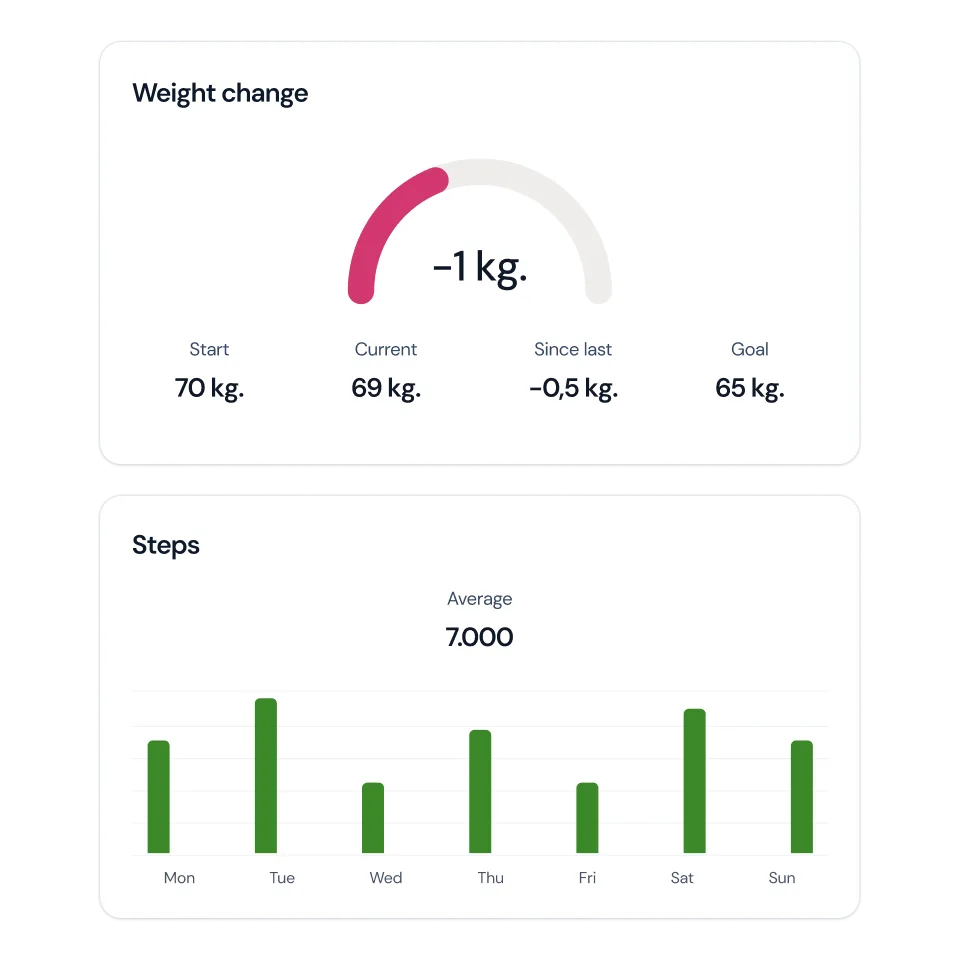
A prospective client is weighing the same thing a hiring manager is: evidence. A week-by-week record of what changed for the people you coach, shared only with their permission, says more than "results-driven" ever will, and it only exists if you keep it from the first check-in. In Coachway each client's check-ins collect progress photos and measurements, and the numbers chart themselves over time, so the record builds while you coach instead of being pieced together later.
Frequently asked questions.
What should a personal trainer resume include?
Six blocks: a header with one link to your work, a three to four line professional summary, certifications with their certifying body and expiry dates, experience with quantified bullets, a skills section covering assessment, populations and software, and education. Keep it to one page until you have several years of experience worth more.
How long should a personal trainer resume be?
One page for anyone under about five years in the industry, which is most trainers applying for floor and studio roles. Two pages only when you have genuinely different experience to show, such as management, programme design for a facility, or education delivery. A second page of thin content reads worse than a full first page.
Do I put certifications before or after experience?
Before experience if you are newly certified or changing careers, because the certification is the thing that qualifies you at all. After experience once you have two or more years of real client work, because by then the work is the stronger evidence and the certification is the box to tick.
What if I have no personal training experience yet?
Lead with the certification, then use the experience section for the transferable parts of whatever you did before: client-facing work, sales, scheduling, teaching, or team supervision. Add any unpaid coaching you have genuinely done, described honestly as such. A career changer who can explain why they moved is a normal hire; one who leaves an unexplained gap is not.
Should a personal trainer resume include a photo?
It depends where you are applying. In much of Europe a photo is common on a CV and expected in some countries; in the UK, Ireland, the US, Canada and Australia it is usually left off and can complicate the employer's hiring process. When in doubt, leave it off the document and put the visual evidence in the link instead.
Do online coaching roles need a different resume?
Yes, in emphasis. Remote coaching is won on written communication, check-in discipline and retention rather than floor presence, so the bullets that matter are the ones about client tenure, response times and how you handled clients you never met in person. Name the coaching platforms you have actually delivered on, because a hiring coach will ask.
Is a resume even necessary if I want to train clients independently?
Not for clients, who never ask for one. It still matters for gym floor space, studio partnerships, insurance applications and anything involving a facility. If you are going straight to independent coaching, the equivalent asset is a profile and a body of visible client work, which is what your bio and your platform do instead.
Keep reading
all guidesPersonal Trainer Bio Examples: 10 Copy-Paste Templates (2026)
10+ personal trainer bio examples for Instagram, websites, directories and pitches, a 5-part bio formula, a six-fact ChatGPT prompt that writes three lengths at once, a career-changer example, and the mistakes that cost coaches clients.
Read the guideHow to Become a Fitness Coach (2026): Certification, First Clients, Gym vs Online
What the job actually involves, the honest answer on certification, the four realistic paths in - gym-employed, freelance, studio, online - and how to land your first paying clients.
Read the guideBest personal trainer certifications for online coaching (2026)
A neutral, hedged comparison of NASM, ACE, ISSA, NCSF and NSCA for coaches who want to train clients online: cost, recognition, and who each fits. Then the part cert guides skip - a credential makes you credible, but building the online business is the bigger leap.
Read the guideHow much does it cost to become a personal trainer? (2026)
The real 2026 cost of becoming a personal trainer: verified certification prices, the startup costs beyond the cert, and what you can safely skip at the start.
Read the guideFree tools for this: Personal Trainer Income Calculator · Client Churn Rate Calculator · Personal Trainer Bio Generator
See what Coachway can do for your coaching business
Coachway was built on knowledge from working with 150 online coaches over 6+ years, who all hit the same wall - slow platforms, clunky workflows, wasted hours. Start your 14-day free trial and see what we fixed - the whole platform, no charge today, cancel anytime under Billing.


