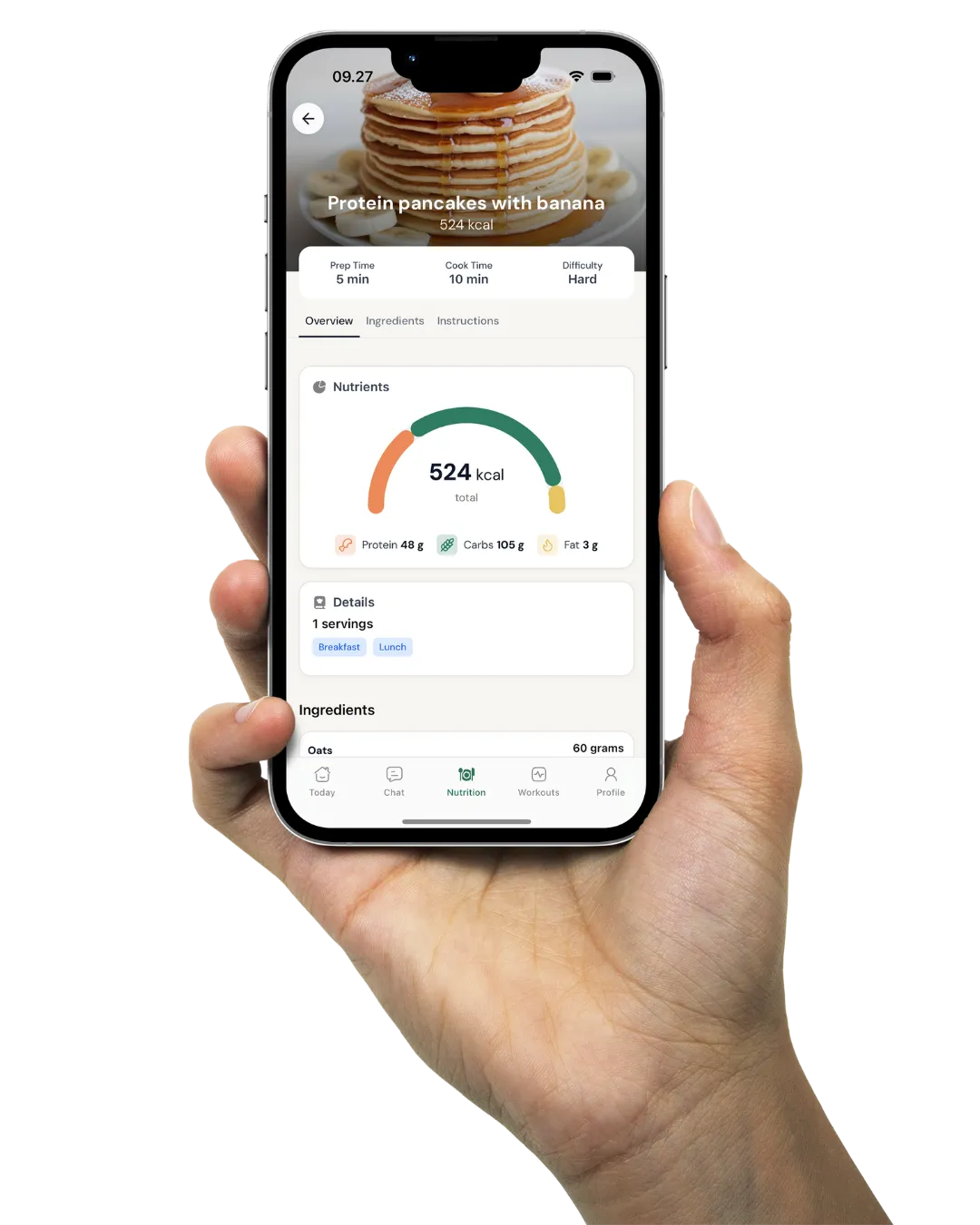
Nutrition coaching software is what a coach uses to build and deliver meal plans or macro targets, track adherence and progress, run weekly check-ins, message clients, and take payments - without rebuilding PDFs or hand-updating spreadsheets. This guide covers what the software must include, how meal plans and macro coaching differ, and the workflow that lets you deliver nutrition to dozens of clients without it eating your week.
Nutrition coaching software - also called nutrition planning software for coaches - lets a coach build
meal plans or set macro targets, track adherence and progress through weekly check-ins, adjust the plan
as each client responds, and take payments in one place, replacing PDF meal plans and hand-updated
spreadsheets.
definition
Nutrition coaching software is a platform that lets an online coach or personal trainer build and
deliver meal plans or macro targets, track client adherence and progress, run check-ins, message
clients, and collect payments - all in one place. It replaces the patchwork of PDF meal plans and
spreadsheets so nutrition can be assigned in seconds and adjusted as each client responds.
What to look for in nutrition coaching software:
·Native meal planning and macro targets - build reusable meal templates and recipes, or set daily protein, carb, and fat numbers, so each client gets the right format.
·Check-ins and progress tracking - tie nutrition to weight, measurements, photos, energy, and hunger so you can see whether the plan is working.
·Allergy and preference handling - adjust a plan for vegetarian, dairy-free, or contest-prep clients without rebuilding it from scratch.
·A branded client app - the client opens your own app for meals, recipes, and tracking, so the experience feels like your coaching.
·Habit and adherence tracking plus payments - log habits, capture what the client actually did, and take payments through your own Stripe account.
the job to be done
What nutrition coaching software actually does.
Nutrition is where a lot of online coaching is won or lost, and it is also where the admin piles up
fastest. The job of nutrition coaching software is to take the plan you would normally build by hand -
meals, recipes, portions, macros, swaps - and turn it into something you assign in seconds and update
without starting over. Our guide on how to do nutrition coaching online covers the method; this page is about the software that carries it.
Most coaches start with a stack of PDF meal plans and a master spreadsheet. It works for the first
handful of clients. Then every diet tweak means re-exporting a document, every allergy means
rebuilding a plan from memory, and every shopping list is something the client has to reverse-engineer
on their own. The plan looks fine. The delivery quietly leaks adherence, because the client cannot see
their meals, their recipes, and their progress in one place.
Proper nutrition software for coaches replaces that patchwork. It stores reusable templates and
recipes, generates shopping lists, supports both meal plans and macro targets, and connects what the
client ate to how they are progressing. One caution worth stating plainly: software does not change
your scope of practice. Coaches should stay inside their qualifications and refer clinical or medical
nutrition needs to a registered dietitian.
buying checklist
What nutrition planning software for coaches must include.
Use this list before you build your workflow or switch platforms. If a tool misses more than a
couple of these, it will cost you delivery time and client adherence every single week.
Reusable meal templates you build once and assign in seconds, so a fat-loss client, a vegetarian client, and a contest-prep client each get the right plan without you starting from a blank page every week.
Ongoing review and adjustment, so each check-in feeds the next plan - you nudge the macros, swap a meal, or scale portions based on how the client actually responded, not a guess from last month.
Flexible nutrition delivery that supports both fixed meal plans and macro targets, because some clients want every meal mapped out and others just need their daily protein, carbs, and fat numbers.
Client adherence and feedback signals, so you see what they actually ate and how they felt against the plan, not just what you prescribed.
Allergy and preference handling, so the plan respects dairy, gluten, vegetarian, or dislike constraints without you rebuilding it from memory each time.
Progress and check-in tracking that ties nutrition to weight, measurements, photos, energy, and hunger, so you can see whether the plan is working before the client stalls.
A branded mobile app the client opens for their meals, recipes, and tracking, so the whole experience feels like your coaching, not a third-party tool.
Payments through your own Stripe account, so the money for your nutrition coaching flows directly to you on predictable per-client pricing.
before and after
Meal plans vs macro coaching.
These are the two ways most coaches deliver nutrition. Neither is better in the abstract - the right
one depends on the client. Good software lets you run both, so you are not forcing every client into
the same mold.
What you compare
Fixed meal plans
Macro coaching
What the client gets
Specific meals, recipes, and portions to follow
Daily protein, carb, and fat targets to hit their own way
Best for
Clients who want structure and zero decisions
Clients building flexibility and long-term food skills
Shopping
A set list straight from the planned recipes
Client shops to their own preferences within the targets
Adherence risk
Can feel rigid or repetitive over time
Needs a client who will log and learn portions
Coach effort to adjust
Swap a recipe or scale portions, syncs to the app
Nudge the target numbers as progress data comes in
step by step
How to deliver nutrition to a client in Coachway.
Coachway was built around the whole nutrition loop, not just the plan export. Here is the full
workflow, from intake to ongoing adjustment, all inside one client record.
01
Set the client up with goals and constraints
Use a check-in or intake form to capture the goal, calorie or macro target, allergies, dislikes, and food preferences. If you need a starting number for the calorie target, run it through the TDEE calculator first. That intake becomes the brief for the plan, so you are not guessing or scrolling old chat messages later.
02
Build or assign the nutrition plan
Set the client's macro targets - the macro calculator turns a calorie number into protein, carb, and fat splits to start from - or assign a meal plan and scale the portions to hit them. Coachway runs both, so whether you coach off numbers or off fixed meals stays a coaching decision, not a software limit, and the plan is ready to send to the client app.
03
Deliver it to the client app
The plan lands in the client's branded Coachway app with meals, recipes, and portions in one place. They cook from it and log how the week went instead of decoding a PDF you have to re-export every time something changes.
04
Track adherence and progress
Weekly check-ins bring back weight, measurements, photos, energy, hunger, and how closely the client stuck to the plan. Ratings become trend lines, so you spot a stall or a slipping habit before it turns into a lost client.
05
Adjust and keep the client moving
Tweak the macros, swap a recipe, or scale portions, and the change syncs straight back to the app. Automations and reminders keep the cadence running so you are coaching the response, not chasing the data.
scale
How nutrition delivery scales to 30, 50, 100+ clients.
Hand-built PDFs do not scale. At 50 clients, every diet tweak, allergy swap, and shopping-list
question becomes admin you do manually. The point of real nutrition coaching software is to make the
template do the heavy lifting, so adding clients does not multiply your hours.
Build once, assign in seconds
Reusable meal templates and a recipe library mean you start from a structure, not a blank page.
Scale portions to the client's target and the plan is ready to assign in seconds.
Nutrition next to progress
Every client lives in Power Panel, where the meal plan, the check-in answers, and the progress
charts sit together. You see whether the nutrition is working without rebuilding context.
Automations carry the cadence
Automatic check-in reminders and broadcasts keep clients on track, so you spend your time
adjusting plans and answering, not chasing logs and sending the same nudge by hand.
Everything feeds the client's branded mobile app, so the nutrition experience stays on-brand as you
grow. Coachway uses predictable per-client pricing and lets you keep your own Stripe account, so client
payments flow directly to you. See the full breakdown on the
pricing page, explore the
meal planner feature, or see how intake and check-ins work with
forms.
questions coaches ask
Frequently asked questions.
What is nutrition coaching software?
Nutrition coaching software is the tool a coach uses to build and deliver meal plans or macro targets, track client adherence and progress, run weekly check-ins, message clients, and take payments - all in one place instead of rebuilding PDFs and hand-updating spreadsheets. The best nutrition coaching software stores reusable meal templates and recipes, generates shopping lists, and connects nutrition to the client's progress data so the coach can see whether the plan is actually working.
Can coaches and personal trainers create meal plans for clients?
Yes. A coach or personal trainer builds meal plans inside the software from reusable templates and a recipe library, sets portions to hit the client's target, and assigns the plan to the client's app. The same builder also handles allergies and preferences, so a plan can be adjusted to a vegetarian, dairy-free, or contest-prep client without starting over. Coaches should stay inside their qualifications and scope of practice, and refer to a registered dietitian for clinical or medical nutrition needs.
What is the difference between meal plans and macro coaching?
A meal plan maps out specific meals, recipes, and portions for the client to follow, which suits people who want structure and certainty. Macro coaching gives the client daily protein, carbohydrate, and fat targets and lets them choose foods to hit those numbers, which builds flexibility and food skills over time. Good nutrition software for coaches supports both, because some clients thrive on a fixed plan and others do better with targets they hit themselves.
How do you track adherence and adjust a client's nutrition over time?
This is the part that actually moves clients. Weekly check-in forms bring back weight, measurements, photos, energy, hunger, and how closely the client stuck to the plan, and the metrics auto-chart into trend lines you can read at a glance. From there you nudge the macro targets, swap a meal, or scale portions, and the change syncs straight to the client app. The build-and-deliver side - templates, recipes, and shopping lists - is covered in our companion guide on meal planning software for personal trainers.
What is the best nutrition coaching software?
The best nutrition coaching software fits how you actually coach: it runs both fixed meal plans and macro targets, handles allergies and preferences, and ties nutrition to check-ins and progress so you can see whether the plan is working. Coachway is a strong fit for online coaches because it pairs native meal planning and habit tracking with a branded client app, check-ins, and payments through your own Stripe account - so the whole nutrition experience stays on your brand. Compare it against your shortlist on the features your clients touch every week.
Does nutrition coaching software include a meal planner and habit tracking?
Good nutrition coaching software includes native meal planning - reusable meal templates, a recipe library, and macro targets - plus habit and adherence tracking so you see what the client actually did, not just what you prescribed. Coachway covers both: you build or assign the plan, the client follows it in their branded app, and weekly check-ins bring back habits, weight, photos, and how closely they stuck to it, so you adjust the next plan from real data.
What software do nutrition coaches use?
Nutrition coaches use nutrition coaching software - a platform where the coach builds meal plans or sets macro targets, tracks adherence through weekly check-ins, messages clients, and collects payments in one place. Coachway is one example built for online coaches: a native meal planner, a branded client app, and payments through your own Stripe account.
Can I run nutrition coaching with MyFitnessPal?
MyFitnessPal is a consumer food-logging app - clients can track what they eat in it, but it has no coach side: no way for a coach to build and assign meal plans, no check-in forms, no client management, and no payments. Many coaches pair it with, or replace it with, dedicated nutrition coaching software.
How does Coachway's pricing work?
Coachway uses predictable per-client pricing, and you keep your own Stripe account so client payments flow directly to you. See the pricing page for the plan that fits your client count.
If you coach personal-training clients and want the build-the-plan side covered in depth, the companion guide on meal planning software for personal trainers goes deeper on templates, recipes, and shopping lists for the trainer-specific workflow.
See what Coachway can do for your coaching business
Coachway was built on knowledge from working with 150 online coaches over 6+ years, who all hit the same wall - slow platforms, clunky workflows, wasted hours. Start your 14-day free trial and see what we fixed - the whole platform, no charge today, cancel anytime under Billing.
The platform you've been waiting forSupported in 6 languages
Built for efficiency6 languages
The coaching platform you've been waiting for
Cookie Preferences
By clicking “Accept All”, you agree to the storing of cookies on your device to enhance site
navigation, analyze site usage and assist in our marketing efforts as outlined in our
privacy policy.
Cookie Preferences
By clicking “Accept All”, you agree to the storing of cookies on your device to enhance site
navigation, analyze site usage and assist in our marketing efforts as outlined in our
privacy policy.
Strictly Necessary (Always Active)
Cookies required to enable basic website functionality.
Analytics
Cookies helping us understand how this website performs, how visitors interact with the site, and
whether there may be technical issues.
Marketing
Cookies used to deliver advertising that is more relevant to you and your interests.
Personalization
Cookies allowing the website to remember choices you make (such as your user name, language, or the
region you are in).