Coachway vs QuickCoach: the honest comparison.
QuickCoach is a genuinely good free tool, and this comparison treats it that way. Per QuickCoach.fit at the time of writing, it is free for up to 20 clients with no time limit, built around clean, simple workout programming and a tidy client app, and it deliberately leaves out the heavier stuff so coaches do not pay for features they will not use. Coachway is a paid, per-client platform built for online fitness and nutrition coaches who want depth and a branded experience: a full meal planner, a coach-branded iOS and Android app, automations, a native-reviewed UI in six languages, and payments through your own Stripe. The honest framing is not free versus expensive. It is "free and simple" versus "paid and deep," and the right answer depends on the stage you are at. The short version and a side-by-side table are right below.
By Markus Evers · Updated July 2026
How this comparison is made: we check every competitor's pricing and features against their live websites and re-verify them on a recurring basis. Coachway is our product - we flag it where it appears, we credit real competitor strengths, and we say who each platform fits better than us. Browse all platform comparisons.
the short version
The core choice is free versus paid-for-depth. Pick QuickCoach if you are new, budget-conscious, or run a lean programming-first practice: per QuickCoach.fit at the time of writing it is free for up to 20 clients with no time limit, and its flat USD 30 per month Pro plan adds a branded app with unlimited clients. Pick Coachway if you want depth and a branded experience worth paying for: a full meal planner with 3,900+ ingredients and complete macro and micronutrient data, a coach-branded iOS and Android app included from day one, onboarding automations, a native-reviewed UI across six languages, and payments through your own Stripe. QuickCoach wins on a free, simple start. Coachway wins on nutrition depth, branded app, automations, native-language UI, and per-client pricing built for scaling. The full side-by-side, with where each one genuinely wins, is below.
Coachway vs QuickCoach, side by side.
| Coachway | QuickCoach | |
|---|---|---|
| Best for | Coaches who want depth and a branded experience | New or budget coaches running lean workout programming |
| Pricing model | Predictable per-client subscription, scales with your client count | Free up to 20 clients; flat ~USD 30/mo Pro, unlimited (per QuickCoach.fit) |
| Nutrition / meal planning | Full meal planner: 3,900+ ingredients, full macros + 30+ micros, allergen filters, PDF | Light; recipes as tasks, no dedicated macro/ingredient database stated |
| Branded app | Coach-branded iOS + Android app included from day one | Branded client app on the paid Pro plan (per QuickCoach.fit) |
| Payments | Your own Stripe: subscriptions, plans, invoices, reminders | No native payments; bill clients externally (per QuickCoach.fit) |
| Automations | Onboarding flows, scheduled content, skip-conditions, inactivity alerts | Activity notifications; lighter automation by design |
| Native-language UI | EN, DA, NO, SV, FI, DE, reviewed by native speakers | No non-English / native-reviewed UI stated |
Pricing and features change. Confirm the current numbers with each provider before you commit. For the wider field, see our guide to the best client management software for personal trainers, and the breakdown of what online coaching software actually costs.
Free and simple, or paid and deep.
It is worth saying plainly: QuickCoach is a genuinely good piece of software, and a lot of coaches are well served by it. This is not a teardown. The two tools are not really competing for the same coach on the same day. QuickCoach is built to do one thing cleanly, deliver workout programming and a tidy client app, and it deliberately leaves out the heavier features so you are not paying for things you will not use. That restraint is a real virtue, and its free-for-20-clients tier (per QuickCoach.fit at the time of writing) means a new coach can run a real practice at zero cost. Coachway sits at a different stage. It is a paid, per-client platform built for the coach who wants depth, structured nutrition, a branded app, onboarding automations, native-language UI, and their own Stripe, all in one tab instead of six. The question is not which is cheaper. It is whether the depth is worth paying for at the stage you are at.
This comparison is built from years of working hands-on with online coaches rather than reading spec sheets. If you want the full feature checklist behind these criteria, our guide on how to choose an online coaching platform walks through the entire stack, and if you are still building your first client base, how to become an online fitness coach covers the wider setup around the software. We have also written a standalone QuickCoach review with the full pricing picture.
where quickcoach wins
QuickCoach
QuickCoach has clear, honest strengths, and there are real reasons coaches choose it. The biggest is cost: per QuickCoach.fit at the time of writing, it is free for up to 20 active clients with the full programming workflow and the client mobile and web apps, with no time limit and no credit card required. For a coach who is just starting, that is hard to beat, you can build real programs and onboard real clients without spending anything. The second strength is restraint. QuickCoach is built to be simple and fast, and its own guidance argues that a coach who does not need nutrition coaching, automation, or a white-label app should not be paying for them. If your work is mostly workout programming with a clean client app, that focus keeps the tool out of your way. Its paid Pro plan (listed at a flat USD 30 per month, with unlimited clients, per QuickCoach.fit) adds a branded client app, branded emails and printouts, and client activity notifications, all without per-client fees, which is appealing if you carry a large client base and want predictable cost.
Choose QuickCoach if: you are new, budget-conscious, or run a lean programming-first practice and want a free, simple tool that stays out of your way. None of this is a weakness in Coachway, it is simply a different design target. Worth noting fairly: by its own positioning QuickCoach does not aim to be a deep nutrition or automation platform, and at the time of writing it does not process payments natively, so you bill clients externally.
where coachway wins
Coachway
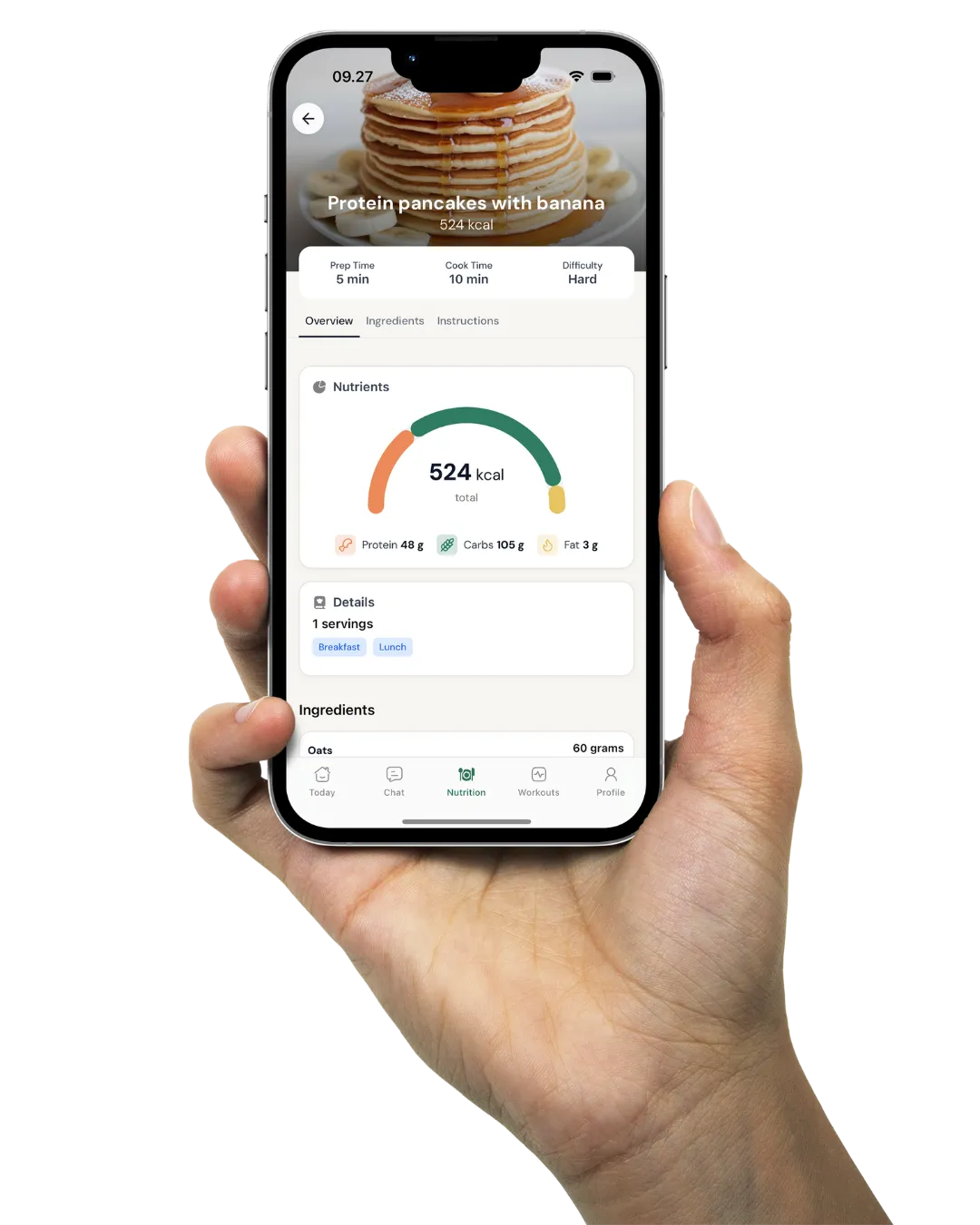
Coachway trades QuickCoach's free, simple start for depth across the whole coaching relationship, and that is what you are paying for. The clearest gap is nutrition. Coachway ships a full meal planner with 3,900+ ingredients, 1,100+ recipes, complete macros plus 30+ micronutrients with percentage of daily value, allergen and dietary filters, smart calorie scaling, and PDF export, where QuickCoach keeps nutrition light by design. The second is the client experience: the coach-branded iOS and Android app, your logo, colors, and banner, is included from day one, not gated behind a paid tier. Around that sit onboarding automations with real skip-conditions, weekly check-ins with photo and measurement tracking and auto-charts, and a 1,800+ exercise workout builder with progressive overload, supersets, and per-set logging. Payments run through your own Stripe, subscriptions, payment plans, invoices, and auto-reminders, so the billing relationship stays yours, where QuickCoach does not handle payments natively at the time of writing. And the entire UI is written and checked by native-speaking coaches in Danish, Norwegian, Swedish, Finnish, German and English, so for a coach in the Nordics or DACH the app feels local rather than translated. Pricing is predictable per-client, so cost tracks the clients you actually carry. Coaches across the Nordics, the UK, and Germany run their businesses on it today.
Choose Coachway if: you want structured nutrition, a branded app included, onboarding automations, native-language UI for Nordic or DACH clients, and payments through your own Stripe, all in one place. If you only need clean workout programming and the lowest possible starting cost, QuickCoach's free tier is the more honest fit.
What people actually say.
A fair picture has to include what coaches and independent reviewers say about a free, focused tool, both the praise and the limits. These are paraphrased takeaways from public reviews and platform statements; quotes are condensed and you should read the originals for full context.
"One of the best things about QuickCoach is that it is 100 percent free, and they fully intend to keep it that way."
"One of the main benefits is just how easy it is to use, it is a free, simple solution, not something with fancy frills or complex extras."
"It advertises itself for nutrition coaches too, but when you hit new plan, it has clearly been built with workout programs in mind."
"A coach who does not need nutrition coaching, automation, or a white-label app should not be paying for them."
"QuickCoach does not process payments natively, so coaches bill clients externally, which most already do anyway."
QuickCoach says on its own site that more than half of its coaches stay on the free plan, which it positions as a complete product rather than a teaser.
The pattern is consistent and to QuickCoach's credit: people love that it is free and simple, and its own team is upfront that it leaves out nutrition depth, automation, a built-in branded app on Free, and native payments. Those are exactly the areas a deeper platform like Coachway is built to cover, which is why the choice comes down to your stage, not to one tool being worse.
Which should you choose?
It comes down to two questions: how much depth does your coaching actually need, and is that depth worth paying for at your stage? If the honest answer is "clean workout programming, nothing more, for as little as possible," QuickCoach is built for that. If it is "structured nutrition, a branded experience, automations, and my own payments, in one place," Coachway is built for that. Here is the fair way to land it.
- You are brand new or watching every euro. QuickCoach. Its free-for-20-clients tier lets you run a real practice at zero cost while you learn what you need.
- Your work is mostly workout programming with a tidy client app. QuickCoach. Its deliberate simplicity is a feature, not a gap.
- Structured nutrition is core to your coaching. Coachway. The meal planner with 3,900+ ingredients and full macro and micronutrient data is the clearest difference between the two.
- You want a branded app and onboarding automations included. Coachway. The coach-branded iOS and Android app and automation flows are there from day one.
- You want to take payments through your own Stripe. Coachway. QuickCoach does not process payments natively at the time of writing; Coachway keeps the billing relationship yours.
- You coach in Danish, Norwegian, Swedish, Finnish, or German. Coachway. Its UI is reviewed by native speakers in those languages.
Still weighing it up? See the wider shortlist of QuickCoach alternatives for the other tools coaches move to when they outgrow the free tier, use the coach income calculator to model what your client base could earn and what per-client pricing means at your client count, sanity-check the per-client math against current Coachway pricing, or browse the full feature set to see exactly what the depth covers.
Frequently asked.
Is Coachway or QuickCoach better for online fitness coaches?+
It depends on your stage. Pick QuickCoach if you are new, budget-conscious, or run a lean programming practice: it is genuinely free for up to 20 clients with no time limit and a clean client app. Pick Coachway for depth and branding: a full meal planner with 3,900+ ingredients, a coach-branded iOS and Android app included, automations, a native-reviewed UI across six languages, and payments through your own Stripe.
Is QuickCoach really free, and what does it cost to upgrade?+
Yes. Per QuickCoach.fit, it is free for up to 20 active clients with the full programming workflow, client mobile and web apps, and no time limit. Its paid Pro plan is a flat USD 30 per month (about USD 25 effective billed annually) with unlimited clients and no per-client fees, adding a custom-branded client app, branded emails and printouts, image uploads, and activity notifications.
Does QuickCoach do nutrition and meal planning?+
Only lightly, by its own design. Per QuickCoach.fit, recipes and habits can be added as tasks, but it does not advertise a dedicated meal planner with an ingredient database and full macro tracking. Coachway includes a full meal planner: 3,900+ ingredients, 1,100+ recipes, complete macros plus 30+ micronutrients with percentage of daily value, allergen and dietary filters, smart calorie scaling, and PDF export. If structured nutrition is core to your coaching, that is the clearest gap.
Can I take client payments inside QuickCoach or Coachway?+
This is a real difference. Per QuickCoach.fit at the time of writing, QuickCoach does not process payments natively; coaches bill clients externally. Coachway connects to your own Stripe account so the billing relationship stays yours, with subscriptions, one-offs, invoices, payment plans, and auto-reminders built in. Coachway uses predictable per-client pricing, and an optional 2.4% per-transaction fee applies only if you use Coachway's built-in payment system rather than your own Stripe checkout.
Which is better for coaching in Danish, Norwegian, Swedish, Finnish, or German?+
Coachway is the natural fit for non-English European markets. Its coach and client UI is written and checked by native-speaking coaches in Danish, Norwegian, Swedish, Finnish, German and English, so the app your clients use reads naturally rather than machine-translated. QuickCoach's site does not state non-English or native-reviewed UI support at the time of writing. For Nordic and DACH clients, Coachway is the deeper native-language fit.
Should a new coach start on QuickCoach or Coachway?+
If you are brand new and watching every euro, QuickCoach's free tier is a sensible call: run real programming for up to 20 clients at no cost and learn what you need. Move to Coachway when you want what a free programming tool does not cover: deep nutrition, a branded app, onboarding automations, native-language UI, and payments through your own Stripe. Coachway has no lock-in, so you can export client data, programs, and check-ins as CSV and PDF anytime.
Features are not the deciding factor. The workflow is.
QuickCoach may match or beat Coachway on raw feature count, and that is fine. It is not the question that decides your week. What decides it is how fast you can run the actual work, week after week: following up a client, sending video feedback, and reviewing a weekly check-in. Coachway is built from working hands-on with online fitness coaches scaling past 1,000 clients, where shaving minutes off every client interaction is the whole game.
The entire product is tuned for one outcome: handle more clients, at a higher satisfaction rate, in less time. A smoother workflow is not just cheaper for you, it is a better experience for the client, and that is what keeps clients paying for longer.
check-ins
Review a weekly check-in in minutes, with notes, data, photos, and exercise history in one view.
follow-up
Messages, video feedback, and plan tweaks happen from one tab, not six different tools.
automation
Automatic reminders run the cadence, and a smart-send mode holds messages back when a client still has an unread one, so the experience stays personal.
Keep reading
all guidesCoachway vs Coachplan: the honest comparison (2026)
Coachway and Coachplan compared honestly for Danish and European coaches: worked pricing math at real client counts, features, languages, and who each one actually fits.
Read the guideKahunas alternatives: 5 best picks for coaches in 2026
A fair rundown of the best Kahunas alternatives for online coaches: where flat pricing wins, where per-client pricing wins, and which platform fits your client base.
Read the guideMy PT Hub alternatives: 5 best picks for coaches in 2026
The best My PT Hub alternatives for online fitness coaches, compared honestly on pricing model, branded app, nutrition depth, and native-language support.
Read the guideSee what Coachway can do for your coaching business
Coachway was built on knowledge from working with 150 online coaches over 6+ years, who all hit the same wall - slow platforms, clunky workflows, wasted hours. Start your 14-day free trial and see what we fixed - the whole platform, no charge today, cancel anytime under Billing.