How to coach clients on GLP-1 medications without overstepping the medical line.
More of your clients are on Ozempic, Wegovy, or Mounjaro than ever, and a lot of coaches feel unsure where they fit. The honest answer: the medication handles appetite, but it does nothing to build or keep muscle. That gap is exactly what good coaching is for. As one coach put it on r/personaltraining, your clients taking these drugs does not make you less of a coach, and the coaches who adapt will do well.
By Markus Evers · Updated June 2026
the short version
To coach a client on a GLP-1 medication, stay firmly in the coaching lane: resistance training two to three times a week to preserve muscle, enough protein (commonly cited at roughly 1.2 to 2.0 g per kg of body weight, spread across meals), and accountability to keep habits in place while appetite is suppressed. The medication is the prescriber's job, and so is any dose change, serious side effect, or medical question. Set expectations early that the scale is one data point, not the whole story, and track strength and body composition so progress stays visible. Done well, this is some of the most valuable coaching there is, because the drug fades and the habits you built are what keep the results.
A note before we start. This article is educational, written for coaches, and is not medical advice. GLP-1 medications are prescription drugs. Nothing here is a substitute for guidance from a client's doctor or prescriber, and as a coach you should never advise on starting, stopping, or dosing the medication. When in doubt, refer to the prescriber.
GLP-1 clients are not a threat to coaching. They are a new market for it.
A lot of coaches saw the rise of Ozempic and Wegovy and quietly panicked. If a drug can make people lose weight without a coach, what is left to sell? That fear gets the situation backwards. These medications are very good at one thing, suppressing appetite, which lowers calorie intake and drives weight loss. They do nothing to decide where that weight comes from.
And that is the problem. A meaningful share of the weight people lose on a GLP-1 can be lean mass, not just fat, unless they train and eat to protect it. Someone who loses 15 kg but gives up a chunk of their muscle ends up lighter, weaker, and at higher risk of regaining fat later. The medication created the deficit. It did not protect the body inside it. That protection is the coach's whole job, and it is why coaches who adapt to these clients tend to do well rather than get replaced.
What a coach does, and what stays with the prescriber.
The cleanest way to coach a GLP-1 client confidently is to draw a hard line between what is yours and what is medical. Stay on your side of it and you can be genuinely valuable without ever overstepping.
your job (coaching)
- Resistance training to preserve muscle and strength.
- Protein and nutrition habits within general healthy ranges.
- Adjusting volume and intensity around energy and appetite.
- Tracking strength, body composition, photos, and consistency.
- Accountability, structure, and keeping habits alive while appetite is low.
- Helping the client prepare for the day the dose changes or stops.
not your job (refer to prescriber)
- Prescribing, changing, or recommending a dose.
- Advising a client to start or stop the medication.
- Managing severe or persistent side effects.
- Interpreting bloodwork or medical history.
- Setting protein or calorie targets that contradict medical guidance.
- Anything that feels like practising medicine. When unsure, refer.
A simple habit protects everyone: when a client raises something medical, your answer is "that one is for your prescriber," and you note it in their record. A clean intake form that asks whether they are on a GLP-1, who prescribed it, and any conditions, flags this from day one.
Programming: lift to keep the muscle the drug would otherwise let go.
The single most important thing you do for a GLP-1 client is make resistance training non-negotiable. Research points the same way: people who combine a GLP-1 with structured strength work hold onto more lean mass than those relying on medication and diet alone, and some keep more of their progress even after stopping the drug. Two to three resistance sessions a week, body weight, bands, or free weights, is enough to send the signal to hold onto muscle while fat comes off.
How to adapt the programming
- Make strength the priority, cardio the supporting act. The point is to protect muscle, not to maximize calorie burn. The deficit is already handled by appetite suppression.
- Start conservative and autoregulate. Energy and appetite often dip in the days after a dose change. Begin with manageable volume and let the client adjust by how they feel that day rather than forcing a fixed plan.
- Progress load gradually. Use progressive overload as tolerance builds, but expect a slower ramp than with a fully fuelled client. Patience here protects both joints and adherence.
- Build for the long game. The training habit they form now is what carries the result when the medication eventually changes or ends.
A structured workout builder with alternative exercises and per-set adjustments makes it easy to dial volume up or down week to week as a client's tolerance shifts, without rebuilding the whole program.
Protein first, on a stomach that fills up fast.
Here is the nutrition paradox of a GLP-1: the client needs more protein to protect muscle, but the medication makes them feel full after a few bites. So the target is not the hard part, the appetite is. Most guidance for active weight loss puts protein in the range of roughly 1.2 to 2.0 grams per kilogram of body weight per day, split across three to four meals, since muscle protein synthesis is generally highest at around 25 to 40 grams of protein per meal (estimates vary). Treat that as a general coaching range, not a medical prescription, and always defer to the client's prescriber or dietitian if they have one.
Practically, the rule is protein first on the plate. When someone fills up after half a meal, whatever they eat first is what counts. Lead with the protein, then vegetables, then carbs and fat. Variety of sources helps too, lean meats, fish, eggs, dairy, tofu, tempeh, legumes, so it stays manageable when appetite is low.
Coaching the plate, not the prescription
- Front-load protein. Smaller, protein-dense meals beat three big plates the client cannot finish.
- Watch for under-eating. Suppressed appetite can tip into eating too little, which sabotages muscle and energy. A meal plan they can actually hit matters more than a perfect one.
- Mind hydration and the basics. Lower intake can mean less water and fewer micronutrients. Keep it simple and consistent.
- Stay in your lane. If the prescriber or a dietitian has set targets, you support them. You do not override medical nutrition guidance.
A built-in meal planner that scales portions and shows protein per meal makes "protein first, smaller plates" something a client can see and follow, instead of a number they have to do math on.
Coach around the dip, refer anything that is not.
GLP-1 clients commonly report nausea, low appetite, fatigue, and sometimes lightheadedness, usually worst in the days after starting or stepping up a dose. Most of that is mild and expected, and you coach around it. Anything severe, persistent, or unusual is not yours to manage, and the right move is to send the client to their prescriber.
Flex around dose changes.
Schedule lighter or shorter sessions in the days after a dose increase, when energy and appetite tend to dip the most.
Never push through "off."
If a client feels dizzy, nauseous, or wrong, the session stops. Hydration and rest first. Toughing it out is not the coaching here.
Reset the scorecard.
Make strength, photos, and how clothes fit the headline metrics, so progress stays visible in the weeks the scale stalls.
Set expectations early, or lose them later
The conversation that protects the relationship happens in week one. Tell the client plainly: the medication handles your appetite, my job is to make sure the weight you lose is fat and not muscle, and to build habits that hold when the dose changes. That framing does two things. It positions you as essential rather than optional, and it pre-empts the day the scale slows down, because you have already told them the scale is only one signal.
This is also where retention is won or lost. The clients who keep their results are the ones who used the medication phase to build the training and eating habits, which is the entire case for structured coaching here. For the wider playbook on keeping clients engaged month after month, read how to retain online coaching clients.
How to structure check-ins for a GLP-1 client.
A standard weekly check-in works, but a GLP-1 client needs a few extra questions and a slightly different lens. You are watching for muscle, energy, intake, and side effects, not just bodyweight. Add these to your normal form and the picture gets a lot clearer.
- Strength markers. Are lifts holding or climbing? A drop in strength is your early warning that muscle, intake, or recovery needs attention.
- Protein and intake reality. Did they actually hit protein, or did appetite get in the way? Coach the obstacle, not the number.
- Energy and side effects. A simple rating, plus a free-text note. Use it to adjust the week's training, and to spot anything that should go to the prescriber.
- Photos and measurements over scale weight. These show whether the loss is fat, the thing the scale alone can hide.
- Dose context. Note when they changed a dose, so you can read a flat or hard week in the right light.
If you want the underlying mechanics of a fast, repeatable review, the workflow in how to do client check-ins as an online coach applies directly. The only change for GLP-1 clients is what you put on the form and what you watch for.
You can absolutely coach a GLP-1 client with simple tools.
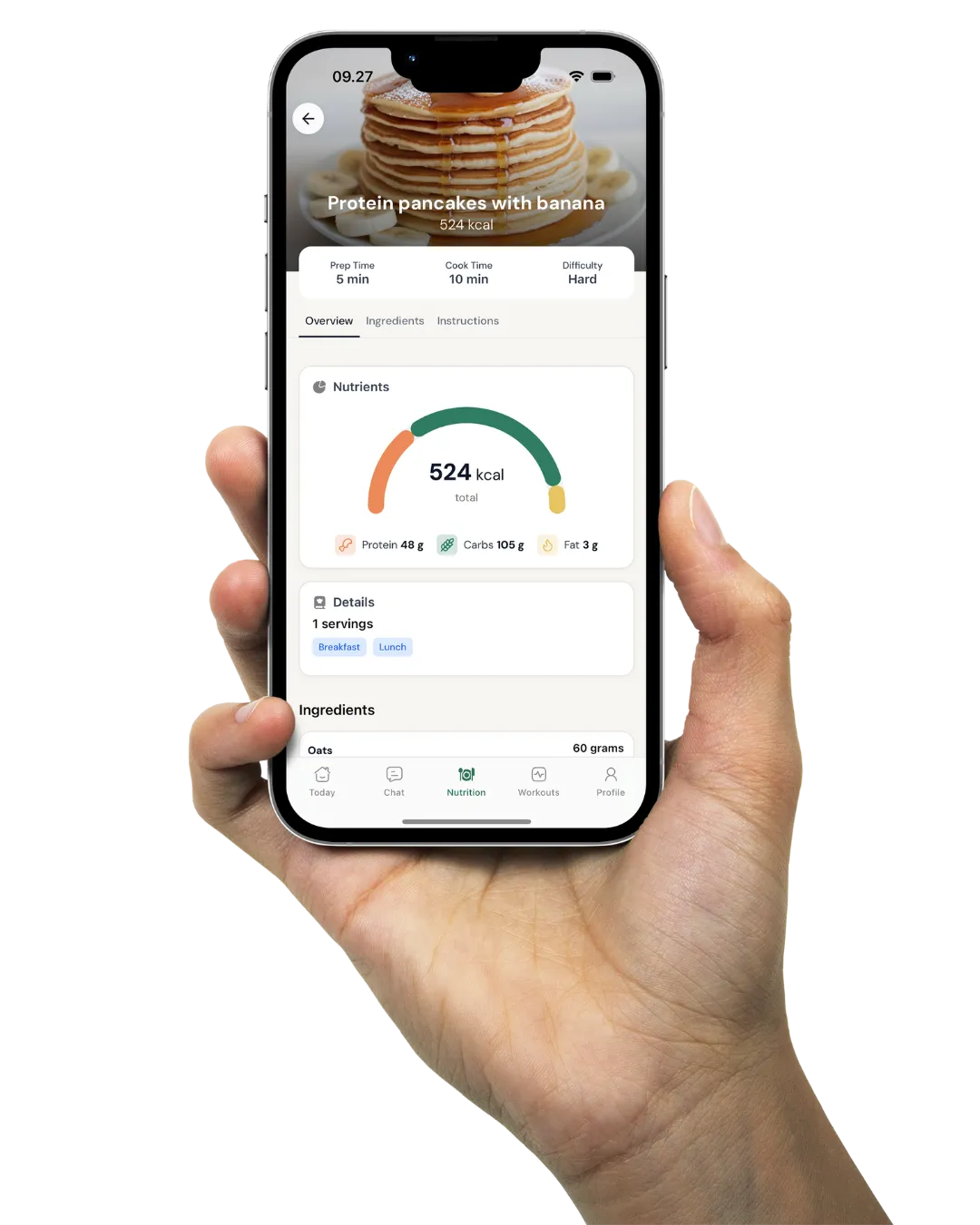
Plenty of coaches start with a form, a spreadsheet, and a chat thread, and that is fine at the beginning. The case for a platform shows up when you have several of these clients at once and the extra tracking, strength markers, protein per meal, dose notes, side-effect flags, starts eating your evenings. Coachway gives you customizable intake and check-in forms, a workout builder and meal planner that adapt fast, and a branded client app so the whole experience feels like yours. We would only suggest it if you have outgrown the simple setup, not before.
feature
Custom check-in forms.
Add strength, protein, energy, and dose questions, with photo and measurement tracking and auto-charts on every client.
feature
Meal planner.
Scale portions, show protein per meal, and build smaller protein-first plates a client with low appetite can actually finish.
pricing
Predictable per-client.
Pricing scales with your client count, not a cut of your base revenue. You keep your own Stripe, and you can cancel anytime.
Frequently asked questions about coaching GLP-1 clients.
Can a personal trainer coach a client who is on Ozempic or another GLP-1?
Yes, and it is becoming a core part of the job. A coach does not prescribe, adjust, or advise on the medication itself, that stays with the client's prescriber. The coach's lane is everything around it: resistance training to preserve muscle, enough protein, working around appetite and side effects, tracking strength and body composition, and keeping the client consistent. Adapting to GLP-1 clients makes you more valuable, not less, because the drug only handles appetite. It does not build or keep muscle, and that is exactly what coaching is for.
How should I program training for a client on a GLP-1 medication?
Prioritize resistance training, two to three sessions a week of body weight, bands, or free weights, because that is the signal that tells the body to hold onto muscle while it loses fat. Keep cardio as a supporting role, not the main event. Expect lower energy and appetite, especially in the first weeks after a dose change, so start conservative on volume, autoregulate by how the client feels that day, and progress load gradually as tolerance builds. The goal is fat loss that protects lean mass, not maximum calorie burn.
How much protein should a client on a GLP-1 eat?
Most guidance for active weight loss lands around 1.2 to 2.0 grams of protein per kilogram of body weight per day, spread across three to four meals rather than one large dose, since muscle protein synthesis is generally highest at around 25 to 40 grams of protein per meal (estimates vary). The real challenge on a GLP-1 is not the target, it is appetite. Clients feel full fast, so protein has to come first on the plate. As a coach you support that with the prescriber's plan, you do not override it.
Is coaching a client on a GLP-1 giving medical advice?
No, as long as you stay in your lane. Training programming, nutrition habits, protein targets within general healthy ranges, and accountability are coaching. Prescribing, changing a dose, advising someone to start or stop the medication, managing serious side effects, or interpreting bloodwork are medical, and belong to the client's doctor or prescriber. The safe rule: coach the training and the food, refer anything medical to the prescriber, and document that you did. This article is educational and is not medical advice.
What side effects should I expect to coach around?
The common ones are nausea, low appetite, fatigue, and sometimes lightheadedness, usually worst in the days after starting or increasing a dose. Practically, that means lighter or shorter sessions around dose changes, watching hydration, not pushing through anything that feels off, and being flexible with timing food around training. If a client reports anything beyond mild and expected, severe or persistent symptoms, your job is to tell them to contact their prescriber, not to coach through it.
How do I set expectations with a GLP-1 client so they stay long term?
Be honest up front: the medication handles appetite, your coaching protects muscle, strength, and habits so the results last when the dose changes or stops. Frame the scale as one data point among several, and track strength, photos, and how clothes fit so progress stays visible even in weeks the scale stalls. The clients who keep their results are the ones who built the training and eating habits during the medication phase, which is the whole reason structured coaching matters here.
Keep reading
all guidesHow to make a full-time living as an online fitness coach
The honest math behind replacing your salary online: clients x price x retention, the first-10 and first-30 milestones, the model choices, and the time-vs-money trap nobody warns you about.
Read the guideHow much do online fitness coaches make?
The honest range from beginner to established, the three levers that set your income (price x retention x roster), the per-client math, and a calculator to model your own.
Read the guideHow to run a coaching discovery call (without being salesy)
The help-first discovery call: diagnose before you prescribe, run a simple rapport-to-fit structure, and handle "I need to think about it" without pressure.
Read the guideSee what Coachway can do for your coaching business
Coachway was built after working with 150+ coaches who all had the same frustrations - slow platforms, clunky workflows, wasted hours. Book a demo and see what we fixed. 15 minutes, and you'll know if it's the right fit.