Meal planning software for personal trainers in 2026: what to look for.
Meal planning software for personal trainers helps coaches create, adjust, and deliver nutrition plans without rebuilding PDFs or manually tracking every client in spreadsheets. The best tools include reusable meal templates, recipes, shopping lists, macro visibility, dietary restrictions, and a feedback loop that tells you what clients actually followed.
By Markus Evers · Updated June 2026
the short version
The best meal planning software for personal trainers lets you build a plan once, reuse it across clients, and adjust it in seconds - with a recipe library, reusable templates, shopping lists, macro visibility, allergy and preference handling, and a check-in feedback loop built in. In short: it should reduce the nutrition admin that kills consistency, not just make prettier PDFs. For online coaches, the goal is not more plans. It is plans clients actually follow without rebuilding everything every Sunday.
Nutrition gets messy faster than training.
Workout plans are relatively stable. Nutrition changes constantly. Clients travel, eat with family, dislike meals, change schedules, hit plateaus, forget groceries, get bored, or realize they cannot prep four meals every Sunday. If your meal planning workflow lives in PDFs, every change becomes manual work.
01
PDFs do not adapt.
One ingredient swap turns into a file edit, a re-export, and another message to the client. Do that across 40 clients and the week is gone.
02
Clients need clarity.
If the client does not know what to buy, cook, swap, or track, the plan becomes a guilt document instead of a coaching tool.
03
Feedback has to connect.
Nutrition does not improve because a plan exists. It improves when check-ins tell the coach what worked, what failed, and what needs changing next.
What meal planning software for personal trainers should include.
These are the features that actually reduce admin. If the tool looks nice but misses these, it will still leak time.
01
Reusable meal templates
A coach should be able to build once, adjust per client, and reuse the best work. If every plan starts from blank, the software is just a nicer document editor.
02
Recipe library with real variety
Clients do not need 30 perfect macro plans they will never cook. They need enough simple meals to keep adherence high when life gets busy.
03
Shopping lists
A meal plan without a shopping list creates friction at the exact point where clients usually fall off. The easier the grocery trip, the better the adherence.
04
Allergy and preference handling
Dairy-free, gluten-free, vegetarian, dislikes, family meals, prep time, and budget all matter. The system should remember constraints instead of making the coach rebuild around them weekly.
05
Macro visibility
Coaches need macro context without turning the client experience into a spreadsheet. Calories, protein, carbs, and fats should be visible where they help decisions.
06
Client feedback loop
The best nutrition systems collect what the client actually followed, what felt hard, and what needs changing. Without feedback, meal planning becomes guessing.
The best nutrition coaching software supports both structure and flexibility.
Some clients need a plan because decisions overwhelm them. Others hate plans and prefer macro targets. Strong nutrition coaching software should not force one philosophy. It should let the coach pick the right structure per client, whether that means full online coaching meal plans or flexible macro guidance. This is one of the criteria worth weighing when you choose an online coaching platform, alongside workouts, check-ins, and payments.
Use meal plans when the client needs clarity.
Beginner clients, busy parents, clients who overthink food, and clients in a short focused phase often do better with concrete meal options. They need less theory and fewer decisions.
Use macros when the client needs autonomy.
More experienced clients often need targets, boundaries, and feedback. They can handle food choices, but need the coach to spot patterns and adjust intelligently.
Nutrition software for trainers: what it must include.
Nutrition software for trainers is the part of your coaching stack that turns food guidance into something a client can follow and a coach can review in minutes: an ingredient database, macro targets, and a feedback loop. The minimum bar in 2026 is a large searchable ingredient database (Coachway ships 3,900+ ingredients), per-meal and per-day macro visibility, allergen and preference filters, shopping lists generated from the plan, and a place where clients log how the plan actually went. Diet software for personal trainers that misses any of these pushes the work back into spreadsheets and DMs - which is the exact admin you bought software to remove. If you are still comparing tools, our roundup of the best online coaching platforms and the best client management software for personal trainers cover how nutrition fits next to everything else a coach runs.
Coachway turns meal planning into a repeatable workflow.
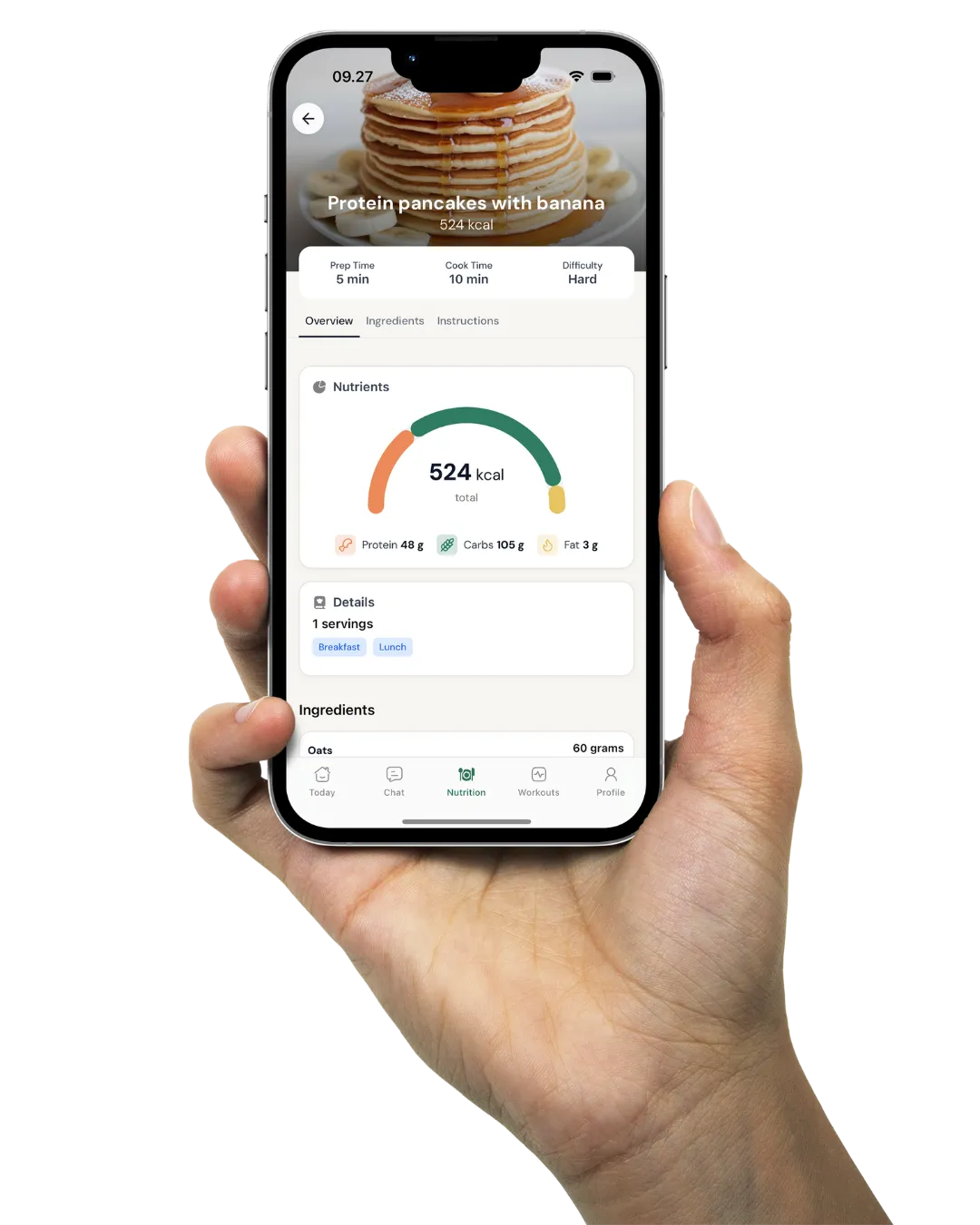
Coachway's meal planner is built for online coaches who need nutrition to scale without becoming a second job. Build from 1,100+ recipes, adjust ingredients, filter allergies, save templates, and keep meal plans connected to check-ins and client progress - on predictable per-client pricing, so your nutrition workload scales without your costs jumping. The point is not more nutrition admin. The point is cleaner delivery.
A serious tool still needs a serious coach.
Meal planning software does not replace professional judgment. In some markets, personal trainers cannot prescribe medical diets unless they have the right qualification. Use the tool to organize delivery, simplify adherence, and keep client context in one place. Stay inside your scope, especially with medical conditions, eating disorders, pregnancy, or clinical nutrition needs.
The rule of thumb.
If the client needs general support to eat more consistently, hit protein, prep meals, or understand basic nutrition, software can help you deliver that cleanly. If the client needs medical nutrition therapy, refer out or collaborate with a qualified professional.
Frequently asked questions about meal planning software.
What is meal planning software for personal trainers?
Meal planning software for personal trainers helps coaches create, adjust, and deliver nutrition plans without rebuilding PDFs or managing every client in spreadsheets. The best tools include recipes, reusable templates, shopping lists, macro visibility, allergy handling, and client feedback.
What should online coaching meal plans include?
Online coaching meal plans should include clear meals, realistic portions, macro context, ingredient swaps, allergy and preference handling, shopping lists, and a simple way for the client to give feedback when the plan does not fit real life.
Can personal trainers create meal plans for clients?
It depends on the country, client situation, and scope of practice. In some markets, medical nutrition therapy is restricted to registered dietitians. Coaches should stay inside local rules and use meal planning software as a delivery and organization tool, not as a license to prescribe medical diets.
What is the difference between meal plans and macro coaching?
Meal plans give the client concrete meals to follow. Macro coaching gives targets and flexibility. Many online coaches use both: structured meal plans for clients who need clarity, macro targets for clients who already understand food choices.
Why do PDFs stop working for online nutrition coaching?
PDFs are hard to edit, hard to track, and easy for clients to ignore. When a client needs a swap, allergy adjustment, or shopping list, the coach ends up rebuilding the document instead of coaching.
What should a nutrition coaching platform include?
Look for recipes, meal templates, macro visibility, shopping lists, dietary restrictions, check-in integration, progress tracking, and a client app where the plan is easy to follow.
How much does meal planning software for personal trainers cost?
Prices range from free (limited plans) to roughly EUR or USD 25 to 75+ per month, split across two pricing models: flat tiers gated by client caps, or predictable per-client pricing. Coachway is EUR 69 per month for up to 5 clients, then EUR 9 per additional client, with optional built-in payments at a 2.4% per-transaction fee (no Coachway fee if you use your own Stripe).
Is meal planning software the same as nutrition software for trainers?
They overlap heavily and the terms are often used interchangeably. Meal planning software emphasises building and delivering concrete meals, recipes, and shopping lists; nutrition software for trainers covers the wider job of food guidance, including macro targets, an ingredient database, and a feedback loop. The best tools do both, so a coach can switch between structured meal plans and flexible macro coaching per client.
What is the best nutrition software for personal trainers?
The best nutrition software for personal trainers builds macro-based meal plans from a large recipe and ingredient database, scales portions to the macro targets you set, handles allergies, and lets clients report intake in their check-ins. Coachway does all of this with 1,100+ recipes and 3,900+ ingredients on the coach side, priced per client with everything in one platform.
Keep reading
all guidesRefeed Days: What They Are & How to Structure Them
A coach's guide to refeed days: what a refeed day is, its real purpose, how to structure carbs, protein, and fat, how it differs from a cheat day, and which clients it suits.
Read the guideNEAT explained: the fat-loss swing factor
NEAT - non-exercise activity thermogenesis - is the energy you burn from everyday movement, and usually the biggest swing factor in fat loss. What it is, why it drops on a diet, and how coaches manage it with a step target.
Read the guideWhat Is Metabolism? Metabolic Rate Explained
Metabolism is how your body turns food into energy. A plain-language guide to the four parts of daily energy expenditure (BMR, TEF, NEAT, EAT), what affects them, and an honest look at the "slow metabolism" claim.
Read the guideSee what Coachway can do for your coaching business
Coachway was built after working with 150+ coaches who all had the same frustrations - slow platforms, clunky workflows, wasted hours. Book a demo and see what we fixed. 15 minutes, and you'll know if it's the right fit.